
Chef Lupita
Aporreadillo Michoacano con Huevo
Michoacán's Tierra Caliente almuerzo, where salted beef is softened, pounded, fried in lard, folded with egg and chile perón salsa, then served beside morisqueta like a proper working table.
A cooking platform built around craft, culture, and the stories behind what we eat.
Created by
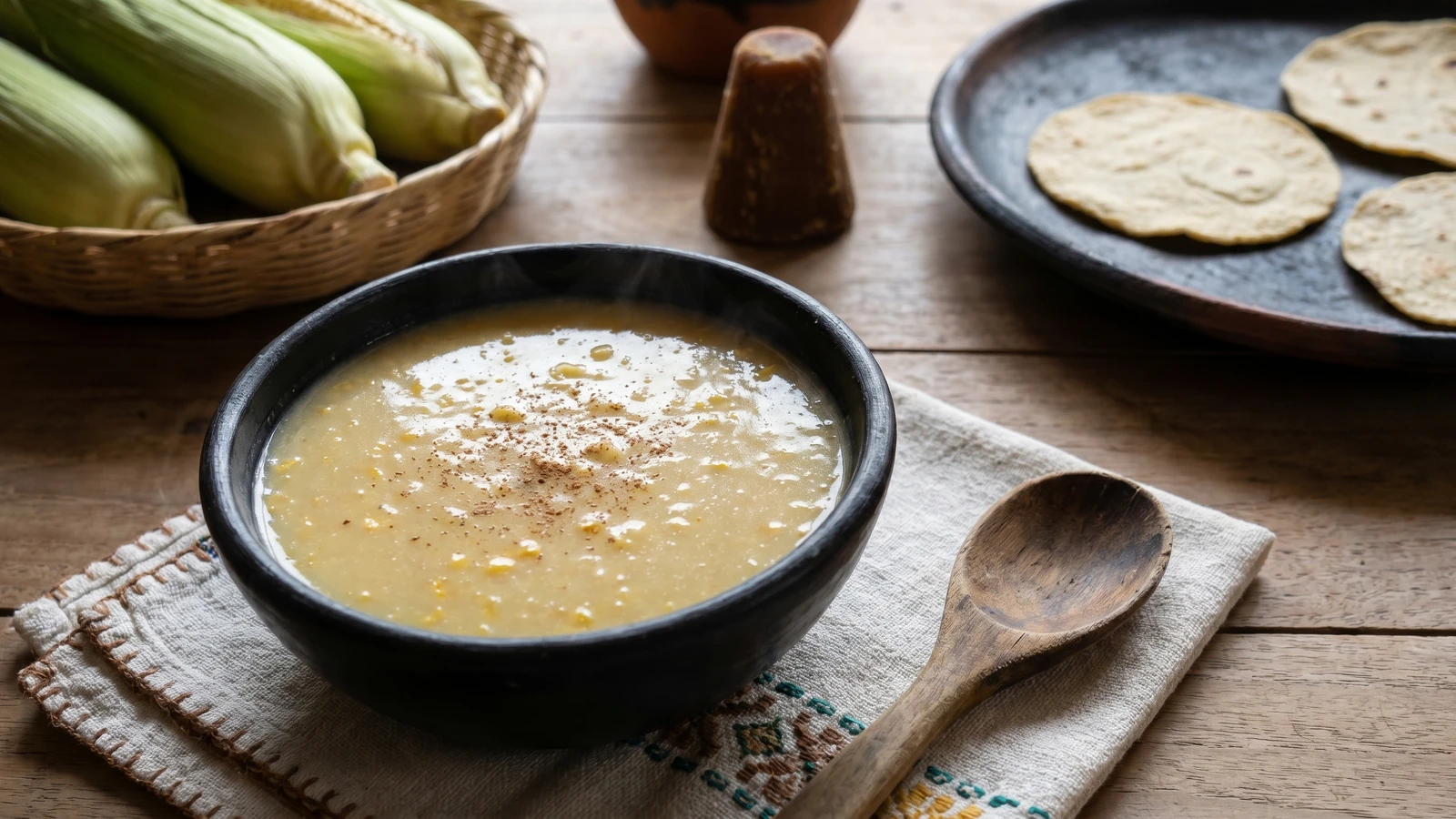
Chiapas highland atole made from young sweet corn, milk, canela, and piloncillo, thickened slowly until it drinks like breakfast and eats like comfort.
Chiapas, especially the highlands around San Cristóbal de las Casas and Comitán, knows this atole as morning food. Not dessert. Not a sweet drink for pretending the cold is charming. A bowl of atole de elote tierno is what you put in your hands when the fog sits low and the comal is already dark with the first tortillas of the day.
The ingredient that matters is young corn, elote tierno, still milky when you press the kernels with your thumbnail. Too mature and it turns pasty. Too green and it tastes like grass. The women who make this well know the difference by touch at the market. Pregúntale a las señoras del mercado. They will tell you which ears came in sweet that morning and which ones are better left for caldo.
This version belongs to Chiapas, with a sister voice in Tabasco's Chontal lowlands, where the same corn logic lives beside pozol, cacao, and hoja de momo. Do not confuse this with pozol. Pozol is made from nixtamalized corn dough, often drunk cold or beaten with cacao. Atole de elote tierno is fresh corn blended, strained, and cooked slowly with milk, canela, and piloncillo until the starch thickens the pot. Stir it like you mean it. Walk away and it catches. No me vengas con atajos.
My mother wrote only one line about corn atoles in her notebook: 'fuego bajo y paciencia.' Low heat and patience. She was from Jalisco, but she knew when another state had something to teach. Cada estado, su propia cocina. Saber cocinar es saber vivir.
Atole comes from the Nahuatl 'atolli,' a maize drink that predates the Spanish conquest and was prepared in many forms across Mesoamerica. In Chiapas and Tabasco, fresh corn atoles sit alongside older Maya corn drinks such as pozol, but they are not the same preparation: pozol depends on nixtamalized masa, while atole de elote tierno depends on the natural starch and sweetness of young corn. Milk and canela entered these atoles after the colonial period, joining the older corn base without replacing the Indigenous technique of slow thickening over heat.
Quantity
6 large ears
kernels cut from the cob
Quantity
4 cups
Quantity
2 cups
Quantity
1
Quantity
3/4 cup, packed, plus more to taste
Quantity
1/4 teaspoon
Quantity
1/2 cup
made with 1/4 cup masa harina and 1/2 cup water, only if the corn is not starchy enough
Quantity
for serving
| Ingredient | Quantity |
|---|---|
| young sweet cornkernels cut from the cob | 6 large ears |
| whole milk | 4 cups |
| water | 2 cups |
| Mexican canela stick | 1 |
| grated piloncillo | 3/4 cup, packed, plus more to taste |
| fine sea salt | 1/4 teaspoon |
| fresh masa harina slurry (optional)made with 1/4 cup masa harina and 1/2 cup water, only if the corn is not starchy enough | 1/2 cup |
| ground canela (optional) | for serving |
Use young ears with plump, pale yellow kernels that release milky juice when pressed. If the kernels look dry or dented, they are too old for this atole. Older corn belongs in another pot. This recipe needs elote tierno because the fresh starch thickens the drink and the natural sweetness carries the flavor.
Combine the milk, water, canela stick, piloncillo, and salt in a heavy pot. Warm over medium-low heat, stirring until the piloncillo dissolves. Do not boil it hard. You want the canela to perfume the liquid and the piloncillo to melt cleanly, not scorch against the bottom.
Put the corn kernels in a blender with 2 cups of the warm milk mixture. Blend until very smooth, at least one full minute. The blender is fine here. Chiapas cooks use the tools they have, as long as the principle is respected: break the corn enough to release its starch and flavor.
Pour the blended corn through a fine-mesh strainer into a bowl, pressing firmly with a spoon. Scrape the underside of the strainer so you do not lose the thick corn milk clinging there. Discard the tough skins. If you skip straining, the atole drinks rough. That texture belongs to neither Comitán nor Villahermosa.
Return the strained corn milk to the pot with the remaining infused milk. Keep the heat low and stir constantly with a wooden spoon, scraping the bottom and corners. In 18 to 25 minutes it will thicken enough to coat the spoon and fall back into the pot in a slow ribbon. This is the work. La cocina no es decoración, es trabajo.
Taste only after the corn has thickened. Sweetness reads differently once the starch has cooked. Add a little more grated piloncillo if the corn was not sweet enough. The flavor should be corn first, canela second, sweetness third. If all you taste is sugar, you lost the dish.
Remove the canela stick. Ladle the atole into clay bowls or thick cups and dust lightly with ground canela if you want it. Serve with hand-pressed tortillas, a piece of pan dulce, or nothing at all. A good atole can stand by itself. Recetas probadas y garantizadas.
1 serving (about 350g)
Culinary guides, cultural storytelling, and the editorial depth that makes cooking meaningful.
Discover Culinary ExplorerChef Lupita
Michoacán's Tierra Caliente almuerzo, where salted beef is softened, pounded, fried in lard, folded with egg and chile perón salsa, then served beside morisqueta like a proper working table.

Chef Lupita
Guerrero's Costa Grande aporreado is salted cecina pounded soft, scrambled with egg, and finished in a red guajillo and chile de árbol salsa loud with garlic and cilantro.

Chef Lupita
Los Altos de Chiapas turns two-night fermented white corn into a tart-sweet atole, cooked with canela and piloncillo, then poured hot into jícaras for desayuno.

Chef Lupita
Oaxaca's Mixteca region ferments nixtamalized masa for days until it turns tart and alive, then simmers it with piloncillo and canela into a thick, warm atole served at first light in clay.