
Chef Lupita
Animalitos de Yema Comitecos
Comitán's pan de yema shaped into little pigs, birds, and rabbits, a Chiapas bakery bread rich with egg yolks, manteca de cerdo, and anís, baked golden on hoja de plátano.
A cooking platform built around craft, culture, and the stories behind what we eat.
Created by
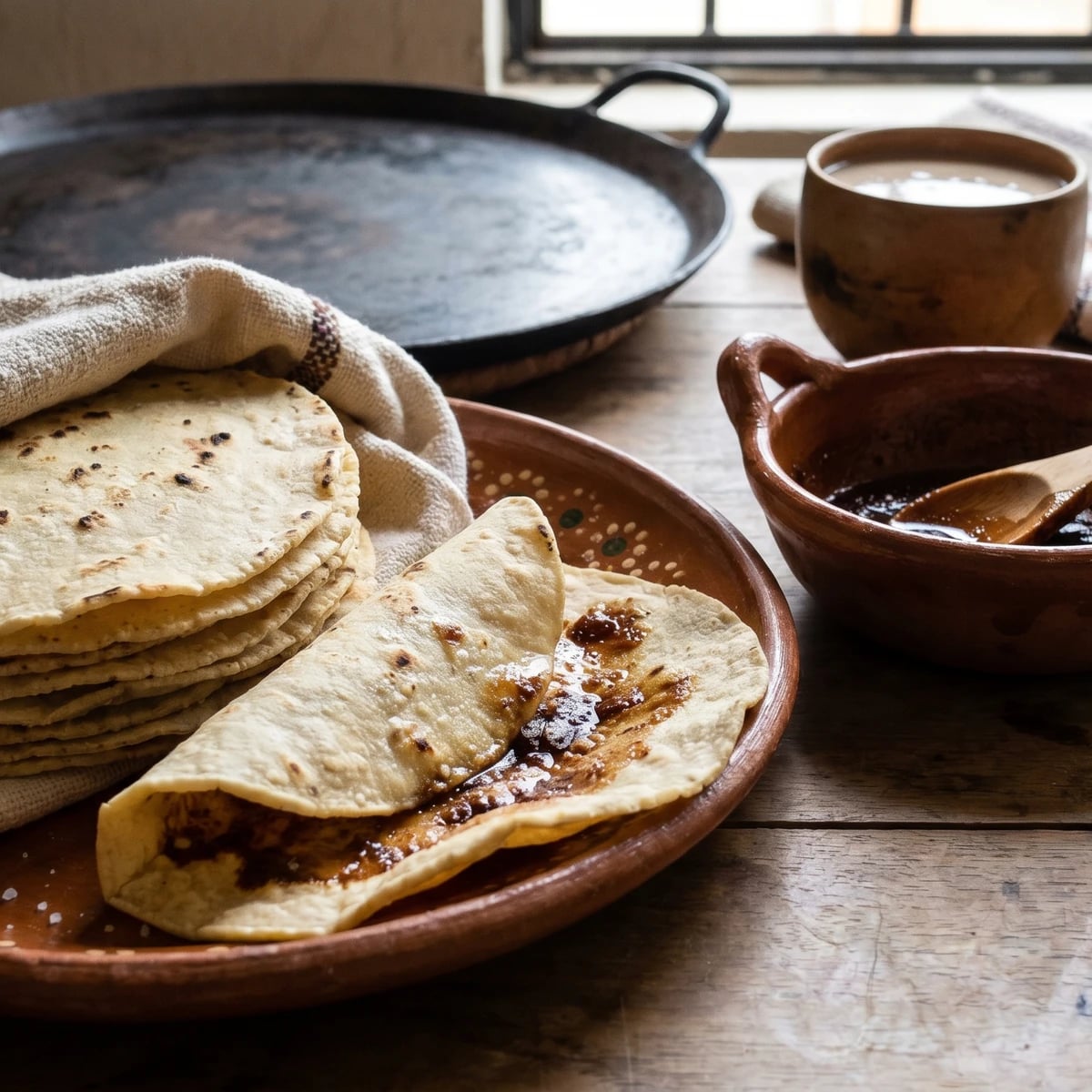
Comitán's highland Chiapas tortilla, hand-pressed from fresh nixtamal masa and finished hot with asiento, the dark pork-lard sediment that melts into corn and makes weeknight food serious.
Chiapas, in the Meseta Comiteca around Comitán de Domínguez, is where this tortilla belongs. The town sits near the Guatemalan border, in highland corn country, with Tojolabal villages close enough that market days carry more knowledge than most cookbooks. This is not a northern flour tortilla. It is fresh nixtamal masa, a comal, and asiento.
Asiento is the dark, fragrant sediment at the bottom of rendered manteca de cerdo. Not clean white lard. Not bacon grease. Asiento. The little browned pork particles and corn-colored fat carry more flavor than a pile of toppings. In Comitán, I watched women keep it in a small clay cazuelita at the side of the comal, spooning it onto tortillas while the surface was still open and hot.
The trick is restraint: enough asiento to perfume the tortilla, not so much that you lose the corn. The tortilla should puff, freckle, and stay tender. Fold it, tuck it into a servilleta, eat it with black beans or a spoonful of chile simojovel salsa if the table wants heat. Cada estado, su propia cocina. This one is Chiapas.
Comitán de Domínguez sits on the Meseta Comiteca Tojolabal of Chiapas, a maize region shaped by Maya Tojolabal communities and by trade routes to Guatemala. Pork fat entered the local kitchen after pigs arrived with the Spanish in the 16th century, and home cooks learned to save asiento, the browned sediment left from rendering manteca, because it stretched flavor across a stack of tortillas. Oaxaca is better known nationally for asiento because of tlayudas, but the Comiteco tortilla is smaller, soft, and eaten from the tortillero, not a northern flour tortilla and not an Oaxacan giant.
Quantity
1 pound, or 1/2 cup prepared asiento
cut into 1-inch pieces if rendering
Quantity
1/4 cup
for rendering
Quantity
1 teaspoon, divided
Quantity
1 1/2 pounds
Quantity
1/3 to 1/2 cup
as needed for softening the masa
Quantity
for serving
made with roasted tomatillo and garlic
Quantity
for serving
| Ingredient | Quantity |
|---|---|
| pork back fat or pork fat trimmings with a little meat attachedcut into 1-inch pieces if rendering | 1 pound, or 1/2 cup prepared asiento |
| waterfor rendering | 1/4 cup |
| fine sea salt | 1 teaspoon, divided |
| fresh nixtamalized white corn masa | 1 1/2 pounds |
| warm wateras needed for softening the masa | 1/3 to 1/2 cup |
| salsa de chile simojovel (optional)made with roasted tomatillo and garlic | for serving |
| frijoles negros de olla (optional) | for serving |
Put the pork fat in a heavy small cazuela or saucepan with the 1/4 cup water. Cook over medium-low heat, stirring every few minutes, until the water cooks off, clear manteca pools in the pan, and the small pork bits turn golden brown, 35 to 45 minutes. Do not rush this. If the heat is high, the sediment scorches before the fat renders and your asiento will taste bitter. If you bought prepared asiento from a carnicería, warm 1/2 cup gently in a small cazuela and begin at step 3.
Strain the clear lard into a heatproof jar and save it. That is good manteca for beans. Do not wash the pan. Scrape up the dark brown paste from the bottom and spoon any browned pork crumbs from the strainer back into it. Stir in 1/2 teaspoon salt and loosen with 1 or 2 tablespoons of the warm rendered lard until spoonable. This dark, salty, roasted sediment is the asiento.
Put the fresh nixtamal masa in a bowl. Sprinkle in the remaining 1/2 teaspoon salt. Knead with your hand, adding warm water 1 tablespoon at a time, until the masa feels soft and pliable, like the lobe of your ear. Press a little between your palms. If the edges crack, it is dry. If it sticks heavily, it is too wet. The tortilla puff begins here, before the comal ever sees it.
Divide the masa into 10 to 12 balls, about 2 ounces each. Keep them covered with a damp cloth. Line a tortilla press with two pieces of plastic and press each ball into a 5 to 5 1/2 inch round, a little thicker than a supermarket tortilla. Uneven edges are fine. Machine-perfect circles are not the goal. Tender corn is the goal.
Heat a dry comal over medium-high heat. Lay one tortilla down and cook until the edges look dry and the underside has pale freckles, about 30 seconds. Flip and cook the second side for 45 seconds. Flip once more and press gently near the edges with a folded cloth or spatula. The tortilla should puff in places and smell deeply of corn. That puff tells you the masa, moisture, and heat are working together.
As soon as the tortilla comes off the comal, spread 1 to 1 1/2 teaspoons warm asiento over one side with the back of a spoon. Work quickly while the surface is still hot and open. The asiento should melt into the pores of the corn, leaving dark glossy streaks, not a greasy puddle. Fold the tortilla in half or quarters and tuck it into a servilleta-lined tortillero while you cook the rest.
Serve the tortillas warm, straight from the tortillero, with frijoles negros de olla if you want a full weeknight table. If you put salsa out, make it with chile simojovel, roasted tomatillo, garlic, and salt. The tortilla itself is not a chile dish. The asiento is the point. Así se hace y punto.
1 serving (about 70g)
Culinary guides, cultural storytelling, and the editorial depth that makes cooking meaningful.
Discover Culinary Explorer
Chef Lupita
Comitán's pan de yema shaped into little pigs, birds, and rabbits, a Chiapas bakery bread rich with egg yolks, manteca de cerdo, and anís, baked golden on hoja de plátano.

Chef Lupita
Comitán's cazueleja is Chiapas pan dulce salado, half bread and half quesadilla, baked in clay over banana leaf with queso fresco softening through the tender wheat crumb.

Chef Lupita
Chiapa de Corzo's painted bread of the dead is a soft enriched pan dulce, brushed with lard, egg, and bright altar colors before it is offered to the departed.

Chef Lupita
Chiapas highland tortillas pressed from raza Comiteco native corn, nixtamalized with cal, ground while still fragrant, and cooked until they puff with the quiet authority of real maiz.