
Chef Lupita
Acambaritas de Acámbaro
Guanajuato's daily bread from Acámbaro, a small glazed roll built on pata, enriched with manteca de cerdo, and baked until the top shines lightly for merienda.
A cooking platform built around craft, culture, and the stories behind what we eat.
Created by
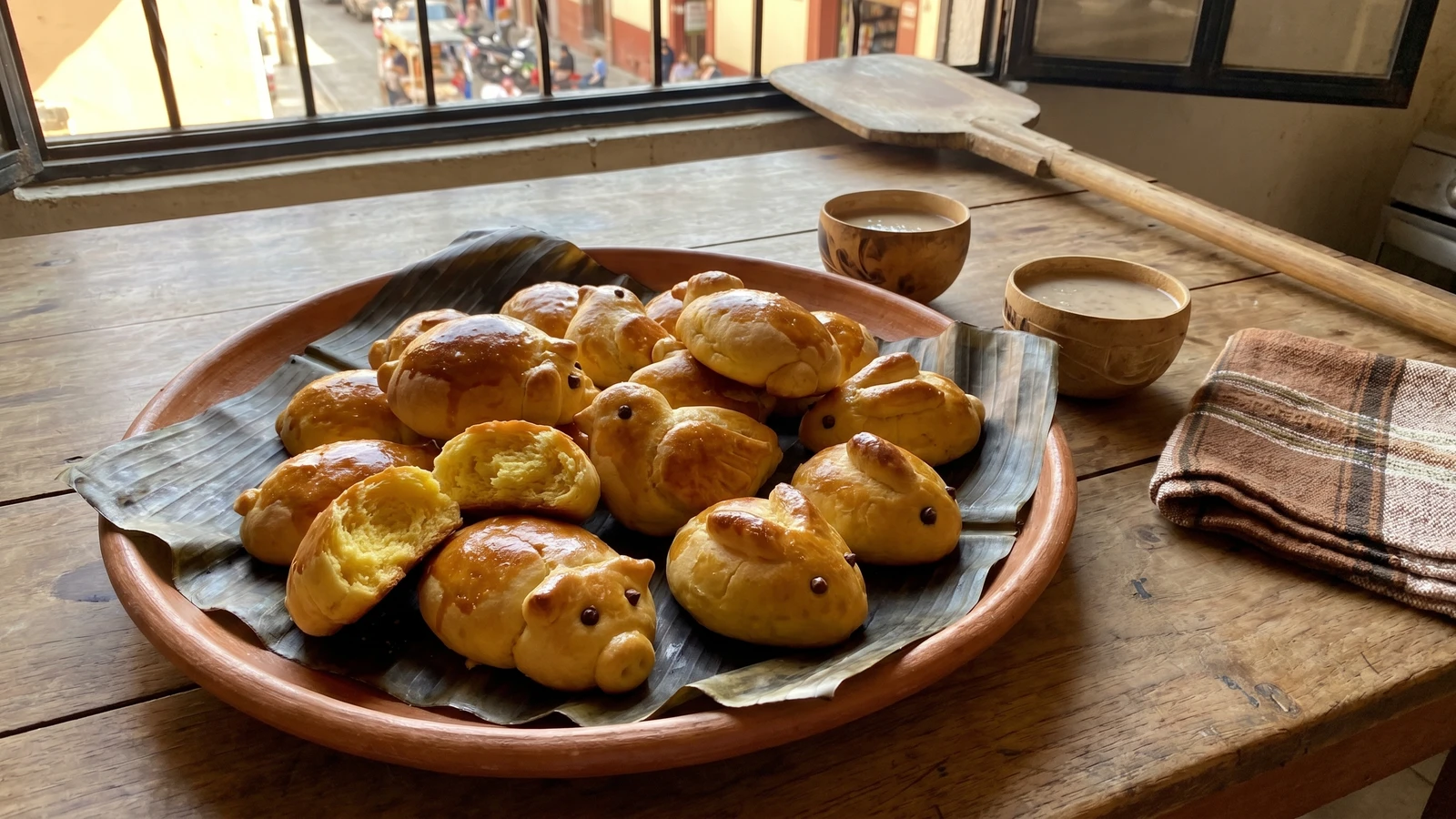
Comitán's pan de yema shaped into little pigs, birds, and rabbits, a Chiapas bakery bread rich with egg yolks, manteca de cerdo, and anís, baked golden on hoja de plátano.
Chiapas, the Meseta Comiteca, Comitán de Domínguez. That is where these animalitos live: in panaderías with hornos de leña, in mercado baskets, on clay plates beside atole when the afternoon gets cool. This is not food from a single Mexico. Cada estado, su propia cocina.
The dough is yellow because of yemas, not food coloring. It is tender because of manteca de cerdo, not shortening. Some panaderas perfume it with anís verde, some keep it plain so the egg and wheat speak clearly. I use anís because the señora in Comitán who let me watch her shape little pigs and birds crushed it in her palm before it went into the flour.
The work is in the hands. You make a soft enriched dough, let it rise slowly, then pinch bodies, ears, snouts, wings, and tails with the patience used for tamales or tortillas. Do not make sculptures. Make bread animals that bake evenly and sit proudly on hoja de plátano. There is no chile here because this is bread. Not every Mexican dish needs chile to announce itself. These rolls announce Chiapas through wheat, yolk, lard, and the bakery. Saber cocinar es saber vivir.
Comitán de Domínguez sits in the Meseta Comiteca of Chiapas, a highland border region tied by trade and family routes to Guatemala, the Central Valleys of Chiapas, and the Indigenous Tojolabal and Tzeltal communities around it. Wheat breads entered Chiapas after the Spanish conquest in the 16th century, but local panaderías made them their own with egg yolks, pork lard, wood-fired ovens, and market-day shapes that children could recognize. Animalitos de yema belong to the comiteco pan de yema family: colonial wheat and pork fat handled through a Chiapas bakery vocabulary, not a northern flour-tortilla tradition or a central Mexican sweet cookie.
Quantity
1/2 cup plus 2 tablespoons
warmed to 100F to 105F
Quantity
2 1/4 teaspoons
Quantity
1/2 cup plus 2 tablespoons
divided
Quantity
4 cups (500 g), plus more for shaping
Quantity
1 teaspoon
Quantity
1 teaspoon
lightly crushed
Quantity
8
room temperature
Quantity
1
room temperature
Quantity
1/2 cup (115 g), plus more for greasing
softened
Quantity
2 large
wiped clean, softened over a flame or comal, and cut to line baking sheets
Quantity
about 36
for eyes; remove cloves before eating
Quantity
1
beaten with 1 tablespoon whole milk
Quantity
1 tablespoon
for brushing after baking
| Ingredient | Quantity |
|---|---|
| whole milkwarmed to 100F to 105F | 1/2 cup plus 2 tablespoons |
| active dry yeast | 2 1/4 teaspoons |
| granulated sugardivided | 1/2 cup plus 2 tablespoons |
| all-purpose wheat flour | 4 cups (500 g), plus more for shaping |
| fine sea salt | 1 teaspoon |
| anís verdelightly crushed | 1 teaspoon |
| large egg yolksroom temperature | 8 |
| large whole eggroom temperature | 1 |
| fresh manteca de cerdosoftened | 1/2 cup (115 g), plus more for greasing |
| banana leaveswiped clean, softened over a flame or comal, and cut to line baking sheets | 2 large |
| whole cloves or black sesame seeds (optional)for eyes; remove cloves before eating | about 36 |
| egg yolk for glazebeaten with 1 tablespoon whole milk | 1 |
| melted manteca de cerdofor brushing after baking | 1 tablespoon |
Stir the warm milk, active dry yeast, and 1 teaspoon of the measured sugar in a small bowl. Let it stand for 8 to 10 minutes, until foamy on top. The milk should feel warm, not hot. If the yeast does not foam, it is dead. Start again now, before you waste eight yolks.
In a large bowl, whisk the flour, remaining sugar, salt, and crushed anís verde. Crush the anís between your palms or in a molcajete first so the oil wakes up. That small perfume is part of the Comiteco bakery smell.
Add the softened manteca de cerdo to the flour mixture. Rub it in with your fingers until the flour looks sandy and no large pieces of fat remain. La manteca es el sabor. It coats the flour and gives these rolls their soft, tender crumb. Shortening leaves a flat, waxy finish. Do not bring me that shortcut.
Add the 8 egg yolks, the whole egg, and the foamy yeast milk. Mix with your hand or a wooden spoon until a soft yellow dough forms. It will be tacky. That is correct. If dry flour stays at the bottom of the bowl, add milk 1 teaspoon at a time. Do not flood it.
Turn the dough onto a lightly floured table and knead for 10 to 12 minutes, until smooth, elastic, and no longer tearing when stretched. Use as little extra flour as possible. Too much flour makes heavy animalitos with hard bellies. In a stand mixer, knead with the dough hook on low for 7 to 8 minutes.
Grease a clean bowl with a little manteca. Set the dough inside, turn it once to coat, and cover with a cotton cloth. Let it rise in a warm corner for 60 to 75 minutes, until puffy and about one and a half times its size. It may not double like lean bread. Do not punish it for being rich.
While the dough rises, wipe the banana leaves clean. Pass each leaf quickly over a gas flame or hot comal until glossy and flexible. Cut them to fit two baking sheets and grease them lightly with manteca. If a leaf cracks, it has not been softened enough.
Turn the dough out and divide it into 18 pieces, about 50 to 55 g each if you are weighing. Cover the pieces and let them rest for 10 minutes. Rested dough listens to your hands. Tight dough fights back.
Shape each piece into a small animal: an oval body for a pig, a pinched head and tail for a bird, long ears for a rabbit. Pull off tiny bits of dough for ears, snouts, wings, and tails, then attach them with a dab of water. Press cloves or black sesame seeds in for eyes. Make the features a little exaggerated because the oven softens details. This is how the panaderas teach it: firm hands, no fuss.
Arrange the animalitos on the banana-leaf-lined baking sheets, leaving space between them. Cover loosely and let them rise 25 to 35 minutes, until puffy and soft to the touch. Brush lightly with the egg-yolk glaze. Do not let glaze pool in the folds, or the little ears and tails will blur.
Bake at 350F for 18 to 22 minutes, rotating the sheets once, until the breads are deep golden and the bottoms release cleanly from the hoja de plátano. If you have a horno de leña, bake in the falling heat after the coals have been swept aside. The leaf edges will darken and the bread will pick up a gentle green aroma.
Brush the hot animalitos with the melted manteca de cerdo in a very thin layer. Let them cool 10 minutes so the crumb settles. Serve warm or at room temperature with atole, chocolate de agua, or café de olla. Remove whole clove eyes before giving them to children. Recetas probadas y garantizadas.
1 serving (about 60g)
Culinary guides, cultural storytelling, and the editorial depth that makes cooking meaningful.
Discover Culinary ExplorerChef Lupita
Guanajuato's daily bread from Acámbaro, a small glazed roll built on pata, enriched with manteca de cerdo, and baked until the top shines lightly for merienda.

Chef Lupita
Michoacan's Tinguindin aguacatas are flat, leaf-scored sweet breads made with harina de trigo, piloncillo, anise, and manteca de cerdo, shaped by hand for the wood oven.

Chef Lupita
From Ajijic on Lake Chapala, Pan Tachihual is a lightly sweet wedding loaf built with harina de trigo, harina de maiz, piloncillo, manteca, anise, and the old Guadalajara pata.

Chef Lupita
The Noroeste sourdough roll from Sonora and Sinaloa, built on pata starter laced with Mexican lager and lime, with a dark crackling crust and a dense sour crumb that drinks capirotada syrup without falling apart.