Chef Isabel
Duelos y Quebrantos Manchegos
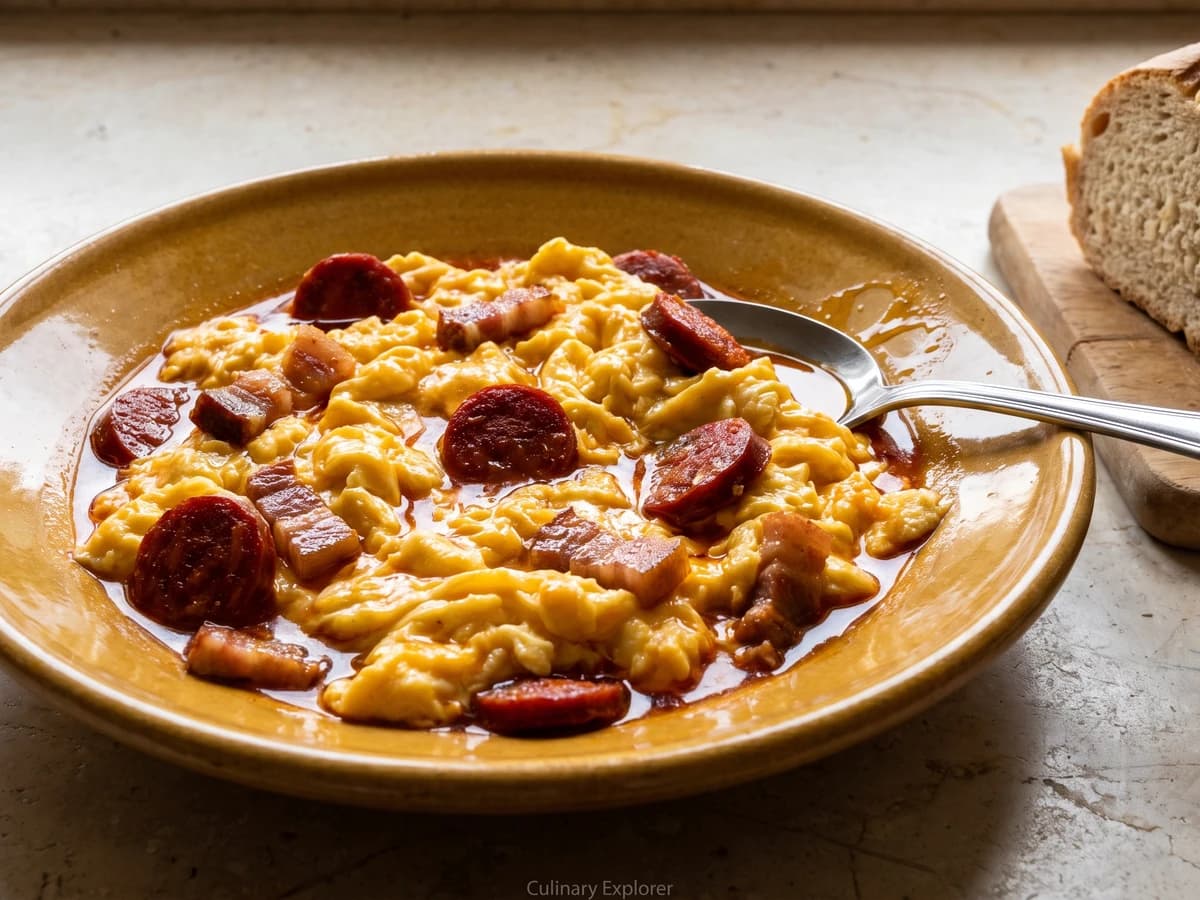
Duelos y quebrantos is Castilla-La Mancha in one pan: chorizo and bacon rendered slowly, then eggs folded through until soft, the plain Saturday meal Cervantes set on Don Quixote's table.
A cooking platform built around craft, culture, and the stories behind what we eat.
Created by
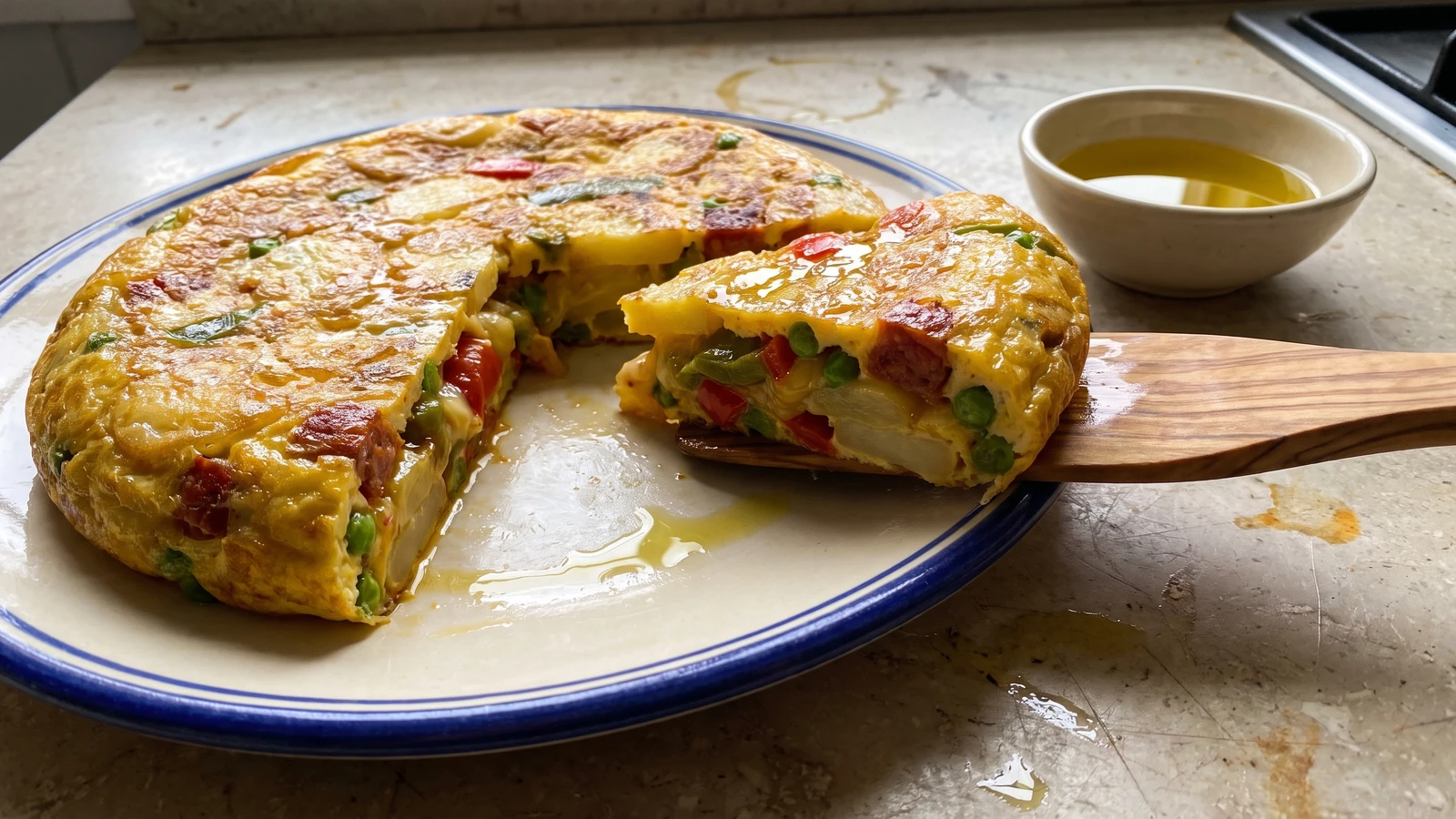
Castile's tortilla paisana folds tender potatoes, peppers, peas, and chorizo into eggs. Cook and drain every filling first, and the omelette turns neatly with a moist, generous centre.
Tortilla paisana belongs to the country kitchens of Castile, though households across inland Spain have long made their own. It is the generous cousin of tortilla de patatas: potato, onion, peppers, peas, and a little chorizo held in egg. Those vegetables and the cured pork make it paisana, country-style, rather than a plain potato tortilla.
The method that decides it is simple: every filling must be fully tender and well drained before it meets the egg. Raw pepper releases water as the tortilla sets, and crisp potato fights the egg instead of becoming part of it. I cook the potato and onion gently, soften the peppers until sweet, and let the peas lose their last bit of moisture. Then the egg has something tender to bind.
Use a 24cm pan and a plate wider than its rim. Set the first side slowly, flip it in one committed movement, and finish the second side just until the centre is moist but no longer liquid. Pésalo, no lo adivines, weigh it, don't guess. Siempre sale, si lo sigues.
If chorizo de cocinar, semi-cured cooking chorizo, is difficult to find, use jamón serrano and fold it in without frying. You lose the red pimentón-stained fat and gain a cleaner, saltier filling, so add another teaspoon of olive oil to the pan. No hace falta haber pisado España. The note in my Margin is shorter still: cook the filling before you ask the egg to hold it.
Tortilla paisana is tied to the inland country larder, especially Castilian household cooking, rather than to one named town. The word paisana marks it as country-style: the potato-and-egg base accepted garden vegetables and a little jamón or chorizo from the matanza, the household pig slaughter that stocked the cured larder. Because the filling followed what each house had, no single formula displaced the others; peppers and peas became the familiar thread, while the cured pork still changes from kitchen to kitchen.
Quantity
450g
peeled and cut into 1cm pieces
Quantity
120g
thinly sliced
Quantity
120g
seeded and cut into 1cm pieces
Quantity
100g
seeded and cut into 1cm pieces
Quantity
100g
thawed and dried if frozen
Quantity
90g
casing removed and finely diced
Quantity
80g
finely diced, as an alternative to chorizo
Quantity
8 (about 400g without shells)
Quantity
350ml
divided
Quantity
7g
divided
| Ingredient | Quantity |
|---|---|
| waxy potatoespeeled and cut into 1cm pieces | 450g |
| onionthinly sliced | 120g |
| red pepperseeded and cut into 1cm pieces | 120g |
| green pepperseeded and cut into 1cm pieces | 100g |
| shelled peasthawed and dried if frozen | 100g |
| semi-cured cooking chorizocasing removed and finely diced | 90g |
| jamón serrano (optional)finely diced, as an alternative to chorizo | 80g |
| large eggs | 8 (about 400g without shells) |
| olive oildivided | 350ml |
| fine sea saltdivided | 7g |
Heat 300ml of the olive oil in a 24cm frying pan over medium-low heat. Add the potato and onion; the oil should bubble softly around them without browning. Cook for 16 to 20 minutes, turning gently every few minutes, until the potato yields completely when pressed with a spoon and the onion is soft and sweet.
Lift the potato and onion into a sieve set over a bowl. Pour the pan oil into a heatproof jug, leaving about 30ml behind. Add both peppers and cook over medium-low heat for 10 to 12 minutes, stirring occasionally, until fully tender and sweet. Add the peas and cook for another 3 minutes, until their surface moisture has disappeared. Drain the vegetables with the potato mixture.
Wipe out the pan and cook the diced chorizo over medium heat for 2 to 3 minutes, just until its fat turns glossy and red. Lift it out with a slotted spoon and drain it. If using jamón serrano, don't fry it; heat makes good jamón leathery, so add it directly to the egg later.
Spread the drained filling on a tray or wide plate for 5 minutes so it is warm rather than scorching. Season it with 3g of the salt. Beat the eggs in a large bowl with the remaining 4g salt until no separate streaks of white remain. Fold in the potato, onion, peppers, peas, and chorizo or jamón. Rest the mixture for 5 minutes so the potato takes in a little egg.
Return the pan to medium heat with 15ml of the reserved oil. When the oil moves freely across the surface, pour in the mixture and spread the filling evenly. Lower the heat to medium-low. Run a spatula around the edge and tuck it inward as it sets. Cook for 6 to 8 minutes, until the underside is golden, the sides are firm, and only the centre still trembles.
Loosen the tortilla all around. Cover the pan with a flat plate wider than its rim, hold both firmly with a dry cloth, and invert them in one committed movement. Add another 10ml reserved oil to the pan, then slide the tortilla back in. Tuck the edge underneath and cook for 3 to 5 minutes. The centre should be moist and set, not liquid. Slide it onto a plate and rest for 10 minutes before cutting.
1 serving (about 320g)
Culinary guides, cultural storytelling, and the editorial depth that makes cooking meaningful.
Discover Culinary ExplorerChef Isabel
Duelos y quebrantos is Castilla-La Mancha in one pan: chorizo and bacon rendered slowly, then eggs folded through until soft, the plain Saturday meal Cervantes set on Don Quixote's table.
Chef Isabel
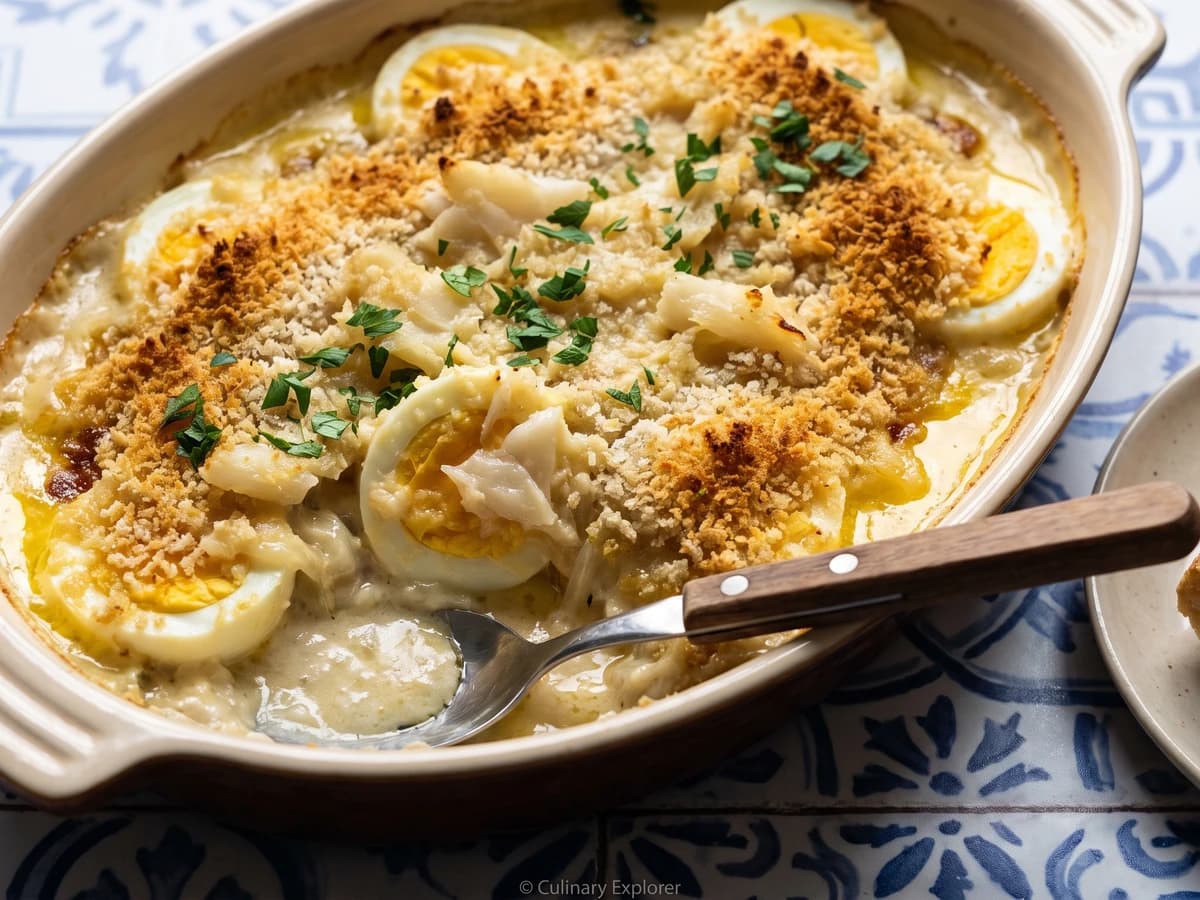
Donostia's baked eggs sit beneath a slow, sweet onion and bacalao sauce, with a fine breadcrumb crust browned under the grill. Desalt the cod properly and the rest is straightforward.
Chef Isabel
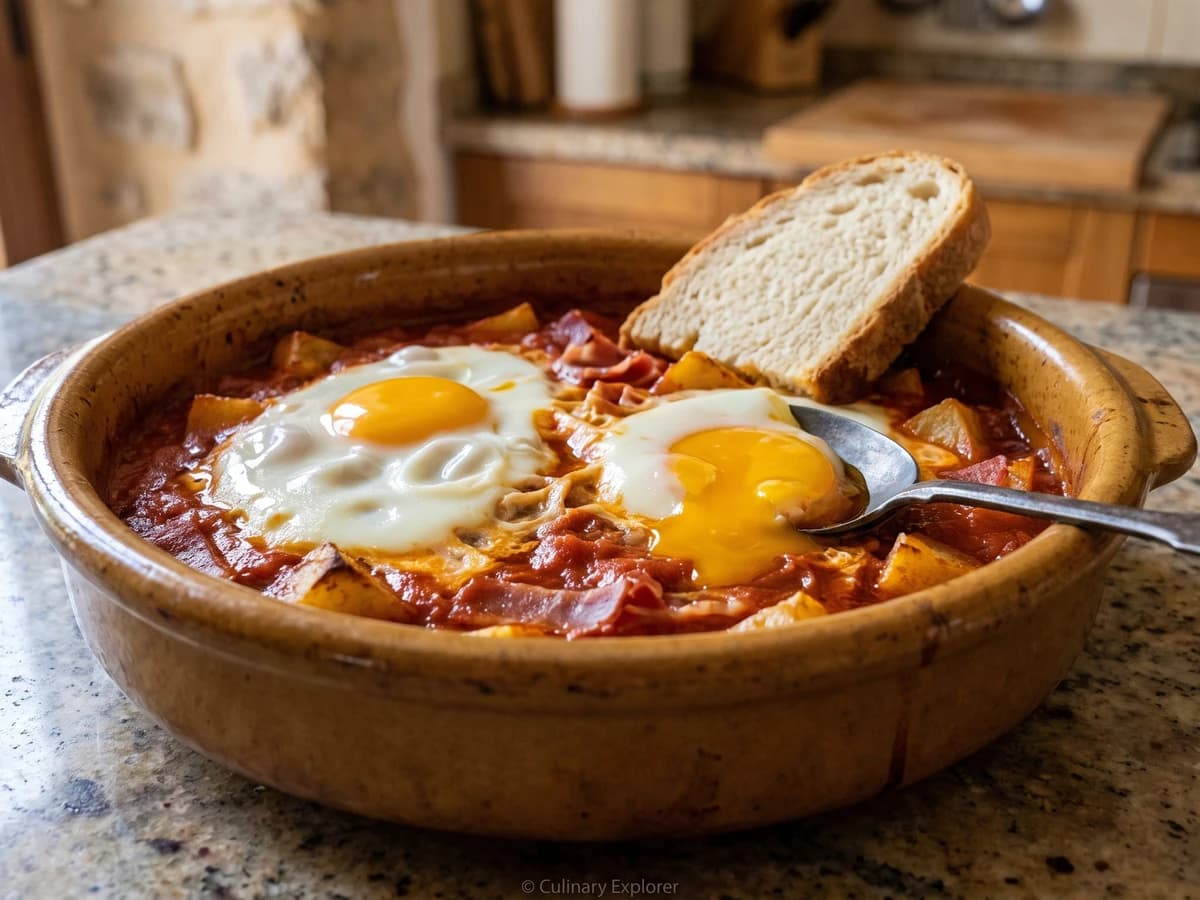
Extremadura sets eggs into a thick bed of fried potato, tomato sofrito, jamón, and its own smoky pimentón, then bakes them just until the whites hold and the yolks stay soft.
Chef Isabel
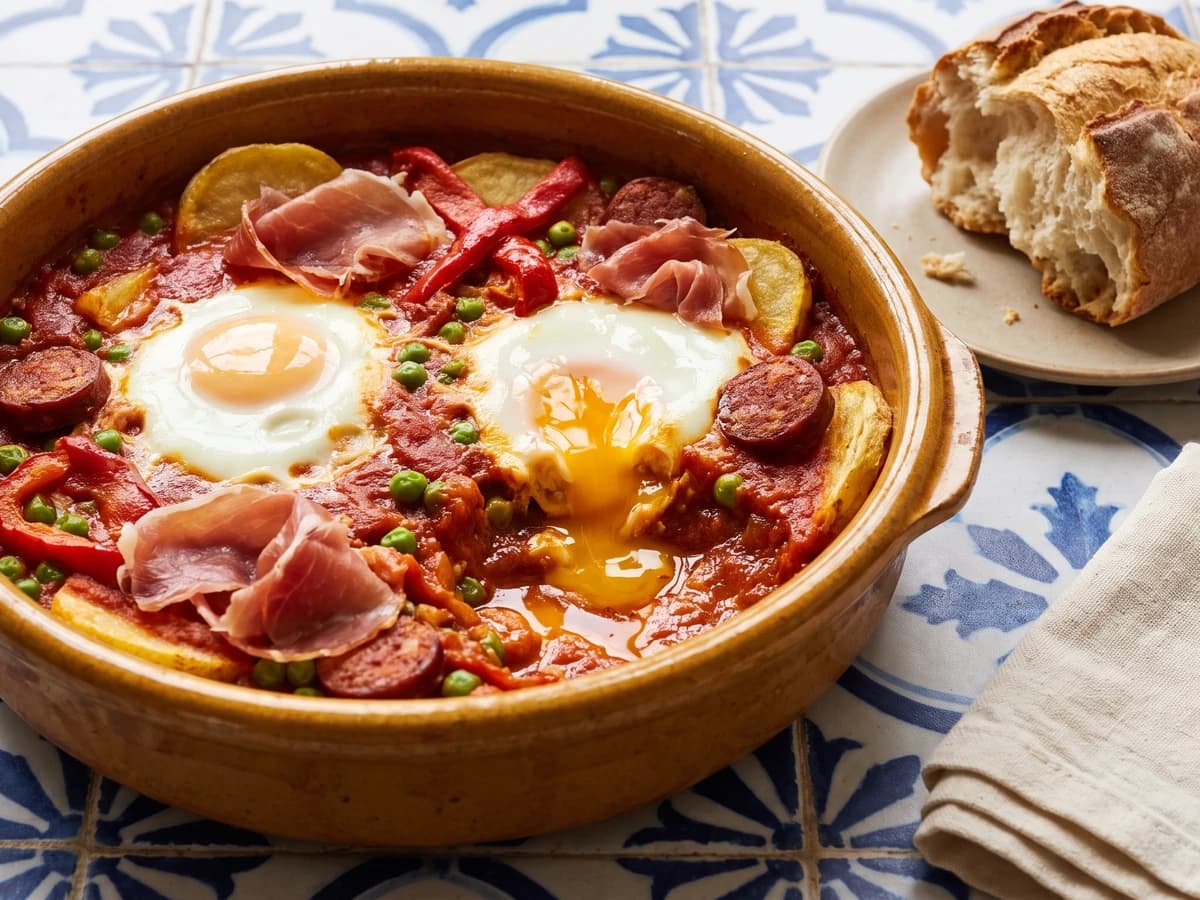
Huevos a la flamenca are Seville in a cazuela: eggs baked over a dark, sweet tomato sofrito with potatoes, peas, peppers, jamón and chorizo, pulled while the whites set and the yolks still run.