
Chef Lupita
Acambaritas de Acámbaro
Guanajuato's daily bread from Acámbaro, a small glazed roll built on pata, enriched with manteca de cerdo, and baked until the top shines lightly for merienda.
A cooking platform built around craft, culture, and the stories behind what we eat.
Created by
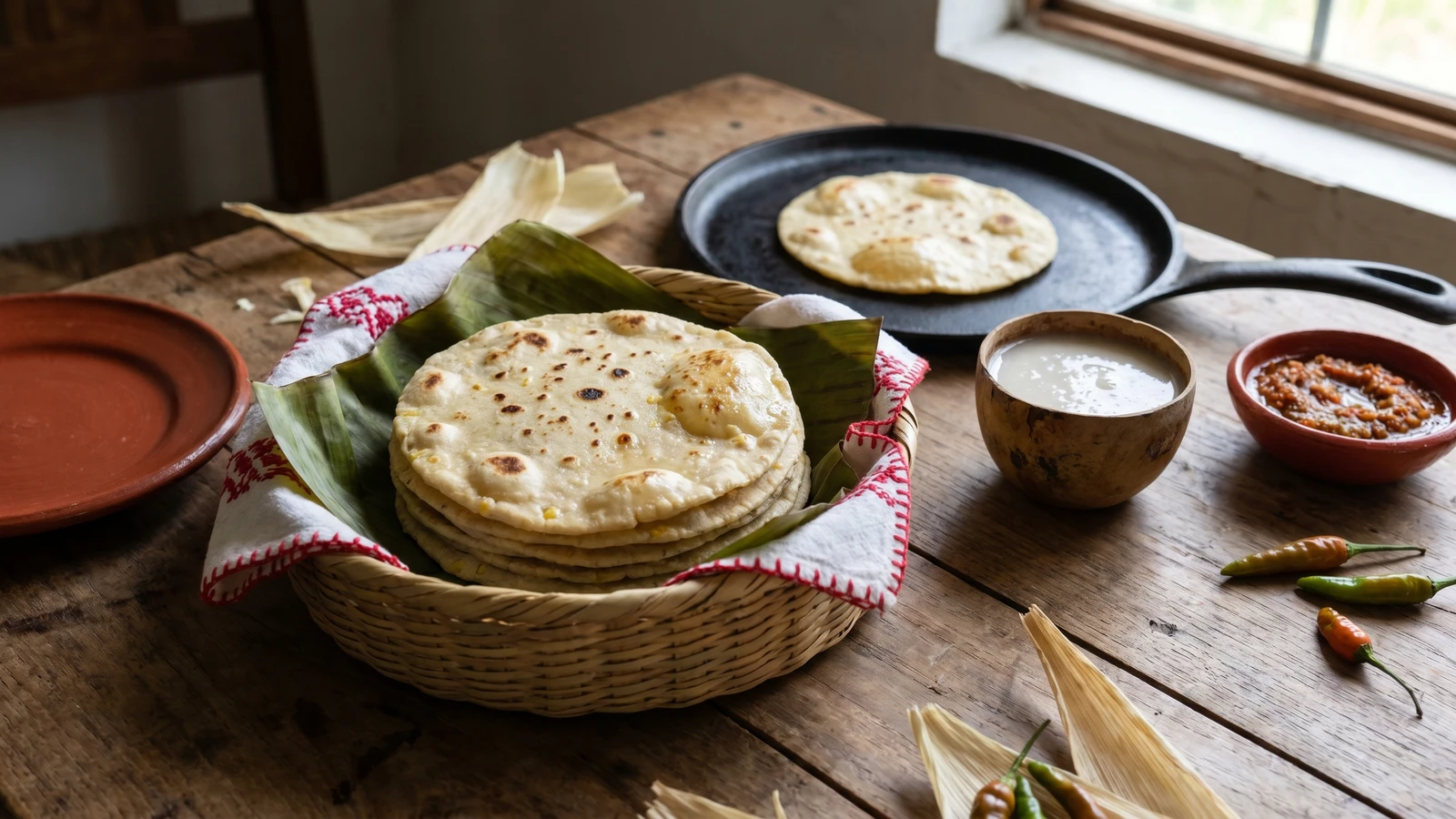
Tabasco's Chontalpa harvest tortilla, made when maíz nuevo is tender enough to grind fresh, pressed thick by hand and cooked on a dry comal until the sweet kernels show.
Tabasco, the Chontalpa and the Grijalva lowlands, is where this tortilla belongs. In Nacajuca, Jalpa de Méndez, Cunduacán, and the Villahermosa markets, maíz nuevo means corn still tender from the milpa, kernels full of milk, not the dry corn you nixtamalize for daily tortillas. This is harvest food. If the corn is old, don't force it. Make regular tortillas and wait for the season.
The tortilla is thicker than a city tortilla, soft and a little sweet, with flecks of fresh kernel in the crumb. A Tabasco cook will stack it in a woven palm tortillera lined with hoja de plátano and put it beside frijol negro de olla, queso de poro from Balancán, or a salsa of chile amashito if lunch needs bite. The tortilla itself is not a chile delivery system. Not all Mexican food is built around heat. This is a 32-state cuisine.
My mother did not make these in Colonia Roma. She was from Jalisco. I learned this in Tabasco from a señora near the Pino Suárez market who stopped me when I tried to press the dough too thin. Fresh corn needs body, she told me, and she was right. The nixtamal gives structure. The maíz nuevo gives sweetness. Press them thick, cook them patiently, and keep them wrapped. Así se hace y punto.
The Spanish word tortilla came after conquest, but Mayan languages of the Gulf lowlands preserve older words such as waaj or waj for corn bread, evidence that this food predates the colonial name by many centuries. Tabasco's Yokot'an Maya communities have long used both nixtamalized corn and tender harvest corn in daily preparations including tortilla, totoposte, pozol, and chorote. Maíz nuevo tortillas belong to the milpa calendar: they appear when the first ears are tender, before the corn hardens enough for storage and daily nixtamal.
Quantity
4 large ears
husked, kernels cut from the cob, cobs scraped for their milk
Quantity
1 1/2 cups
white or yellow
Quantity
3/4 teaspoon
Quantity
2 to 4 tablespoons
only if the dough is too wet
Quantity
1 to 3 tablespoons
only if the dough is too dry
Quantity
1 large leaf
passed over a flame or hot comal until flexible, for lining the tortillera
Quantity
for serving
Quantity
for serving
Quantity
for serving
| Ingredient | Quantity |
|---|---|
| very fresh maíz nuevo or tender field cornhusked, kernels cut from the cob, cobs scraped for their milk | 4 large ears |
| fresh masa de nixtamal from a tortilleríawhite or yellow | 1 1/2 cups |
| fine sea salt | 3/4 teaspoon |
| masa harina (optional)only if the dough is too wet | 2 to 4 tablespoons |
| warm water (optional)only if the dough is too dry | 1 to 3 tablespoons |
| hoja de plátanopassed over a flame or hot comal until flexible, for lining the tortillera | 1 large leaf |
| queso de poro de Balancán (optional) | for serving |
| frijoles negros de olla (optional) | for serving |
| salsa de chile amashito (optional) | for serving |
Use maíz nuevo only when the market has it. Press a kernel with your thumbnail. It should release milky juice and smell sweet, green, and alive. If the kernels are dry and dented, that corn is for nixtamal, not for this tortilla. If the corn is not good today, make regular tortillas and wait. The season decides.
Rinse the hoja de plátano and wipe it dry. Pass it quickly over a gas flame or hot comal until it turns glossy and flexible. Cut it to fit inside your tortillera. In Tabasco, banana leaf is not decoration. It keeps the tortillas soft and gives them the smell of the lowland kitchen.
Cut the kernels from the cobs, then scrape the cobs with the back of the knife to collect the corn milk. Grind the kernels and their milk in a molino, or pulse them in a food processor, until you have a thick, coarse paste with small bits of corn skin still visible. Do not add water unless the machine refuses to move, and then add it by the teaspoon. You are making masa, not a drink.
Put the fresh corn paste in a bowl with the masa de nixtamal and salt. Knead with your hand for three to four minutes, squeezing the fresh corn into the nixtamal masa until the dough holds together. It should be softer than regular tortilla masa but still able to form a ball without running through your fingers. If it is sticky and loose, add masa harina one tablespoon at a time. If it cracks, add warm water one teaspoon at a time.
Cover the bowl with a damp servilleta and let the dough rest for 20 minutes. This matters. The nixtamal masa takes in the moisture from the fresh corn, and the dough becomes easier to press. A cook who understands masa does not rush this part.
Heat a dry comal over medium heat. No oil. No manteca here. Save the lard for tamales and beans. This tortilla cooks on dry heat so the corn sugars brown in spots while the inside stays tender. The comal is ready when a pinch of masa sets on contact and browns slowly, not immediately.
Divide the dough into 12 balls, about the size of a small lime. Press each ball between plastic sheets or softened banana leaf to a 5-inch round, about 1/4 inch thick. Do not press these paper-thin like a Mexico City taco tortilla. Maíz nuevo needs thickness so the fresh corn can stay tender inside.
Lay one tortilla on the hot comal. Cook for about 60 seconds, until the top looks matte and the edges lift. Flip and cook for 90 seconds, until brown freckles appear. Flip once more and press gently with a folded cloth or spatula. It should puff in soft pockets, not always into a full balloon. Fresh corn behaves differently from plain nixtamal masa. Watch the tortilla, not the clock.
Stack the tortillas in the banana-leaf-lined tortillera and wrap them with a clean servilleta. Let them sit for 10 minutes before serving so the crumb settles and the edges soften. Serve with frijoles negros de olla, queso de poro de Balancán, or salsa de chile amashito if you want bite at the table. The tortilla itself is sweet with corn, not hot with chile. Cada estado, su propia cocina.
1 serving (about 60g)
Culinary guides, cultural storytelling, and the editorial depth that makes cooking meaningful.
Discover Culinary ExplorerChef Lupita
Guanajuato's daily bread from Acámbaro, a small glazed roll built on pata, enriched with manteca de cerdo, and baked until the top shines lightly for merienda.

Chef Lupita
Michoacan's Tinguindin aguacatas are flat, leaf-scored sweet breads made with harina de trigo, piloncillo, anise, and manteca de cerdo, shaped by hand for the wood oven.

Chef Lupita
From Ajijic on Lake Chapala, Pan Tachihual is a lightly sweet wedding loaf built with harina de trigo, harina de maiz, piloncillo, manteca, anise, and the old Guadalajara pata.

Chef Lupita
Comitán's pan de yema shaped into little pigs, birds, and rabbits, a Chiapas bakery bread rich with egg yolks, manteca de cerdo, and anís, baked golden on hoja de plátano.