
Chef Juliana
Angu de Fuba a Mineira
You think cornmeal will turn into lumps and shame. It won't. Cold water first, patient stirring, and a real garlic base give you angu that solves dinner.
A cooking platform built around craft, culture, and the stories behind what we eat.
Created by
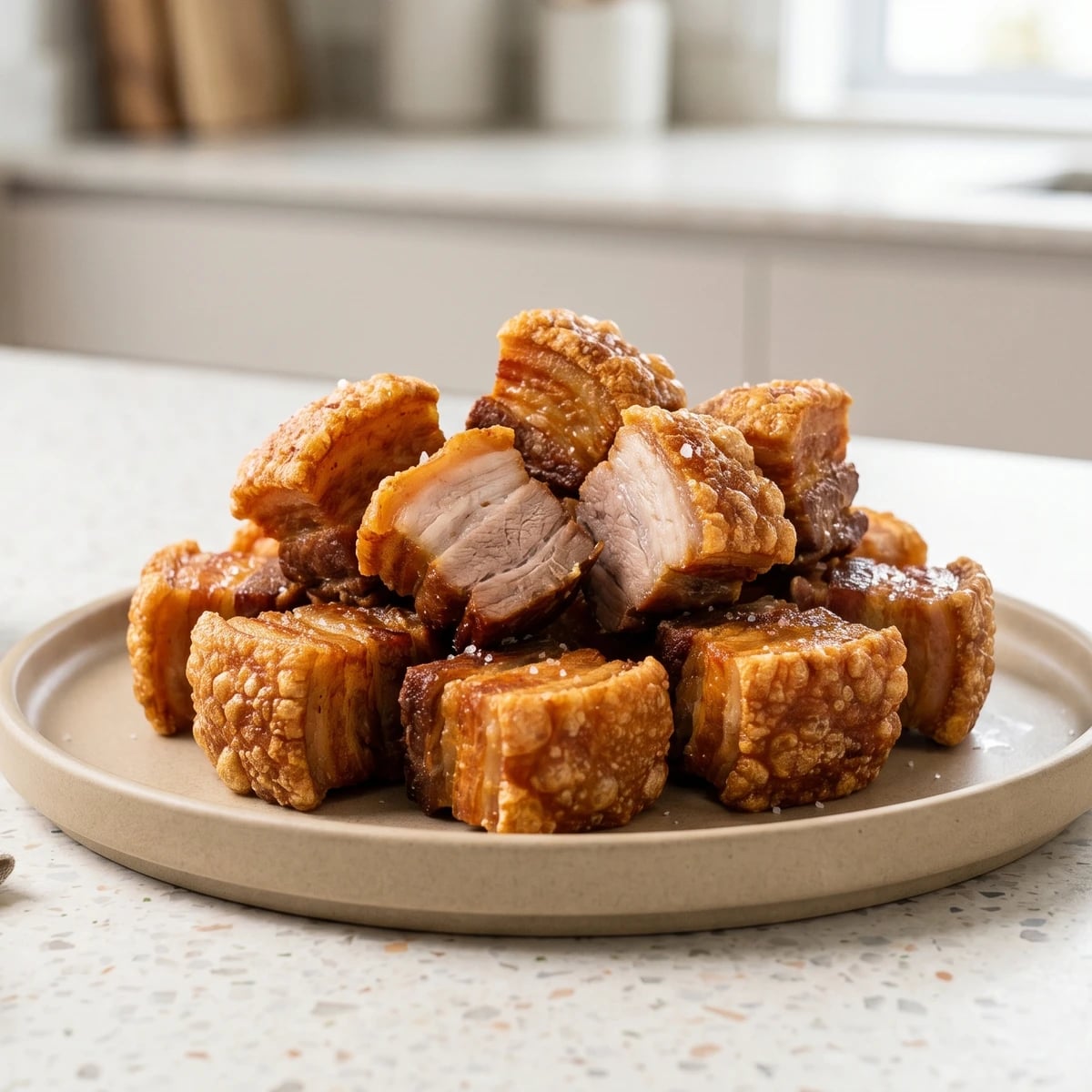
You don't need courage, you need a heavy pot, dry pork belly, and patience. Low fire melts the fat, high fire crisps the edges, and your pê-efe suddenly sounds like Minas.
You're looking at a pot of hot fat and thinking, quietly, isso não é pra mim. I know. Pork belly pops, the stove feels bossy, and someone in the family always says only a born cook knows when torresmo is done. Nonsense. Cozinhar não é dom, é um aprendizado. Anota aí: low fire first, high fire later, salt at the end.
I learned these things as a grown woman, with a cheap notebook open on the counter and a good deal of embarrassment. The first time I tried to rush pork fat, I got chewy little cubes and a kitchen that smelled like regret. So we won't rush. Receitas que funcionam are not magic, they're clear steps that tell you what to watch for.
On a Brazilian table, torresmo isn't a pile of fried meat doing theater. It's the crisp little side that wakes up the pê-efe: arroz soltinho, feijão creamy from a real refogado, couve murcha in garlic, maybe farofa if the day is asking nicely. That plate, rice and beans and meat and something green, is how a country quietly keeps being itself.
The method is simple because the pork does most of the work. Low heat melts the fat and cooks the cubes through before the outside hardens. A rest dries the surface so the second fry can crisp instead of sulk. Salt goes on at the very end, while the torresmo is hot, because salt too early pulls moisture and softens the crust. You are not guessing. You're listening, watching, and learning the ponto.
Torresmo belongs to the pork-heavy cooking of Minas Gerais, a state where colonial mining settlements and rural farms leaned on pigs because they could be raised close to the house and every bit gave food or fat. By the eighteenth and nineteenth centuries, lard, cracklings, beans, corn, and greens were everyday food for households, workers, and tropeiros moving goods through the interior. The Mineira style is usually thicker and meatier than a bar snack, rendered first and crisped again so the piece keeps a soft bite under the crackling skin.
Quantity
2 1/4 pounds (1 kg)
cut into 1 1/4-inch (3 cm) cubes
Quantity
1/2 cup
Quantity
1/2 to 1 cup, only if needed
Quantity
1 1/2 teaspoons
to finish
Quantity
1
cut into wedges
| Ingredient | Quantity |
|---|---|
| skin-on pork bellycut into 1 1/4-inch (3 cm) cubes | 2 1/4 pounds (1 kg) |
| water | 1/2 cup |
| lard or neutral oil (optional) | 1/2 to 1 cup, only if needed |
| fine saltto finish | 1 1/2 teaspoons |
| lime (optional)cut into wedges | 1 |
Pat the pork belly very dry, especially the skin, then cut it into even cubes about 3 cm wide. Don't season yet. Dry pork pops less in the pot, and even pieces cook at the same pace instead of giving you one burnt cube, one rubbery cube, and a lesson you didn't ask for.
Put the pork belly and water in a high-sided heavy pot over medium-low heat. Stir now and then as the water bubbles, the pork turns pale, and the first glossy fat appears in the bottom. The water buys time so the meat doesn't stick or scorch before its own fat begins to render.
Once the water is gone, lower the heat if the pot is too fierce and let the pork cook slowly in its own fat, stirring every few minutes, until the pieces shrink, firm up, and turn pale gold, about 35 to 40 minutes. They should look cooked and a little wrinkled, not deeply crisp yet. This first cooking melts the fat and tenderizes the meat; high heat now would brown the outside before the inside is ready.
Lift the pork pieces onto a rack or paper towels with a slotted spoon and let them rest for 20 minutes. Strain the rendered fat if there are dark bits, then return enough fat to the pot to make about 1 inch. Resting lets surface moisture leave the pork, so the second fry crisps the outside instead of fighting damp skin.
Heat the fat to 180°C to 190°C (355°F to 375°F), or until one piece dropped in bubbles hard right away. Fry the pork in 2 or 3 batches, never crowding the pot, until the cubes are deep golden, blistered, and the bubbling sound turns sharper, about 3 to 5 minutes per batch. Crowd the pan and the temperature drops; the pork steams, goes chewy, and refuses to dourar properly.
Move the torresmo to a rack or paper towels and salt it immediately while it's hot. Toss, taste, and add a little more salt if it asks for it. Salt now sticks to the fresh crust without pulling water out before the crust forms. Serve with lime if you like, beside rice, beans, couve, and farofa. Eat one standing at the stove. That's the cook's tax.
1 serving (about 95g)
Culinary guides, cultural storytelling, and the editorial depth that makes cooking meaningful.
Discover Culinary Explorer
Chef Juliana
You think cornmeal will turn into lumps and shame. It won't. Cold water first, patient stirring, and a real garlic base give you angu that solves dinner.

Chef Juliana
You don't need a secret hand for this pot. Brown the ribs, soften the corn, build the refogado, and let the caldo thicken itself like comida de verdade does.

Chef Juliana
You brown the ribs until the pot gives you flavor, then you let time do the softening. Angu waits beside it, simple and creamy, ready to catch the molho.

Chef Juliana
The person who says isso não é pra mim needs a hot pan, a tight roll of leaves, and two minutes. Bright couve is the something green that makes the pê-efe complete.