
Chef Juliana
Angu de Fuba a Mineira
You think cornmeal will turn into lumps and shame. It won't. Cold water first, patient stirring, and a real garlic base give you angu that solves dinner.
A cooking platform built around craft, culture, and the stories behind what we eat.
Created by
You don't need a secret hand for this pot. Brown the ribs, soften the corn, build the refogado, and let the caldo thicken itself like comida de verdade does.
You look at a pot like this and think, quietly, isso não é pra mim. Too long, too Brazilian, too much like something somebody's grandmother just knows. Good. That's the exact nonsense a gente is going to take apart today.
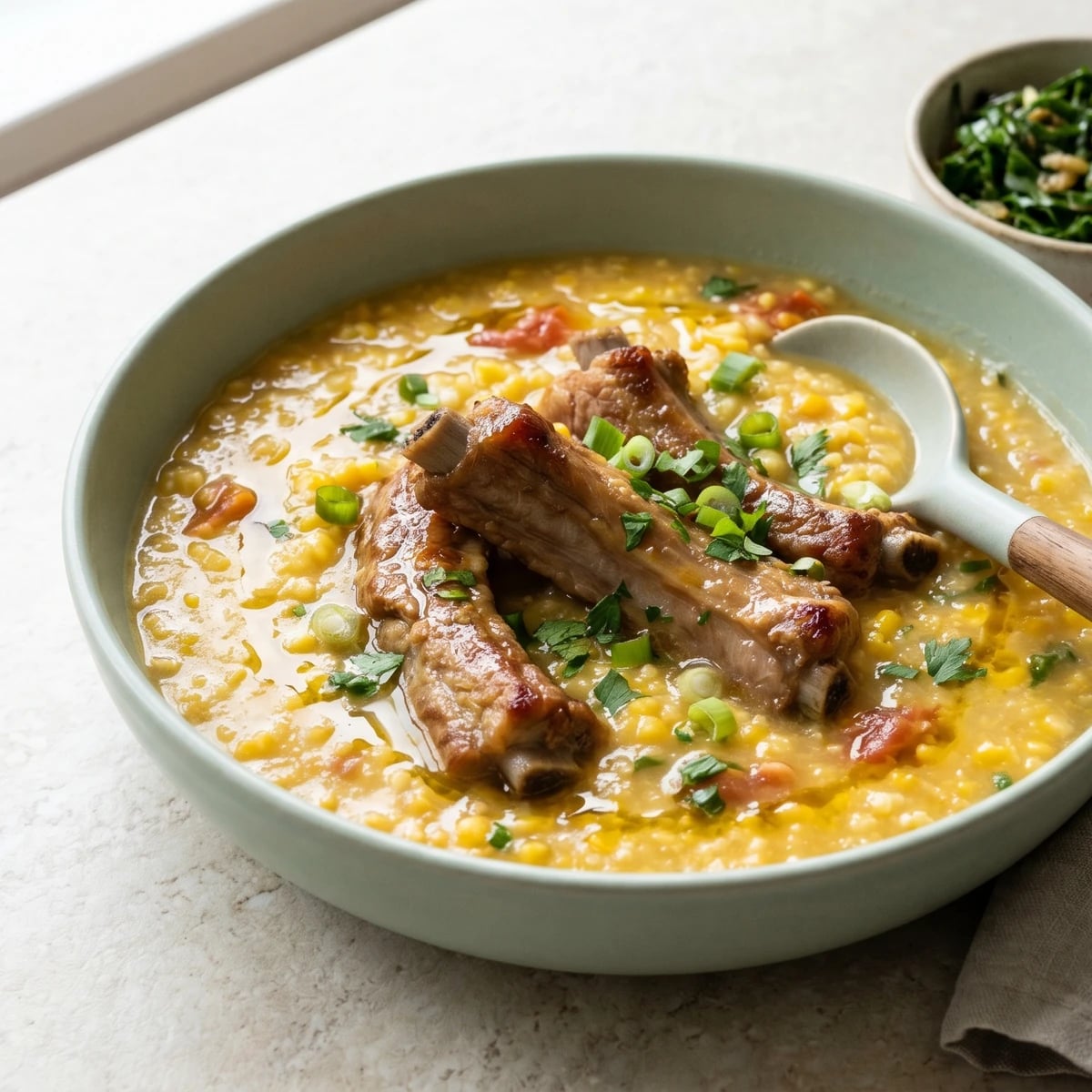
Canjiquinha com costelinha is not fancy. It's cracked corn, pork ribs, onion, garlic, and patience. The kind of pot that sits between soup and stew, thick enough to feed people properly, simple enough to teach. Put it next to arroz soltinho, feijão from scratch, and couve refogada, and there it is: the pê-efe spirit in a bowl. The food that keeps a country itself without making a speech about it.
The method matters. You soak the canjiquinha so the little broken grains hydrate evenly and don't grab the bottom of the pot like glue. You brown the ribs hard because pale meat gives pale flavor. You build an honest refogado, onion and garlic in good fat, because no packet is going to do the work of real food. Then the corn cooks until it releases its own starch and thickens the caldo. No flour. No cornstarch. No powdered lie in a shiny packet.
By the end, you'll have a pot that smells like Sunday and behaves like a recipe that works. Cooking isn't a gift, it's something you learn. Anota aí.
Canjiquinha, also called quirera de milho in parts of Brazil, is cracked dried corn cooked into a thick savory stew, especially common in Minas Gerais and other inland kitchens where corn, pork, and greens shaped everyday food. The dish sits close to the logic of old rural cooking: stretch a flavorful cut of pork through a pot of grain, then serve it with rice, beans, and couve for a full table. Regional versions argue over thickness, cuts of pork, and whether the pot should finish loose like soup or thick enough to stand a spoon, which is a very Brazilian kind of useful argument.
Quantity
2 cups
rinsed until the water runs mostly clear, then soaked for 30 minutes
Quantity
2 pounds
cut into individual ribs
Quantity
2 tablespoons
Quantity
2 teaspoons, divided, plus more to taste
Quantity
1/2 teaspoon
Quantity
3 tablespoons
Quantity
1 large
finely chopped
Quantity
5 cloves
minced
Quantity
1 medium
chopped
Quantity
1
Quantity
8 cups, plus more as needed
Quantity
1 cup
chopped
Quantity
2 cups
finely sliced, for serving
Quantity
as needed
Quantity
as needed
| Ingredient | Quantity |
|---|---|
| canjiquinha (cracked dried corn)rinsed until the water runs mostly clear, then soaked for 30 minutes | 2 cups |
| pork ribscut into individual ribs | 2 pounds |
| lime juice or vinegar | 2 tablespoons |
| salt | 2 teaspoons, divided, plus more to taste |
| black pepper | 1/2 teaspoon |
| oil or lard | 3 tablespoons |
| onionfinely chopped | 1 large |
| garlicminced | 5 cloves |
| tomatochopped | 1 medium |
| bay leaf | 1 |
| hot water or unsalted homemade stock | 8 cups, plus more as needed |
| scallions or parsleychopped | 1 cup |
| couvefinely sliced, for serving | 2 cups |
| cooked white rice (optional) | as needed |
| cooked beans (optional) | as needed |
Put the canjiquinha in a bowl, rinse it under running water, then cover with plenty of water and soak for 30 minutes. The grains should swell a little and feel less gritty between your fingers. This helps them cook evenly and keeps the bottom of the pot from turning into cement, which is not dinner.
Pat the ribs dry and season them with the lime juice or vinegar, 1 teaspoon of the salt, and the black pepper. Let them sit while the corn soaks. Dry meat browns; wet meat spits, steams, and sulks in the pot.
Heat the oil or lard in a heavy 5-liter pot over medium-high heat. Brown the ribs in batches until they have deep color on several sides, about 8 to 10 minutes per batch. Don't crowd the pan. If the ribs sit piled on top of each other, they release water, the heat drops, and you get grey boiled meat instead of the brown bits that make the caldo taste like something.
Lower the heat to medium. Add the onion to the same pot and cook, scraping the browned bits from the bottom, until it goes soft and see-through, about 5 minutes. Add the garlic and cook for one minute, just until you smell it. Then add the tomato and cook until it collapses into the onion. This is the refogado, the foundation, not decoration. Burnt garlic is bitter, and raw tomato leaves the stew sharp.
Return all the ribs to the pot with the bay leaf and 6 cups of the hot water or stock. Bring to a boil, then lower to a steady simmer, lid slightly open, until the ribs are beginning to soften, about 45 minutes. They don't need to fall off the bone yet. They need a head start because pork takes longer than cracked corn.
Drain the soaked canjiquinha and stir it into the pot. Add the remaining 2 cups hot water and the remaining 1 teaspoon salt. Stir well, scraping the bottom, then simmer gently for 35 to 45 minutes, stirring every 5 to 10 minutes. The grains should turn tender and the caldo should thicken from the corn itself. If it gets too thick before the corn is soft, add hot water, 1/2 cup at a time. Cold water shocks the simmer and slows the whole pot down.
Taste a spoonful. The corn should be tender with a little body, not hard in the center, and the ribs should pull easily when pressed with a spoon. The stew should be creamy and loose enough to ladle. If it stands like polenta, thin it with hot water. Canjiquinha thickens as it sits, because corn keeps drinking even after the heat is off.
Turn off the heat, remove the bay leaf, and stir in most of the scallions or parsley. Rest the pot for 10 minutes, then taste for salt. Serve with the remaining herbs on top, couve refogada on the side, and rice and beans if you're making the full pê-efe. The rest is just people getting quiet because dinner worked.
1 serving (about 610g)
Culinary guides, cultural storytelling, and the editorial depth that makes cooking meaningful.
Discover Culinary Explorer
Chef Juliana
You think cornmeal will turn into lumps and shame. It won't. Cold water first, patient stirring, and a real garlic base give you angu that solves dinner.

Chef Juliana
You brown the ribs until the pot gives you flavor, then you let time do the softening. Angu waits beside it, simple and creamy, ready to catch the molho.

Chef Juliana
The person who says isso não é pra mim needs a hot pan, a tight roll of leaves, and two minutes. Bright couve is the something green that makes the pê-efe complete.

Chef Juliana
You think this is a dish for someone else's kitchen. Wrong. Cook the beans right, brown the linguiça properly, fold in the farofa, and dinner starts behaving.