
Chef Lupita
Aporreadillo Michoacano con Huevo
Michoacán's Tierra Caliente almuerzo, where salted beef is softened, pounded, fried in lard, folded with egg and chile perón salsa, then served beside morisqueta like a proper working table.
A cooking platform built around craft, culture, and the stories behind what we eat.
Created by
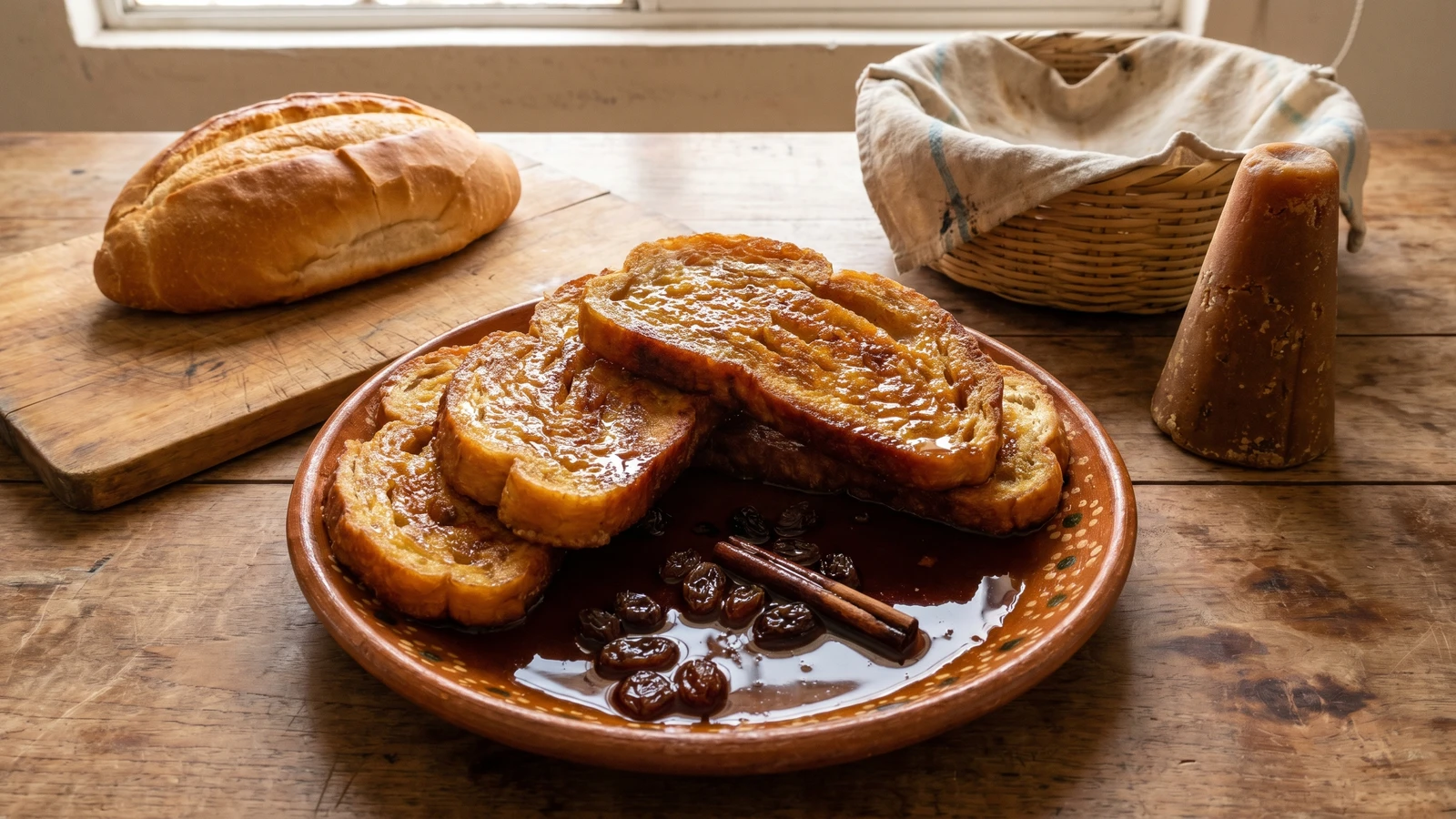
Guadalajara's Semana Santa torrejas are thick slices of birote salado, milk-soaked, egg-battered, fried, and finished in piloncillo syrup until the bread drinks the canela.
Jalisco puts these torrejas on the table during Cuaresma and Semana Santa, especially in Guadalajara, where birote salado is not just bread. It is a city signature. The crust is sturdy, the crumb is tight, and that is why it survives the soaking, frying, and syrup without collapsing into sadness.
This is not capirotada. Do not confuse the two because both use bread and piloncillo. Torrejas are built one slice at a time: dipped in milk, covered in beaten egg, fried until the edges turn gold, then bathed in miel de piloncillo with canela. The technique belongs to home kitchens and market fondas, the kind of place where a señora can tell by touch whether the bread is stale enough.
My mother wrote torrejas in her notebook under 'Semana Santa, Guadalajara,' with one line in the margin: 'pan de ayer, nunca fresco.' Yesterday's bread, never fresh. She was right. Fresh birote falls apart. Day-old birote holds its spine and takes the syrup properly. Recetas probadas y garantizadas.
Torrejas came into Mexico through Spanish Lenten and convent cooking, where stale bread, eggs, milk, and sweet syrup turned household economy into a festival dish. In Jalisco, the Guadalajara version became tied to birote salado, a bread whose firm crust and dense crumb developed as a local specialty in the 19th and 20th centuries. During Semana Santa, torrejas share the table with capirotada, but the two are separate dishes: capirotada is assembled and baked, while torrejas are battered, fried, and finished in syrup.
Quantity
1 large
cut into 1-inch thick slices
Quantity
2
cut into 1-inch thick slices, only if birote is unavailable
Quantity
2 cups
Quantity
1 tablespoon
Quantity
1 teaspoon
Quantity
1/4 teaspoon
Quantity
4
separated
Quantity
1/2 cup
for dusting
Quantity
1 1/2 cups
for frying
Quantity
8 ounces
chopped
Quantity
2 cups
Quantity
1
Quantity
2
Quantity
1 strip
no white pith
Quantity
1 tablespoon
| Ingredient | Quantity |
|---|---|
| day-old birote saladocut into 1-inch thick slices | 1 large |
| day-old bolillos (optional)cut into 1-inch thick slices, only if birote is unavailable | 2 |
| whole milk | 2 cups |
| granulated sugar | 1 tablespoon |
| Mexican vanilla extract | 1 teaspoon |
| fine sea salt | 1/4 teaspoon |
| large eggsseparated | 4 |
| all-purpose flourfor dusting | 1/2 cup |
| neutral oil or lardfor frying | 1 1/2 cups |
| piloncillochopped | 8 ounces |
| water | 2 cups |
| Mexican cinnamon stick (canela) | 1 |
| whole cloves | 2 |
| orange peelno white pith | 1 strip |
| raisins (optional) | 1 tablespoon |
Lay the birote slices on a rack for 20 minutes if they are only slightly stale. You want firm bread that feels dry at the surface but not rock hard. Guadalajara birote salado can take the soaking because the crust has character. Fresh sandwich bread cannot. No me vengas con atajos.
Put the piloncillo, water, canela, cloves, orange peel, and raisins if using in a wide saucepan. Bring to a steady simmer and cook for 12 to 15 minutes, until the piloncillo dissolves and the syrup lightly coats a spoon. It should smell of dark sugar and canela, not candy. Keep it warm over low heat.
Whisk the milk with the sugar, vanilla, and salt in a shallow dish. Dip each bread slice quickly on both sides. Count two seconds per side for birote, less for bolillo. The center should soften, but the slice must still lift in one piece. If it breaks now, it will break worse in the pan.
Beat the egg whites in a clean bowl until they hold soft peaks. Beat the yolks in a separate bowl, then fold them into the whites with a firm hand and no drama. This foamy egg coat is what gives torrejas their tender outside. Do not stir it flat.
Spread the flour on a plate. Dust each soaked bread slice lightly on both sides, shaking off the excess, then pass it through the beaten egg so the whole slice is covered. The flour helps the egg cling. Too much flour makes a paste. A light hand, así se hace y punto.
Heat the oil or lard in a heavy skillet over medium until a small drop of egg sizzles immediately. Fry the battered slices in batches, 2 to 3 minutes per side, until golden with darker edges. Do not crowd the pan. Lift them out with a slotted spatula and drain briefly on a rack.
Slide the fried torrejas into the warm piloncillo syrup in a single layer, turning once. Simmer gently for 3 to 4 minutes, just long enough for the bread to drink the syrup without falling apart. Spoon syrup over the top. The surface should look glossy and amber, with canela staining the edges.
Serve the torrejas warm or at room temperature in shallow clay dishes with extra syrup spooned over them. They should be sweet, soft in the center, and still structured at the edge. This is a Jalisco Lenten breakfast or almuerzo dish, not dessert pretending to be breakfast.
1 serving (about 210g)
Culinary guides, cultural storytelling, and the editorial depth that makes cooking meaningful.
Discover Culinary ExplorerChef Lupita
Michoacán's Tierra Caliente almuerzo, where salted beef is softened, pounded, fried in lard, folded with egg and chile perón salsa, then served beside morisqueta like a proper working table.

Chef Lupita
Guerrero's Costa Grande aporreado is salted cecina pounded soft, scrambled with egg, and finished in a red guajillo and chile de árbol salsa loud with garlic and cilantro.

Chef Lupita
Los Altos de Chiapas turns two-night fermented white corn into a tart-sweet atole, cooked with canela and piloncillo, then poured hot into jícaras for desayuno.

Chef Lupita
Oaxaca's Mixteca region ferments nixtamalized masa for days until it turns tart and alive, then simmers it with piloncillo and canela into a thick, warm atole served at first light in clay.