
Chef Lupita
Aporreadillo Michoacano con Huevo
Michoacán's Tierra Caliente almuerzo, where salted beef is softened, pounded, fried in lard, folded with egg and chile perón salsa, then served beside morisqueta like a proper working table.
A cooking platform built around craft, culture, and the stories behind what we eat.
Created by
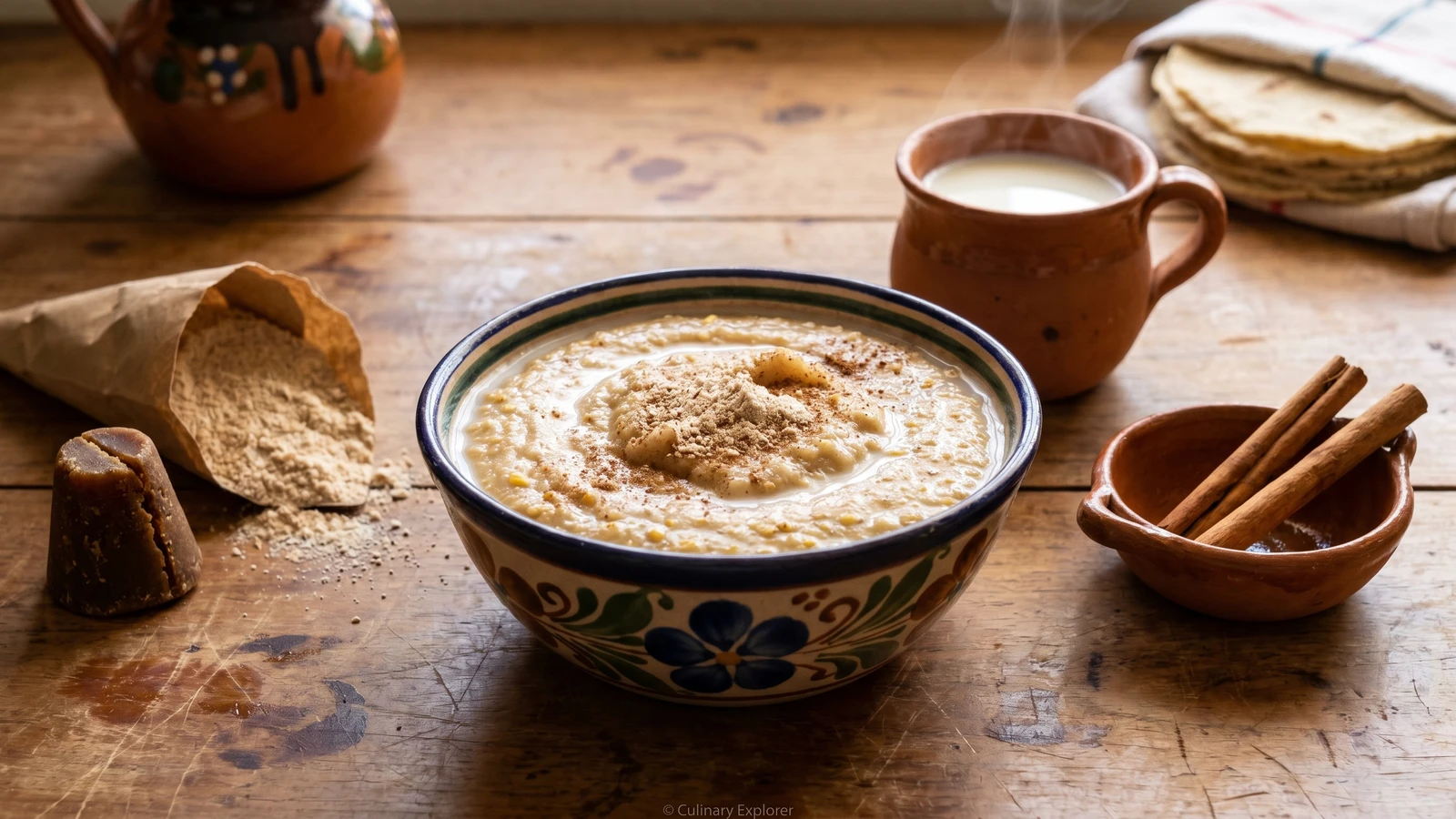
Jalisco's field breakfast, avena simmered with market pinole, piloncillo, and Mexican canela until thick enough to carry a worker through the morning without wasting a peso.
Jalisco, especially Los Altos and the ranch kitchens that feed Guadalajara before sunrise, is where this bowl belongs. Avena con pinole is desayuno, not dessert pretending to be breakfast. It is oats stretched with toasted ground corn, sweetened with piloncillo, scented with Mexican canela, and eaten before the day starts asking for your back.
The pinole is the authority. At the Mercado de Abastos in Guadalajara, the women who sell grains know which sacks smell fresh and which ones have been sitting too long. Pinole should smell like toasted maize and canela, not raw flour. The oats are the newcomer here. The pinole carries the older memory. You whisk it into a slurry because it thickens fast and clumps if you disrespect it. Masa harina is not pinole. Remember that.
My mother was from Jalisco, and in her notebook she wrote, "pinole al final, fuego bajo." Pinole at the end, low fire. She did not waste words. Low heat, a wooden spoon, a clay bowl, and enough salt to make the piloncillo taste like itself. This is food for economy and work. Saber cocinar es saber vivir.
The word pinole comes from the Nahuatl pinolli, a toasted ground maize preparation eaten across Mesoamerica before 1521, either dry, mixed with water, or cooked into atoles for portable energy. Oats arrived later through European grain agriculture and became common in Mexican home breakfasts in the late 19th and early 20th centuries, when inexpensive cereal grains entered both urban and rural pantries. In Jalisco and the rest of Occidente, stirring pinole into avena kept the older corn technique inside a newer breakfast bowl: roasted maize, piloncillo, and canela doing the real work.
Quantity
1 cup
Quantity
3 cups, plus more for loosening at the table
Quantity
1 1/2 cups
divided
Quantity
1
Quantity
2 ounces
chopped or grated
Quantity
1/4 teaspoon
Quantity
1/2 cup
market-ground with canela if available, sifted if clumpy
Quantity
1/2 teaspoon
Quantity
2 tablespoons
for finishing
Quantity
for finishing
| Ingredient | Quantity |
|---|---|
| old-fashioned rolled oats | 1 cup |
| whole milk | 3 cups, plus more for loosening at the table |
| waterdivided | 1 1/2 cups |
| Mexican canela stick | 1 |
| piloncillochopped or grated | 2 ounces |
| fine sea salt | 1/4 teaspoon |
| pinole de maíz tostadomarket-ground with canela if available, sifted if clumpy | 1/2 cup |
| Mexican vanilla extract (optional) | 1/2 teaspoon |
| pinole de maíz tostado (optional)for finishing | 2 tablespoons |
| ground Mexican canela (optional) | for finishing |
Set a 2-quart clay cazuela or heavy saucepan over medium heat. Add the oats dry and stir with a wooden spoon for 3 to 4 minutes, until they smell nutty and take on a faint golden edge. This wakes up the grain so the avena tastes toasted, not flat. If the oats darken before they smell good, lower the heat. Burned oats make a bitter breakfast.
Pour in the 3 cups of milk and 1 cup of the water. Add the canela stick, piloncillo, and salt. Stir slowly, scraping the bottom so the oats do not catch. Bring the pot to a gentle simmer, just enough movement at the edge of the milk to dissolve the piloncillo. A hard boil makes the milk climb the pot and turns breakfast into cleanup.
Reduce the heat to low and cook for 8 to 10 minutes, stirring often, until the oats swell and soften but the pot still looks a little loose. It should not be stiff yet. The pinole comes next, and pinole keeps drinking liquid after the fire is off. My mother used to say to leave room for the corn to speak. She was right.
In a small bowl, whisk the 1/2 cup pinole with the remaining 1/2 cup water until smooth, like a thin masa. Do this before it touches the hot milk. If you pour dry pinole straight into the pot, it grabs into little pellets and you will be chasing lumps with a spoon. No me vengas con atajos.
Pour the pinole slurry into the avena in a thin stream while stirring constantly. Cook 4 to 5 minutes more, until the porridge thickens, the toasted corn aroma rises from the pot, and the spoon leaves a slow trail across the bottom. Remove the canela stick. Stir in the vanilla if using. If the avena becomes too stiff, loosen it with a splash of milk. The texture should mound softly on the spoon, not run like cereal milk.
Turn off the heat and let the avena rest for 3 minutes. Ladle it into deep Tonalá barro bowls. Dust lightly with extra pinole and a pinch of ground Mexican canela. Put a little warm milk on the table for anyone who wants it looser. This is desayuno for work, economy, and sense. Así se hace y punto.
1 serving (about 300g)
Culinary guides, cultural storytelling, and the editorial depth that makes cooking meaningful.
Discover Culinary ExplorerChef Lupita
Michoacán's Tierra Caliente almuerzo, where salted beef is softened, pounded, fried in lard, folded with egg and chile perón salsa, then served beside morisqueta like a proper working table.

Chef Lupita
Guerrero's Costa Grande aporreado is salted cecina pounded soft, scrambled with egg, and finished in a red guajillo and chile de árbol salsa loud with garlic and cilantro.

Chef Lupita
Los Altos de Chiapas turns two-night fermented white corn into a tart-sweet atole, cooked with canela and piloncillo, then poured hot into jícaras for desayuno.

Chef Lupita
Oaxaca's Mixteca region ferments nixtamalized masa for days until it turns tart and alive, then simmers it with piloncillo and canela into a thick, warm atole served at first light in clay.