Chef Lupita
Acúmara Tatemada al Comal
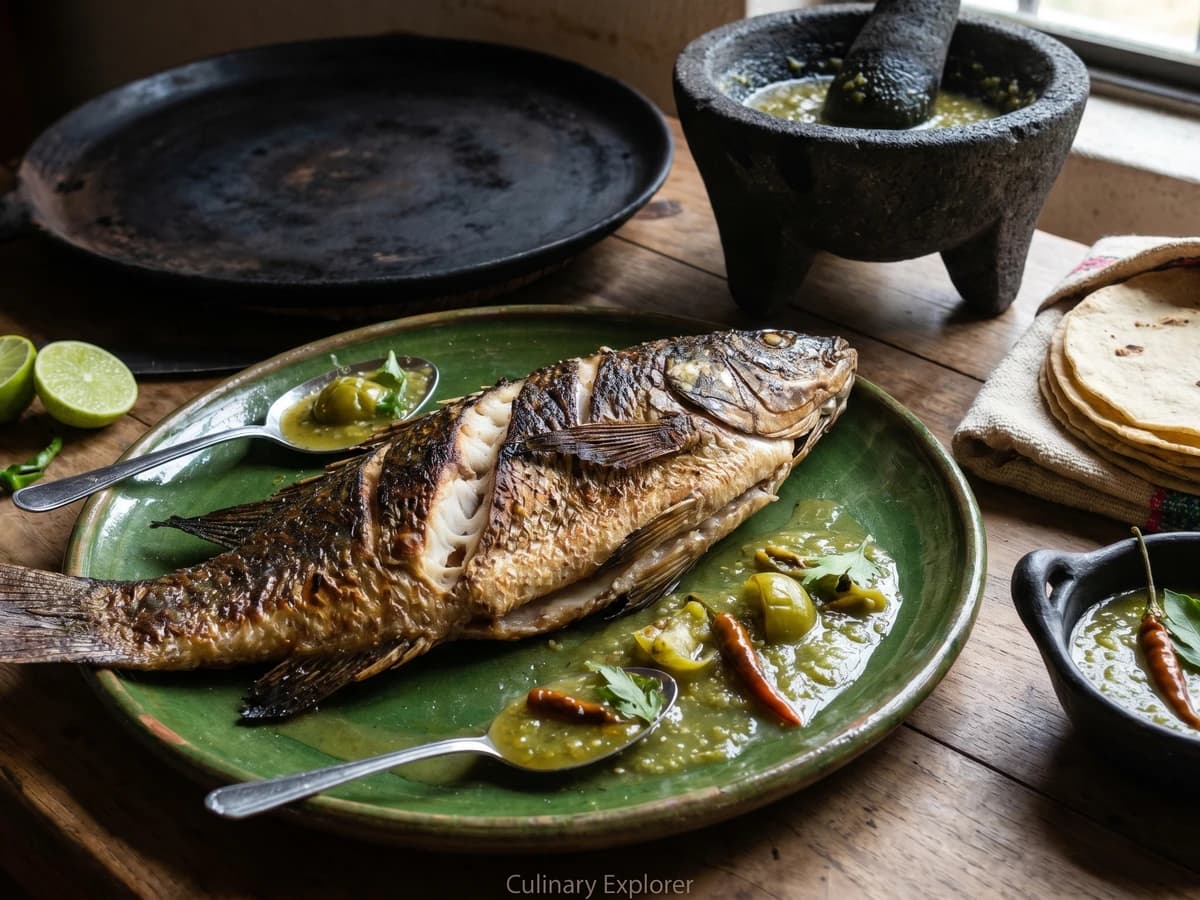
Michoacán's Lake Pátzcuaro acúmara, a whole kurucha from the lago tatemada on a comal de leña and served with chile perón atápakua, corn tortillas, and P'urhépecha discipline.
A cooking platform built around craft, culture, and the stories behind what we eat.

Created by
A pre-Hispanic Mayan dish from the milpa villages of Yucatán, where tender ibes are folded with coarsely ground toasted pepitas, cebollina, and cilantro. Smoky if you do it right.
Toksel is from Yucatán. Not from Mérida exactly, from the milpa villages around it, the small Mayan communities where the milpa still feeds the family and the words for the ingredients are still in Maya. Toksel means "toasted" in Yucatec Maya. The dish is named for what you do to the pepitas.
This is one of the oldest dishes I have collected. Older than achiote on the peninsula, older than the Spanish pig, older than the colonial recados that define the rest of Yucatecan cooking. Beans, squash seeds, herbs, fire. That is the entire architecture. The ibes are a small white bean grown in the milpa alongside corn and squash, the three sisters of Mesoamerican agriculture, and they have a buttery interior and a thin skin that the dried lima bean only approximates. If you can find true ibes at a Yucatecan specialty market, buy them. If you cannot, use small dried lima beans and know that you are making a respectful approximation, not the real thing.
In the villages, the pepitas are toasted on a comal set directly on wood coals, and the smoke goes into the seed. Some cooks add a hot stone from the hearth into the finished dish for a few minutes to push that smoke deeper. That is where the recipe gets its name in the deeper sense: toasted by stone, toasted by fire. You will not have a hearth. You will have a comal and a stove. That is fine. Toast slowly, watch the color, pull them off the moment they turn gold. La cocina no es decoración, es trabajo.
My mother did not cook Yucatecan food. She was from Jalisco. But I have a page in my own notebook now, copied carefully from a señora in the village of Yaxunah who showed me how she prepares this dish for the milpa workers who come home hungry at midday. She told me: "The pepita is the meat. The bean is the body. The cebollina is the breath." I have not found a better way to explain it. Así se hace y punto.
Toksel belongs to the small surviving canon of pre-Hispanic Mayan dishes that crossed the colonial divide largely unchanged, a category that also includes sikil pak and certain preparations of chaya. The word derives from the Yucatec Maya verb "tok," meaning to roast or toast over fire, and refers specifically to the toasting of the pepitas that defines the dish. Ibes themselves are a regional variety of Phaseolus lunatus cultivated in the Yucatán milpa system for at least three millennia, grown in the classic intercropping triad with corn and squash that Mesoamerican farmers refined long before European contact, and the dish's persistence in rural Mayan kitchens, while it has been almost entirely overlooked by national Mexican food media, reflects both the resilience of milpa agriculture and the continued use of Yucatec Maya as a kitchen language in towns across the peninsula's interior.
Quantity
1 pound
or substitute small dried lima beans
Quantity
1 large sprig
fresh
Quantity
1 small
halved
Quantity
2
peeled and smashed
Quantity
1 tablespoon, plus more to taste
Quantity
1 1/2 cups
unsalted
Quantity
1 bunch (or 6 scallions)
finely chopped, white and green parts
Quantity
1/2 cup
finely chopped
Quantity
1
finely minced
Quantity
2 tablespoons
or substitute with bean broth for a fully vegan version
Quantity
from 1 orange
or substitute 2 tablespoons fresh orange juice mixed with 1 tablespoon lime juice
Quantity
for serving
warmed
Quantity
for serving
Quantity
for serving
| Ingredient | Quantity |
|---|---|
| dried ibes (Mayan white lima beans)or substitute small dried lima beans | 1 pound |
| epazotefresh | 1 large sprig |
| white onionhalved | 1 small |
| garlic clovespeeled and smashed | 2 |
| sea salt | 1 tablespoon, plus more to taste |
| raw hulled pepitas (green pumpkin seeds)unsalted | 1 1/2 cups |
| cebollina (Yucatecan chives) or scallionsfinely chopped, white and green parts | 1 bunch (or 6 scallions) |
| fresh cilantrofinely chopped | 1/2 cup |
| fresh chile habanero (optional)finely minced | 1 |
| rendered pork lard (manteca de cerdo) (optional)or substitute with bean broth for a fully vegan version | 2 tablespoons |
| sour orange (naranja agria) juiceor substitute 2 tablespoons fresh orange juice mixed with 1 tablespoon lime juice | from 1 orange |
| hand-pressed corn tortillas (optional)warmed | for serving |
| chiltomate or salsa de chile tamulado (optional) | for serving |
| cebolla morada encurtida (pickled red onion) (optional) | for serving |
Rinse the dried ibes under cold water and pick out any stones or shriveled beans. Cover with cold water by three inches and soak for at least 6 hours or overnight. Ibes have a thin, delicate skin compared to other beans. The soak is not optional. It rehydrates the skin so it does not split during cooking and leave you with broken beans floating in cloudy water.
Drain the ibes and transfer them to a heavy clay olla or pot. Cover with fresh cold water by two inches. Add the epazote, halved onion, and smashed garlic. Bring to a gentle simmer over medium-low heat. Skim any foam that rises in the first ten minutes. Cook uncovered at the lowest simmer for 60 to 90 minutes, until the beans are tender but still hold their shape. Add the salt only in the final 15 minutes. Salt added too early toughens the skin.
While the beans cook, heat a dry comal or heavy iron skillet over medium heat. Add the pepitas in a single layer. Toast them slowly, stirring almost constantly with a wooden spoon. They will pop and dance across the comal. The smell will turn from grassy to nutty to almost popcorn-like. This takes about 8 to 10 minutes. Pull them off the heat the moment they turn an even pale gold. Burned pepitas turn bitter and there is no fixing that later.
Let the toasted pepitas cool for five minutes. Transfer them to a molcajete or a dry blender and grind to a coarse, almost sandy meal. You are not making a paste. You want texture, like coarse polenta. If you grind too far, the oil releases and you get pepita butter. Stop before that happens. In the villages they grind on a metate. The molcajete is the home version.
When the ibes are tender, lift them out with a slotted spoon into a wide ceramic bowl. Reserve one cup of the cooking liquid. Discard the epazote, onion, and garlic. While the beans are still warm, fold in the ground pepitas a handful at a time. The pepitas drink the bean broth and turn the dish creamy without any dairy. Add a few tablespoons of the reserved bean broth if it looks dry. The texture should be loose and shaggy, not a paste.
Add the chopped cebollina or scallion, the cilantro, the minced habanero if you want heat, and the lard if you are using it. Squeeze in the sour orange juice. Stir gently with a wooden spoon. Taste. Adjust salt. The dish should taste of toasted pepita first, then bean, then the bright lift of sour orange and the green snap of the herbs. Cada estado, su propia cocina, and this one is Mayan to its core.
Spoon the toksel into a wide clay plate or a banana-leaf-lined platter. Serve warm or at room temperature. Pass warm corn tortillas, chiltomate, and pickled red onion on the side. In Yucatán this is eaten with the fingers and a folded tortilla. So eat it that way. Saber cocinar es saber vivir.
1 serving (about 260g)
Culinary guides, cultural storytelling, and the editorial depth that makes cooking meaningful.
Discover Culinary ExplorerChef Lupita
Michoacán's Lake Pátzcuaro acúmara, a whole kurucha from the lago tatemada on a comal de leña and served with chile perón atápakua, corn tortillas, and P'urhépecha discipline.

Chef Lupita
Puebla's weekday adobo of pork shoulder braised in a thick guajillo and ancho sauce sharpened with vinegar, cumin, and clove. The deep red of a market spice stall, the dish a poblana cooks without thinking.

Chef Lupita
Loreto's pit-roasted clams, planted hinge-up in beach sand and tatemadas under a fast fire of dried romerillo brush, the resinous Baja desert shrub that gives this dish its smoke.

Chef Lupita
Oaxaca's eighth mole, the silky, almond-and-cinnamon almendrado, served over poached chicken. Mild, sweet, restrained, and a quiet rebuttal to anyone who thinks Mexican food has to be hot to be Mexican.