Chef Lupita
Acúmara Tatemada al Comal
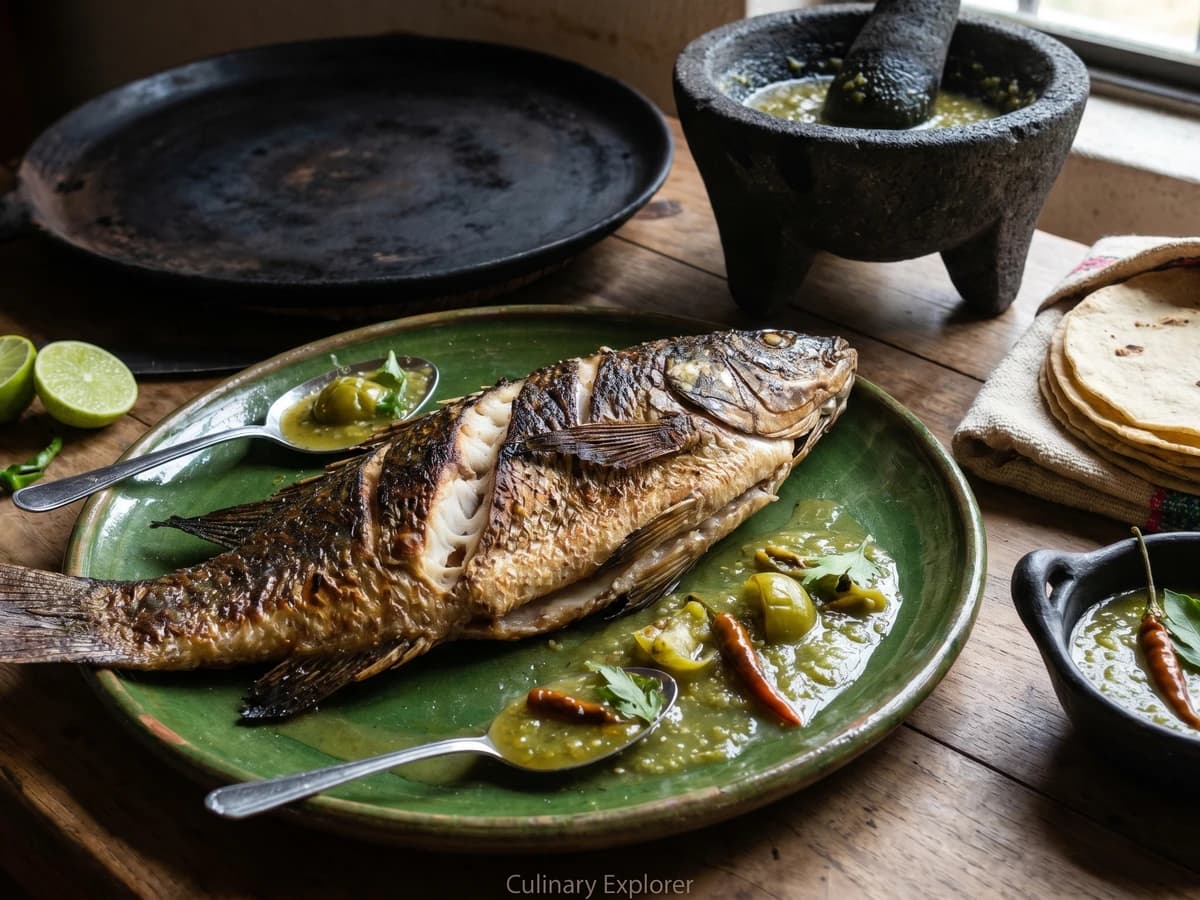
Michoacán's Lake Pátzcuaro acúmara, a whole kurucha from the lago tatemada on a comal de leña and served with chile perón atápakua, corn tortillas, and P'urhépecha discipline.
A cooking platform built around craft, culture, and the stories behind what we eat.

Created by
Campeche's Thursday plate, beef strips marinated in recado de bistek and sour orange, then braised low and slow with charred tomato, chile xcatic, and potatoes in a clay cazuela. Always served over white rice.
This is a Campeche dish. Specifically a weeknight Campeche dish, the kind that lands on the table on a Thursday when the woman of the house has worked all day and still needs to feed six people something honest. In the houses of the old port city, bistec a la cazuela has a fixed place on the weekly rotation. Monday is pucheros. Thursday is bistec. White rice goes underneath. Pickled red onion goes on top. Nobody is improvising.
The identity of this dish lives in two ingredients. The first is recado de bistek, the Yucatecan spice paste built on black pepper, garlic, oregano, clove, and cumin, ground into a stiff brick and sold by weight at the Mercado Pedro Sainz de Baranda. If you cannot find recado de bistek, you can build it from recado rojo by leaning on the pepper and easing back on the achiote, but the peninsula will know. The second is the sour orange, naranja agria, which marinates the beef and carries the recado into the meat. Lime alone will not do it. The bitterness of the sour orange peel is part of the flavor.
The whole habanero is not there to make the dish spicy. It is there to perfume the braise. You drop it in whole, stem and all, and you do not pierce it. The oil on its skin releases into the sauce and gives you that floral peninsular smell that nothing else in Mexico produces. If you want heat, the diner breaks the habanero open at the table on a saucer of their own. The cook does not decide that for the family.
My mother did not cook peninsular food. She was from Jalisco. The first time I made this dish was in a kitchen in Calkini, watching a señora named Doña Lourdes work the cazuela with her left hand and slice onion for the cebolla morada with her right. She told me Campeche food is quieter than Yucatán food. It does not show off. It just feeds people, week after week, for a hundred years. Saber cocinar es saber vivir.
Bistec a la cazuela belongs to the broader peninsular tradition of slow-braised meats built on recado pastes, a culinary form that fused pre-Hispanic Mayan spice-grinding practices with Spanish stewing techniques after the 16th century. The recados themselves, codified into the eight classic Yucatecan pastes (rojo, negro, bistek, escabeche, chilmole, adobo blanco, alcaparrado, and de salpicon), became the backbone of peninsular home cooking by the 19th century, with each town's market vendors guarding their own ratios. Campeche's version of bistec a la cazuela is distinguished from Yucatán's by its use of more tomato and a lighter hand with the recado, a difference Campechano cooks attribute to the city's longer history as a Gulf trading port, where Caribbean and Veracruzan tomato-based stews influenced the local table.
Quantity
2 pounds
sliced against the grain into thin strips about 1/4 inch thick
Quantity
1/3 cup
or 3 parts fresh orange juice to 2 parts fresh lime juice
Quantity
4 tablespoons
or 2 tablespoons recado rojo blended with peppercorns, oregano, garlic, and cloves
Quantity
1 teaspoon, plus more to taste
Quantity
3 tablespoons
Quantity
1 large
halved and sliced into thin half-moons
Quantity
6
finely chopped
Quantity
4
charred on a comal and roughly chopped
Quantity
1
charred whole on the comal (or substitute chile guero)
Quantity
1
left whole, stem on
Quantity
2
Quantity
1 teaspoon
toasted and crumbled
Quantity
1 1/2 pounds
peeled and cut into 1-inch chunks
Quantity
1 cup
Quantity
2 tablespoons
Quantity
to taste
Quantity
for serving
Quantity
for serving
Quantity
for serving
warmed
| Ingredient | Quantity |
|---|---|
| beef chuck or skirt steaksliced against the grain into thin strips about 1/4 inch thick | 2 pounds |
| fresh sour orange juiceor 3 parts fresh orange juice to 2 parts fresh lime juice | 1/3 cup |
| recado de bistekor 2 tablespoons recado rojo blended with peppercorns, oregano, garlic, and cloves | 4 tablespoons |
| kosher salt | 1 teaspoon, plus more to taste |
| manteca de cerdo (pork lard) | 3 tablespoons |
| white onionhalved and sliced into thin half-moons | 1 large |
| garlic clovesfinely chopped | 6 |
| ripe Roma tomatoescharred on a comal and roughly chopped | 4 |
| chile xcaticcharred whole on the comal (or substitute chile guero) | 1 |
| chile habaneroleft whole, stem on | 1 |
| bay leaves | 2 |
| dried Mexican oreganotoasted and crumbled | 1 teaspoon |
| waxy yellow potatoespeeled and cut into 1-inch chunks | 1 1/2 pounds |
| beef broth or water | 1 cup |
| white vinegar | 2 tablespoons |
| fresh ground black pepper | to taste |
| steamed white rice | for serving |
| pickled red onion with sour orange and habanero (optional) | for serving |
| hand-pressed corn tortillas (optional)warmed | for serving |
In a glass or ceramic bowl, dissolve the recado de bistek in the sour orange juice. Work it with a fork until it becomes a loose paste, no lumps. Add the salt. Toss the beef strips through the marinade until every piece is coated dark and glossy. Cover and refrigerate for at least 30 minutes, ideally an hour. The sour orange does two jobs here: it tenderizes the meat and it carries the recado into the fibers. No me vengas con atajos. A dry rub is not the same dish.
Heat a dry cast iron comal over medium-high. Lay the whole tomatoes and the chile xcatic directly on it. Turn them every couple of minutes until the skins are blackened in patches and the flesh has softened. About 8 to 10 minutes. The char is not decoration. It is sweetness. A tomato that goes raw into this dish tastes thin. A charred tomato tastes like the kitchen of a señora in Pomuch.
In a heavy clay cazuela or a 12-inch Dutch oven, melt 2 tablespoons of the manteca over medium-high heat. La manteca es el sabor. When it shimmers, lift the beef strips out of the marinade, letting the excess drip off, and sear them in two or three batches. Do not crowd the pan or the meat will steam instead of brown. Each batch takes 2 to 3 minutes. Set the seared beef aside on a plate. Keep the marinade. You will need it.
Add the remaining tablespoon of manteca to the cazuela. Lower the heat to medium. Add the sliced onion with a pinch of salt and cook for 5 to 6 minutes, until the onion is translucent and starting to take color at the edges. Add the chopped garlic and cook for 1 minute more, just until fragrant. Do not let the garlic brown. Burned garlic in a recado dish is a mistake you cannot fix.
Chop the charred tomatoes roughly, skins and all. Slice the chile xcatic into thick rings. Add both to the cazuela and stir. Cook for 8 minutes, pressing the tomatoes with the back of a wooden spoon until they break down into a chunky sauce. The mixture should darken from bright red to a deeper brick color. That color tells you the tomato is cooked, not raw.
Return the seared beef and any juices to the cazuela. Pour in the reserved marinade and the cup of broth. Add the bay leaves, the toasted oregano, and the whole habanero. The habanero goes in whole, stem on. It perfumes the pot without making the dish hot. If it bursts, you have made a different dish, so do not poke it. Bring to a simmer, lower the heat, cover partially, and braise for 30 minutes.
Stir in the potato chunks and the vinegar. Push the potatoes down so they are submerged in the sauce. Cover and continue to simmer for 25 to 30 minutes, until the potatoes are tender all the way through and the sauce has thickened enough to coat the back of a spoon. Stir gently every ten minutes so nothing sticks to the bottom of the cazuela. Taste and adjust the salt now. The potatoes will have absorbed a lot of it.
Remove the cazuela from the heat. Fish out the habanero and the bay leaves. Let the bistec sit for 5 minutes off the heat so the sauce settles into the meat. Serve generous spoonfuls over steamed white rice, with pickled red onion alongside and warm corn tortillas to mop the plate. The habanero goes onto a small saucer at the table for whoever wants to break it open and add the heat themselves. Así se hace y punto.
1 serving (about 340g)
Culinary guides, cultural storytelling, and the editorial depth that makes cooking meaningful.
Discover Culinary ExplorerChef Lupita
Michoacán's Lake Pátzcuaro acúmara, a whole kurucha from the lago tatemada on a comal de leña and served with chile perón atápakua, corn tortillas, and P'urhépecha discipline.

Chef Lupita
Puebla's weekday adobo of pork shoulder braised in a thick guajillo and ancho sauce sharpened with vinegar, cumin, and clove. The deep red of a market spice stall, the dish a poblana cooks without thinking.

Chef Lupita
Loreto's pit-roasted clams, planted hinge-up in beach sand and tatemadas under a fast fire of dried romerillo brush, the resinous Baja desert shrub that gives this dish its smoke.

Chef Lupita
Oaxaca's eighth mole, the silky, almond-and-cinnamon almendrado, served over poached chicken. Mild, sweet, restrained, and a quiet rebuttal to anyone who thinks Mexican food has to be hot to be Mexican.