Chef Lupita
Acúmara Tatemada al Comal
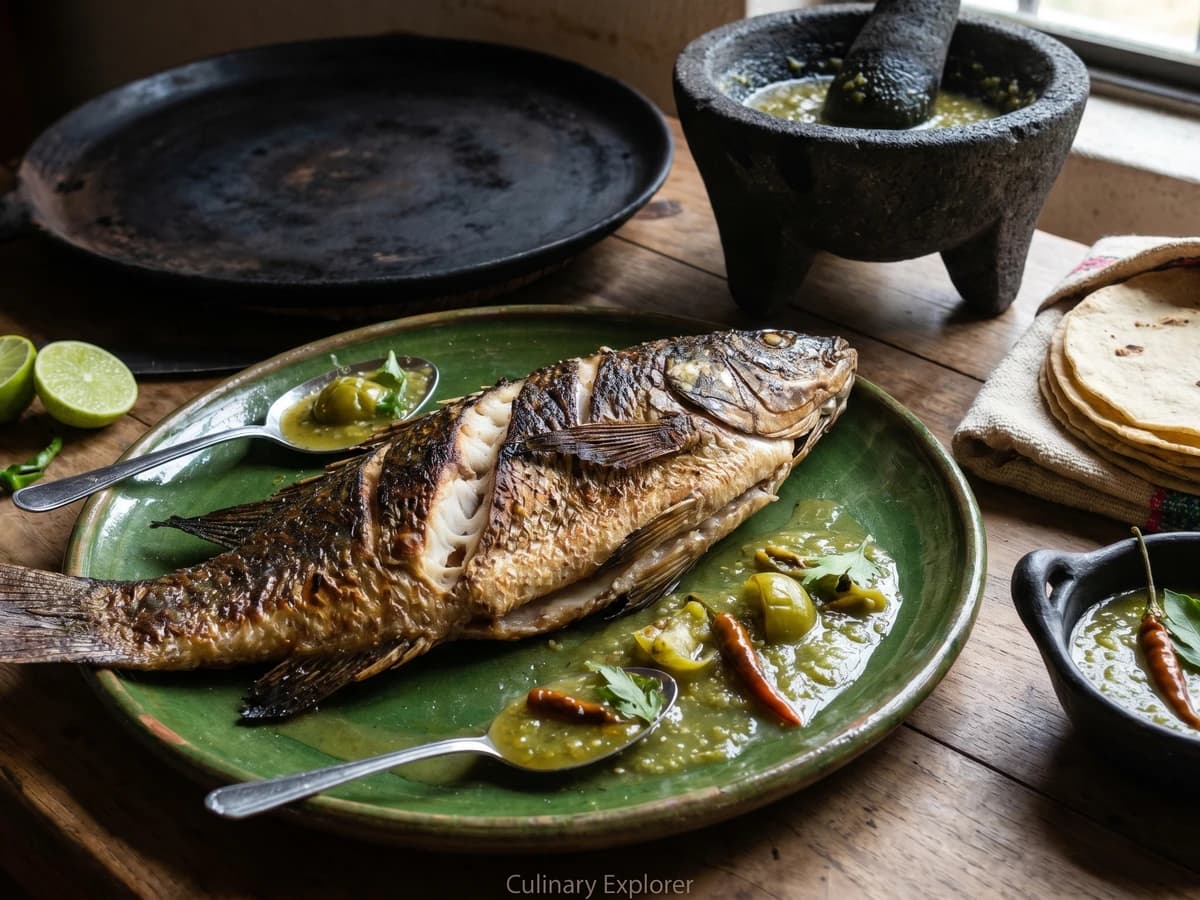
Michoacán's Lake Pátzcuaro acúmara, a whole kurucha from the lago tatemada on a comal de leña and served with chile perón atápakua, corn tortillas, and P'urhépecha discipline.
A cooking platform built around craft, culture, and the stories behind what we eat.
Created by
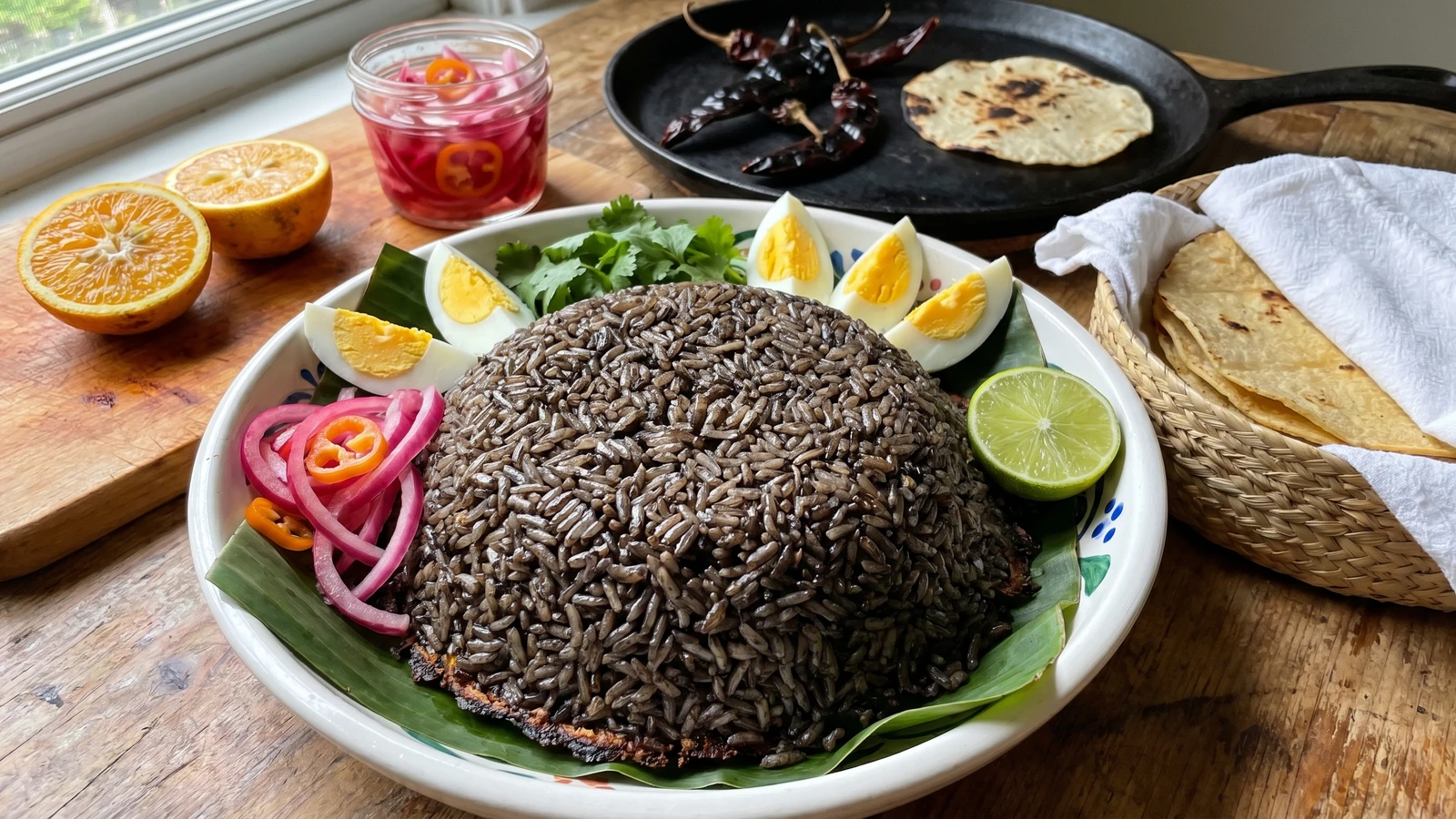
Yucatán's ash-dark rice, fried in lard and cooked in pork stock with recado negro, the burnt-chile and tortilla paste that gives the peninsula its smokiest pot.
This is from Yucatán. Not from a generic 'Mexico,' not from the center, not from anywhere a stranger to the peninsula would guess. Arroz negro yucateco lives on the Yucatán Peninsula and it depends entirely on a paste called recado negro, sometimes called chilmole, that no other regional cuisine in Mexico makes.
Recado negro is built by burning dried chiles, the chile seco yucateco when you can find it, until they are black and brittle, and burning corn tortillas alongside them until they snap like charcoal. The char is the recipe. Everywhere else in Mexico, burned chile is a mistake. In Yucatán, it is the foundation of a paste that flavors everything from relleno negro for Hanal Pixan to this pot of rice on a Tuesday night. The peninsula's cooks figured out centuries ago that controlled burning, taken right to the edge of bitter, gives you a depth of smoke that no toasting can match.
The rice itself is built the Mayan-Spanish way: rinsed, dried, fried in manteca de cerdo until the grains are gold, then bloomed with the recado and finished in pork stock. Allspice, clove, and Yucatecan oregano carry the peninsular signature, those spice notes that tell you immediately you are not in Oaxaca or Jalisco anymore. You are east of the Sierra, in the land of cenotes and henequén and Lebanese-Mayan kitchens that have been talking to each other for a hundred and fifty years.
My mother never made this. She was from Jalisco and Jalisco does not cook this way. I learned recado negro from a señora in Tixkokob who burns her chiles in a clay pot set on coals in her patio, and who told me, when I flinched at the smoke, that if I was not coughing I was not making it right. Cada estado, su propia cocina. Yucatán's cocina is this one.
Recado negro descends from pre-Hispanic Mayan techniques of cooking with carbonized chiles and toasted maize, a practice the peninsula's cooks preserved and refined through the colonial era when Spanish spices (clove, allspice, black pepper) and Caribbean trade goods folded into the indigenous pantry. The paste's ceremonial use in relleno negro for Hanal Pixán, the Mayan Day of the Dead observance practiced from October 31 through November 2, marks it as one of the few Mexican preparations where deliberate burning, taken past the point of toasting into actual carbonization, is the defining technique rather than a fault. The chile seco yucateco itself, sometimes called chile xcatik when fresh or chile blanco when used another way, is a peninsular cultivar barely grown outside the three states of Yucatán, Campeche, and Quintana Roo, which is why no other regional Mexican cuisine produces a sauce quite like this one.
Quantity
2 cups
Quantity
6
stemmed and seeded
Quantity
2
stemmed and seeded
Quantity
4
day-old
Quantity
4
unpeeled
Quantity
1 small
halved
Quantity
1/2 teaspoon
Quantity
1/2 teaspoon
Quantity
2
Quantity
1/2 teaspoon
Quantity
1 tablespoon
Quantity
3 tablespoons
Quantity
4 cups
warm
Quantity
1 teaspoon, plus more to taste
Quantity
2 tablespoons
Quantity
1 sprig
Quantity
for serving
Quantity
for serving
Quantity
for serving
Quantity
for serving
| Ingredient | Quantity |
|---|---|
| long-grain white rice | 2 cups |
| dried chile seco yucateco (or chilhuacle negro)stemmed and seeded | 6 |
| dried chile guajillostemmed and seeded | 2 |
| corn tortillasday-old | 4 |
| garlic clovesunpeeled | 4 |
| white onionhalved | 1 small |
| whole black peppercorns | 1/2 teaspoon |
| whole allspice berries | 1/2 teaspoon |
| whole cloves | 2 |
| dried Mexican oregano, preferably Yucatecan | 1/2 teaspoon |
| achiote paste (recado rojo) | 1 tablespoon |
| manteca de cerdo (pork lard) | 3 tablespoons |
| pork or chicken stockwarm | 4 cups |
| kosher salt | 1 teaspoon, plus more to taste |
| fresh sour orange juice (or orange plus lime) | 2 tablespoons |
| fresh epazote | 1 sprig |
| pickled red onion with habanero (optional) | for serving |
| lime halves (optional) | for serving |
| sliced hard-boiled egg (optional) | for serving |
| fresh cilantro leaves (optional) | for serving |
Open a window. Turn on the fan. This step is going to smoke, and it is supposed to. Heat a comal over medium-high until it is very hot. Lay the stemmed chiles directly on the surface and burn them. Not toast. Burn. Push them down with a spatula until they turn black and brittle, about two minutes per side. Do the same with the day-old tortillas until they are charred and stiff. This char is the recado. In Yucatán they call this chilmole, and what looks like a mistake everywhere else is the recipe here.
On the same comal, toast the unpeeled garlic and the halved onion until the skins blacken and the flesh softens, about six minutes. Move them around so they char in patches, not uniformly. Toast the peppercorns, allspice, cloves, and oregano in a dry skillet for thirty seconds until fragrant. Yucatecan cooking is built on these spices: allspice and clove are not Mexican from the center, they are peninsular, brought by Caribbean and Lebanese trade routes.
Break the burned chiles and tortillas into a heatproof bowl and cover with hot tap water. Hot, not boiling. Let them soak fifteen minutes until soft. Drain. Peel the garlic. Combine the soaked chiles and tortillas, garlic, onion, toasted spices, oregano, achiote paste, sour orange juice, and one teaspoon of salt in a blender. Blend until you have a thick, almost-black paste. The color should be the color of wet asphalt. If it looks brown, you did not burn the chiles enough.
Rinse the rice in a fine-mesh strainer under cold water until the water runs clear. Shake out as much water as you can and spread the rice on a kitchen towel. Let it air-dry for ten minutes. Wet rice will steam instead of fry, and the grains will clump. The Yucatecan technique depends on each grain being separate.
In a heavy 4-quart pot or wide cazuela, melt the lard over medium heat. Add the rinsed and dried rice. Stir constantly with a wooden spoon for four to five minutes until the grains turn pale gold and translucent at the edges. La manteca es el sabor. The rice should sound like sand against the pot. This is the step that separates Yucatecan arroz negro from a sad black risotto.
Push the rice to one side of the pot. Spoon three heaping tablespoons of the recado negro into the bare side. Let it fry in the lard for one full minute, stirring it in place. It will sputter and the smell will sharpen. This blooms the burnt chile and wakes up the spices. Now stir the recado through the rice until every grain is coated ash-dark. Save the remaining recado in a jar for the next pot. It keeps in the fridge for two weeks.
Pour in the warm stock all at once. Stir once to settle the rice into an even layer. Tuck the epazote sprig into the surface. Taste the liquid and adjust salt now, because once the lid goes on, the seasoning is locked in. The broth should taste slightly more assertive than you want the final rice to taste. Bring to a gentle boil.
Reduce the heat to the lowest setting your stove allows. Cover tightly. Cook for eighteen minutes without lifting the lid. No me vengas con atajos. Lifting the lid releases the steam that finishes the grain. After eighteen minutes, kill the heat and let the pot rest, still covered, for ten more minutes. The bottom will form a faint costra, the toasted layer that the cook gets to scrape up as a reward.
Remove the epazote sprig. Fluff the rice gently with a fork, lifting from the bottom so the costra distributes. The grains should be separate, ash-dark, glossed with lard, smelling of burned chile and allspice. Serve on white porcelain or Yucatecan slipware so the black of the rice has somewhere to land. Top with pickled red onion, a slice of hard-boiled egg, cilantro leaves, and a half lime on the side. Así se hace y punto.
1 serving (about 270g)
Culinary guides, cultural storytelling, and the editorial depth that makes cooking meaningful.
Discover Culinary ExplorerChef Lupita
Michoacán's Lake Pátzcuaro acúmara, a whole kurucha from the lago tatemada on a comal de leña and served with chile perón atápakua, corn tortillas, and P'urhépecha discipline.

Chef Lupita
Puebla's weekday adobo of pork shoulder braised in a thick guajillo and ancho sauce sharpened with vinegar, cumin, and clove. The deep red of a market spice stall, the dish a poblana cooks without thinking.

Chef Lupita
Loreto's pit-roasted clams, planted hinge-up in beach sand and tatemadas under a fast fire of dried romerillo brush, the resinous Baja desert shrub that gives this dish its smoke.

Chef Lupita
Oaxaca's eighth mole, the silky, almond-and-cinnamon almendrado, served over poached chicken. Mild, sweet, restrained, and a quiet rebuttal to anyone who thinks Mexican food has to be hot to be Mexican.