Chef Thomas
Anchovy Sauce
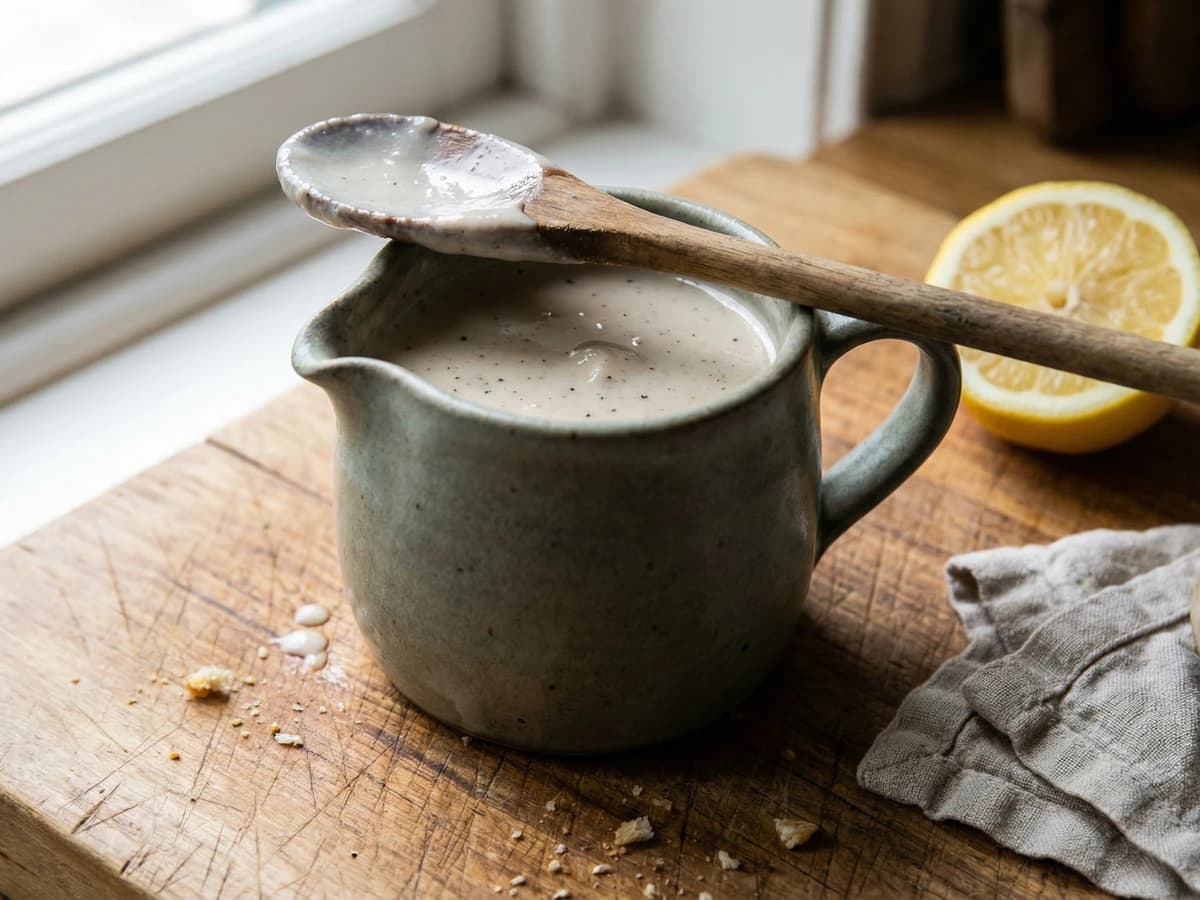
A proper white sauce sharpened with pounded anchovy, the old Georgian trick for waking up a piece of poached fish or a slice of roast lamb on a Sunday in spring.
A cooking platform built around craft, culture, and the stories behind what we eat.
Created by Chef Thomas
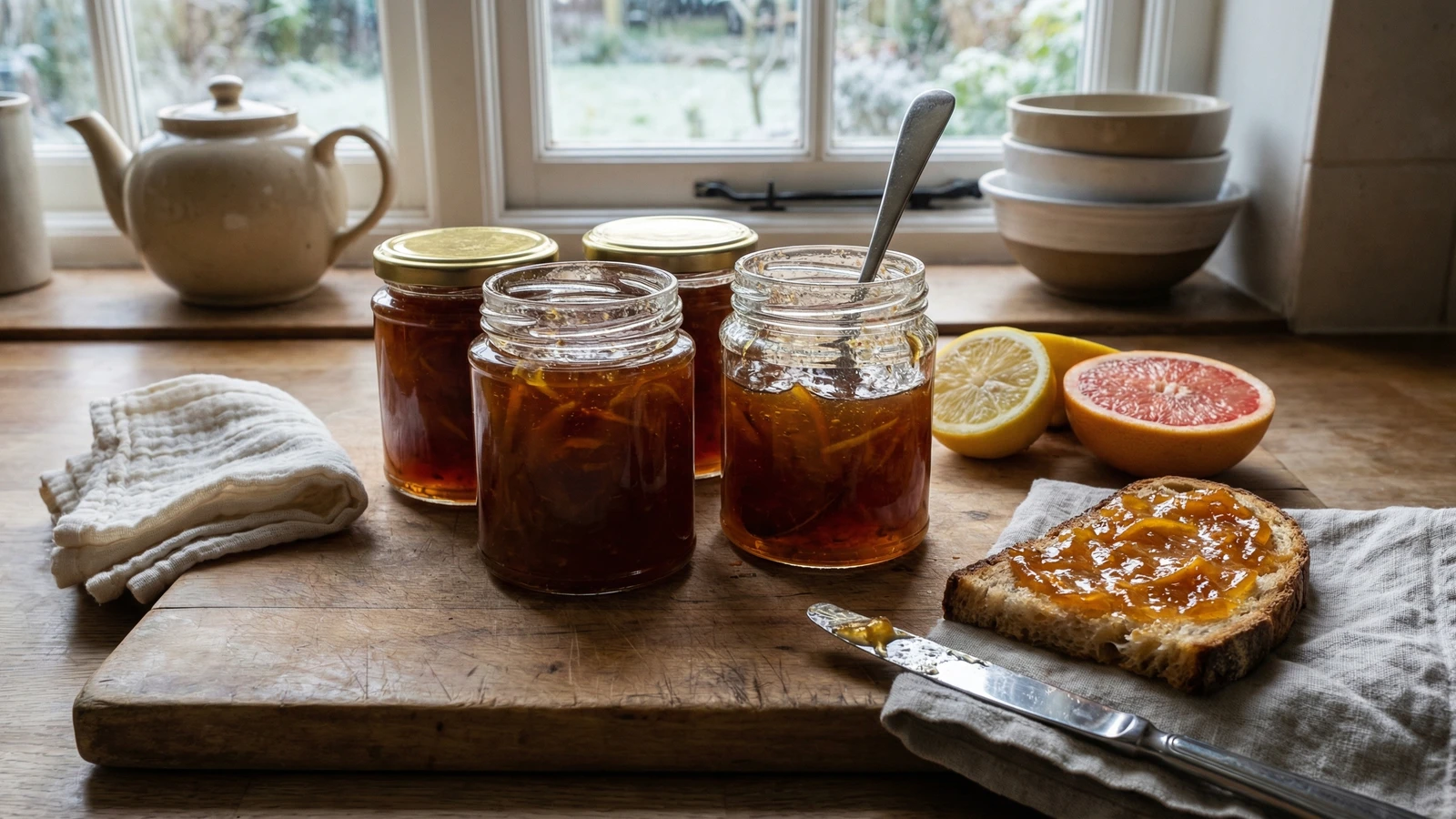
A gentler winter marmalade of grapefruit, orange, and lemon for cooks who find Seville too sharp, bright and bittersweet and worth a slow January morning at the stove.
January is the marmalade month. The Sevilles are in for their brief, sour window, the kitchen wants something to do, and the light coming through the window is the kind of pale, hopeful gold that asks to be matched in a jar. But Seville isn't for everyone. Some people find it too bitter, too uncompromising, a marmalade that argues with you before breakfast. Fair enough.
This is the gentler version. Grapefruit gives it backbone and a faint pinkish edge. Sweet orange brings the warmth and the colour you want on toast. Lemon keeps everything honest and stops it tipping into something cloying. The three together make a marmalade that still tastes of itself, still has the bittersweet pull that makes marmalade worth eating, but doesn't make your face do anything dramatic.
Make it on a Saturday when you've nowhere to be. The chopping is the slow bit, and there's no shortcut. Put the radio on. Leave the muslin bag of pips to do its quiet work. The kitchen will smell of citrus oil for two days afterwards and you'll find yourself opening the cupboard just to look at the row of jars. I wrote it down in the notebook the first time I made it: bright, bittersweet, January in a jar. That still feels about right.
A recipe is a conversation, not a contract. If you like your marmalade darker, boil it a little longer until it goes properly amber. If you like a finer cut, slice the peel into threads. The ratios above are a starting point. The marmalade is yours.
Quantity
1 large (about 500g)
scrubbed
Quantity
2 (about 400g total)
scrubbed
Quantity
2 (about 200g total)
scrubbed
Quantity
2.5 litres
Quantity
2.5kg
Quantity
small knob
to settle the foam
| Ingredient | Quantity |
|---|---|
| grapefruitscrubbed | 1 large (about 500g) |
| unwaxed sweet orangesscrubbed | 2 (about 400g total) |
| unwaxed lemonsscrubbed | 2 (about 200g total) |
| cold water | 2.5 litres |
| granulated or preserving sugar | 2.5kg |
| unsalted butter (optional)to settle the foam | small knob |
Wash all the fruit in warm water and dry it. Cut each piece in half across the equator and squeeze out the juice into a large preserving pan or your biggest, heaviest pot. Use a spoon to scoop out the pulp and pips from the spent halves and tip those into a square of muslin. The pips and the white pith are where the pectin lives, so don't be tempted to skip the muslin bag. Tie it tightly with string and drop it into the pan.
Now the slow bit. Take the empty fruit halves and slice the peel as finely or as thickly as you like, working through the pile while something good plays in the background. Thin shreds give a delicate, almost translucent marmalade. Thicker chunks give you the kind that sits on toast like a small statement. Your kitchen, your rules. Add the sliced peel to the pan with the juice and the muslin bag.
Pour in the cold water. The peel will float about, looking unpromising. Cover the pan with a clean tea towel and leave it on the counter overnight. This soak softens the peel and starts to draw the pectin out of the pith and pips. You can skip it if you're impatient, but the marmalade will be the better for the wait.
The next day, bring the pan to a gentle simmer, lid off, and let it cook for around two hours. You're waiting for the peel to go completely soft. Press a shred between your finger and thumb. It should give way without any resistance, almost melting. If it still has any chew at all, keep going. Undercooked peel will stay tough in the jar and there's no fixing it later. The kitchen will smell of bright, bitter citrus the whole time. There are worse ways to spend a winter morning.
Lift out the muslin bag with tongs and let it cool for a few minutes on a plate. When you can handle it, squeeze it hard over the pan with the back of a spoon. A thick, jellyish liquid will come out. That's the pectin. Get every drop. This is what makes the marmalade set.
While the peel is finishing, set the oven to 140C/120C fan. Tip the sugar into a roasting tin and warm it in the oven for ten minutes. Warm sugar dissolves quickly and stops the boil losing its momentum. At the same time, wash your jars in hot soapy water, rinse them well, and let them dry in the same oven. Sterilised, warm, ready to go.
Tip the warmed sugar into the pan with the cooked peel and juice. Stir over a low heat until every grain of sugar has dissolved. Run the back of the spoon along the bottom of the pan. If it feels gritty at all, keep stirring. Sugar that hasn't dissolved properly will crystallise in the jar later. Patience here pays you back.
Now turn the heat right up and bring the marmalade to a rolling boil. Don't stir it now. Let it bubble furiously for fifteen to twenty minutes. The colour will deepen from pale gold to amber, the bubbles will get smaller and louder, and the whole thing will start to look like marmalade rather than sugary citrus soup. Trust your nose. It knows before you do.
Put a small plate in the freezer before you start boiling. To test, take the pan off the heat (this matters, otherwise you overshoot) and drop a teaspoon of marmalade onto the cold plate. Wait thirty seconds, then push it gently with your finger. If the surface wrinkles and the marmalade holds its shape behind your fingertip, it's done. If it's still loose and runny, put the pan back on the heat for another three or four minutes and test again. The first time you see the wrinkle, you'll never forget it.
Stir in the small knob of butter if you're using it. It dissolves any foam on top and gives you a clearer marmalade. Let the pan sit off the heat for ten minutes. This rest is important, because it lets the peel settle through the syrup rather than floating to the top of every jar. Then ladle into the warm sterilised jars, right to the brim, and seal immediately with the lids. Label them when they're cool. Three-fruit, the date, the year. You'll be glad in November when you're rummaging through the cupboard.
1 serving (about 20g)
Culinary guides, cultural storytelling, and the editorial depth that makes cooking meaningful.
Discover Culinary ExplorerChef Thomas
A proper white sauce sharpened with pounded anchovy, the old Georgian trick for waking up a piece of poached fish or a slice of roast lamb on a Sunday in spring.

Chef Thomas
A spiced autumn chutney made from a glut of apples and a quiet afternoon, simmered down until the kitchen smells of October and the jars line up on the counter like a small, useful insurance policy.
Chef Thomas
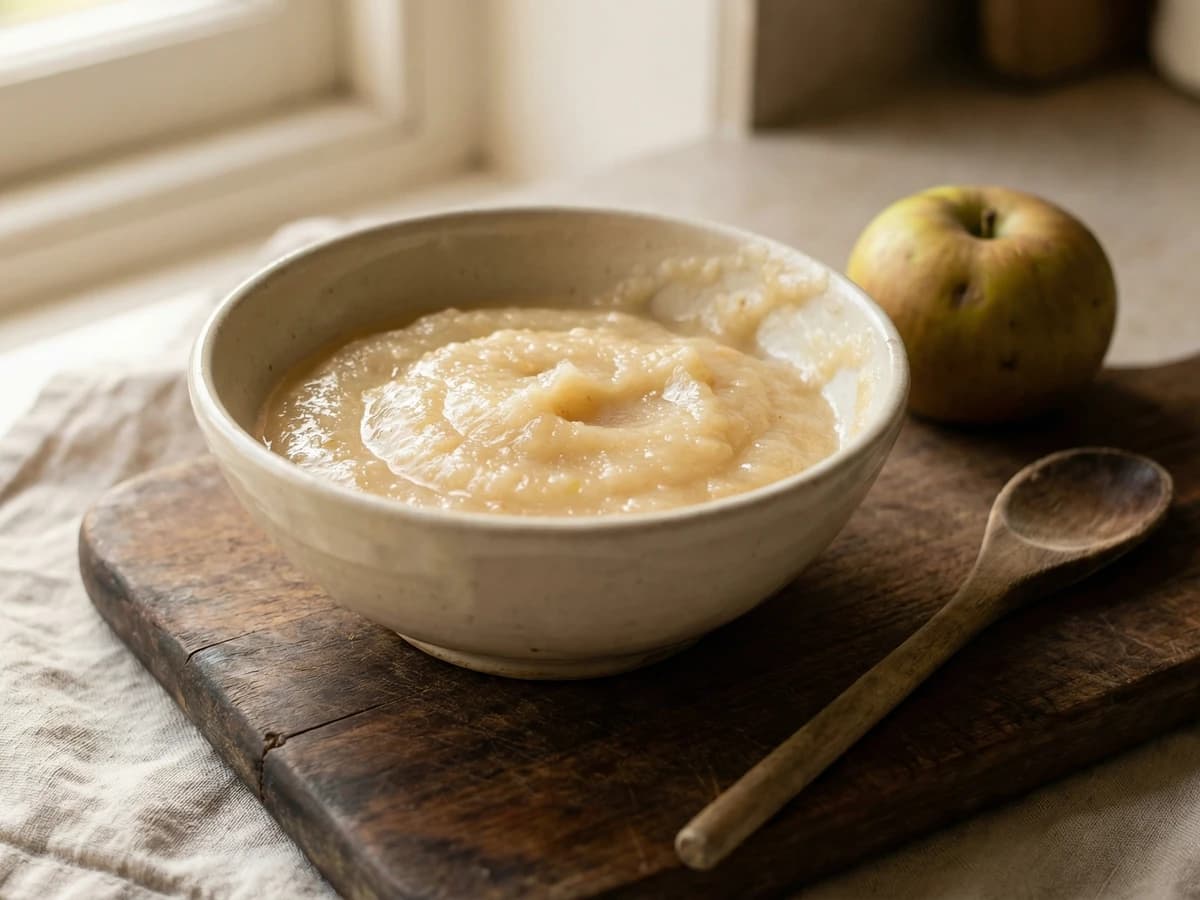
A bowl of sharp, fluffy Bramley apple sauce, made in the time it takes to carve the pork, the kind of small condiment that quietly makes the whole meal make sense.
Chef Thomas
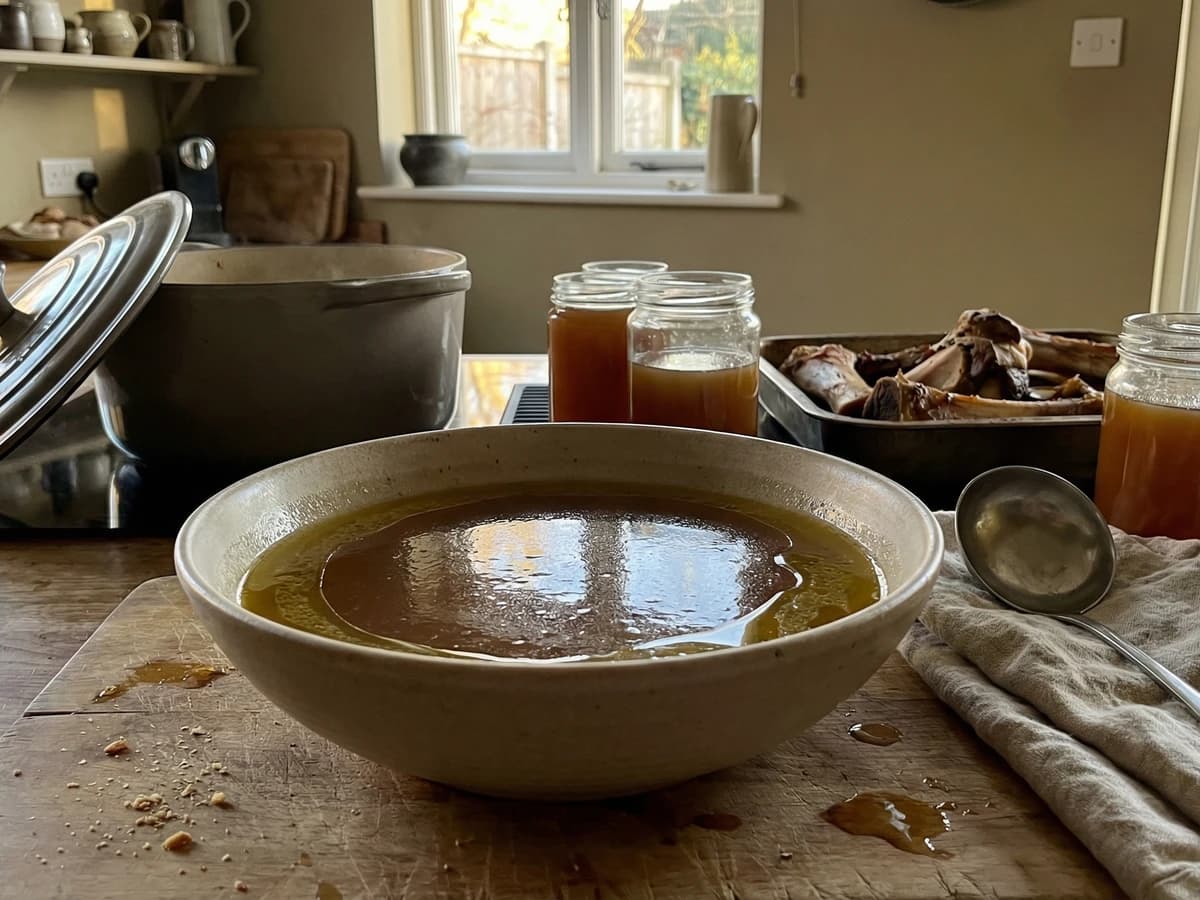
Beef bones roasted until dark, then coaxed for a long afternoon into a deep amber stock, the foundation of every good gravy, every braise, every bowl of winter soup worth the trouble.