Chef Thomas
Anchovy Sauce
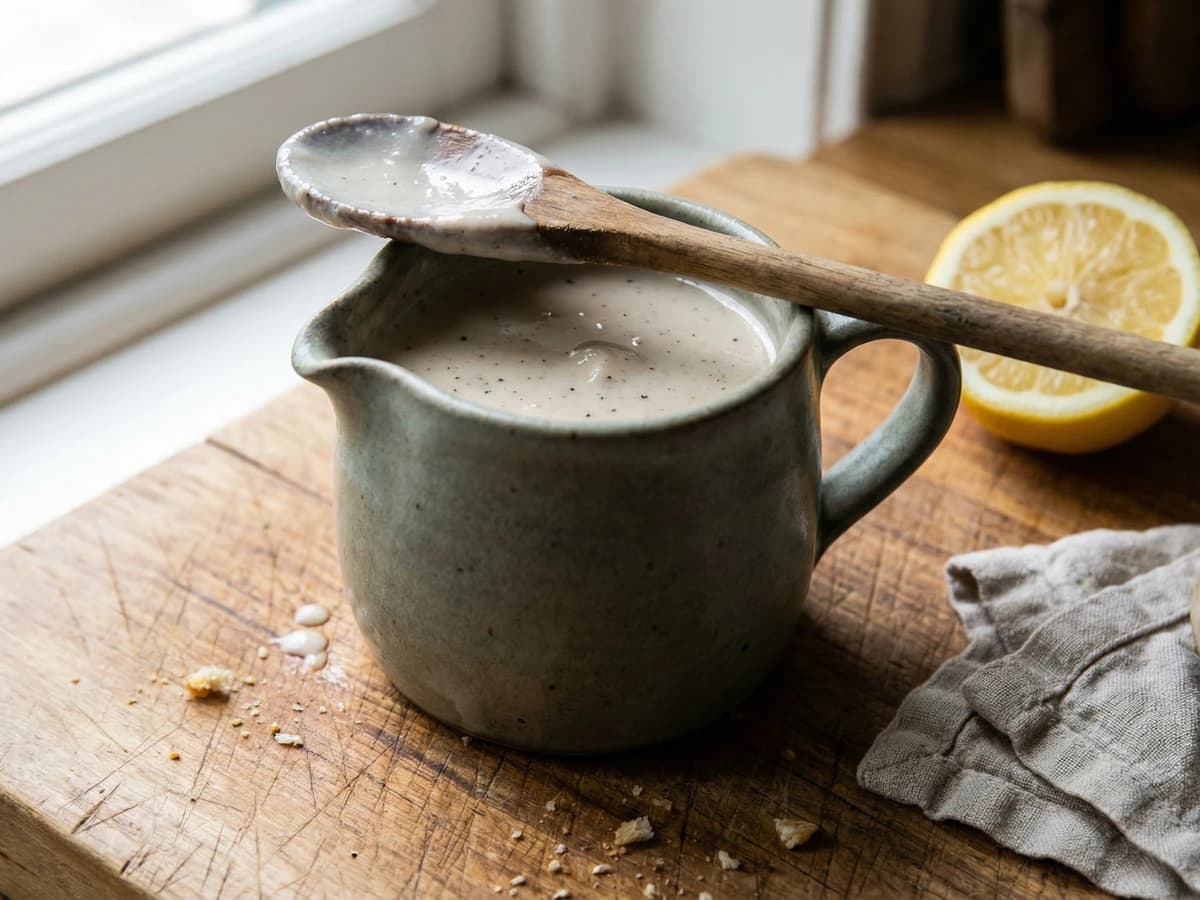
A proper white sauce sharpened with pounded anchovy, the old Georgian trick for waking up a piece of poached fish or a slice of roast lamb on a Sunday in spring.
A cooking platform built around craft, culture, and the stories behind what we eat.

Created by Chef Thomas
Hedgerow blackberries cooked down with a cooking apple, strained through muslin until the juice runs clear, then boiled with sugar into a dark, glossy jelly that holds the whole of September in a jar.
Blackberries arrive in the lanes at the beginning of September, almost overnight, and for two or three weeks the hedges are dripping with them. You can't walk past without stopping. That's how this starts: a carrier bag, a scratched forearm, fingers stained purple, a vague plan to do something with the haul before it spoils.
Bramble jelly is what to do. Not jam, jelly. The seeds of a blackberry are too many and too hard to live in a jam without getting between your teeth. Strained through muslin, they vanish entirely, and what's left is a dark, glossy preserve that tastes of nothing but the fruit. It catches the light when you hold a spoonful up to the window. It catches the light through the side of the jar. That's worth the patience the muslin asks of you.
The apple is the trick. A single cooking apple, chopped roughly and thrown in skin and all, lends enough pectin to set the whole pan. No need for jam sugar or shop-bought pectin or anything that pretends to help. The fruit does it itself, the way it's been done in country kitchens for as long as anyone has been picking brambles.
I made some last weekend. I wrote it down in the notebook: "Brambles. Sunday. Rain coming in. Four jars." One of them is open now and I'm putting it on toast for breakfast tomorrow. There are few better feelings than putting a warm plate, or a warm slice of toast, in front of someone you care about.
Quantity
1.5kg
foraged or from the market, stems picked off
Quantity
1 medium
roughly chopped, skin, core and all
Quantity
1
juiced
Quantity
600ml
Quantity
about 450g per 600ml of strained juice
weighed after straining
| Ingredient | Quantity |
|---|---|
| ripe blackberriesforaged or from the market, stems picked off | 1.5kg |
| cooking appleroughly chopped, skin, core and all | 1 medium |
| lemonjuiced | 1 |
| cold water | 600ml |
| granulated sugarweighed after straining | about 450g per 600ml of strained juice |
Tip the blackberries into a colander and rinse them gently under cold water. Pick out any stems, leaves, or bruised fruit. Don't be too precious about it. A few slightly under-ripe berries are welcome here, they bring extra pectin and help the jelly set. If you've foraged them yourself, you'll know what I mean about the small thorns still clinging to your wrists.
Tip the blackberries and the chopped apple into a heavy preserving pan. Pour in the water and the lemon juice. Bring it slowly to a simmer over a medium heat, then turn it down and let it bubble gently for about forty-five minutes. Mash the fruit now and then with a wooden spoon to coax out the juices. The kitchen will start to smell like the end of summer: warm, dark, faintly winey. The berries should collapse completely into a deep purple sludge.
Scald a piece of muslin in boiling water and use it to line a large sieve set over a deep bowl. Tip in the cooked fruit and let it drip. This is the part that asks for patience. Leave it overnight if you can, or at least four hours. Don't squeeze the bag, however much you want to. Squeezing forces pulp through and clouds the jelly. A clear bramble jelly is the whole point. A cloudy one tastes the same but doesn't catch the light, and catching the light is half of why you're doing this.
Measure the strained juice into the cleaned preserving pan. For every 600ml of juice, add 450g of granulated sugar. This isn't fussy maths, it's the ratio that gives you a jelly that sets but still tastes of fruit rather than sugar. Warm the pan gently and stir until the sugar has completely dissolved. Don't let it boil yet. Run a wooden spoon through the bottom of the pan and you shouldn't feel any grit. If you do, keep stirring.
Now turn the heat up and bring the jelly to a rolling boil. A proper rolling boil, the kind that won't be stirred down. Let it bubble hard for eight to ten minutes. The colour will deepen to a dark, glossy garnet and the surface will look thicker, almost lacquered. To test for setting point, drop a teaspoon of jelly onto a cold saucer (keep a few in the freezer for this), let it sit for a minute, then push it with your finger. If the surface wrinkles, it's ready. If it slides about like syrup, give it another two minutes and try again.
Have your jars ready: scrubbed, rinsed, and warmed in a low oven so they don't crack when the hot jelly goes in. Ladle the jelly into the jars, filling almost to the top, and seal immediately with the lids. The jelly will look thin in the jar and you'll worry you've got it wrong. Don't. It firms as it cools. By morning it will hold its shape on a spoon. Label the jars, write the date on them, and put them somewhere dark.
1 serving (about 20g)
Culinary guides, cultural storytelling, and the editorial depth that makes cooking meaningful.
Discover Culinary ExplorerChef Thomas
A proper white sauce sharpened with pounded anchovy, the old Georgian trick for waking up a piece of poached fish or a slice of roast lamb on a Sunday in spring.

Chef Thomas
A spiced autumn chutney made from a glut of apples and a quiet afternoon, simmered down until the kitchen smells of October and the jars line up on the counter like a small, useful insurance policy.
Chef Thomas
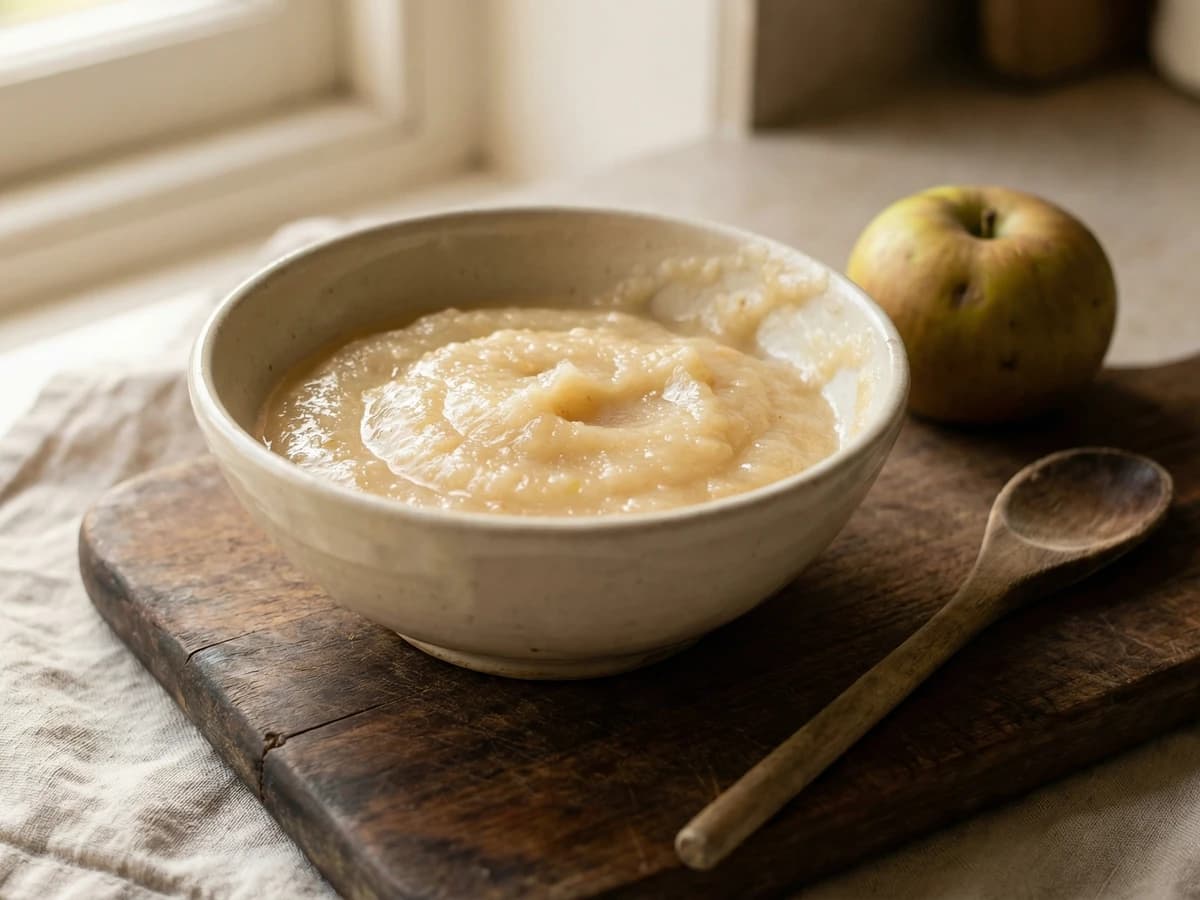
A bowl of sharp, fluffy Bramley apple sauce, made in the time it takes to carve the pork, the kind of small condiment that quietly makes the whole meal make sense.
Chef Thomas
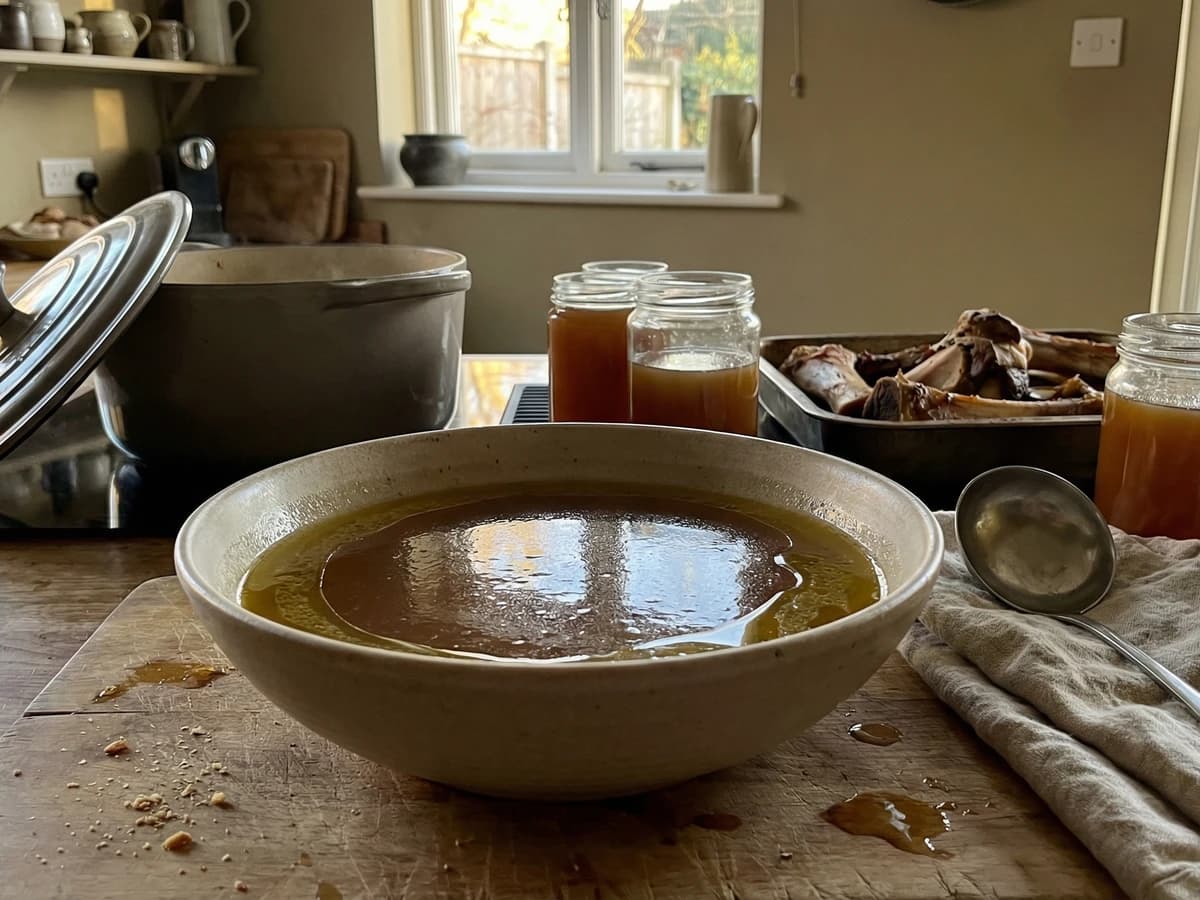
Beef bones roasted until dark, then coaxed for a long afternoon into a deep amber stock, the foundation of every good gravy, every braise, every bowl of winter soup worth the trouble.