Chef Thomas
Anchovy Sauce
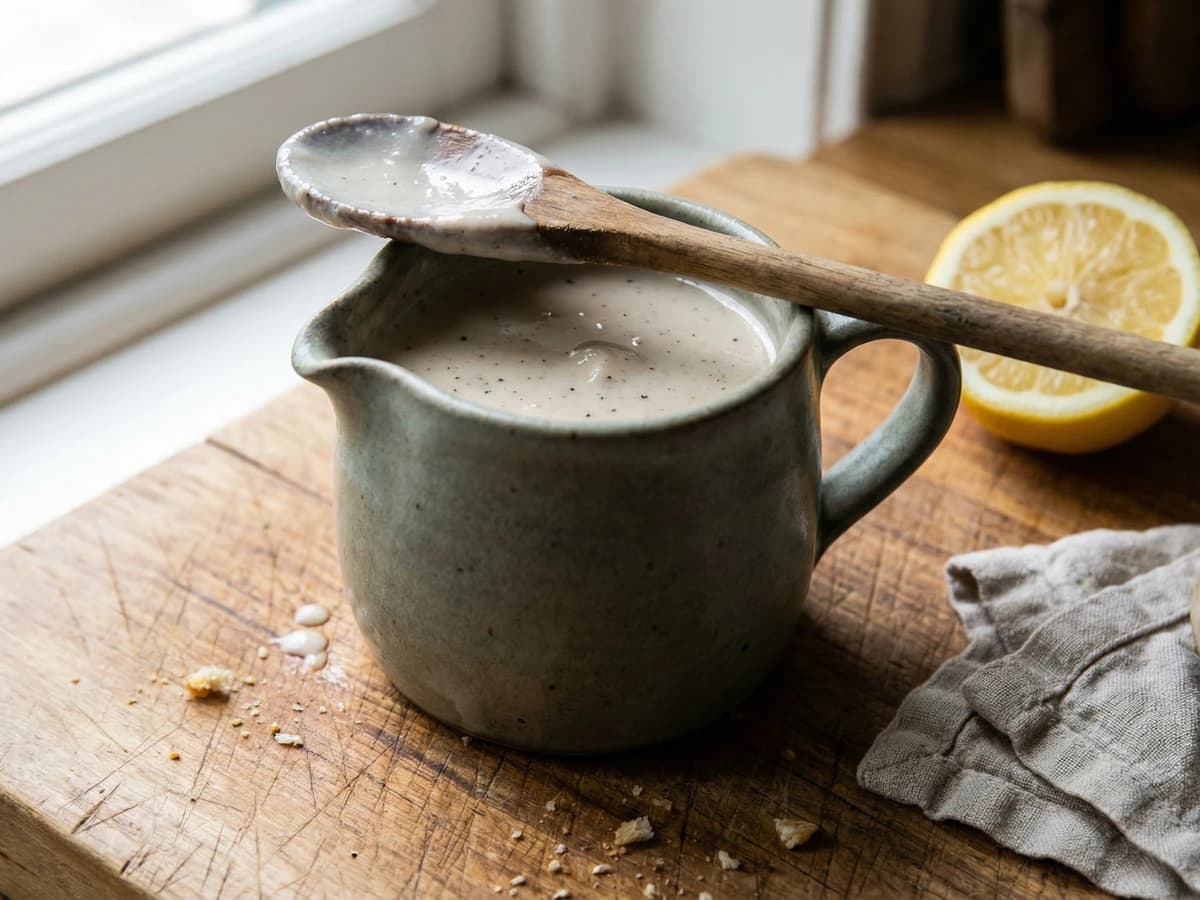
A proper white sauce sharpened with pounded anchovy, the old Georgian trick for waking up a piece of poached fish or a slice of roast lamb on a Sunday in spring.
A cooking platform built around craft, culture, and the stories behind what we eat.

Created by Chef Thomas
A rose-gold jelly made from early autumn windfalls, set on its own pectin and tasting of wild orchards, the kind of jar you reach for in February when summer feels like a long time ago.
There's a lane near here lined with crab apple trees, and in the third week of September the fruit starts to drop. Small, hard, bitter little things, mottled red and yellow, no good for eating. But pick them up off the grass, wash off the dirt, and they'll give you one of the most useful jars in the kitchen.
Crab apples carry their own pectin, which means no sachets, no fuss, no chemistry set. You cook them down with water, strain them overnight, weigh the juice, add sugar, and boil hard until the jelly sets. That's the whole thing. The colour changes as it cooks, from pale pink to amber to a deep rose-gold that catches the autumn light when you hold the jar to the window. I've made this every September I can remember, and it never stops feeling like a small miracle that something so plain becomes something so beautiful.
A jar of crab apple jelly is a different proposition from a sweet jam. It's tart, faintly floral, almost wine-like, and it belongs alongside cold meat and strong cheese as readily as it belongs on toast. A spoonful melted into the pan juices of a roast lamb is a thing worth knowing about. Stirred into gravy. Spread on the cheese board next to a wedge of mature cheddar. I wrote it down in the notebook the first year I made it: pink in the jar, gold in the spoon, a small autumn kept on a shelf.
Go and find a tree. Most people don't know what crab apples are for and the windfalls just sit there going to waste. The market decides, but so does the hedgerow.
Quantity
1.5kg
windfalls, washed, stems and any bruised bits removed, halved
Quantity
approximately 1.2 litres
Quantity
450g per 600ml of strained juice
Quantity
1
juiced
Quantity
a few
| Ingredient | Quantity |
|---|---|
| crab appleswindfalls, washed, stems and any bruised bits removed, halved | 1.5kg |
| water | approximately 1.2 litres |
| granulated sugar | 450g per 600ml of strained juice |
| lemonjuiced | 1 |
| thyme sprigs or a bay leaf (optional) | a few |
Tip the crab apples into the sink and wash them well. They've usually been on the ground, so give them more attention than you would shop-bought fruit. Pull off the stems and pick out anything properly bruised or rotten. Halve them with a knife. Don't bother coring or peeling. The skins, the cores, the pips, they all carry pectin and flavour, and you'll be straining the lot anyway.
Put the apples in a large heavy pan and pour in just enough water to cover them. Bring to a gentle simmer and let them cook, lid slightly ajar, for about forty-five minutes. You're looking for the fruit to collapse completely into a soft, rosy mush. Stir occasionally with a wooden spoon, breaking up the larger pieces against the side of the pan. The kitchen will start to smell of wild orchards, slightly tart, slightly floral. That's the sign it's working.
Scald a jelly bag or a square of clean muslin with boiling water and suspend it over a deep bowl. A sturdy chair turned upside down with the bag tied to its legs works as well as anything fancy. Tip the cooked fruit and all its juice into the bag and leave it to drip overnight. Don't squeeze it. I know it's tempting. But pressing forces the cloudy pulp through and you lose the clarity that makes a jelly worth the trouble. Patience now, jewels in the morning.
In the morning, the bowl will hold a clear, pale-pink juice that looks like nothing much but is the whole point of the exercise. Measure it. For every 600ml of juice, weigh out 450g of granulated sugar. Write it down somewhere if you're easily distracted. I've miscounted this more than once and ended up with jelly that was too sweet or that wouldn't set, and there's no fixing it after the fact.
Pour the juice into a wide, heavy pan. Add the sugar and the lemon juice and the thyme or bay if you're using it. Stir gently over a low heat until every grain of sugar has dissolved. Run a finger across the back of a spoon and you should feel no graininess. Now turn the heat right up and bring it to a hard, rolling boil. Don't stir from this point on. The jelly needs to climb up the sides of the pan and bubble furiously. It will go from pink to amber to a deeper, rose-gold colour, and the bubbles will change from a frothy chaos to a slower, glossier thump. That's setting point approaching.
After about eight to ten minutes of hard boiling, take the pan off the heat and spoon a little jelly onto a cold saucer. Let it sit for half a minute, then push it with your finger. If the surface wrinkles and the jelly holds its shape rather than running back, you're there. If it's still loose, put the pan back on the heat for another two or three minutes and test again. Trust the wrinkle, not the clock. Every batch is different. Some years the apples are juicier, some years drier. The jelly tells you when it's ready.
Skim any pale scum from the surface with a slotted spoon. Fish out the herbs if you used any. Ladle the jelly into warm sterilized jars, filling them right to the top. Seal while still hot. Set the jars on a wooden board to cool, and listen out for the small satisfying ping as the lids draw down. Label them with the date. You'll thank yourself in February.
1 serving (about 20g, 1 tablespoon)
Culinary guides, cultural storytelling, and the editorial depth that makes cooking meaningful.
Discover Culinary ExplorerChef Thomas
A proper white sauce sharpened with pounded anchovy, the old Georgian trick for waking up a piece of poached fish or a slice of roast lamb on a Sunday in spring.

Chef Thomas
A spiced autumn chutney made from a glut of apples and a quiet afternoon, simmered down until the kitchen smells of October and the jars line up on the counter like a small, useful insurance policy.
Chef Thomas
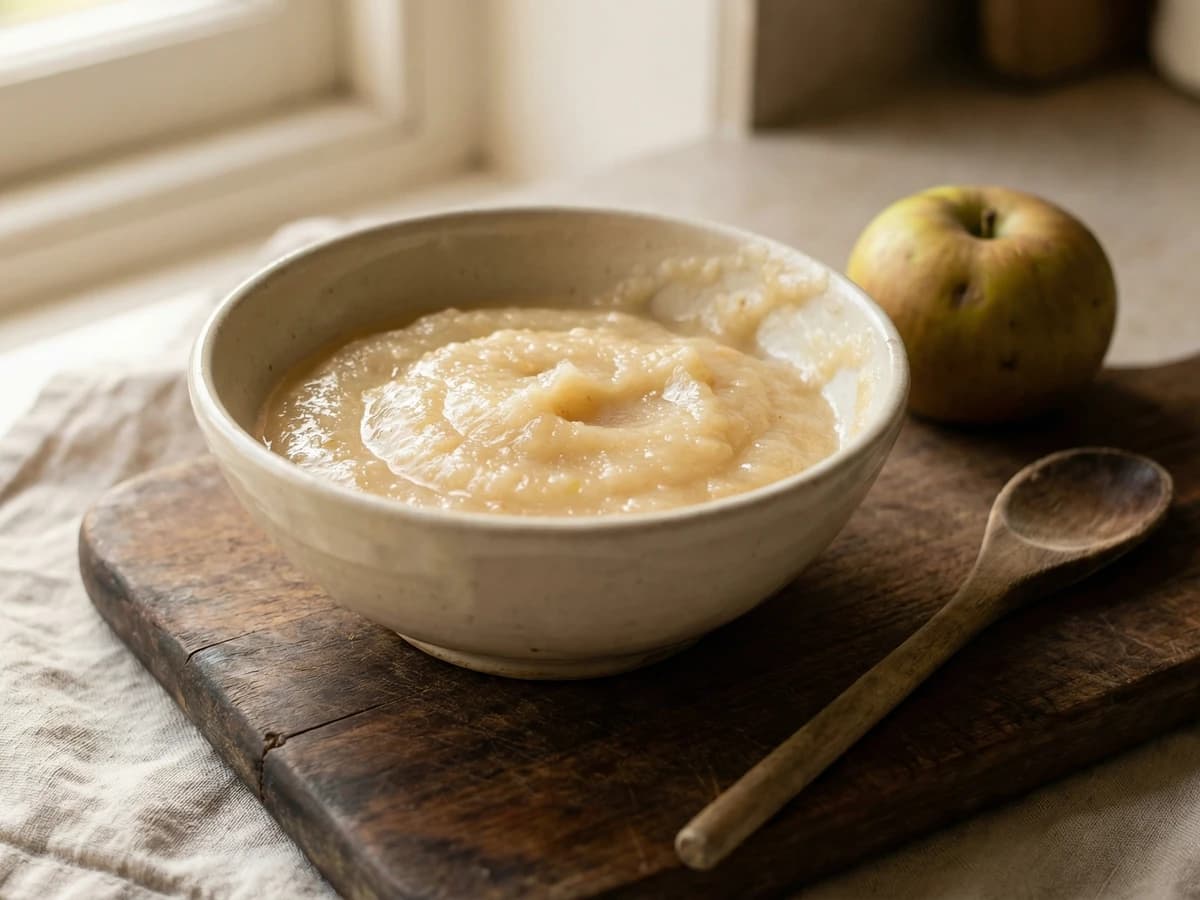
A bowl of sharp, fluffy Bramley apple sauce, made in the time it takes to carve the pork, the kind of small condiment that quietly makes the whole meal make sense.
Chef Thomas
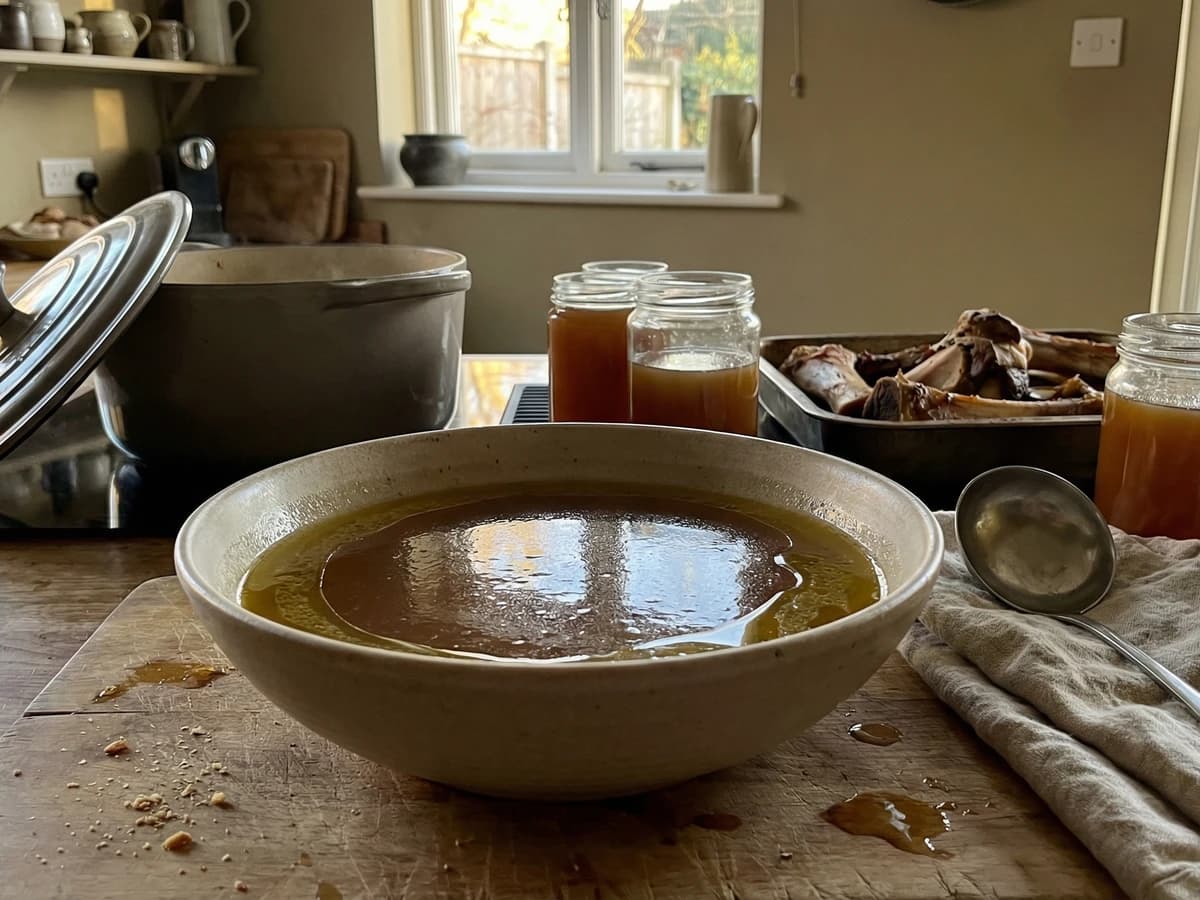
Beef bones roasted until dark, then coaxed for a long afternoon into a deep amber stock, the foundation of every good gravy, every braise, every bowl of winter soup worth the trouble.