Chef Thomas
Anchovy Sauce
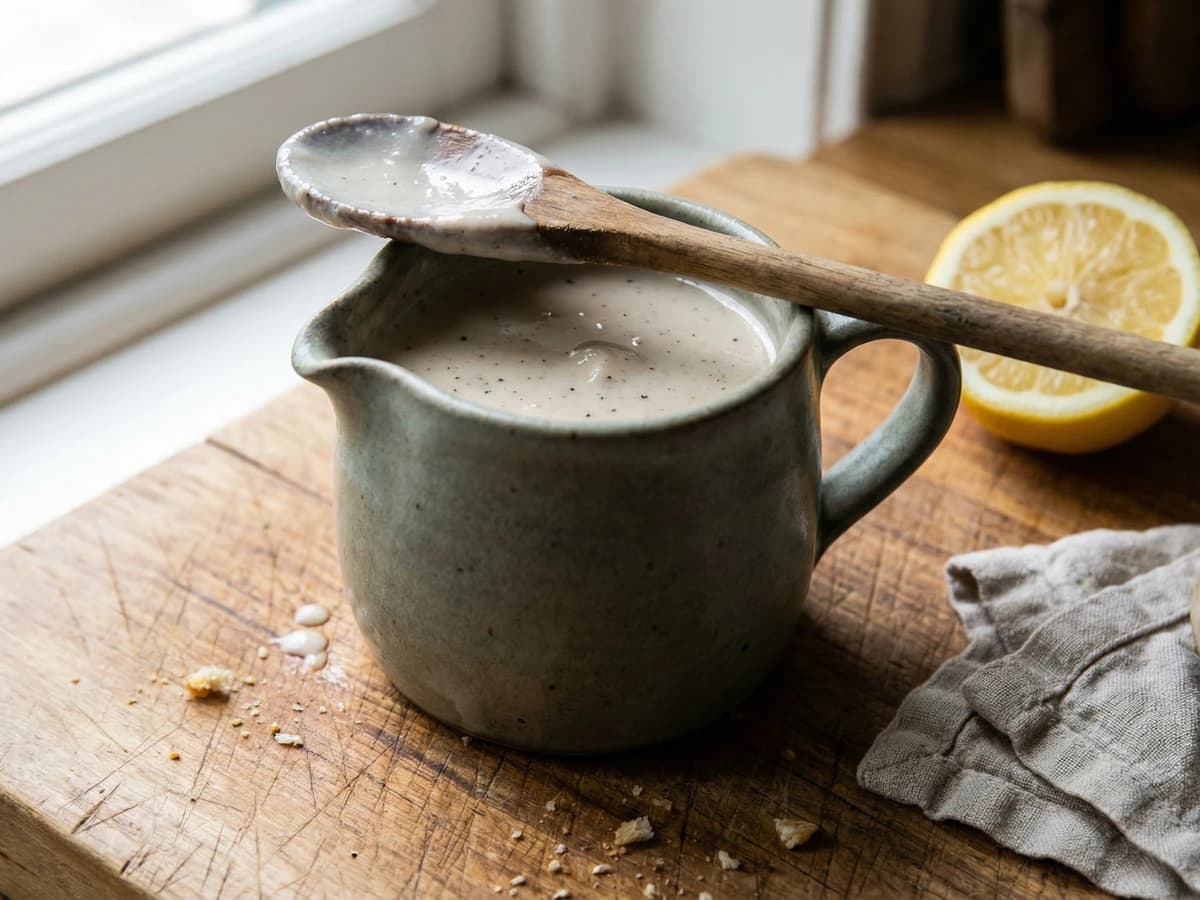
A proper white sauce sharpened with pounded anchovy, the old Georgian trick for waking up a piece of poached fish or a slice of roast lamb on a Sunday in spring.
A cooking platform built around craft, culture, and the stories behind what we eat.

Created by Chef Thomas
Wild blackberries and a couple of cooking apples turned into jars of deep, inky jam, the kind that holds the taste of a September walk all the way through to spring.
September is a generous month if you know where to look. The blackberries are out along every lane and field edge, glossy and black and a little reluctant to come off the bramble without scratching you for the privilege. I went out on Saturday with an ice cream tub and came back with stained fingers and more fruit than I knew what to do with. The notebook decided: jam.
Blackberries on their own don't set well. They're low in pectin and high in juice, and left to themselves they'll give you something more like a sauce than a spread. The apple fixes that. A couple of Bramleys, cooked down to a fluff before the berries go in, do all the quiet work of holding the jam together. You don't taste them in the finished jar, not really. You just notice that the jam stays on the toast.
This is the kind of cooking I love best. A walk, a pan, a few jars on the windowsill catching the afternoon light, and something to give away. There are few better feelings than handing someone a warm jar of jam you made yourself. We're only making dinner. We're only making jam. The principle is the same.
I wrote it down in the notebook on Saturday evening: blackberries, apples, rain on the window, four jars. That's enough for a recipe and almost enough for a year.
Quantity
1kg
picked over for stalks and leaves
Quantity
500g
peeled, cored and roughly chopped (Bramleys if you can)
Quantity
1.3kg
Quantity
1
juiced
Quantity
small knob
to settle the foam at the end
| Ingredient | Quantity |
|---|---|
| blackberriespicked over for stalks and leaves | 1kg |
| cooking applespeeled, cored and roughly chopped (Bramleys if you can) | 500g |
| granulated sugar | 1.3kg |
| lemonjuiced | 1 |
| unsalted butter (optional)to settle the foam at the end | small knob |
Wash four medium jars and their lids in hot soapy water, rinse well, and put them on a tray in a low oven, 120C, for fifteen minutes to dry out and sterilise. Leave them there until you need them. Cold jam in cold jars cracks the glass; warm jam in warm jars behaves itself.
Put the chopped apples into a wide, heavy-bottomed pan with about 100ml of water and the lemon juice. Set them over a gentle heat and let them cook down for ten minutes or so, stirring now and then, until the apple has collapsed into a soft, slightly fluffy mush. This is where the pectin comes from. Don't skip it. Don't rush it.
Tip the blackberries in on top of the softened apples. Stir them through and let them cook for five minutes, just until they start to give up their juice and the whole pan turns a deep, inky purple. The kitchen will smell of hedgerows and rain. That's the smell you're after.
Pour in all the sugar at once and stir gently over a low heat until every grain has dissolved. Run a wooden spoon along the bottom of the pan and feel for grittiness. If you can still feel sugar, keep stirring. Boiling jam with undissolved sugar gives you a grainy, joyless set, and there is no fixing it later.
Once the sugar has dissolved, turn the heat up and bring the jam to a proper rolling boil. Not a polite simmer, a proper boil that you can't stir down. Let it bubble fiercely for eight to ten minutes. The colour will deepen, the bubbles will get smaller and glossier, and the surface will start to look like something between liquid and jelly. Skim off any pinkish foam that gathers at the edges.
Take the pan off the heat and spoon a little jam onto your cold saucer from the freezer. Wait a minute, then push it gently with your fingertip. If the surface wrinkles and the jam holds its shape, it's ready. If it slides about like syrup, put the pan back on the heat for another two or three minutes and try again. Most jams set somewhere between minute eight and minute fifteen. Yours will tell you when it's there.
Stir in the small knob of butter if you're using it. It melts the foam away in seconds. Let the jam stand for five minutes off the heat so the fruit settles evenly through it rather than floating to the top. Then ladle it carefully into the warm jars, right up to the brim, and seal straight away while everything is still hot. Label them when they've cooled. Write the date. You'll be glad in February.
1 serving (about 20g)
Culinary guides, cultural storytelling, and the editorial depth that makes cooking meaningful.
Discover Culinary ExplorerChef Thomas
A proper white sauce sharpened with pounded anchovy, the old Georgian trick for waking up a piece of poached fish or a slice of roast lamb on a Sunday in spring.

Chef Thomas
A spiced autumn chutney made from a glut of apples and a quiet afternoon, simmered down until the kitchen smells of October and the jars line up on the counter like a small, useful insurance policy.
Chef Thomas
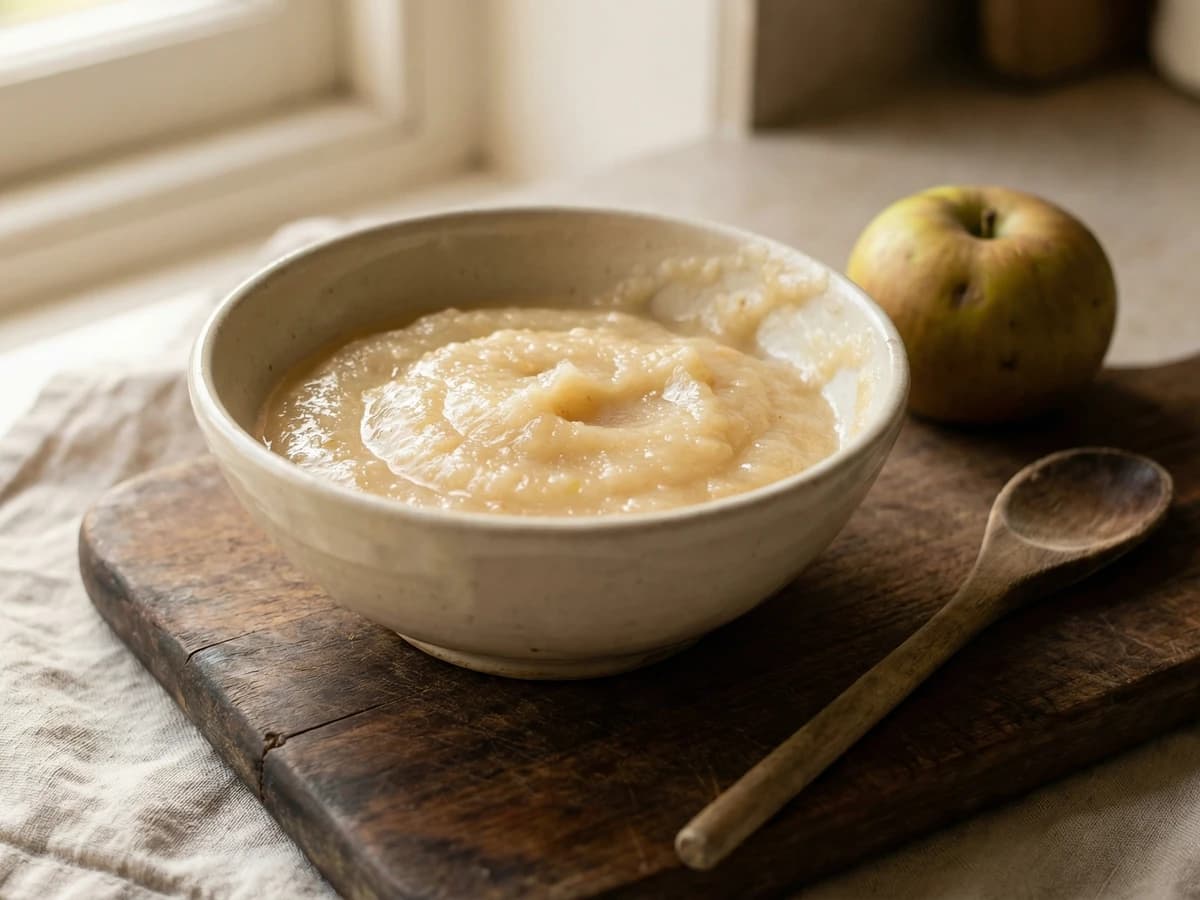
A bowl of sharp, fluffy Bramley apple sauce, made in the time it takes to carve the pork, the kind of small condiment that quietly makes the whole meal make sense.
Chef Thomas
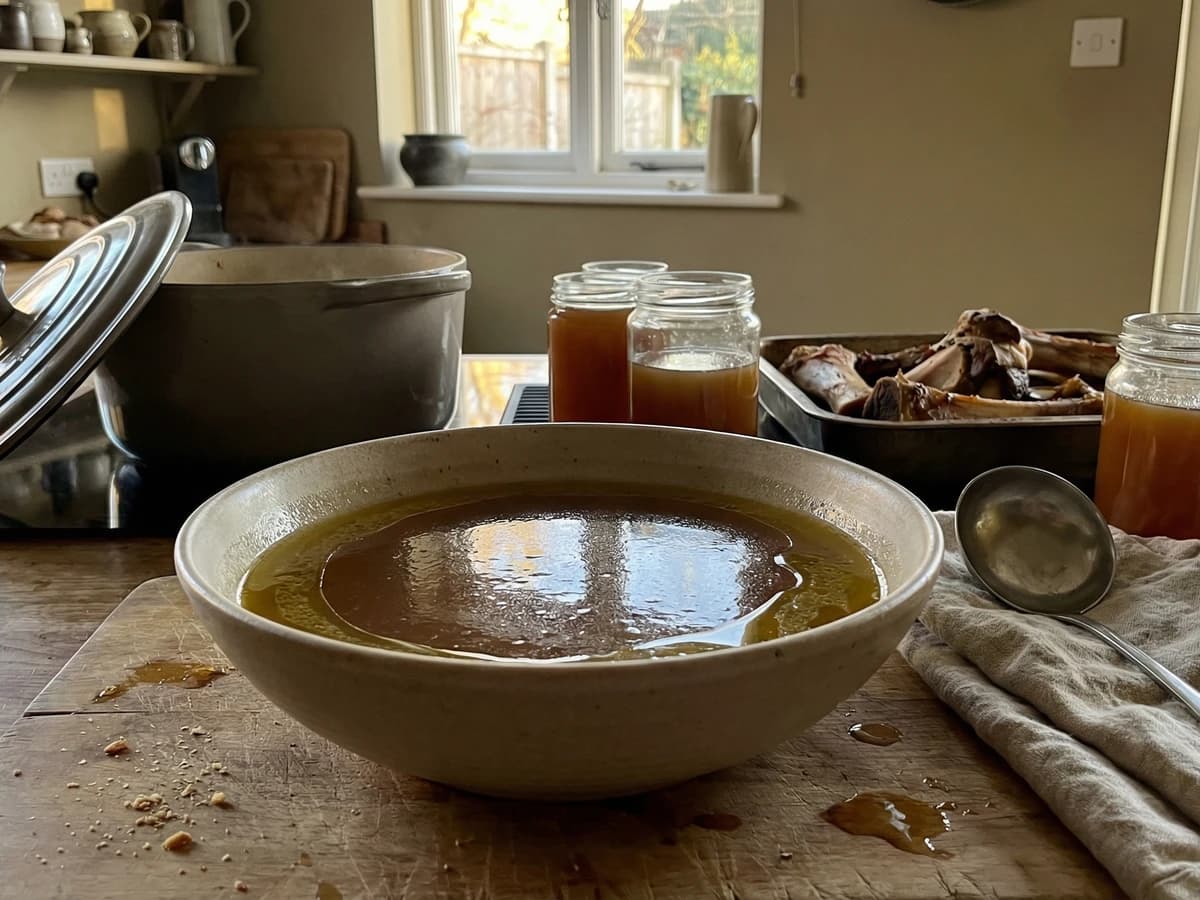
Beef bones roasted until dark, then coaxed for a long afternoon into a deep amber stock, the foundation of every good gravy, every braise, every bowl of winter soup worth the trouble.