Culinary Explorer

A cooking platform built around craft, culture, and the stories behind what we eat.
Discover Culinary Explorer
Thessaloniki Harbour Garides Saganaki (Γαρίδες Σαγανάκι)

Thessaloniki Harbour Garides Saganaki (Γαρίδες Σαγανάκι)

Created by

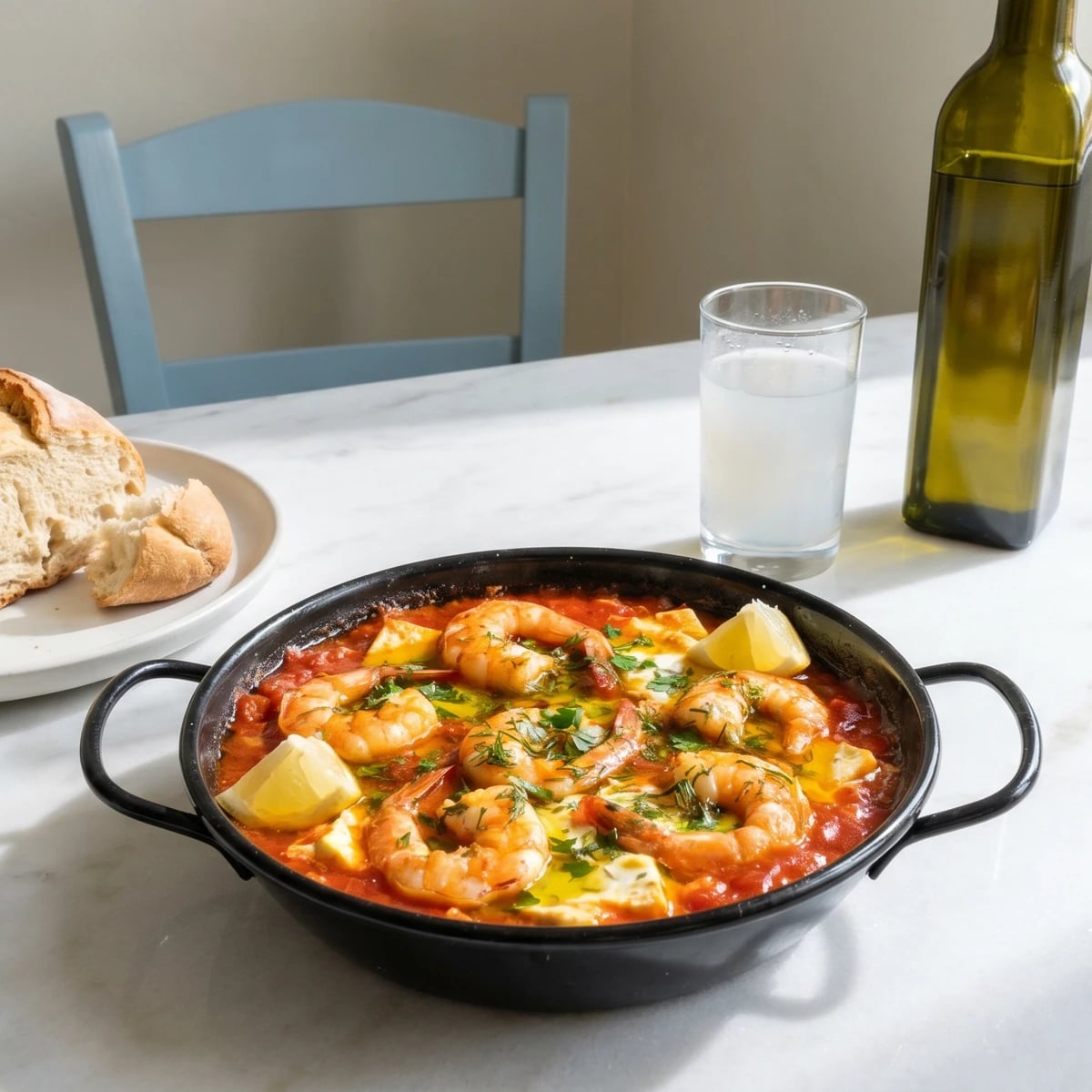
Garides saganaki belongs to the Thessaloniki harbour table: shrimp, tomato, feta, a little ouzo, and the small two-handled pan that gives the dish its name.

Main Dishes
Greek
Dinner Party
Date Night
Comfort Food
15 min
Active Time
20 min cook35 min total
Yield4 servings as a main dish, or 6 as a meze

Garides saganaki is a Thessaloniki harbour dish before it is a restaurant slogan: shrimp in a sharp tomato sauce, feta softening into the edges, and the little two-handled pan, the saganaki, brought straight to the table. The sauce is bright, salty, and a little briny. It asks for bread, not ceremony.

The one rule is timing. Build the tomato sauce first, until it is thick enough to leave a clean trail when you drag the spoon through it, then add the shrimp only at the end. Shrimp forgive almost nothing. Give them a few minutes in the hot sauce and they stay sweet and springy; cook them from the beginning and they turn tight before the feta even has time to warm.

Use good tomatoes in season, or good canned tomatoes when winter is telling the truth. A splash of ouzo is common in the north, but it should sit behind the tomato and seafood, not shout over them. Good olive oil, and patience. That is enough.

Saganaki takes its name from the small two-handled pan, related to the Turkish word sahan, and in Greece it names the vessel as much as the dish. Garides saganaki is a modern taverna and ouzerie dish, especially at urban harbour tables such as Thessaloniki, where seafood meze, tomato, feta, and anise-scented spirits met naturally in the same pan. Its history is not ancient village cooking, but it is still real Greek cooking: a recorded small-pan dish of the twentieth-century table.

The technique, the tradition, and the story behind every dish.

Discover Culinary Explorer

Ingredients

large raw shrimp (garides)

Quantity

600g

peeled and deveined, tails left on if liked

extra virgin Koroneiki olive oil

Quantity

60ml

yellow onion

Quantity

1 medium

finely chopped

garlic cloves

Quantity

3

thinly sliced

small red chilli (optional)

Quantity

1

finely chopped

dried chilli flakes (optional)

Quantity

1/2 teaspoon

dry white wine

Quantity

120ml

ouzo (optional)

Quantity

30ml

ripe tomatoes

Quantity

500g

grated

canned crushed tomatoes (optional)

Quantity

400g

tomato paste

Quantity

1 tablespoon

fine sea salt

Quantity

1/2 teaspoon

plus more to taste

freshly ground black pepper

Quantity

1/4 teaspoon

dried Greek oregano

Quantity

1/2 teaspoon

Greek feta

Quantity

180g

crumbled into large pieces

flat-leaf parsley

Quantity

2 tablespoons

chopped

fresh dill

Quantity

1 tablespoon

chopped

lemon

Quantity

1

cut into wedges

country bread

Quantity

as needed

for serving

Equipment Needed

  • 26cm saganaki pan or ovenproof skillet
  • box grater for fresh tomatoes
  • fish spatula or wide spoon

Instructions

  1. 1

    Prepare the shrimp

    Pat the shrimp dry and season them lightly with a pinch of the salt and the black pepper. Keep them cold while you make the sauce. If the shrimp smell clean and faintly sweet, you're on the right road; if they smell strong, no sauce will rescue them.

  2. 2

    Start the sauce

    Warm the olive oil in a 26cm saganaki pan or ovenproof skillet over medium heat. Add the onion and cook for 6 to 8 minutes, until soft and pale gold at the edges. Add the garlic and chilli and cook for 1 minute more, just until the garlic smells sweet.

  3. 3

    Reduce the wine

    Stir in the tomato paste and let it darken for 1 minute. Pour in the wine and ouzo, scraping the pan, and let them bubble for 2 minutes so the sharp alcohol edge cooks off and the sauce begins to gather itself.

  4. 4

    Thicken the tomato

    Add the grated or crushed tomatoes, the remaining salt, and the oregano. Simmer uncovered for 10 to 12 minutes, stirring now and then, until the sauce is thick and glossy and a spoon dragged through the pan leaves a clean trail for a moment.

    If fresh tomatoes are pale and watery, use good canned tomatoes. The calendar is not sentimental.
  5. 5

    Add the shrimp

    Heat the oven to 220C. Nestle the shrimp into the thick sauce in one layer and spoon a little sauce over them. Cook on the stovetop for 2 minutes only, until the undersides begin to turn pink. This late addition is what keeps the shrimp tender.

  6. 6

    Finish with feta

    Scatter the feta over the pan in large crumbles, not dust. Transfer the pan to the oven and bake for 5 to 7 minutes, until the shrimp are just opaque, the feta has softened, and the sauce bubbles thickly around the edges.

  7. 7

    Serve at once

    Rest the pan for 2 minutes, then finish with parsley, dill, and a thread of olive oil if the sauce wants it. Serve straight from the saganaki with lemon wedges and bread for the sauce. The pan is hot, so put it down with respect.

Chef Tips

  • Use large raw shrimp, not cooked shrimp. Cooked shrimp reheated in tomato sauce become tight and dull, and then everyone blames the recipe.
  • Feta should be Greek sheep's milk or sheep-and-goat milk feta, firm enough to crumble in large pieces. Soft salad cheese melts away and leaves the sauce muddy.
  • If you don't cook with ouzo, leave it out and use the wine alone. Don't replace it with something sweet. The dish needs brightness, not perfume.
  • Serve garides saganaki with bread, a bitter green salad, and chilled white wine or ouzo. It is rich from feta and oil, so the table around it should stay clean.

Advance Preparation

  • The tomato sauce can be made up to 1 day ahead and chilled. Reheat it until thick and bubbling before adding the shrimp.
  • Peel and devein the shrimp up to 6 hours ahead, then keep them covered in the refrigerator. Do not salt them until cooking.

Frequently Asked Questions

Nutrition Information

1 serving (about 350g)

Calories
545 calories
Total Fat
25 g
Saturated Fat
8 g
Trans Fat
0 g
Unsaturated Fat
16 g
Cholesterol
250 mg
Sodium
1160 mg
Total Carbohydrates
42 g
Dietary Fiber
4 g
Sugars
8 g
Protein
39 g

Note: Chef personas and recipes are created with AI assistance. Cook with care: follow safe food-handling practices, check doneness with a thermometer when needed, and adapt for allergies and your kitchen.

Where cooking meets culture.

Culinary guides, cultural storytelling, and the editorial depth that makes cooking meaningful.

Discover Culinary Explorer

More from Greek Seafood & Fish

Browse the full collection