Culinary Explorer

A cooking platform built around craft, culture, and the stories behind what we eat.
Discover Culinary Explorer
Aegean Islands Chtapodi sti Schara (Χταπόδι στη Σχάρα)

Aegean Islands Chtapodi sti Schara (Χταπόδι στη Σχάρα)

Created by

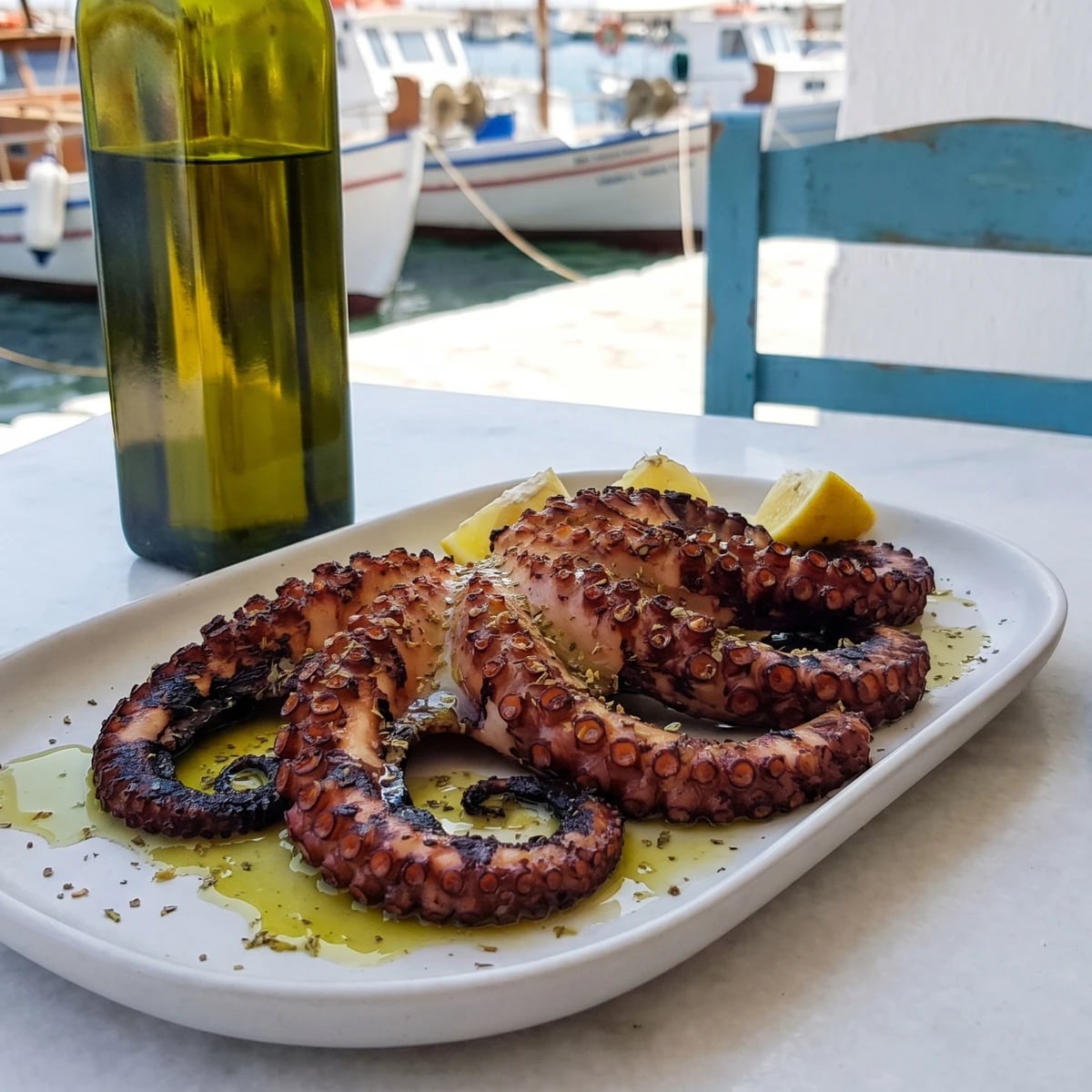
Aegean island octopus, simmered tender in its own juices, then marked hard on the grill and finished with oil, vinegar, oregano, and lemon.

Main Dishes
Greek
Outdoor Dining
Special Occasion
Date Night
15 min
Active Time
1 hr 10 min cook1 hr 25 min total
Yield4 servings as a main or 6 as meze

Chtapodi sti Schara belongs to the Aegean island quay: octopus first softened in its own red juices, then grilled until the edges catch and the suckers turn crisp in places. It is the ouzo plate you find where the fishing boats tie up, simple enough to look obvious and exact enough to punish haste.

The one method that decides it is this: add no water. The octopus gives its own cooking liquid, salty and dark, and that liquid is the flavor you want to keep. Boil it in water and you wash the sea out of it. Grill it from raw and you'll fight the chew all evening.

I cook it gently first, then char it quickly, and I don't bury it under sauce. Olive oil, vinegar, oregano, lemon. Λίγα και καλά. The region is the dish's surname here: on the islands, this is not restaurant theater, it is how a hard ingredient becomes tender enough for a long table and a small glass.

Grilled octopus is tied to the fishing communities of the Aegean islands, especially the Cyclades and Dodecanese, where octopus was traditionally beaten on seaside rocks and sun-dried briefly before cooking. The common modern use of frozen octopus is not a betrayal of the dish; freezing helps tenderize the muscle in a way the old beating once did. Its place as an ouzo meze grew from the kafeneio and harbour table, where salty, smoky seafood called for a small glass rather than a full feast.

The technique, the tradition, and the story behind every dish.

Discover Culinary Explorer

Ingredients

whole octopus (chtapodi)

Quantity

1.5kg

cleaned, fresh or thawed from frozen

bay leaves

Quantity

2

red wine vinegar

Quantity

60ml

divided

extra virgin Koroneiki olive oil

Quantity

90ml

divided

dried Greek oregano

Quantity

1 teaspoon

crushed between your fingers

lemon

Quantity

1

cut into wedges

fine sea salt (optional)

Quantity

1/2 teaspoon

only if needed after tasting

freshly ground black pepper

Quantity

1/2 teaspoon

Equipment Needed

  • heavy lidded pot, 24cm
  • charcoal grill or ridged cast-iron grill pan
  • pastry brush

Instructions

  1. 1

    Prepare the octopus

    Rinse the octopus well, especially inside the head, and pat it dry. If the beak and eyes are still attached, cut them away. Leave the tentacles whole for now, because they cook more evenly and look like themselves on the grill.

  2. 2

    Cook without water

    Put the octopus in a heavy pot with the bay leaves and 30ml of the vinegar. Cover tightly and set over low heat. Add no water. Octopus carries its own sea inside it, and as it warms it gives enough liquid to cook in; water only thins the flavor and leaves you with a polite, tired thing.

    Keep the heat low. If the pot boils hard, the skin tears and the flesh tightens before it has time to soften.
  3. 3

    Simmer until tender

    Cook gently for 45 to 60 minutes, turning the octopus once or twice in its own dark red juices. It is ready when a small knife slips into the thickest part of a tentacle with only a little resistance. If your octopus is older or very large, give it another 10 minutes. Patience is cheaper than chewing.

  4. 4

    Reduce the juices

    Lift the octopus onto a tray and let it cool until you can handle it. Boil the liquid in the pot for 5 to 8 minutes until glossy and salty-sweet, then strain it. Cut the tentacles apart and keep the head in large pieces if you like it, as many island cooks do.

  5. 5

    Dress before grilling

    Whisk 45ml olive oil with 2 tablespoons of the reduced octopus juices, the remaining 30ml vinegar, the oregano, and the black pepper. Brush the octopus lightly with this dressing. Taste before adding salt; the octopus and its juices may already have given you enough.

  6. 6

    Char fast

    Heat a charcoal grill or ridged grill pan until very hot. Grill the tentacles for 2 to 3 minutes per side, just until the edges char and the suction cups crisp in spots. Don't park it there. The octopus is already cooked, and the grill's job is smoke, edges, and appetite.

  7. 7

    Finish and serve

    Lay the grilled octopus on a warm platter. Spoon over the remaining 45ml olive oil and a little more of the reduced juices if you have them. Serve with lemon wedges, more oregano if you like, and bread for the oil. A cold glass of ouzo beside it is not decoration; it is the table.

Chef Tips

  • Frozen octopus is often the wiser buy. Thaw it slowly in the refrigerator overnight, and you'll have a more tender result than with a beautiful fresh one that hasn't been properly worked.
  • Do not salt early. Octopus is naturally salty, and the reduced cooking juices become saltier as they concentrate. Taste at the end, then decide.
  • Serve it warm, not scorching hot, with bread, olives, and something sharp in the glass. This is outdoor food, made for talking between bites.

Advance Preparation

  • Thaw frozen octopus in the refrigerator for 24 hours before cooking.
  • You can simmer the octopus up to 1 day ahead, chill it in its strained juices, then grill it just before serving.
  • Bring cooked octopus to room temperature for 30 minutes before grilling so it chars quickly without drying.

Frequently Asked Questions

Nutrition Information

1 serving (about 245g)

Calories
325 calories
Total Fat
12 g
Saturated Fat
2 g
Trans Fat
0 g
Unsaturated Fat
10 g
Cholesterol
145 mg
Sodium
930 mg
Total Carbohydrates
8 g
Dietary Fiber
1 g
Sugars
1 g
Protein
45 g

Note: Chef personas and recipes are created with AI assistance. Cook with care: follow safe food-handling practices, check doneness with a thermometer when needed, and adapt for allergies and your kitchen.

Where cooking meets culture.

Culinary guides, cultural storytelling, and the editorial depth that makes cooking meaningful.

Discover Culinary Explorer

More from Greek Seafood & Fish

Browse the full collection