
Chef Dimitra
Chios Nerantzi Glyko Koutaliou (Νεράντζι Γλυκό Κουταλιού)
Chios bitter orange peel rolled into tight coils, blanched through clean waters, then preserved in a clear fragrant syrup for the spoon-sweet tray.
A cooking platform built around craft, culture, and the stories behind what we eat.
Created by
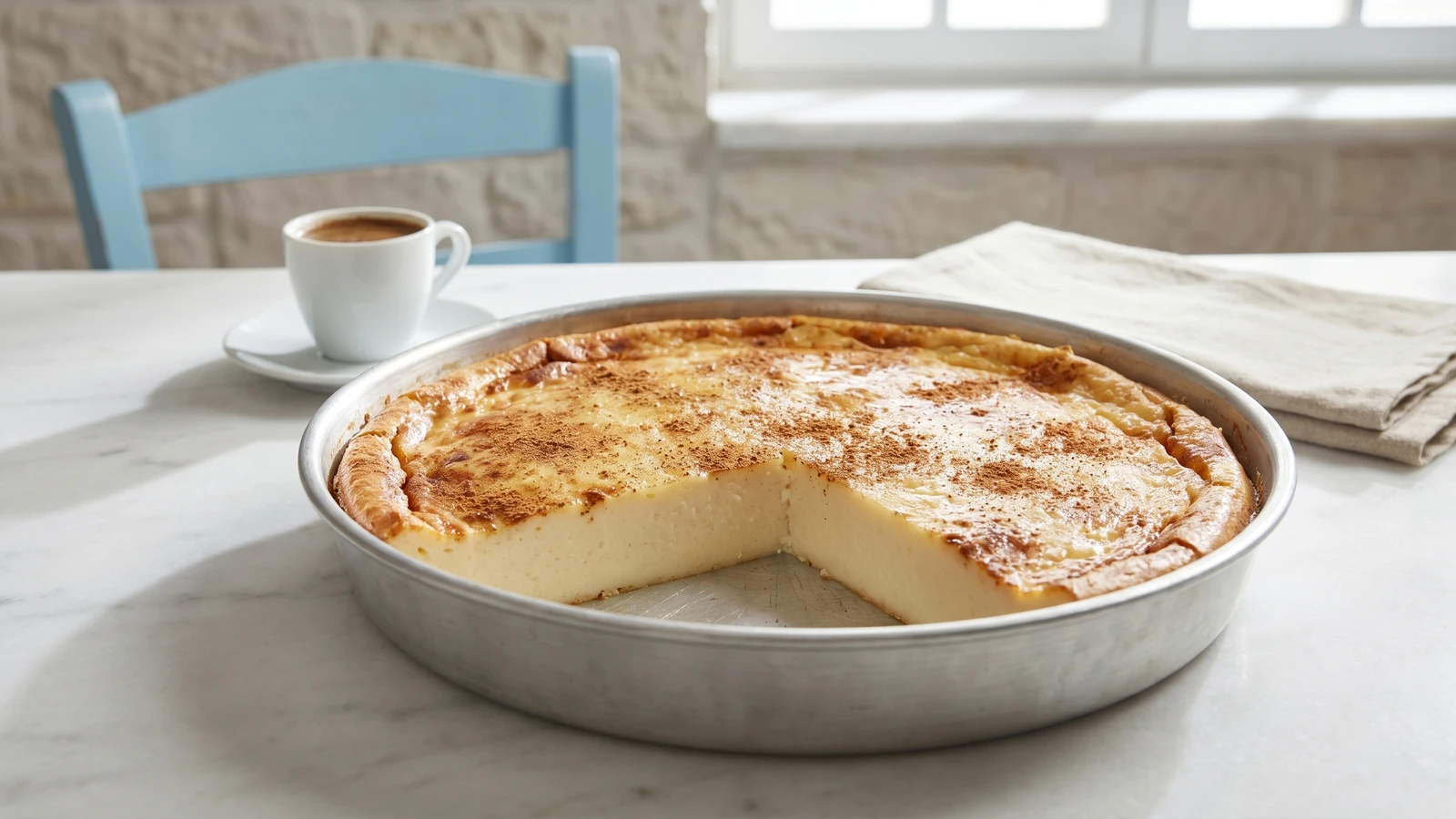
Thessaly's milk pie is a plain custard baked in a tapsi, soft enough to tremble when cut, with cinnamon on top and no syrup to hide the milk.
Galatopita Thessalias is the milk pie of the Thessalian plain, a shallow semolina custard baked in a round tapsi until the top freckles with cinnamon and the middle still gives under the knife. It has no syrup and no phyllo here. The pleasure is milk, eggs, a little butter, and the smell of the top browning.
The method that decides it is the tempering. Pour the hot milk and semolina into the beaten eggs slowly, whisking the whole time, then return everything to the pot. Rush this and the eggs tighten into little flecks; take one quiet minute and the custard bakes smooth enough to cut in squares but soft enough to eat with a spoon.
This is the sweet a dairy house can make without fuss, after the milk has been carried in and before anyone starts pretending dessert needs more than it does. In my Thessaloniki notebook I keep the Thessalian version plain, because that is its strength. Λίγα και καλά: good milk, fine semolina, patience.
Galatopita belongs to the dairy belt of central Greece, especially Thessaly and Epirus, where sheep and goat milk were turned into milk pies whenever a household had more milk than it could drink fresh. The Thessalian no-phyllo version is closer to a baked milk pudding than to galaktoboureko: no syrup, no layered pastry, just milk thickened with semolina and eggs in a tapsi. Its timing followed the animals as much as the church calendar, with the richest versions appearing after spring lambing, when milk was most plentiful.
Quantity
10g
softened, for the tapsi
Quantity
10g
for dusting the tapsi
Quantity
1.2L
preferably full-fat
Quantity
120g
for the custard
Quantity
160g
150g for the custard, 10g for the top
Quantity
4
at room temperature
Quantity
50g
40g for the custard, 10g for finishing
Quantity
zest of 1 lemon
finely grated
Quantity
1 teaspoon
Quantity
1/4 teaspoon
Quantity
1
for the top
Quantity
15ml
for the top
Quantity
1 teaspoon
| Ingredient | Quantity |
|---|---|
| unsalted buttersoftened, for the tapsi | 10g |
| fine semolina (simigdali psilo)for dusting the tapsi | 10g |
| whole milkpreferably full-fat | 1.2L |
| fine semolina (simigdali psilo)for the custard | 120g |
| caster sugar150g for the custard, 10g for the top | 160g |
| large eggsat room temperature | 4 |
| unsalted butter40g for the custard, 10g for finishing | 50g |
| unwaxed lemon zestfinely grated | zest of 1 lemon |
| vanilla extract (optional) | 1 teaspoon |
| fine sea salt | 1/4 teaspoon |
| large egg yolkfor the top | 1 |
| whole milkfor the top | 15ml |
| ground cinnamon | 1 teaspoon |
Heat the oven to 180C conventional, or 170C fan. Butter a 30cm round metal tapsi with the softened butter, then dust it with the 10g semolina and shake out the excess. Galatopita should be shallow, not a deep pudding hiding in a casserole.
Put the 1.2L milk, 150g of the sugar, the salt, and the lemon zest in a heavy saucepan. Warm over medium heat until the sugar dissolves and the milk is hot, with tiny movement at the edge of the pot. Don't let it boil hard.
Rain in the 120g semolina with one hand while whisking with the other. Keep whisking for 5 to 6 minutes, until the mixture thickens into a loose custard and the whisk leaves a brief trail. Take the pot off the heat and whisk in 40g butter and the vanilla, if using.
Whisk the 4 eggs in a large bowl until they are one color. Add two ladles of the hot semolina milk in a thin stream, whisking the whole time, then whisk in two more ladles. Hot milk goes to the eggs slowly so they warm evenly; rush it and the eggs tighten into little flecks. Take one quiet minute here and the custard bakes smooth.
Scrape the warmed egg mixture back into the saucepan and whisk until glossy and even. Return the pot to low heat for 1 minute only, whisking, just to bring everything together. It should pour thickly but still move.
Pour the custard into the prepared tapsi and smooth the top. Whisk the egg yolk with the 15ml milk and brush it lightly over the surface, without digging into the custard. Mix the remaining 10g sugar with the cinnamon and scatter it evenly over the top. Dot with the remaining 10g butter.
Bake for 40 to 45 minutes, until the top is golden in patches and the center still has a small wobble when you move the pan. Cool for at least 1 hour before cutting. Warm from the oven it tastes wonderful but slumps; rested, it cuts clean and still eats softly.
1 serving (about 200g)
Culinary guides, cultural storytelling, and the editorial depth that makes cooking meaningful.
Discover Culinary ExplorerChef Dimitra
Chios bitter orange peel rolled into tight coils, blanched through clean waters, then preserved in a clear fragrant syrup for the spoon-sweet tray.

Chef Dimitra
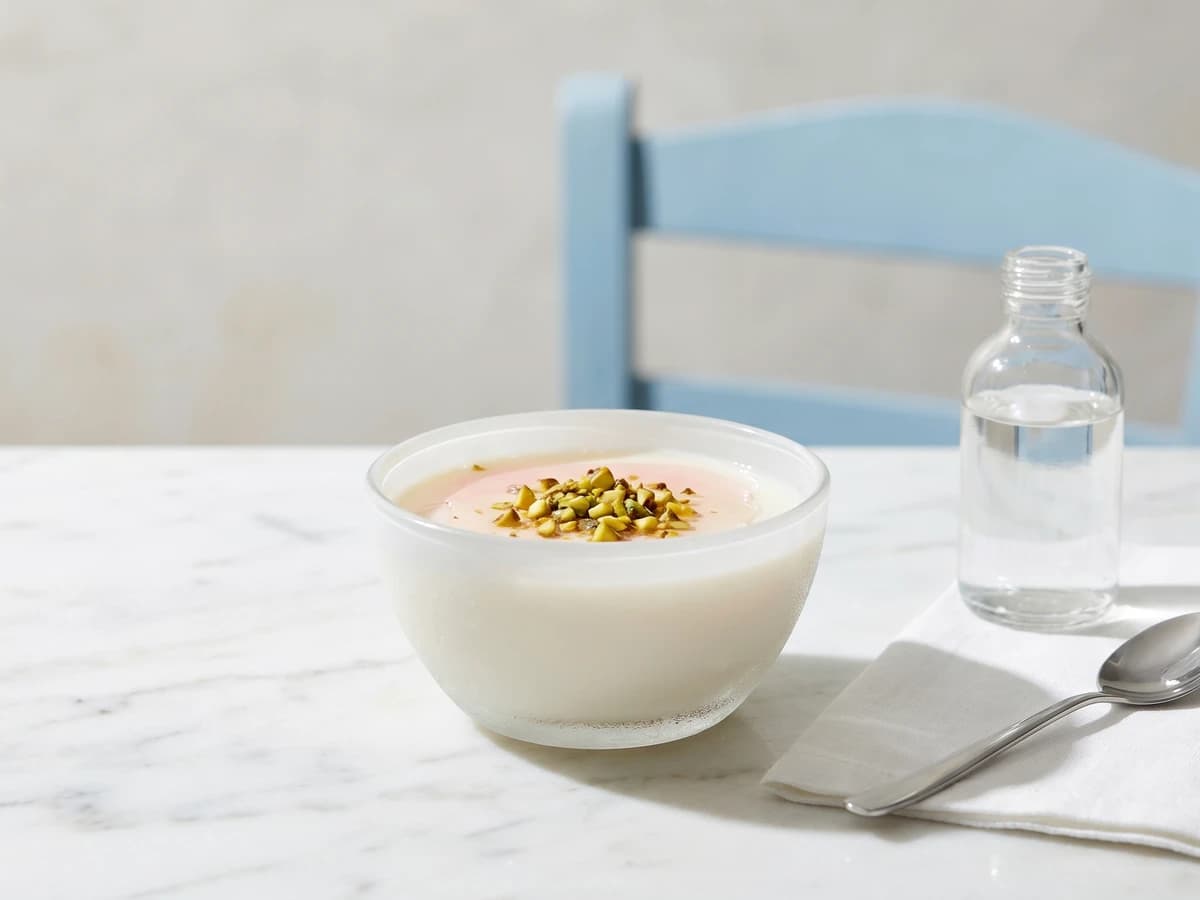
Chios gives vanilla submarine its mastic breath: a pearly spoon sweet stirred stiff, served cold in water, and offered as the simplest kerasma.
Chef Dimitra
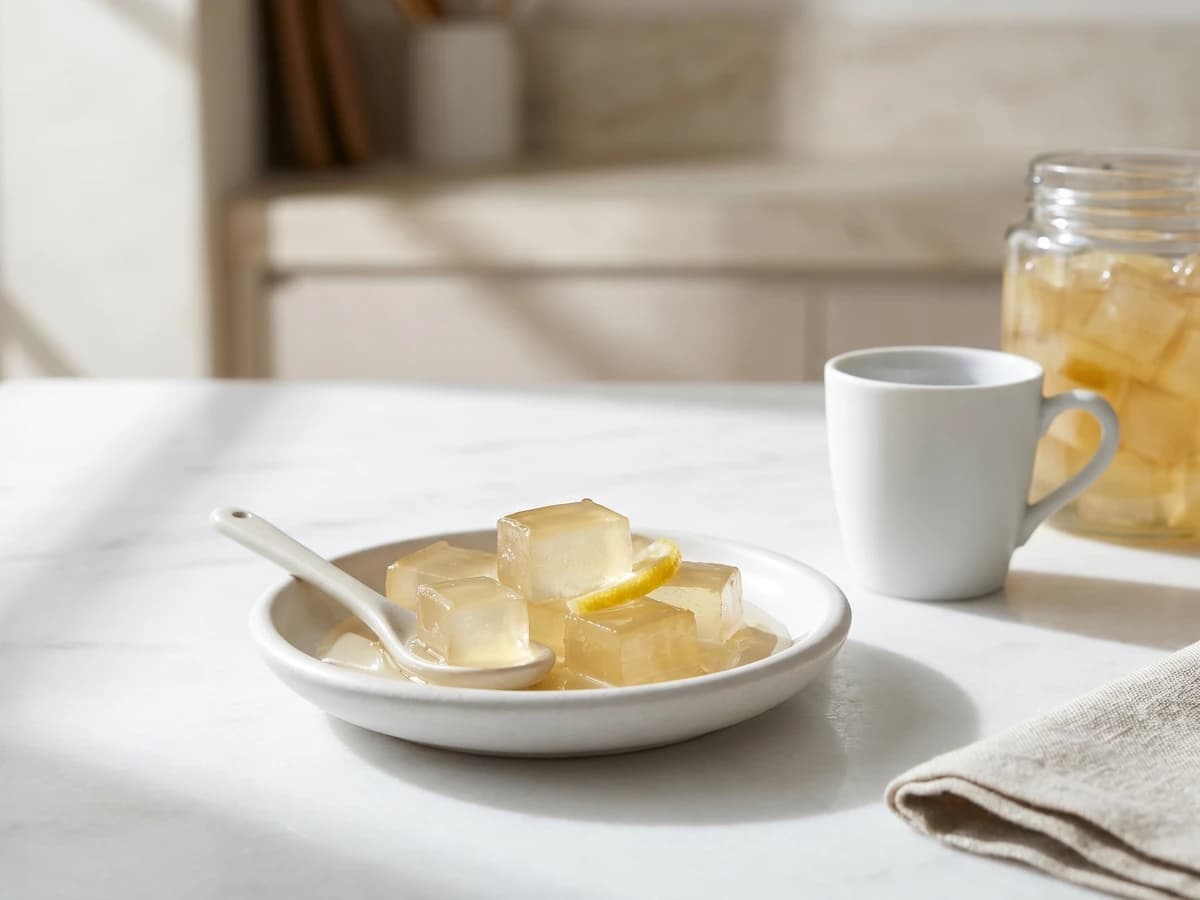
Mahalepi is the cooling milk pudding of Cyprus and the Politiki table: pale, trembling, and loosened at the spoon with cold rosewater syrup.
Chef Dimitra
Cyprus keeps the watermelon after the red flesh is gone: firm white rind, lime-soaked for snap, simmered slowly in lemon syrup until each piece shines on the spoon.