Culinary Explorer

A cooking platform built around craft, culture, and the stories behind what we eat.
Discover Culinary Explorer
Té de Damiana Sudcaliforniana

Té de Damiana Sudcaliforniana

Created by

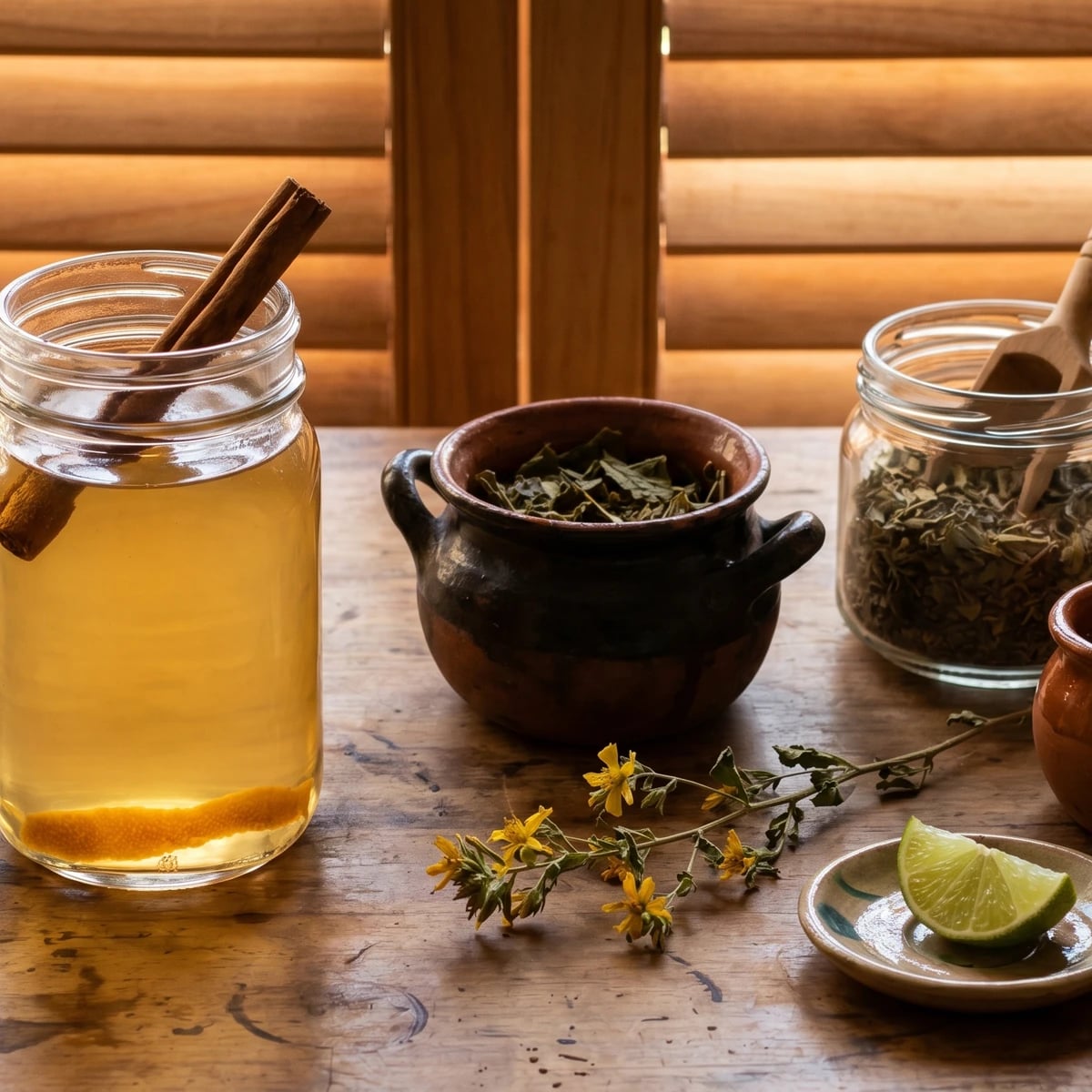
Baja California Sur's wild-harvested damiana infusion, steeped with canela and miel de mezquite. The herbal tea the Guaycura were drinking centuries before anyone bottled it into a liqueur.

Beverages
Mexican
Date Night
Romantic
Weeknight
5 min
Active Time
15 min cook20 min total
Yield4 cups (4 servings)

This is from Baja California Sur. Not the Yucatan, not central Mexico, the long dry peninsula where the Sierra de la Laguna pours down toward the Sea of Cortez and damiana grows wild along the rocky slopes. Turnera diffosa. A small yellow-flowered shrub that smells faintly of resin when you brush against it. The Guaycura, the indigenous people who lived on the peninsula long before the Jesuits arrived, were already drinking it.

Damiana is not a flavor. It is a plant. The bottled liqueur you find in tourist shops is a 19th-century invention, and there is a serious argument among bartenders in La Paz and Todos Santos that the original margarita was built on damiana liqueur, not Cointreau, before the recipe got rewritten for the American market. That is a debate for another conversation. The tea is older than the liqueur and it is what people in Baja Sur actually drink at home.

The brew is straightforward and unforgiving. Good damiana, water just under a boil, eight minutes of steep, miel de mezquite from the desert mesquite trees that grow on the same hillsides as the damiana. That is the whole recipe. The miel matters. Mezquite honey has a smoky, woody depth that wildflower honey cannot replicate, and it is what makes this tea taste like the place it comes from. If you cannot find mezquite honey, use a good raw wildflower honey and accept the compromise. Saber cocinar es saber vivir, and in Baja Sur, saber vivir includes knowing what grows on your own hillside.

Damiana (Turnera diffosa) is a small flowering shrub native to the Baja California peninsula and the broader Sonoran Desert, and its use as a medicinal and ceremonial infusion is documented among the Guaycura and Pericu peoples in Jesuit missionary records from the 17th and 18th centuries, where it was described as a tonic for fatigue and a remedy for stomach ailments. The commercial Damiana liqueur, produced in Guadalajara since the late 19th century and sold in the distinctive Indian-goddess-shaped bottle, codified damiana's association with Baja Sur in the national imagination, though the plant itself was the everyday tea of peninsular rancheros long before any bottle existed. Local bartenders in La Paz and Todos Santos still argue that the proto-margarita served at Hussong's Cantina and other Baja establishments in the 1930s and 1940s used damiana liqueur rather than triple sec, a claim that has gained credibility among Mexican cocktail historians but remains unresolved.

The technique, the tradition, and the story behind every dish.

Discover Culinary Explorer

Ingredients

filtered water

Quantity

4 cups

dried damiana leaves (Turnera diffusa)

Quantity

3 tablespoons

loosely packed

Mexican canela (Ceylon cinnamon)

Quantity

1 stick

about 3 inches

miel de mezquite or wildflower honey

Quantity

2 tablespoons, plus more to taste

orange peel

Quantity

1 strip, about 2 inches

white pith removed

piloncillo (optional)

Quantity

1 small pinch

shaved

fresh lime wedges (optional)

Quantity

for serving

Equipment Needed

  • Small clay olla or 2-quart stainless saucepan
  • Fine-mesh strainer
  • Heavy glass pitcher or clay jarro for serving
  • Small heavy glass cups or clay jarritos

Instructions

  1. 1

    Inspect the damiana

    Pour the dried damiana into your hand and look at it. You want small olive-green leaves, brittle, with the faint smell of dry mountain shrub when you crush one between your fingers. Damiana from Baja Sur should smell green and slightly resinous, never musty. If it smells like hay or nothing at all, it is too old and the tea will taste like nothing. Turnera diffosa is the plant. Anything sold as 'damiana flavoring' or already blended into a tea bag is not what you want.

    Buy whole-leaf damiana from a hierberia, not a supermarket tea aisle. The vendors in La Paz and Todos Santos sell it loose by the gram and they will let you smell it before you pay.
  2. 2

    Bring the water to a near-boil

    Pour the water into a small clay olla or a stainless saucepan and set it over medium heat. Drop in the canela stick and the orange peel. Heat the water until small bubbles cling to the side of the pot and the surface trembles. You want it just under a boil. Boiling water scalds delicate leaves and pulls bitterness out of damiana the same way it does out of green tea. Hot, not violent.

  3. 3

    Add the damiana and steep

    Pull the pot off the heat. Add the damiana leaves and stir once with a wooden spoon to make sure every leaf is wet. Cover and let it steep for 8 to 10 minutes. Not longer. The leaves will give up their flavor in that window, and after that you start pulling tannin and bitterness that you do not want. The liquid should turn the color of pale amber tobacco, with a green-brown depth underneath.

  4. 4

    Strain and sweeten

    Strain the tea through a fine-mesh sieve into a warm clay jarro or heavy glass pitcher. Press lightly on the leaves with the back of a spoon. Stir in the miel de mezquite while the tea is still hot so it dissolves clean. Taste. If you want it sweeter, add a pinch of shaved piloncillo, not more honey. The piloncillo gives the molasses note that pairs with damiana the way it was drunk in the rancherias of the sierra.

  5. 5

    Serve hot or cold

    Pour into small heavy glass cups or clay jarritos. A wedge of lime on the rim if you want. In Baja Sur this tea is drunk hot at night and chilled with ice in the afternoon. Both are correct. Cada estado, su propia cocina, and Baja Sur takes its damiana seriously enough to drink it year-round.

Chef Tips

  • Buy whole-leaf damiana from a hierberia or a Mexican herbal market. Loose leaves keep their oils. Tea bags labeled 'damiana blend' usually contain very little real Turnera diffosa and are cut with other leaves to stretch them.
  • Miel de mezquite is the right honey for this tea. The mesquite tree grows on the same Baja and Sonoran hillsides as the damiana, and the two flavors evolved alongside each other. A jar of wildflower honey will work as a compromise, but it will not taste like Baja Sur.
  • Drink this tea at night. Damiana is gently warming and has a calming reputation in Baja Sur households. It is not a morning caffeine substitute. It is what you serve after dinner when you want the evening to slow down.

Advance Preparation

  • The tea can be brewed up to one day ahead and refrigerated. The flavor holds well cold, though the canela note softens overnight.
  • Dried damiana leaves keep in a sealed glass jar away from light for up to six months. After that the volatile oils fade and the tea loses its character.

Frequently Asked Questions

Nutrition Information

1 serving (about 245g)

Calories
35 calories
Total Fat
0 g
Saturated Fat
0 g
Trans Fat
0 g
Unsaturated Fat
0 g
Cholesterol
0 mg
Sodium
5 mg
Total Carbohydrates
9 g
Dietary Fiber
0 g
Sugars
9 g
Protein
0 g

Note: Chef personas and recipes are created with AI assistance. Cook with care: follow safe food-handling practices, check doneness with a thermometer when needed, and adapt for allergies and your kitchen.

Where cooking meets culture.

Culinary guides, cultural storytelling, and the editorial depth that makes cooking meaningful.

Discover Culinary Explorer

More from Noroeste Beverages

Browse the full collection