Chef Makoa
Fāfā (Tahitian Taro Leaves in Coconut Cream)
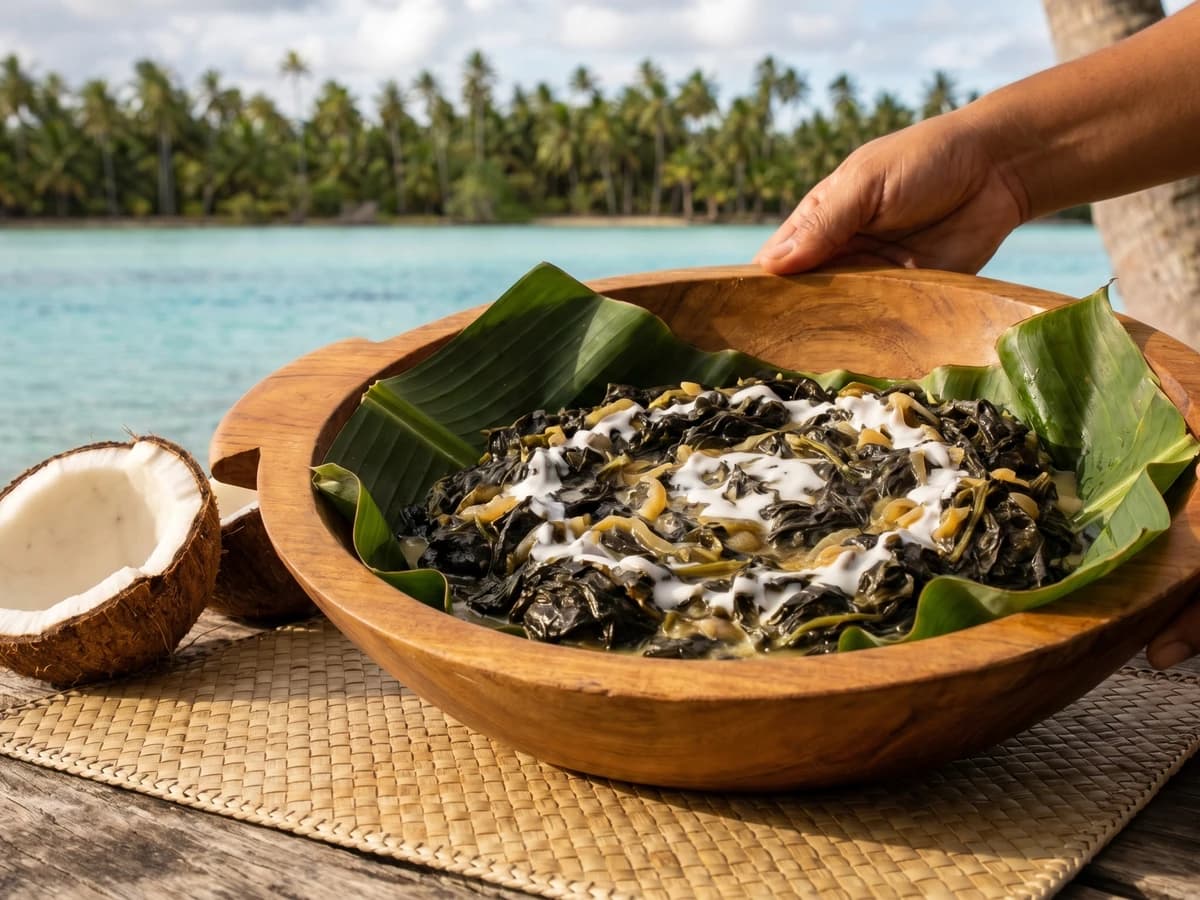
Tahiti's fāfā cooks young taro leaves down with onion and coconut cream until they turn dark, silky, and rich enough to feed the whole table.
A cooking platform built around craft, culture, and the stories behind what we eat.
Created by
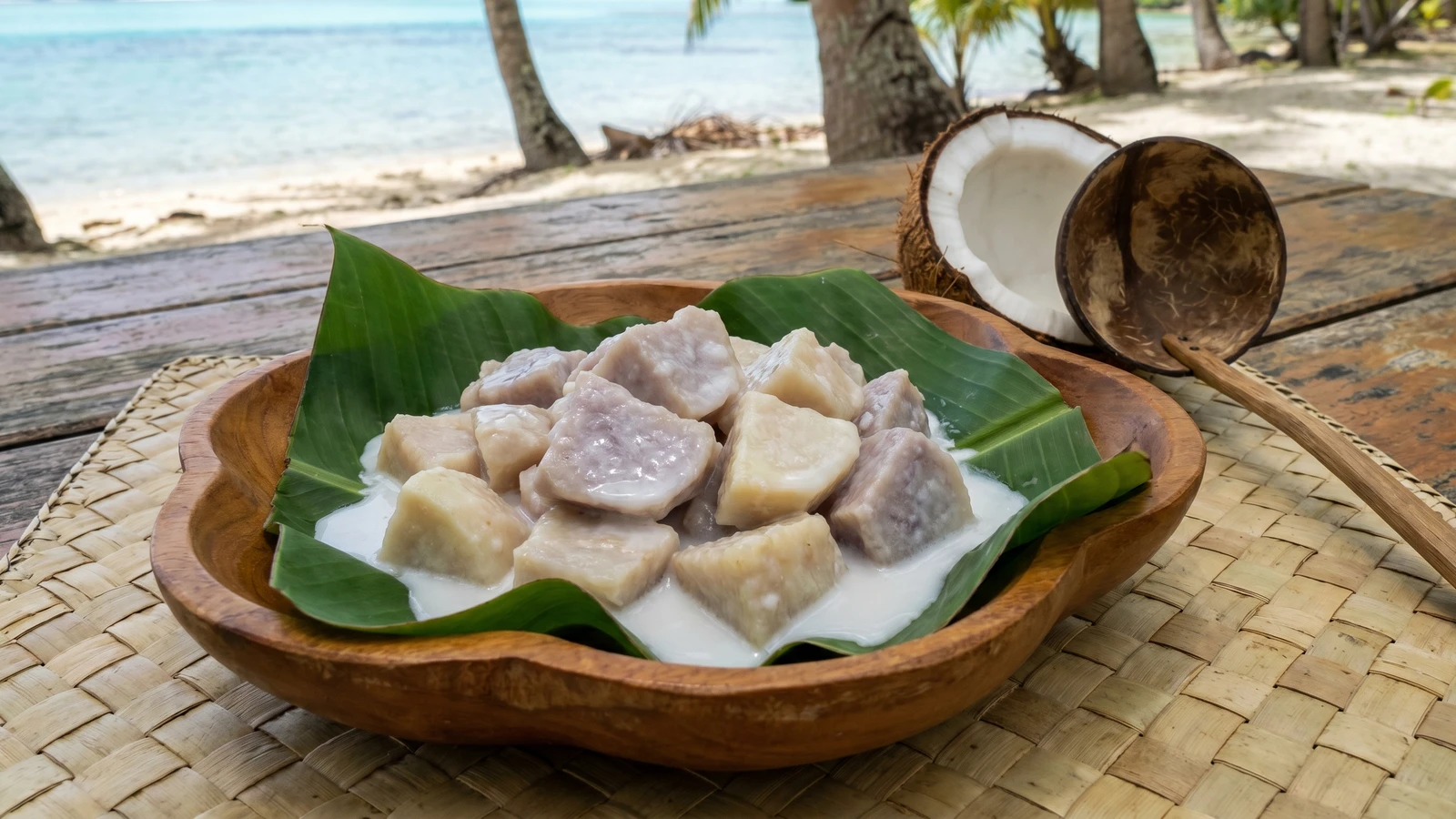
Tahitian taro boiled soft, salted gently, and bathed warm in coconut milk until every piece shines. The fenua feeds first, the coconut finishes, and the bowl stays open.
The canoe carried the elder brother before it carried most of what people now call dinner. In Tahiti, the fenua, the land, gives taro in that old canoe-crop line, and this dish keeps it plain: boiled until the corm gives, then covered with coconut milk so the root drinks back richness from the tree beside it. One ocean, one canoe, one root.
I learned this kind of bowl by sitting quiet at other people's tables, which is the only smart thing for a Hawaiian man to do when the dish belongs to Tahiti. Back home I know Hāloa as our elder brother, and I know poi from the stone. In Tahiti the hand is different. The taro stays in pieces, soft and warm, and the coconut milk wraps it like kindness. Sāmoa has its faʻalifu talo, taro simmered with coconut cream. Tonga has talo with lolo. The Cooks, Hawaiʻi, Aotearoa, all of us keep the root close, but each island speaks it its own way.
So don't make this precious. Peel carefully, cook patiently, salt enough to wake the coconut, and serve it beside fish, roast pork, chicken, greens, or whatever your table already has. Eat what you have. The deep food can sit right next to the everyday plate, no shame in that. The respect is in knowing whose bowl this is, and in not rushing the taro when it is trying to come soft.
Taro is one of the core canoe crops carried by Polynesian voyagers across the Pacific, planted from the western islands through the Society Islands and onward to Hawaiʻi, Aotearoa, and Rapa Nui. In Tahiti and the wider Society Islands, taro with coconut milk sits in the deep-food line of maʻa Tahiti, Tahitian food, where root crops, breadfruit, fish, and coconut fed the people long before imported rice and tinned meats became everyday companions. Its close cousin, Sāmoan faʻalifu talo, shows the same old grammar in another island's hand: a cooked root finished with coconut, simple enough for Sunday and strong enough for ceremony.
Quantity
2 pounds
peeled and cut into 2-inch chunks
Quantity
1 tablespoon
plus more to taste
Quantity
enough to cover the taro
Quantity
2 cups
or 1 can (13 to 14 ounces) full-fat coconut milk
Quantity
1/2 cup
Quantity
1 small leaf
for lining the serving bowl
| Ingredient | Quantity |
|---|---|
| taropeeled and cut into 2-inch chunks | 2 pounds |
| sea saltplus more to taste | 1 tablespoon |
| water | enough to cover the taro |
| fresh coconut milkor 1 can (13 to 14 ounces) full-fat coconut milk | 2 cups |
| thick coconut cream (optional) | 1/2 cup |
| pandanus leaf or banana leaf (optional)for lining the serving bowl | 1 small leaf |
Trim the taro and peel away the rough skin, then cut the corm into big 2-inch chunks. If your hands itch from raw taro, rinse well and keep going, no drama. Raw taro has that bite in it. The full cook is what makes it gentle.
Put the taro in a heavy pot, cover with cool water by an inch, and add the tablespoon of sea salt. Bring it to a steady boil, then lower to a strong simmer and cook 25 to 35 minutes, until a fork slides through the center with no chalky core left. No blame the taro if it takes longer. Some roots are stubborn.
While the taro cooks, warm the coconut milk in a small pot over low heat. Do not boil it hard. You want it loose, fragrant, and glossy, with the fat gathered back into the milk. Stir in the coconut cream if you want a richer Sunday bowl.
Drain the taro gently so the pieces stay whole, then return them to the warm pot for one minute off the heat. Let the surface dry just a little. That way the coconut milk clings instead of sliding straight off.
Pour the warm coconut milk over the taro and fold once or twice, softly, until every piece has a pale coconut sheen. Taste the milk at the bottom of the pot. It should be gently salty, not sweet, because salt is what lets the coconut speak.
Line a wooden bowl with pandanus or banana leaf if you have it, spoon in the taro, and pour the coconut milk left in the pot over the top. Serve warm, family-style, with grilled fish, oven pork, chicken, or greens. This is Tahiti's bowl. Keep it generous.
1 serving (about 235g)
Culinary guides, cultural storytelling, and the editorial depth that makes cooking meaningful.
Discover Culinary ExplorerChef Makoa
Tahiti's fāfā cooks young taro leaves down with onion and coconut cream until they turn dark, silky, and rich enough to feed the whole table.

Chef Makoa
Tahiti's fēʻi are orange-fleshed mountain bananas, cooked until tender and served like a starch, warm with sea salt, coconut cream, and the quiet sweetness of the high valleys.
Chef Makoa
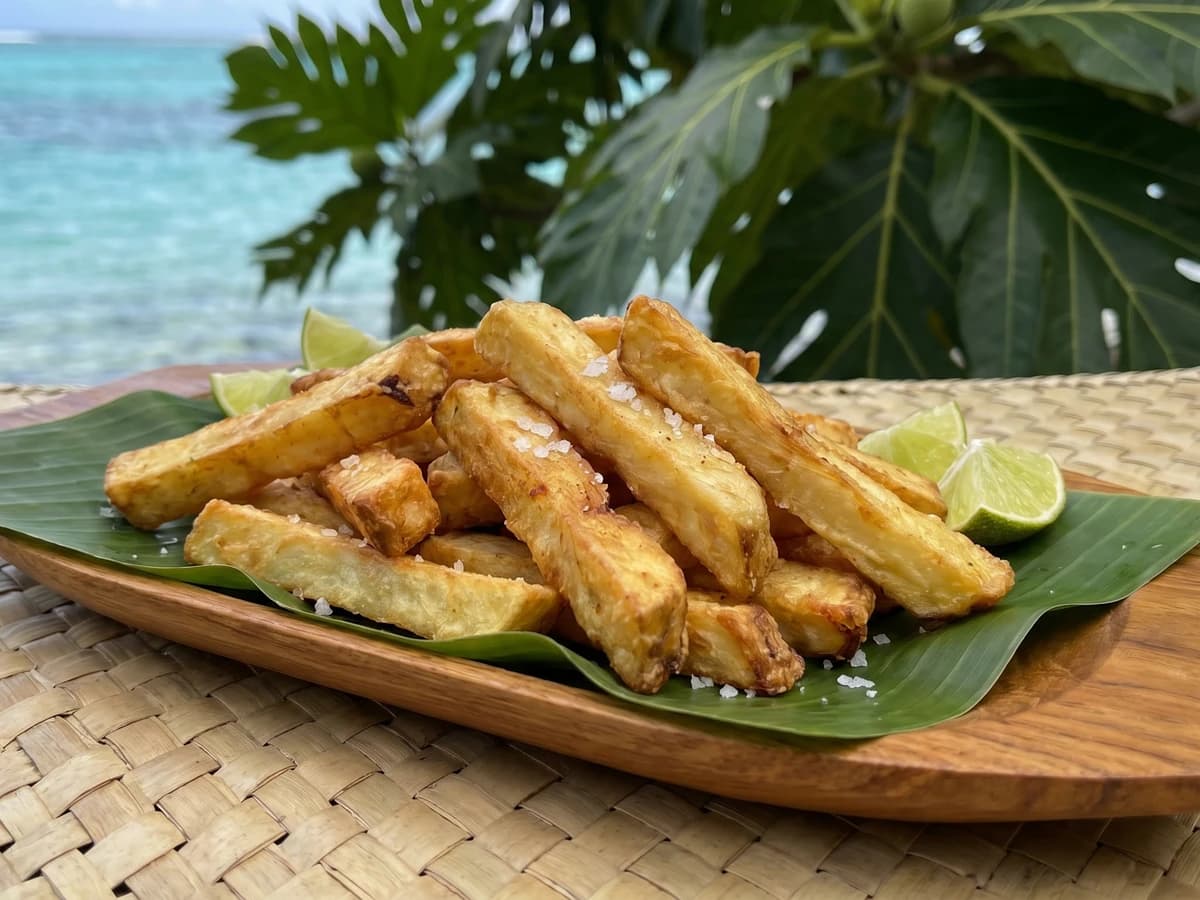
Firm Tahitian ʻuru cut into thick wedges, cooked until tender, then fried crisp and salted while hot. The old canoe crop lands on the table like chips, only deeper.

Chef Makoa
Tender slices of Tahitian ʻuru, breadfruit, baked in coconut milk until the edges go gold, with just enough cheese from the French island pantry to brown the top.