
Chef Lupita
Birria Tacos with Consome
Jalisco's goat birria, born around Cocula and carried into Guadalajara's markets, slow-braised in ancho, guajillo, cascabel, and chile de arbol, then tucked into corn tortillas crisped in its own red fat.
A cooking platform built around craft, culture, and the stories behind what we eat.
Created by
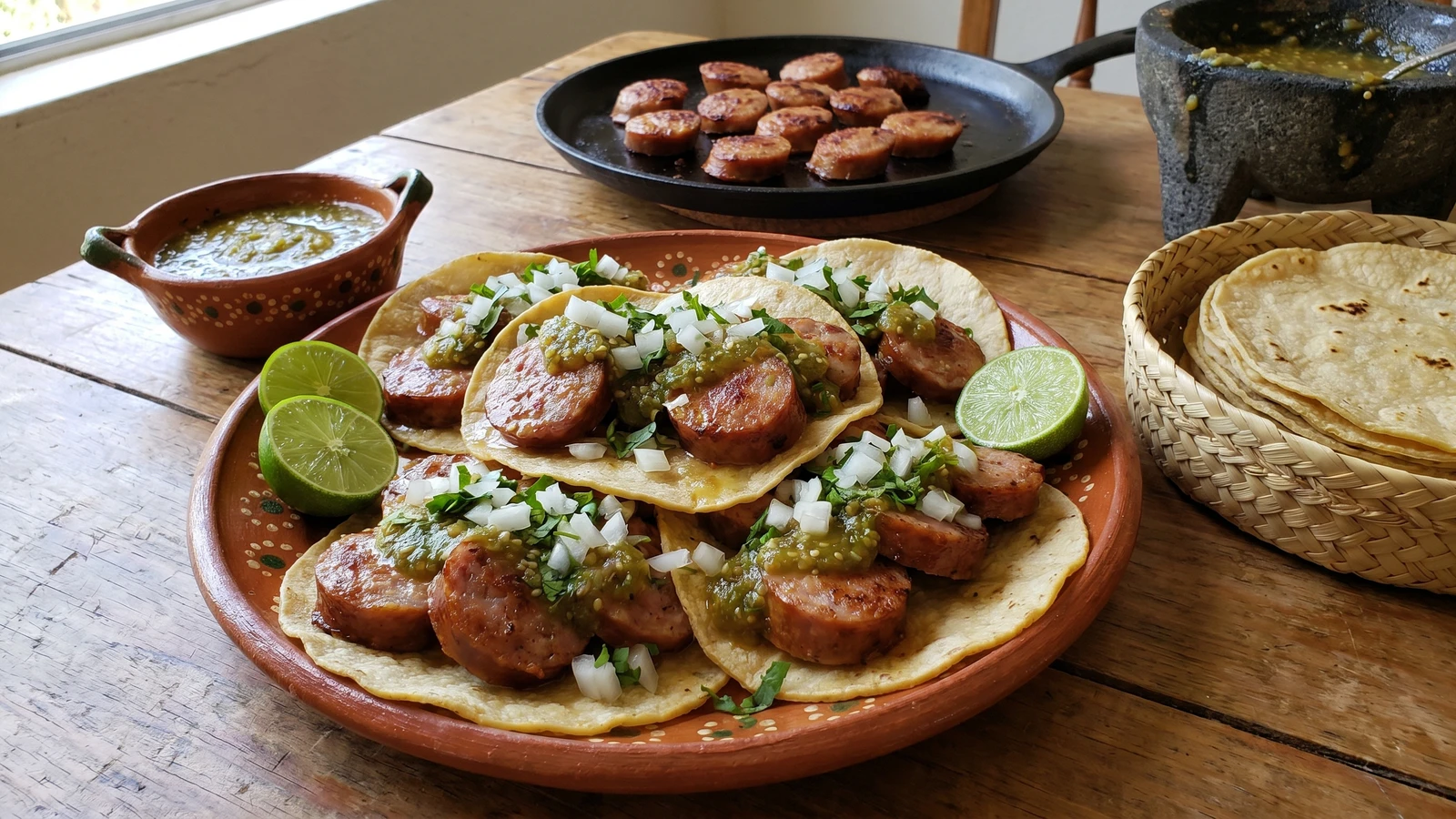
Chiapas Highlands butifarra, browned on a comal until the edges glisten, tucked into hand-pressed corn tortillas with raw onion, cilantro, lime, and a sharp chile manzano salsa.
Chiapas, Los Altos, San Cristobal de las Casas. That is where this taco lives. Cold mountain air, market tables lined with smoked meats, cheeses, panes compuestos, and coils of butifarra made by families who learned the seasoning from mothers and grandmothers, not from a factory label.
Butifarra chiapaneca is pork sausage, compact and well-seasoned, usually eaten sliced as a botana or warmed on the comal. For tacos, you cut it thick enough to keep its bite, then brown it in its own fat until the cut sides take color. No me vengas con atajos. If you boil it or bury it under cheese, you've missed the point.
The salsa belongs to the highlands too. Chile manzano, tomatillo, onion, cilantro, lime. The chile manzano has heat, yes, but it also has a green-fruit sharpness that works against the pork fat. This is not food from a single Mexico. Cada estado, su propia cocina.
Butifarra arrived in Mexico through Spanish charcuteria traditions, but in Chiapas it became a regional embutido shaped by the markets of San Cristobal de las Casas and Comitan, where pork, vinegar, garlic, and warm spices were adapted to local taste. The Chiapas Highlands developed a distinct sausage culture because curing, drying, and market sale made practical sense in cooler mountain towns. Chile manzano, common in highland markets from Chiapas into the central-southern mountains, is prized for its thick flesh and bright heat, which is why it cuts through pork so cleanly.
Quantity
1 pound
sliced into 1/4-inch rounds
Quantity
12
Quantity
1 tablespoon
only if the sausage is lean
Quantity
1/2 medium
finely diced
Quantity
1/2 cup
chopped
Quantity
2
cut into wedges
Quantity
6
husked and rinsed
Quantity
2
stemmed
Quantity
1 small
Quantity
1
unpeeled
Quantity
1/2 teaspoon, plus more to taste
Quantity
2 tablespoons
chopped
| Ingredient | Quantity |
|---|---|
| butifarra chiapanecasliced into 1/4-inch rounds | 1 pound |
| hand-pressed corn tortillas | 12 |
| manteca de cerdo (optional)only if the sausage is lean | 1 tablespoon |
| white onionfinely diced | 1/2 medium |
| fresh cilantrochopped | 1/2 cup |
| limescut into wedges | 2 |
| tomatilloshusked and rinsed | 6 |
| fresh chile manzanostemmed | 2 |
| white onion wedge | 1 small |
| garlic cloveunpeeled | 1 |
| kosher salt | 1/2 teaspoon, plus more to taste |
| fresh cilantro for the salsachopped | 2 tablespoons |
Heat a dry comal over medium-high. Put the tomatillos, chile manzano, onion wedge, and unpeeled garlic on the hot surface. Turn them until the tomatillos soften and blister, the onion chars at the edges, and the garlic skin darkens. The chile manzano should blister, not collapse into mush. You want brightness with a little smoke from the comal.
Peel the garlic. In a molcajete, grind the garlic and salt first, then work in the chile manzano, onion, and tomatillos until the salsa is rough and juicy. Stir in the chopped cilantro. A blender works if that is what you have, but pulse it. Do not make a green smoothie. A highland salsa should still show the hand that made it.
Lay the sliced butifarra on the hot comal in a single layer. If the sausage is lean, rub the comal with a little manteca de cerdo first. Cook 2 to 3 minutes per side, until the cut faces turn deep golden and the edges glisten with rendered pork fat. Do not crowd the comal. Crowding makes the sausage sweat instead of brown.
Warm the corn tortillas on the same comal, about 30 seconds per side, until they puff in spots and pick up a few toasted marks. Keep them wrapped in a clean servilleta. Flour tortillas are a northern tradition. Here, in Chiapas, you use corn.
Place 3 or 4 slices of browned butifarra in each warm tortilla. Spoon chile manzano salsa over the pork, then add diced white onion, chopped cilantro, and a squeeze of lime. Eat them while the tortilla is flexible and the sausage fat is still glossy. Recetas probadas y garantizadas.
1 serving (about 270g)
Culinary guides, cultural storytelling, and the editorial depth that makes cooking meaningful.
Discover Culinary ExplorerChef Lupita
Jalisco's goat birria, born around Cocula and carried into Guadalajara's markets, slow-braised in ancho, guajillo, cascabel, and chile de arbol, then tucked into corn tortillas crisped in its own red fat.

Chef Lupita
Sonora's working morning burrito: chicharrón de cáscara stewed in chile colorado with diced potato, rolled tight in a paper-thin tortilla sobaquera and eaten standing up at the carreta.

Chef Lupita
Mocorito's pork chilorio, shredded and confited in lard with chile ancho and pasilla, rolled into a thin handmade flour tortilla. The burrito Sinaloa sends out into the world.

Chef Lupita
Sonora's morning burrito of mashed pinto frijoles puercos and melted queso asadero, wrapped in a paper-thin sobaquera and seared on the comal until the cheese pulls in long strings.