Culinary Explorer

A cooking platform built around craft, culture, and the stories behind what we eat.
Discover Culinary Explorer
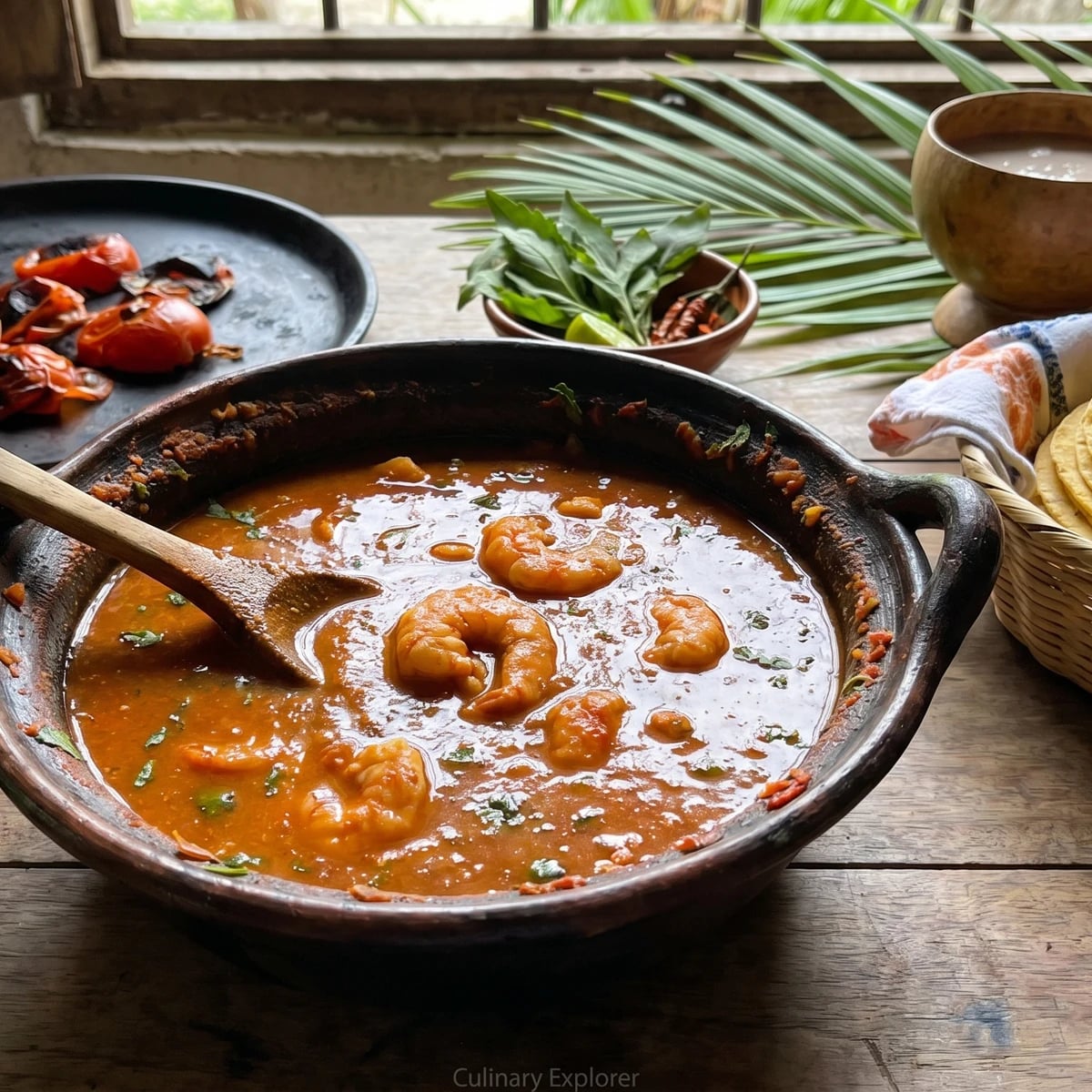
Tabasco Shrimp Chilpachole

Tabasco Shrimp Chilpachole

Created by

Tabasco's shrimp chilpachole sits between caldo and atole, a masa-thickened lowland broth built with chile ancho, ripe jitomate, epazote, and shrimp pulled from river country.

Soups & Stews
Mexican
Special Occasion
Comfort Food
35 min
Active Time
1 hr 5 min cook1 hr 40 min total
Yield6 servings

Tabasco, especially the Chontalpa and the river towns around Nacajuca and Villahermosa, owns this bowl. Chilpachole de camarón is not a thin seafood soup. It is a thick, serious broth, somewhere between caldo and atole, made for humid kitchens where the shrimp tastes of river, lagoon, and Gulf water.

The base is chile ancho, jitomate, garlic, onion, epazote, and masa. Not cornstarch. Masa. The corn gives the broth its body and tells you this belongs to the Maya south, where soups are often thickened by corn and carried by herbs, not only by chile heat. The chile ancho gives color and depth. The chile amashito, when it appears at the table, gives the Tabasco bite. Know the difference.

I learned a version of this from a Chontal woman outside Nacajuca who fried the sauce in manteca de cerdo before adding the shrimp broth. She watched the cazuela like a guard. Too thin, she said, and it is caldo. Too thick, and you made atole for breakfast. Chilpachole has to move slowly from the spoon. Así se hace y punto.

Chilpachole is part of the Gulf and southeastern Mexican soup family, with strong roots in Veracruz and Tabasco, where river, lagoon, and coastal proteins are cooked with chile, tomato, epazote, and corn-based thickeners. The name is commonly linked to Nahuatl roots for chile-based stews, and the dish shows the post-conquest meeting of native corn and chile techniques with Old World tomato cultivation patterns and lard cookery. In Tabasco, shrimp, jaiba, and local river seafood make the dish distinct from the better-known Veracruz crab versions.

The technique, the tradition, and the story behind every dish.

Discover Culinary Explorer

Ingredients

head-on shell-on medium shrimp

Quantity

2 pounds

peeled and deveined, shells and heads reserved

cold water

Quantity

8 cups

white onion

Quantity

1/2 medium

for the shrimp broth

garlic cloves

Quantity

3

smashed, for the shrimp broth

fresh epazote sprigs

Quantity

2

for the shrimp broth

kosher salt

Quantity

1 teaspoon, plus more to taste

dried chile ancho

Quantity

4

stemmed, seeded, and wiped clean

dried chile guajillo

Quantity

2

stemmed, seeded, and wiped clean

ripe jitomates

Quantity

1 pound

halved

white onion

Quantity

1/2 medium

sliced

garlic cloves

Quantity

4

unpeeled

manteca de cerdo

Quantity

2 tablespoons

fresh masa for tortillas

Quantity

3/4 cup

or 1/2 cup masa harina mixed with 1/2 cup warm water

warm shrimp broth

Quantity

1 cup

for loosening the masa

fresh epazote sprigs

Quantity

2 additional

fresh chile amashito (optional)

Quantity

6 to 10

lightly crushed, for serving

lime halves (optional)

Quantity

for serving

hand-pressed corn tortillas (optional)

Quantity

for serving

warmed

Equipment Needed

  • Dry comal or heavy cast iron skillet
  • Wide clay cazuela or heavy 5-quart pot
  • High-powered blender
  • Fine-mesh strainer
  • Wooden spoon for stirring the masa-thickened broth

Instructions

  1. 1

    Peel the shrimp

    Peel and devein the shrimp, keeping the heads and shells. Refrigerate the cleaned shrimp while you build the broth. Do not throw away the shells. That is where the flavor is, and a thin boxed stock will not give you a Tabasco chilpachole.

  2. 2

    Make shrimp broth

    Put the shrimp heads and shells in a pot with the cold water, onion, smashed garlic, epazote, and salt. Bring to a gentle simmer and cook for 25 minutes, pressing the shells against the side of the pot with a spoon. Strain well and discard the solids. You should have about 6 cups of clean, reddish shrimp broth.

  3. 3

    Toast the chiles

    Heat a dry comal over medium. Toast the chile ancho and chile guajillo one at a time, about 20 to 30 seconds per side, just until they soften, darken slightly, and smell deep. Do not blacken them. Burned chile makes bitter broth, and no amount of shrimp will repair it.

    Chile ancho gives the round, raisiny body. Guajillo sharpens the color. This is not about making the soup fiery. Not all Mexican soups are chile-forward.
  4. 4

    Soak the chiles

    Place the toasted chiles in a bowl and cover with hot water. Let them soften for 20 minutes. Hot water, not boiling. Boiling water roughens the skins and can push bitterness into the sauce.

  5. 5

    Roast the vegetables

    On the same comal, roast the jitomates, sliced onion, and unpeeled garlic until the tomatoes slump and char in spots, the onion softens, and the garlic skins brown. Peel the garlic. This roasted sweetness keeps the broth from tasting raw and flat.

  6. 6

    Blend the sauce

    Drain the chiles and put them in a blender with the roasted jitomates, onion, peeled garlic, and 1 cup of shrimp broth. Blend until completely smooth. Strain through a fine-mesh sieve, pressing hard on the solids. A chilpachole should be thick, yes, but not full of chile skins.

  7. 7

    Fry the base

    Melt the manteca de cerdo in a wide cazuela or heavy pot over medium heat. Add the strained chile-jitomate sauce. It will sputter, so stir with discipline. Cook 8 to 10 minutes, until the sauce darkens, thickens, and the fat leaves a red sheen at the edges. La manteca es el sabor.

  8. 8

    Thicken with masa

    Whisk the fresh masa with 1 cup warm shrimp broth until smooth. Add this masa mixture to the cazuela through a strainer, stirring constantly so it does not lump. Masa is the body of the dish. Cornstarch makes a glossy shortcut. No me vengas con atajos.

  9. 9

    Simmer the broth

    Add 5 cups of the shrimp broth and the remaining epazote sprigs. Simmer gently for 18 to 20 minutes, stirring often along the bottom so the masa does not catch. The broth should coat the spoon lightly and move slowly, not stand still like porridge. Taste for salt.

  10. 10

    Cook the shrimp

    Add the cleaned shrimp and cook 3 to 5 minutes, just until they curl and turn opaque. Pull the pot from the heat immediately. Shrimp overcooks fast, and a careful cocinera does not ruin good seafood in the last five minutes.

  11. 11

    Serve in clay

    Ladle the chilpachole into deep clay bowls or serve family-style from the cazuela. Put lightly crushed chile amashito, lime halves, and warm corn tortillas on the table. Each person decides the final heat. Cada estado, su propia cocina.

Chef Tips

  • Buy head-on shrimp when you can. The heads make the broth taste like shrimp instead of salted water. Frozen head-on Gulf shrimp is better than tired supermarket shrimp sitting on ice.
  • Chile amashito is the small Tabasco chile for the table. If you cannot find it, look in Mexican markets that carry southeastern ingredients. A substitution is a compromise, not an upgrade.
  • Fresh masa from a tortilleria gives the best body. Masa harina works when it must, but whisk it smooth before it touches the pot or you will get lumps.
  • Epazote is not optional here. It cuts through the sweetness of shrimp and tomato. Dried epazote is weaker, so use more if that is all the market gives you.
  • The final texture matters. Chilpachole is thicker than caldo and looser than atole. If it gets too thick, loosen it with hot shrimp broth, not plain water.

Advance Preparation

  • The shrimp broth can be made one day ahead and refrigerated. Keep the cleaned shrimp separate and cold.
  • The chile-jitomate sauce can be toasted, blended, strained, and refrigerated one day ahead. Fry it in manteca de cerdo on the day you serve.
  • Do not add the shrimp ahead. Cook them only at the end, just before serving, so they stay tender.

Frequently Asked Questions

Nutrition Information

1 serving (about 500g)

Calories
300 calories
Total Fat
8 g
Saturated Fat
2 g
Trans Fat
0 g
Unsaturated Fat
5 g
Cholesterol
110 mg
Sodium
690 mg
Total Carbohydrates
43 g
Dietary Fiber
7 g
Sugars
4 g
Protein
19 g

Note: Chef personas and recipes are created with AI assistance. Cook with care: follow safe food-handling practices, check doneness with a thermometer when needed, and adapt for allergies and your kitchen.

Where cooking meets culture.

Culinary guides, cultural storytelling, and the editorial depth that makes cooking meaningful.

Discover Culinary Explorer

More from Chiapas & Tabasco Soups & Stews

Browse the full collection