
Chef Lupita
Aguascalientes Beef Tongue Pozole (Pozole de Lengua)
Aguascalientes' Bajio pozole de lengua, built with cacahuazintle hominy, tender beef tongue, chile ancho and guajillo, with xoconostle brightness and table garnishes.
A cooking platform built around craft, culture, and the stories behind what we eat.
Created by
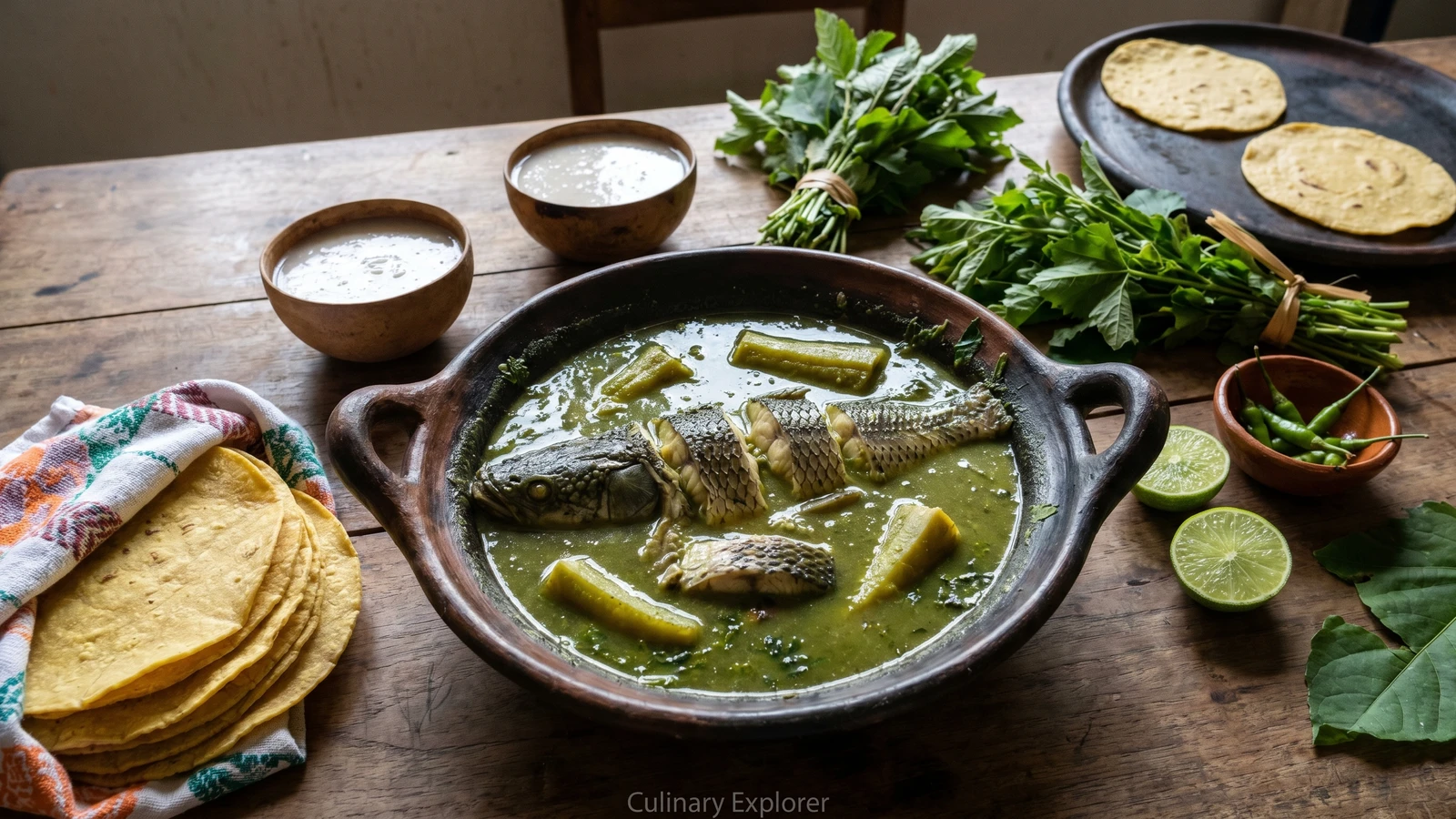
Tabasco's pejelagarto en verde turns the armored river fish of the Grijalva into a herbaceous caldo thickened with masa, chaya, chipilin, momo, and chile amashito.
Tabasco, the lowland river country around Villahermosa, Nacajuca, Centla, and the Grijalva, is where this dish lives. Pejelagarto is not catfish. It is pejelagarto, the long-snouted armored fish of the rivers and wetlands, and a Chontal cook will hear the difference before the pot even reaches the table.
This green sauce does not behave like a central Mexican salsa verde. Do not come here looking for tomatillo and serrano to do all the work. The Maya south leans on herbs: chaya for its deep green body, chipilin for that wild bean-leaf perfume, momo, also called hierba santa, for the aniseed shadow that tells you you are in the Gulf lowlands. The chile amashito is small and sharp, but it does not own the pot. Not all Mexican soups are chile-forward. Learn that and you'll cook Tabasco with more respect.
I learned versions of this caldo from women who cooked by the river, not from restaurant menus. They browned the fish lightly in manteca de cerdo, loosened fresh masa in broth with their fingers, and simmered the sauce until it clung softly to the pejelagarto. Masa is masa, not cornstarch. La manteca es el sabor. The ceramic on the table should be barro, the tortillas should be warm, and the pozol should be cold in a jicara. Cada estado, su propia cocina.
Pejelagarto has been eaten in Tabasco and the broader Maya lowland wetlands since pre-Columbian times, especially among Chontal Maya communities whose foodways were shaped by rivers, lagoons, and seasonal flooding. The herb-heavy green broths of Tabasco and northern Chiapas reflect a regional pattern older than the national idea of chile-dominant Mexican cooking: chaya, chipilin, momo, and masa build flavor and body before dried chiles enter the discussion. In the 20th century, pejelagarto became one of Tabasco's most visible culinary emblems, often roasted or stewed, but home versions in green sauce still carry the older logic of river fish, garden herbs, and corn as thickener.
Quantity
2 1/2 pounds
cleaned and cut into 3-inch crosswise pieces
Quantity
2 teaspoons, divided, plus more to taste
Quantity
2 tablespoons
Quantity
3 tablespoons
Quantity
1 medium
thinly sliced
Quantity
4
peeled
Quantity
8
stemmed, plus more for the table
Quantity
3 cups
stems removed
Quantity
1 cup
tender stems included
Quantity
4 large
tough center ribs removed
Quantity
1/2 cup
Quantity
6 cups
warm
Quantity
1/2 cup
Quantity
2 small
chopped
Quantity
1
peeled and cut into 1-inch pieces
Quantity
1 tablespoon
Quantity
for serving
Quantity
for serving
Quantity
for serving
| Ingredient | Quantity |
|---|---|
| pejelagartocleaned and cut into 3-inch crosswise pieces | 2 1/2 pounds |
| sea salt | 2 teaspoons, divided, plus more to taste |
| fresh lime juice | 2 tablespoons |
| manteca de cerdo | 3 tablespoons |
| white onionthinly sliced | 1 medium |
| garlic clovespeeled | 4 |
| fresh chile amashitostemmed, plus more for the table | 8 |
| fresh chaya leavesstems removed | 3 cups |
| fresh chipilin leavestender stems included | 1 cup |
| momo leaves (hierba santa)tough center ribs removed | 4 large |
| fresh cilantro leaves and tender stems | 1/2 cup |
| fish broth or light chicken brothwarm | 6 cups |
| fresh masa from nixtamal | 1/2 cup |
| ripe Roma tomatoeschopped | 2 small |
| small green plantainpeeled and cut into 1-inch pieces | 1 |
| hoja de platano oil or additional manteca de cerdo | 1 tablespoon |
| warm hand-pressed corn tortillas (optional) | for serving |
| lime halves (optional) | for serving |
| cold pozol in jicaras (optional) | for serving |
Rub the pejelagarto pieces with 1 teaspoon salt and the lime juice. Let them sit for 20 minutes while you prepare the herbs. This firms the surface and cleans the river smell without erasing the fish. Pejelagarto should still taste like pejelagarto.
Bring a small pot of water to a boil. Add the chaya leaves and cook for 3 minutes, then drain. Chaya must be cooked before it goes into the blender. Raw chaya is not for this pot, and no señora in Tabasco needs to be told twice.
In a blender, combine the cooked chaya, chipilin, momo, cilantro, garlic, chile amashito, and 2 cups warm broth. Blend until very smooth and deep green. The sauce should smell like wet leaves, cornfields after rain, and chile just sharp enough to wake the mouth. If the blender struggles, add a little more broth, not water.
Heat the manteca de cerdo in a wide clay cazuela or heavy pot over medium heat. Pat the pejelagarto dry and brown it lightly, 2 minutes per side. Do not cook it through. You are setting the surface so the fish holds together later. Remove it to a plate.
In the same fat, add the sliced onion and cook until soft and translucent, about 6 minutes. Add the chopped tomato and cook until it collapses and stains the onion lightly. This is not a tomato stew. The tomato rounds the green sauce, nothing more.
Pour the blended herb sauce into the cazuela. It will darken when it hits the hot fat. Cook for 8 to 10 minutes, stirring often, until the raw green smell settles and a light sheen of manteca appears at the edges. This is where the herbs become sauce. No me vengas con atajos.
Whisk the fresh masa with 1 cup warm broth until completely smooth. Use your fingers if you need to feel the lumps. Pour it through a strainer into the cazuela, stirring as it goes in. Masa thickens the broth and gives it the flavor of corn. Cornstarch gives you paste. There is a difference.
Add the remaining 3 cups broth, the green plantain pieces, and the remaining 1 teaspoon salt. Simmer gently for 18 to 20 minutes, until the plantain is tender and the broth has the body of a light atole. Stir from the bottom so the masa does not catch.
Return the browned pejelagarto to the cazuela. Spoon sauce over the pieces and simmer gently for 10 to 12 minutes, until the fish is cooked through and the green sauce clings to the skin. Taste for salt. Add the hoja de platano oil or one more spoonful of manteca de cerdo at the end for gloss and aroma.
Carry the cazuela to the table. Serve each bowl with a piece of pejelagarto, plantain, and enough green broth to soak a tortilla. Put lime halves and extra chile amashito on the side, not on top of everything. Let the cook decide. Serve with warm hand-pressed tortillas and cold pozol in jicaras. Recetas probadas y garantizadas.
1 serving (about 520g)
Culinary guides, cultural storytelling, and the editorial depth that makes cooking meaningful.
Discover Culinary ExplorerChef Lupita
Aguascalientes' Bajio pozole de lengua, built with cacahuazintle hominy, tender beef tongue, chile ancho and guajillo, with xoconostle brightness and table garnishes.

Chef Lupita
Veracruz's Gulf coast rice from Alvarado, built with seafood stock, tomato, chile chipotle, epazote, shrimp, fish, jaiba, and pulpo, served loose and brothy in a clay cazuela.

Chef Lupita
Costa Chica's wet salt-beef stew, built from chile costeño, guajillo, tomato, manteca, yuca, plantain, and masa dumplings, the ranching pot of Cuajinicuilapa and Pinotepa.

Chef Lupita
Michoacán's P'urhépecha atápakua is a masa-thickened sauce and stew at once, built with pork, chile guajillo, and hierbabuena added only at the end.