
Chef Lupita
Acambaritas de Acámbaro
Guanajuato's daily bread from Acámbaro, a small glazed roll built on pata, enriched with manteca de cerdo, and baked until the top shines lightly for merienda.
A cooking platform built around craft, culture, and the stories behind what we eat.
Created by
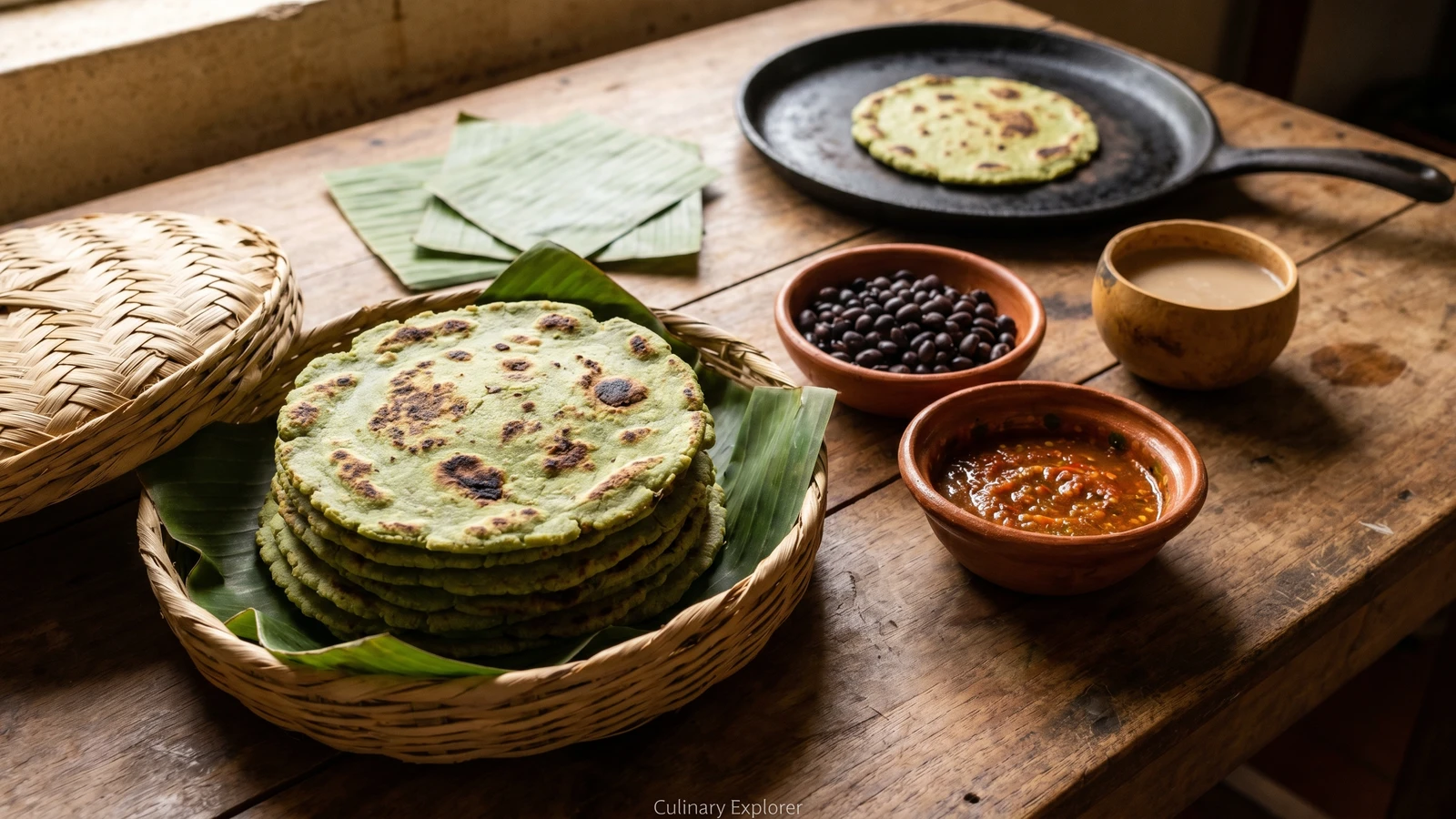
Tabasco's thick tortilla de platano, made with green plantain and nixtamal masa, pressed by hand and browned on the comal for the Chontal kitchen table.
Tabasco, especially the Chontal communities around Nacajuca, Jalpa de Mendez, and the low river country near Villahermosa, cooks with plantain the way other regions lean on wheat or potatoes. The green plantain is not garnish here. It is structure. It gives the tortilla weight, a faint vegetal sweetness, and the kind of chew that belongs beside black beans, pejelagarto, fresh cheese, or a clay cup of atole.
This is not a northern flour tortilla. Flour tortillas belong to the north, where wheat made sense. In Tabasco, the kitchen speaks corn, cacao, yuca, chile amashito, hoja santa, and platano macho. The green plantain is boiled until just tender, mashed while warm, then worked into nixtamal masa with salt and a little manteca de cerdo if the cook wants a softer tortilla. La manteca es el sabor, but the plantain is the grammar.
I learned this from a woman in the Pino Suarez market in Villahermosa who pressed them thicker than a corn tortilla and scolded me when I tried to make the edges too perfect. 'No es hostia,' she told me. It is not a communion wafer. Leave the hand in it. A proper tortilla de platano has uneven edges, brown comal spots, and enough body to carry beans without folding like paper. Cada estado, su propia cocina.
Green plantain entered southeastern Mexican cooking after plantains arrived through Caribbean and colonial trade routes, then settled into the humid lowlands of Tabasco, Chiapas, Veracruz, and the Yucatan Peninsula where the crop grows well. In Chontal Tabasco kitchens, plantain joined older Mesoamerican corn techniques, creating breads and thick tortillas that combine nixtamal masa with cooked platano macho. The dish shows how Tabasco's food sits between the Gulf, the river systems, and the Maya-Chontal pantry, not the wheat and beef traditions of northern Mexico.
Quantity
2 large
unpeeled
Quantity
2 cups
or 1 3/4 cups masa harina mixed with 1 1/4 cups warm water
Quantity
1 1/2 teaspoons
Quantity
2 tablespoons
softened
Quantity
2 to 4 tablespoons
as needed
Quantity
1
cut into squares for pressing or lining the tortilla basket
Quantity
for serving
Quantity
for serving
Quantity
for serving
| Ingredient | Quantity |
|---|---|
| green plantains (platano macho verde)unpeeled | 2 large |
| fresh nixtamal masaor 1 3/4 cups masa harina mixed with 1 1/4 cups warm water | 2 cups |
| fine sea salt | 1 1/2 teaspoons |
| manteca de cerdosoftened | 2 tablespoons |
| warm wateras needed | 2 to 4 tablespoons |
| hoja de platano (optional)cut into squares for pressing or lining the tortilla basket | 1 |
| frijoles negros de olla (optional) | for serving |
| queso fresco (optional) | for serving |
| salsa de chile amashito (optional) | for serving |
Put the unpeeled green plantains in a pot and cover with water by two inches. Bring to a steady simmer and cook 20 to 25 minutes, until a knife enters with some resistance. Do not cook them until mushy. You want cooked starch, not baby food.
Drain the plantains and let them cool just enough to handle. Cut off the ends, slit the skins lengthwise, and peel them. Mash the warm plantain in a metate, molcajete, or heavy bowl until mostly smooth with a few small bits left. Those bits tell you it was made by hand. La cocina no es decoracion, es trabajo.
Add the nixtamal masa, salt, and manteca de cerdo to the mashed plantain. Knead with your hands for 4 to 5 minutes. The dough should feel firm, warm, and pliable, like a thick corn tortilla dough with more pull. If it cracks badly, add warm water one tablespoon at a time. If it sticks like paste, knead in a spoonful of masa.
Cover the dough with a damp cloth and rest it for 10 minutes. The plantain and corn need time to drink the moisture evenly. Skip the rest and the edges crack on the comal. No me vengas con atajos.
Divide the dough into 10 balls, each about the size of a small lime. Press between plastic sheets or squares of hoja de platano to 1/4 inch thick. These are thicker than everyday corn tortillas. Do not flatten them until they disappear. Tabasco is not asking for a northern flour tortilla.
Heat a dry comal over medium. Lay one tortilla down and cook 2 to 3 minutes, until the underside has brown spots and releases easily. Flip and cook 2 minutes more. Flip once again for 30 to 60 seconds, pressing lightly with your fingers or a folded cloth. The surface should look puffed in places, spotted, and dry at the edges.
Wrap the tortillas in a woven servilleta or line the basket with hoja de platano. Serve warm with frijoles negros de olla, queso fresco, and salsa de chile amashito if you have it. The tortilla is savory, not dessert. Remember that before someone tries to put cinnamon sugar on it.
1 serving (about 155g)
Culinary guides, cultural storytelling, and the editorial depth that makes cooking meaningful.
Discover Culinary ExplorerChef Lupita
Guanajuato's daily bread from Acámbaro, a small glazed roll built on pata, enriched with manteca de cerdo, and baked until the top shines lightly for merienda.

Chef Lupita
Michoacan's Tinguindin aguacatas are flat, leaf-scored sweet breads made with harina de trigo, piloncillo, anise, and manteca de cerdo, shaped by hand for the wood oven.

Chef Lupita
From Ajijic on Lake Chapala, Pan Tachihual is a lightly sweet wedding loaf built with harina de trigo, harina de maiz, piloncillo, manteca, anise, and the old Guadalajara pata.

Chef Lupita
Comitán's pan de yema shaped into little pigs, birds, and rabbits, a Chiapas bakery bread rich with egg yolks, manteca de cerdo, and anís, baked golden on hoja de plátano.