
Chef Lupita
Arroz a la Oaxaqueña
Oaxaca's red rice, stained with tomato and fried in lard, steamed with carrots, ejotes, black beans, and epazote. The side that anchors a Oaxacan family meal and earns its place beside the main.
A cooking platform built around craft, culture, and the stories behind what we eat.
Created by
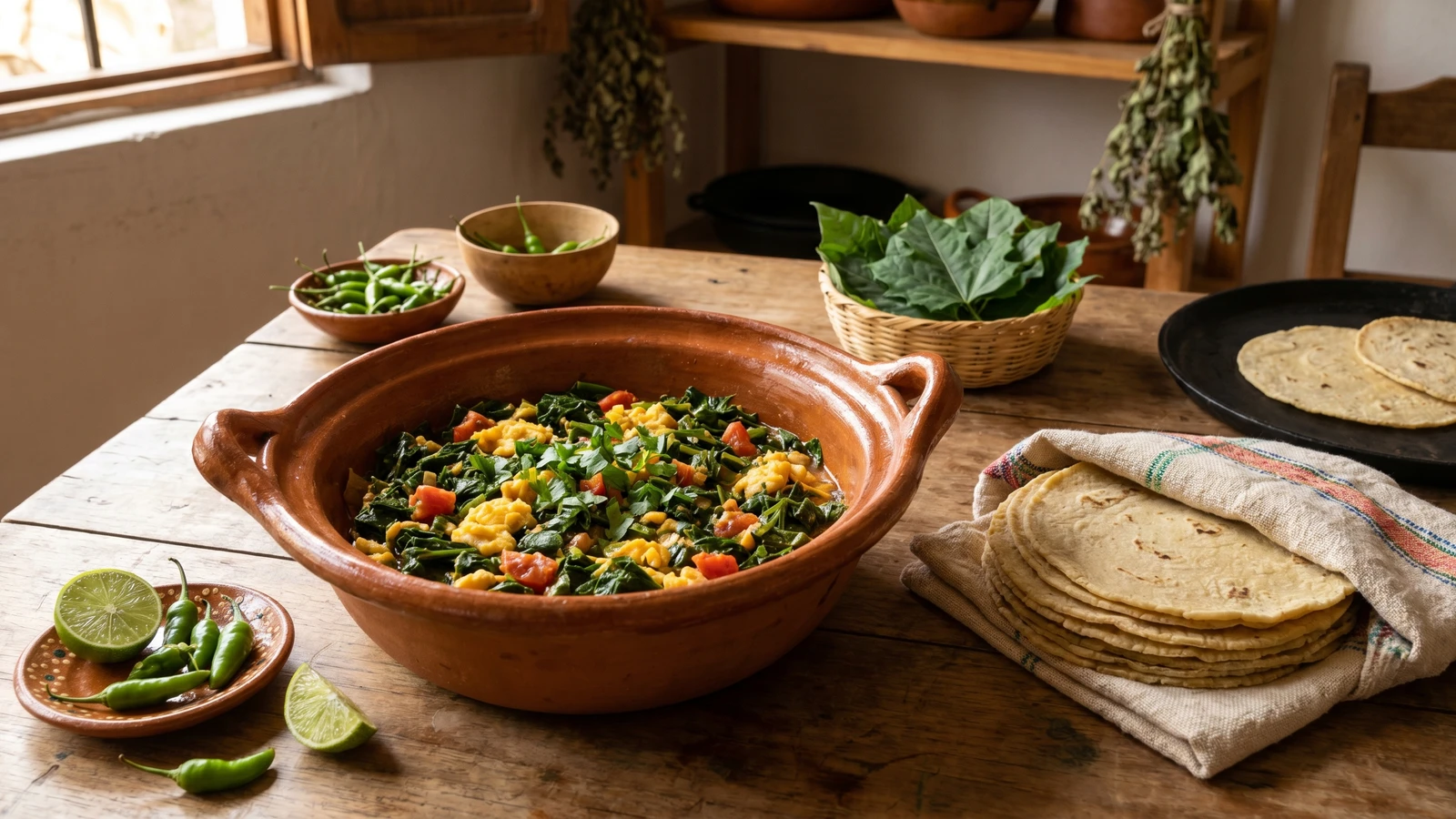
Tabasco's daily Chontal green, chaya leaves boiled, chopped, then guisada in manteca with tomato, onion, and eggs until the pan smells like a lowland kitchen at breakfast.
Tabasco, the Chontalpa and the river lowlands, is where this dish lives. Chaya grows like it belongs there, tough and generous, beside cacao, plantain, yuca, and the wet heat that makes green things take over if you turn your back.
This is chaya guisada, not a decorative green on a plate. The leaves are cooked first because raw chaya is not food. It has to be boiled, drained, chopped, and then worked in manteca de cerdo with tomato, white onion, garlic, and eggs. The chile on the side is chile amashito, small and sharp, from Tabasco's own table. Not every Mexican dish needs chile inside the pan. Here the green is the point.
I learned a version like this from a Chontal woman near Nacajuca who cooked it in a clay cazuela and served it with thick tortillas tabasquenas, the kind that can carry a spoonful of greens and egg without folding like paper. She did not measure the chaya. She measured by the handful, by the hunger in the house, by what the patio gave that morning. Preguntale a las senoras del mercado. They will tell you the same thing.
The principle is simple but not careless: cook the leaf properly, fry the tomato until it gives up its water, then let the eggs bind everything without drying out. Saber cocinar es saber vivir. A dish this humble feeds a family because the cook knows the plant, the pan, and the timing.
Chaya, Cnidoscolus aconitifolius, is a domesticated leafy green of the Maya region and the Gulf lowlands, used for centuries in household cooking from Tabasco through the Yucatan peninsula. Because raw chaya contains cyanogenic compounds, traditional cooks boil or thoroughly cook the leaves before eating them, a practice preserved through repetition long before food chemistry gave it a name. In Tabasco, especially around Chontal Maya communities, chaya appears in everyday guisos with egg, tomato, and chile amashito, showing how one regional plant becomes daily food rather than festival food.
Quantity
12 ounces
tough stems removed
Quantity
1 teaspoon, plus more to taste
Quantity
2 tablespoons
Quantity
1/2 medium
finely chopped
Quantity
2
finely chopped
Quantity
2 medium
finely chopped
Quantity
1
lightly crushed, plus more for serving
Quantity
5
beaten with a pinch of salt
Quantity
2 tablespoons
chopped
Quantity
for serving
warmed
Quantity
for serving
| Ingredient | Quantity |
|---|---|
| fresh chaya leavestough stems removed | 12 ounces |
| kosher salt | 1 teaspoon, plus more to taste |
| pork lard (manteca de cerdo) | 2 tablespoons |
| white onionfinely chopped | 1/2 medium |
| garlic clovesfinely chopped | 2 |
| ripe Roma tomatoesfinely chopped | 2 medium |
| fresh chile amashitolightly crushed, plus more for serving | 1 |
| large eggsbeaten with a pinch of salt | 5 |
| fresh cilantro (optional)chopped | 2 tablespoons |
| thick hand-pressed corn tortillas tabasquenas (optional)warmed | for serving |
| lime halves (optional) | for serving |
Pick through the chaya leaves and remove any tough stems. Rinse the leaves well in two changes of water. If the sap bothers your skin, use gloves. Chaya is generous, but it is not lettuce. Do not eat it raw.
Bring a medium stainless steel, enamel, or clay pot of water to a strong boil. Do not use aluminum. Add the teaspoon of salt and the chaya leaves. Boil uncovered for 15 minutes, until the leaves turn deep green and tender. This is the safety step and the flavor step. No me vengas con atajos.
Drain the chaya well and let it cool just enough to handle. Squeeze it lightly, not dry as rope, just enough so it does not flood the pan. Chop it into rough ribbons. The texture should still look like a leaf, not a paste.
Set a clay cazuela or heavy skillet over medium heat and melt the manteca de cerdo. Add the white onion and cook for 3 to 4 minutes, until it turns translucent at the edges. Add the garlic and stir for 30 seconds. Add the tomato and the crushed chile amashito. Cook until the tomato softens, darkens slightly, and the watery edge disappears. La manteca es el sabor, and tomato needs fat before it tastes like anything.
Add the chopped chaya to the tomato base and stir until every leaf is coated with the red-orange fat. Cook for 3 to 4 minutes, pressing and turning the greens so they absorb the tomato and onion. Taste for salt now. The chaya should taste earthy and clean, not flat.
Lower the heat to medium-low. Pour in the beaten eggs and let them sit for 20 seconds before stirring. Fold slowly with a wooden spoon until the eggs form soft curds through the chaya. Do not scramble them into crumbs. Pull the pan off the heat while the eggs still look a little glossy. The cazuela will finish them.
Scatter the cilantro over the top if using. Serve the chaya guisada from the cazuela with warm thick tortillas tabasquenas, lime halves, and more chile amashito on the side. This is breakfast, supper, and the thing you cook when the patio gives you greens and the house needs feeding. Cada estado, su propia cocina.
1 serving (about 220g)
Culinary guides, cultural storytelling, and the editorial depth that makes cooking meaningful.
Discover Culinary ExplorerChef Lupita
Oaxaca's red rice, stained with tomato and fried in lard, steamed with carrots, ejotes, black beans, and epazote. The side that anchors a Oaxacan family meal and earns its place beside the main.
Chef Lupita
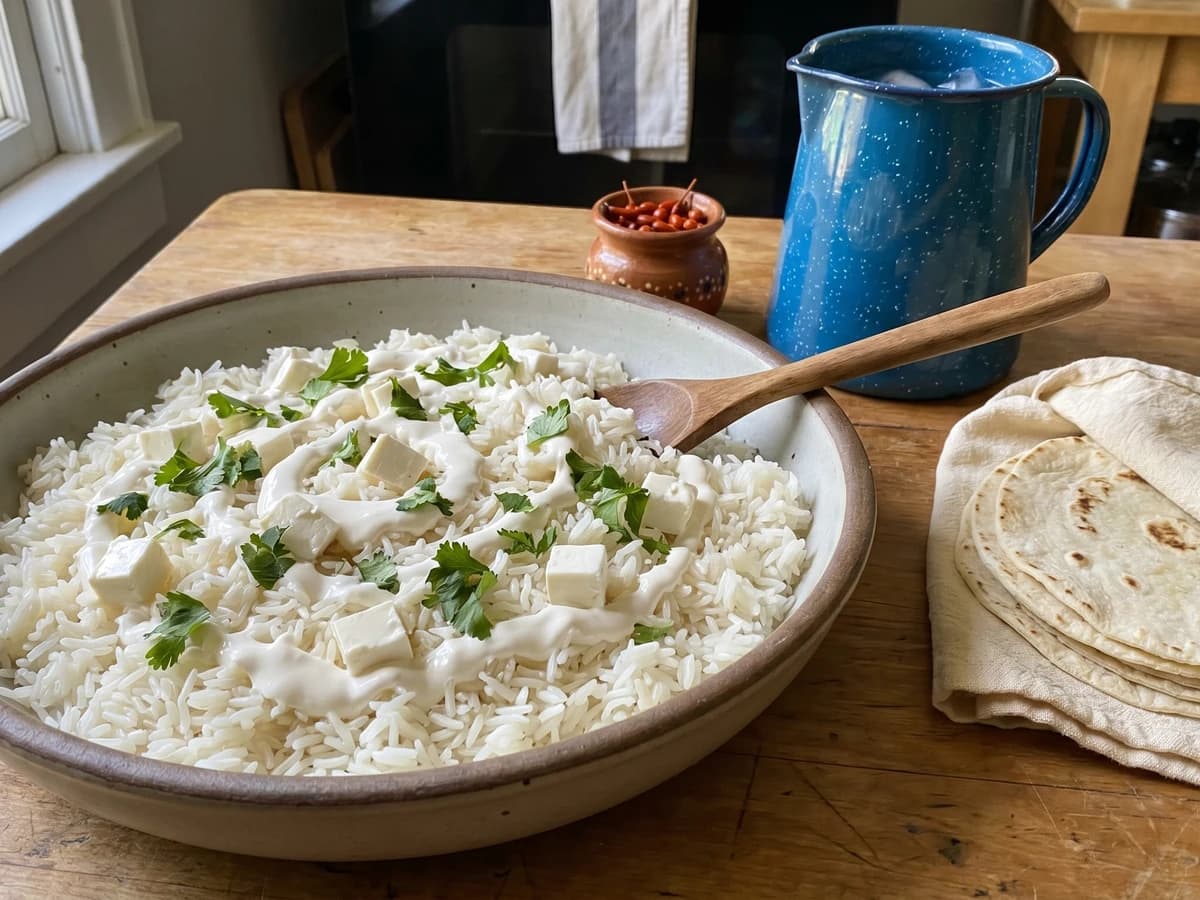
Sinaloa's home-cook white rice topped with cold cubes of cream cheese that soften into the warm grain, finished with crema and a sprinkle of chiltepin at the table. The trick that makes a side dish feel like a small luxury.
Chef Lupita
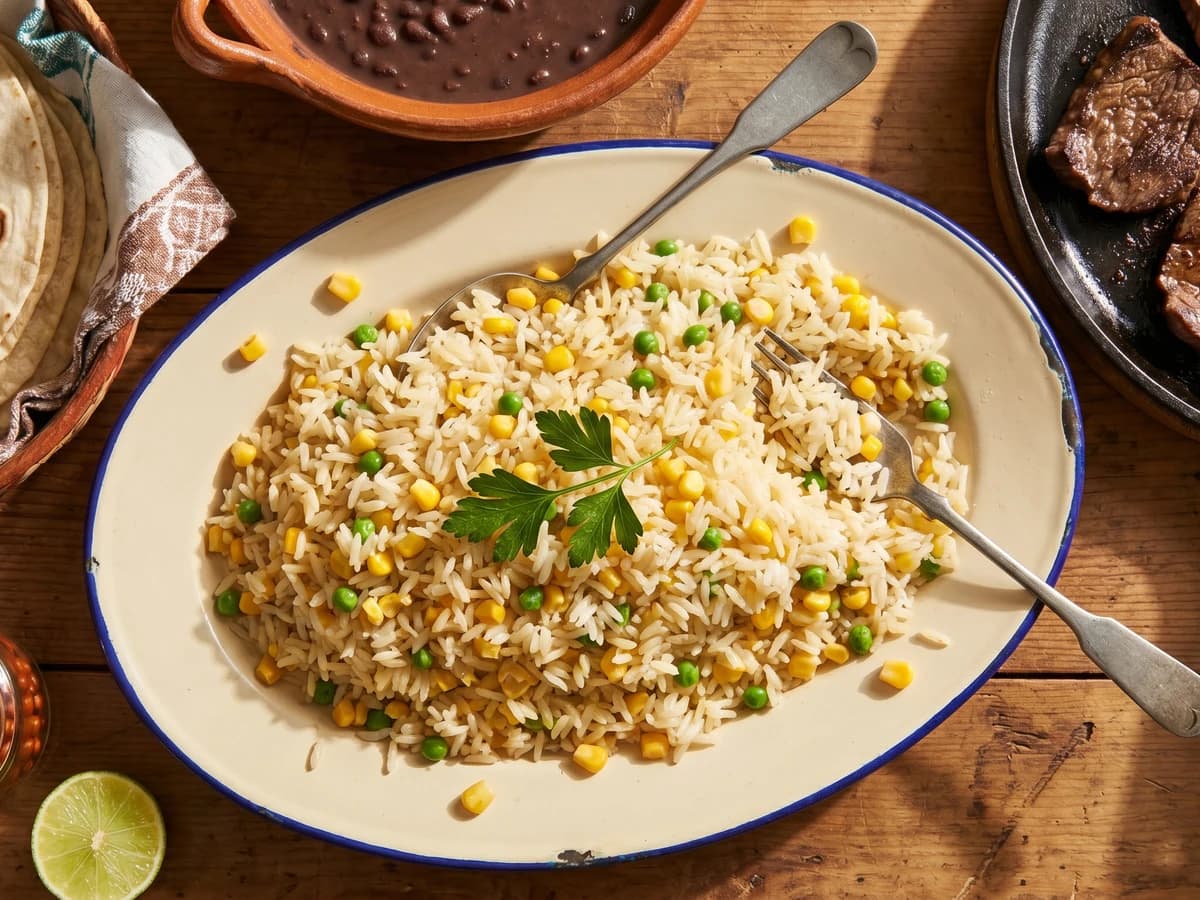
Sonora's white rice, toasted in butter and steamed with sweet corn and tender peas. The clean, quiet partner to a plate of carne asada, not the red rice of central Mexico.

Chef Lupita
Yucatán's white rice with sweet corn kernels, toasted in lard with garlic and onion. The quiet base that holds up against the peninsula's bold achiote-stained stews.