
Chef Lupita
Arroz a la Oaxaqueña
Oaxaca's red rice, stained with tomato and fried in lard, steamed with carrots, ejotes, black beans, and epazote. The side that anchors a Oaxacan family meal and earns its place beside the main.
A cooking platform built around craft, culture, and the stories behind what we eat.

Created by
Los Altos de Chiapas gives you tender calabacita, sweet elote, tomato, epazote, and a little chile Simojovel, cooked softly in manteca until the milpa tastes like itself.
Chiapas, especially Los Altos around San Cristobal de las Casas, knows this dish from the milpa, not from a restaurant menu. Calabacita, elote, tomato, onion, epazote. These are not decorative vegetables. They are the small economy of a home kitchen when the squash is tender and the corn is fresh.
The flavor is built in manteca de cerdo, with onion and tomato cooked down before the squash goes in. That matters. If you throw everything into the pan at once, the squash leaks water and the dish tastes tired. The women who taught me this in the highland markets cooked the tomato first until the fat shone around the edges. Then the calabacita could soften without becoming mush.
Chile Simojovel belongs to Chiapas, small and serious, with a clean bite. Use it fresh if you can find it, or use a serrano because most cooks outside Chiapas will have to. That is a compromise, not an upgrade. The epazote is not optional. It is the smell that tells you this is a Mexican milpa dish and not anonymous sauteed squash.
Cada estado, su propia cocina. These calabacitas are not Sonoran, not Pueblan, not from a buffet line with yellow cheese melted on top. This is the home-table side of Chiapas, served in clay with tortillas nearby. Así se hace y punto.
Squash, corn, chile, and beans formed the core of the Mesoamerican milpa long before the Spanish arrived in the 16th century, and Chiapas remains one of the regions where that agricultural logic still shapes daily cooking. Epazote, native to Mexico and Central America, has been used since pre-Columbian times as both seasoning and digestive aid, especially with corn and beans. Chile Simojovel is named for the Chiapas municipality of Simojovel and is one of the state chiles that rarely travels far, which is why many versions outside Chiapas lose their regional edge.
Quantity
2 tablespoons
Quantity
1/2 medium
finely chopped
Quantity
2
finely chopped
Quantity
1
finely chopped
Quantity
3 medium
chopped
Quantity
1 teaspoon, plus more to taste
Quantity
4 medium
cut into 1/2-inch pieces
Quantity
2 cups
cut from 3 ears of corn
Quantity
1/3 cup
Quantity
2 sprigs
Quantity
1/2 cup
crumbled
Quantity
for serving
| Ingredient | Quantity |
|---|---|
| manteca de cerdo | 2 tablespoons |
| white onionfinely chopped | 1/2 medium |
| garlic clovesfinely chopped | 2 |
| fresh chile Simojovel or chile serranofinely chopped | 1 |
| ripe tomatoeschopped | 3 medium |
| kosher salt | 1 teaspoon, plus more to taste |
| Mexican calabacitas or small gray squashcut into 1/2-inch pieces | 4 medium |
| fresh corn kernelscut from 3 ears of corn | 2 cups |
| water or light chicken broth | 1/3 cup |
| fresh epazote | 2 sprigs |
| queso de Chiapas or queso fresco (optional)crumbled | 1/2 cup |
| warm hand-pressed corn tortillas (optional) | for serving |
Cut the calabacitas into even 1/2-inch pieces so they soften at the same pace. Slice the kernels from the corn cobs and keep the cobs for stock if you cook that way. Do not use canned corn here unless the market gives you no choice. Fresh elote is the point.
Heat the manteca de cerdo in a wide clay cazuela or heavy skillet over medium heat. Add the white onion and cook for 3 minutes, until it turns translucent but not brown. Add the garlic and chile Simojovel and cook for 30 seconds. The chile should wake up in the fat, not burn. La manteca es el sabor.
Add the chopped tomato and salt. Cook for 6 to 8 minutes, stirring often, until the tomato collapses into a rough sauce and the fat starts to shine around the edges. This is not a raw tomato salad. You cook it down so the calabacitas have something to absorb.
Stir in the calabacitas and corn kernels. Turn them through the tomato until every piece is coated. Add the water or light chicken broth. The pan should sound active but not dry. Cover and cook for 10 to 12 minutes, stirring once, until the squash is tender but still holds its shape.
Tuck in the epazote sprigs during the last 4 minutes of cooking. Add it too early and it turns dull. Add it at the end and it perfumes the whole cazuela with that green, sharp smell every Chiapas market cook knows. Taste for salt. Remove the stems before serving.
Spoon the calabacitas into a warm clay cazuela and scatter queso de Chiapas or queso fresco over the top if using. Serve with warm hand-pressed corn tortillas. This is a side dish, yes, but with tortillas it becomes supper. Saber cocinar es saber vivir.
1 serving (about 315g)
Culinary guides, cultural storytelling, and the editorial depth that makes cooking meaningful.
Discover Culinary ExplorerChef Lupita
Oaxaca's red rice, stained with tomato and fried in lard, steamed with carrots, ejotes, black beans, and epazote. The side that anchors a Oaxacan family meal and earns its place beside the main.
Chef Lupita
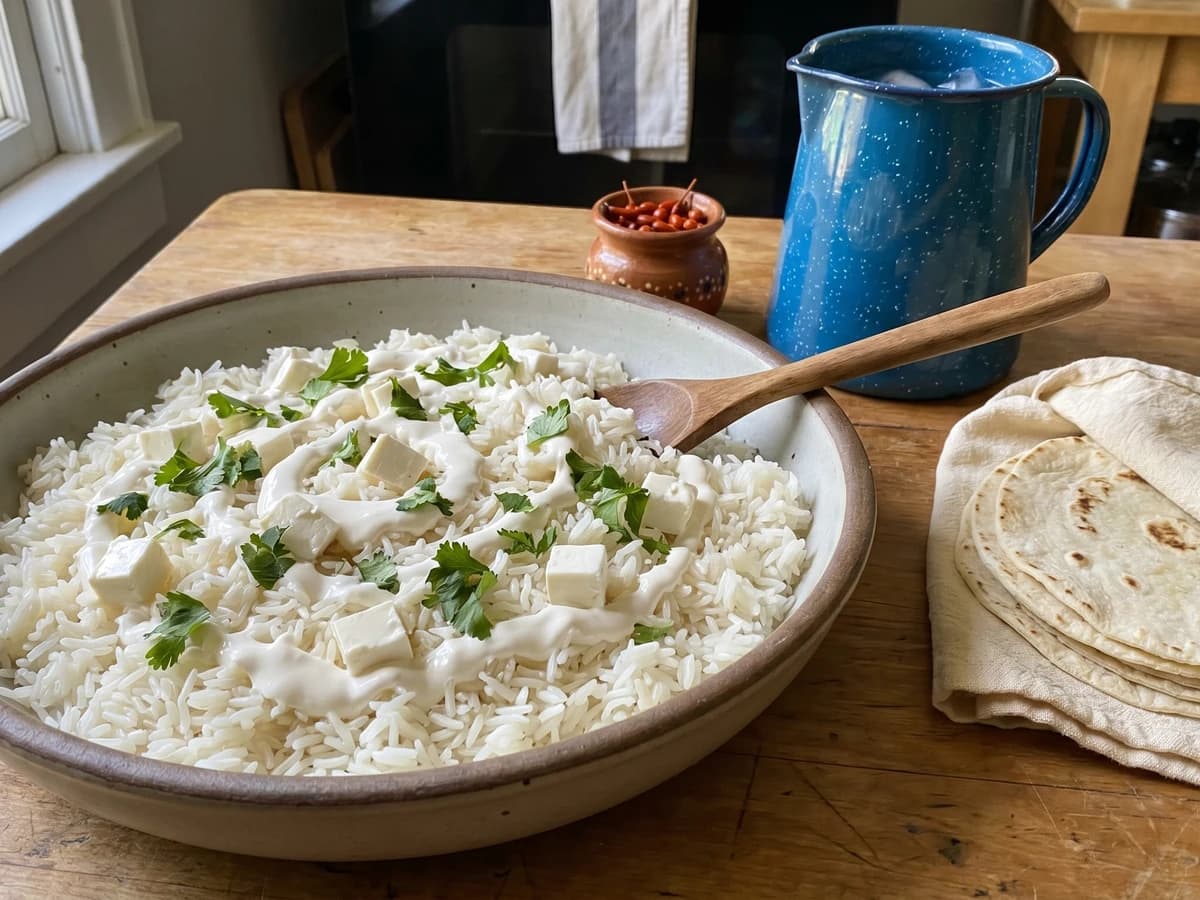
Sinaloa's home-cook white rice topped with cold cubes of cream cheese that soften into the warm grain, finished with crema and a sprinkle of chiltepin at the table. The trick that makes a side dish feel like a small luxury.
Chef Lupita
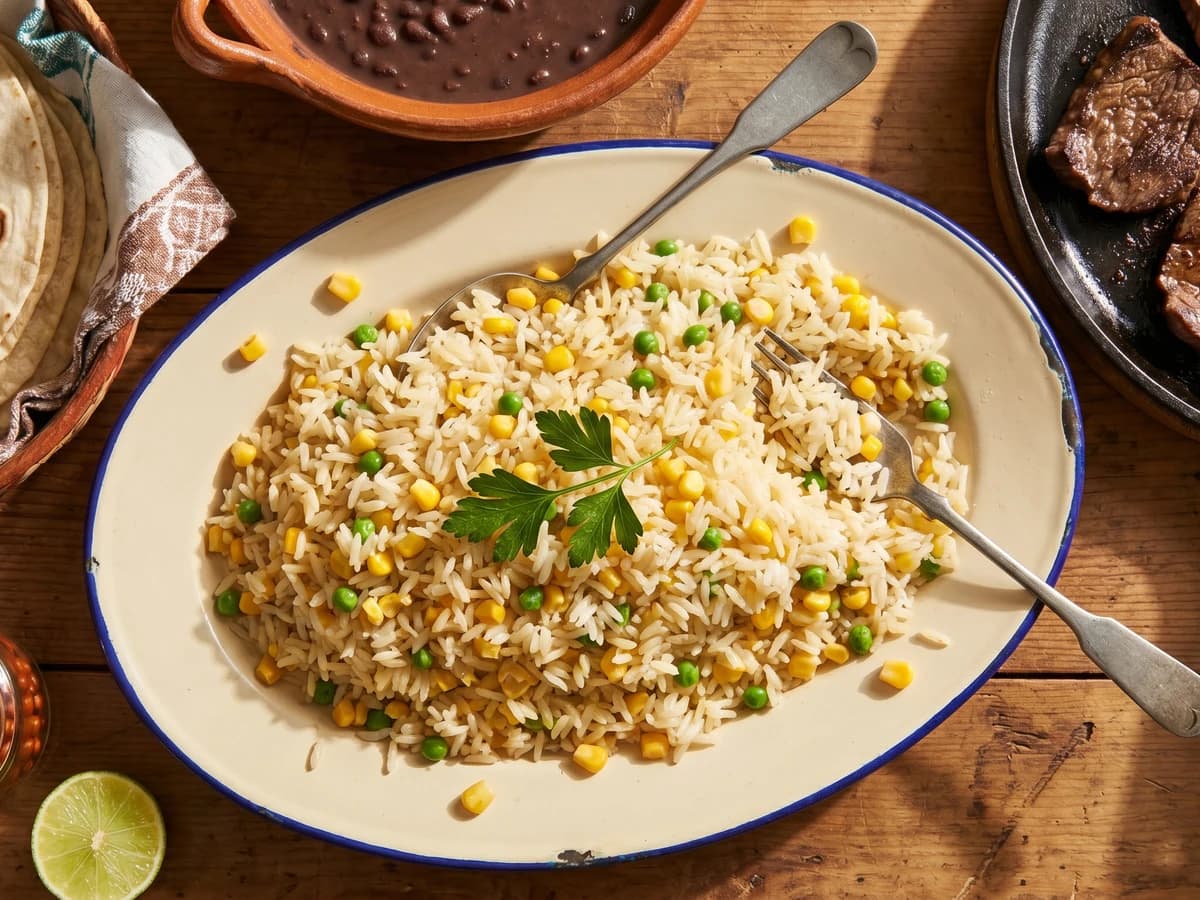
Sonora's white rice, toasted in butter and steamed with sweet corn and tender peas. The clean, quiet partner to a plate of carne asada, not the red rice of central Mexico.

Chef Lupita
Yucatán's white rice with sweet corn kernels, toasted in lard with garlic and onion. The quiet base that holds up against the peninsula's bold achiote-stained stews.