
Chef Lupita
Arroz a la Oaxaqueña
Oaxaca's red rice, stained with tomato and fried in lard, steamed with carrots, ejotes, black beans, and epazote. The side that anchors a Oaxacan family meal and earns its place beside the main.
A cooking platform built around craft, culture, and the stories behind what we eat.
Created by
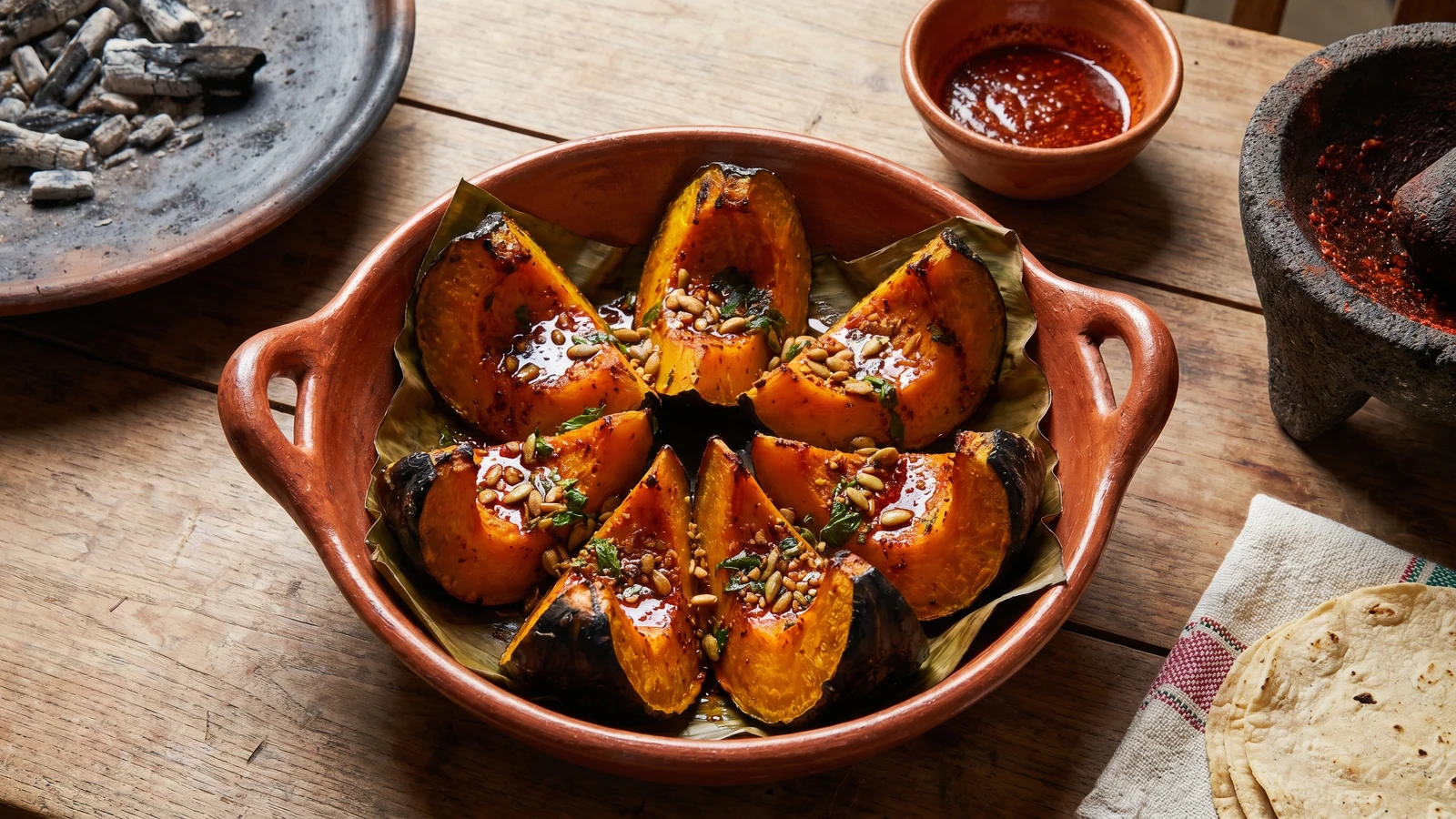
From the Tzotzil highlands of Chiapas, a whole milpa squash roasted in rescoldo embers, split open, glossed with chile Simojovel manteca, and finished with epazote and toasted pepita.
Chiapas, in the Tzotzil highlands of Los Altos, is where this calabaza lives. Think San Juan Chamula, Zinacantan, the market in San Cristobal de las Casas, women selling squash with field dust still sitting in the grooves. This is milpa food: corn, beans, squash, chile, herbs, and a fire that works harder than most people.
The calabaza criolla is roasted whole in rescoldo, the ember bed left after cooking. The rind blackens. Good. That black shell is not a mistake, it is protection. Inside, the flesh tightens, sweetens, and turns deep orange without sugar. If you add piloncillo, you are making another dish. This one belongs beside beans, turkey, tamales, or a holiday table when meat is present but the milpa still speaks first.
The chile is Simojovel, from Chiapas, small and serious. The herb is epazote, with chipilin folded in at the end because Chiapas knows that leaf better than almost anyone. The fat is manteca de cerdo. I watched a woman outside Chamula brush roasted squash with chile-stained lard and tell her daughter not to drown it, just wake it. She was right. Saber cocinar es saber vivir.
The milpa system of maize, beans, and squash was established in Mesoamerica thousands of years before the Spanish arrived; archaeological squash remains at Guila Naquitz in Oaxaca date to roughly 8000 BCE, making squash one of the earliest domesticated plants in the region. In highland Chiapas, Tzotzil and Tzeltal households kept rescoldo cooking because a single wood fire could cook tortillas, beans, roots, and squash in sequence with no wasted fuel. Pork lard entered the regional kitchen after pigs arrived in the 16th century, but the calabaza, the milpa logic, and the ember-roasting technique are older than conquest.
Quantity
1 (4 to 5 pounds)
scrubbed and dried
Quantity
2 teaspoons, plus more to taste
Quantity
4 tablespoons
melted and divided
Quantity
3
stemmed
Quantity
1
stemmed and seeded
Quantity
2
unpeeled
Quantity
1/3 cup
Quantity
8
finely chopped
Quantity
1/2 cup
thick stems removed
Quantity
2 tablespoons
Quantity
1
passed quickly over a flame to soften, for lining the serving cazuela
Quantity
for serving
Quantity
for serving
warmed
| Ingredient | Quantity |
|---|---|
| whole calabaza criollascrubbed and dried | 1 (4 to 5 pounds) |
| sal de grano | 2 teaspoons, plus more to taste |
| manteca de cerdomelted and divided | 4 tablespoons |
| dried chile Simojovelstemmed | 3 |
| dried chile anchostemmed and seeded | 1 |
| garlic clovesunpeeled | 2 |
| raw hulled pepitas | 1/3 cup |
| fresh epazote leavesfinely chopped | 8 |
| tender chipilin leavesthick stems removed | 1/2 cup |
| naranja agria juice | 2 tablespoons |
| hoja de platano (optional)passed quickly over a flame to soften, for lining the serving cazuela | 1 |
| lime halves (optional) | for serving |
| thick hand-pressed corn tortillas (optional)warmed | for serving |
Build a hardwood or lump charcoal fire and let it burn down until you have a deep bed of gray embers, 35 to 45 minutes. You want steady heat, not active flames. This is how the women in highland kitchens make one fire do several jobs: tortillas on the comal, beans in the olla, calabaza in the dying embers.
Pierce the calabaza 8 to 10 times with the tip of a heavy knife, especially near the stem and blossom end. Rub the rind with 1 tablespoon of melted manteca de cerdo and 1 teaspoon of sal de grano. Do not peel it. The rind is the cooking vessel. The blackened shell protects the flesh while the inside turns dense, sweet, and soft.
Set the whole calabaza directly into the embers and bank more embers around the lower half. Turn it a quarter turn every 15 to 20 minutes with long tongs. Roast 70 to 90 minutes, until the rind is blistered black in places, the squash feels heavy and soft, and a skewer slides through the thickest part without resistance. If using the oven, roast on a heavy sheet pan for 75 to 90 minutes, turning twice.
While the squash roasts, heat a dry comal over medium. Toast the chile ancho about 20 seconds per side, just until it smells raisiny and the skin relaxes. Toast the chile Simojovel only 5 to 10 seconds per side. It is small and already smoky, so wake it up, do not burn it. Toast the unpeeled garlic until spotted and soft, 6 to 8 minutes. Toast the pepitas until they puff and start to jump, 3 to 4 minutes.
Peel the toasted garlic. In a molcajete, grind the chile ancho, chile Simojovel, garlic, remaining 1 teaspoon sal de grano, and three quarters of the toasted pepitas into a coarse paste. Stir this paste into the remaining 3 tablespoons melted manteca de cerdo with the naranja agria juice and chopped epazote. The lard carries the chile into the squash. Vegetable oil sits on top and tastes thin. La manteca es el sabor.
Move the roasted calabaza to a board and let it rest for 15 minutes. Split it through its natural ridges. Scoop out the wet seed mass and stringy center, but do not scrape away the good flesh. Cut the squash into thick wedges, 2 inches wide at the rind. Keep the blackened rind attached. Diners pull the sweet flesh away from it at the table.
Heat the comal or a wide clay cazuela over medium-high. Brush the cut sides of each wedge generously with the chile manteca. Set the wedges cut side down and cook 2 to 3 minutes, until the edges darken and the manteca glistens in the ridges. Turn and sear the second cut side. Scatter the chipilin leaves over the wedges during the last minute so they soften against the hot squash.
Line an Amatenango del Valle clay cazuela with the softened hoja de platano if using. Pile the wedges family-style, spoon any remaining chile manteca over the top, and scatter the reserved toasted pepitas. Serve with lime halves and thick hand-pressed corn tortillas. This is not calabaza en tacha. No piloncillo. The embers already did the sweetening. Cada estado, su propia cocina.
1 serving (about 285g)
Culinary guides, cultural storytelling, and the editorial depth that makes cooking meaningful.
Discover Culinary ExplorerChef Lupita
Oaxaca's red rice, stained with tomato and fried in lard, steamed with carrots, ejotes, black beans, and epazote. The side that anchors a Oaxacan family meal and earns its place beside the main.
Chef Lupita
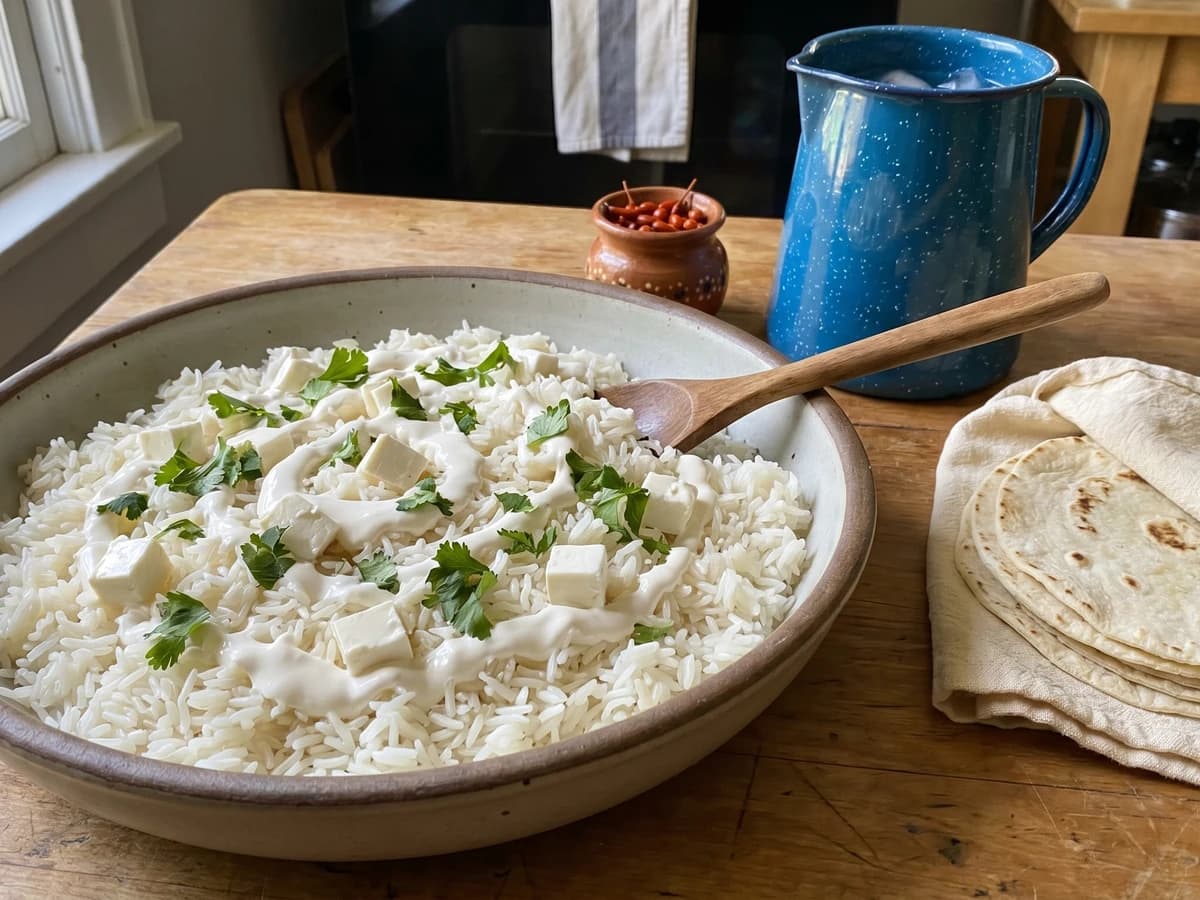
Sinaloa's home-cook white rice topped with cold cubes of cream cheese that soften into the warm grain, finished with crema and a sprinkle of chiltepin at the table. The trick that makes a side dish feel like a small luxury.
Chef Lupita
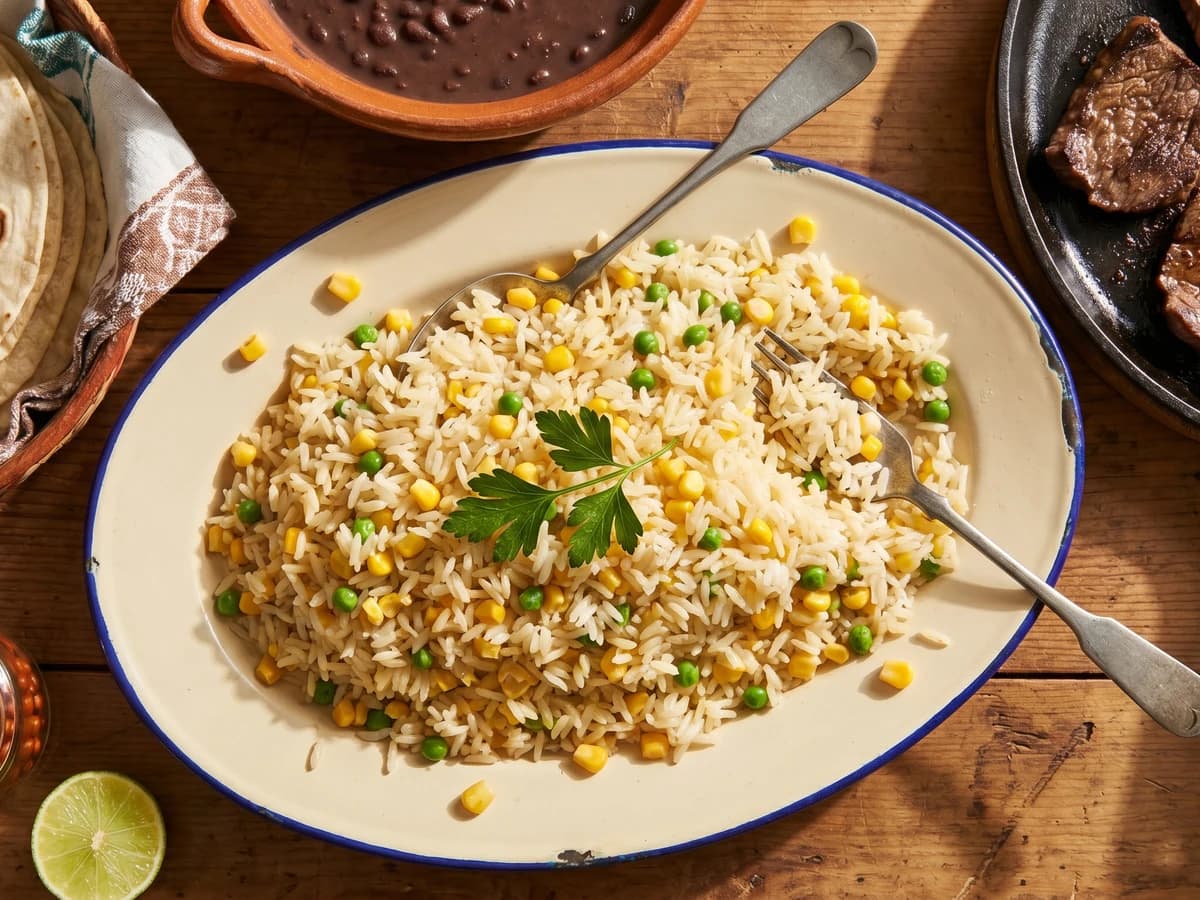
Sonora's white rice, toasted in butter and steamed with sweet corn and tender peas. The clean, quiet partner to a plate of carne asada, not the red rice of central Mexico.

Chef Lupita
Yucatán's white rice with sweet corn kernels, toasted in lard with garlic and onion. The quiet base that holds up against the peninsula's bold achiote-stained stews.