
Chef Lupita
Arroz a la Oaxaqueña
Oaxaca's red rice, stained with tomato and fried in lard, steamed with carrots, ejotes, black beans, and epazote. The side that anchors a Oaxacan family meal and earns its place beside the main.
A cooking platform built around craft, culture, and the stories behind what we eat.

Created by
Tabasco's lowland pot of black beans, salt pork, chicharron, epazote, and chile amashito, cooked until thick and dark enough to stain the spoon.
Tabasco, the wet lowlands along the Grijalva and Usumacinta rivers, is where this frijol con puerco belongs. Not the Yucatan Monday version, though it has cousins there. This one is Tabasqueno: black beans, salted pork, chicharron, epazote, white rice, radish, cilantro, lime, and the small green chile amashito that bites harder than its size suggests.
The beans are the body. The pork gives salt and fat. The chicharron breaks down into the broth and makes the pot thick, dark, and serious. You don't cook this like a clean restaurant side dish. You cook it like a house pot, the kind that sits near the stove while tortillas warm and someone cuts radishes at the table.
I learned a version like this from a woman near Comalcalco who served it in a clay cazuela with rice on the side, not underneath. She crushed chile amashito with lime and salt in a small jicara and told me, 'This chile is Tabasco. Don't replace it with jalapeno and then say it's the same.' She was right. Cada estado, su propia cocina.
Soak the beans if they are old. Simmer them gently. Add the chicharron late enough that it keeps some body but early enough that it gives itself to the broth. No me vengas con atajos. This is weeknight food only if you planned like someone who knows how to live. Saber cocinar es saber vivir.
Frijol con puerco is strongly associated with the Maya southeast, especially Yucatan, Campeche, and Tabasco, where black beans, pork, rice, radish, citrus, and fresh chiles form a shared regional vocabulary. In Tabasco, chile amashito, a small wild or semi-wild chile gathered and sold in local markets, marks the dish more precisely than habanero, which belongs more loudly to the Yucatecan table. The use of pork reflects the post-conquest arrival of pigs in the 16th century, while black beans and epazote come from older Mesoamerican cooking traditions that already knew how to make beans taste like a complete meal.
Quantity
1 pound
picked over and rinsed
Quantity
8 cups, plus more as needed
Quantity
12 ounces
cut into 1-inch pieces
Quantity
1/2 pound
cut into 1 1/2-inch pieces
Quantity
1/2 medium
left whole
Quantity
3
smashed
Quantity
1 large sprig
Quantity
1 tablespoon
Quantity
1/2 medium
finely chopped
Quantity
2
finely chopped
Quantity
1 cup
broken into rough pieces
Quantity
1 teaspoon, plus more to taste
Quantity
2 cups
for serving
Quantity
6
thinly sliced, for serving
Quantity
1/2 cup
for serving
Quantity
for serving
Quantity
2 tablespoons
for serving
Quantity
for serving
warmed
| Ingredient | Quantity |
|---|---|
| dried black beanspicked over and rinsed | 1 pound |
| water | 8 cups, plus more as needed |
| salt pork or tocino saladocut into 1-inch pieces | 12 ounces |
| pork ribs or pork shouldercut into 1 1/2-inch pieces | 1/2 pound |
| white onionleft whole | 1/2 medium |
| garlic clovessmashed | 3 |
| epazote | 1 large sprig |
| manteca de cerdo | 1 tablespoon |
| white onionfinely chopped | 1/2 medium |
| garlic clovesfinely chopped | 2 |
| chicharron de cerdobroken into rough pieces | 1 cup |
| kosher salt | 1 teaspoon, plus more to taste |
| arroz blanco (optional)for serving | 2 cups |
| radishes (optional)thinly sliced, for serving | 6 |
| chopped cilantro (optional)for serving | 1/2 cup |
| lime halves (optional) | for serving |
| fresh chile amashito (optional)for serving | 2 tablespoons |
| thick corn tortillas tabasquenas (optional)warmed | for serving |
Put the black beans in a large bowl and cover with water by three inches. Soak 6 to 8 hours if the beans are older than the season. If you bought fresh dried beans from a good market vendor, you can cook them without soaking, but most people outside Tabasco do not know how old their beans are. Soak them. Drain before cooking.
Place the drained beans in a heavy pot or clay cazuela with 8 cups fresh water, the salt pork, pork ribs or shoulder, the whole half onion, smashed garlic, and epazote. Bring to a simmer over medium heat. Skim the gray foam that gathers on top during the first 15 minutes. Keep the bubbles gentle. A hard boil breaks the beans before the broth has body.
Lower the heat, cover the pot partway, and cook 1 1/2 to 2 hours, until the beans are tender and the pork gives when pressed with a spoon. Add hot water as needed to keep the beans covered by about one inch. Do not salt hard at the beginning. The salt pork is already working in the pot, and you will adjust at the end like a cook with sense.
In a small skillet, melt the manteca de cerdo over medium heat. Add the finely chopped onion and cook until soft and lightly golden at the edges, about 6 minutes. Add the finely chopped garlic and cook 1 minute more. The smell should be sweet and porky, not sharp. La manteca es el sabor.
Scrape the onion and garlic refrito into the bean pot. Remove and discard the whole onion and epazote stem if it has gone woody. Crush 1 cup of beans against the side of the pot with the back of a spoon and stir them back in. This is how the broth thickens without flour, cornstarch, or other nonsense.
Stir in the chicharron pieces and simmer uncovered for 20 to 30 minutes, until some pieces soften into the beans and a few still hold their chew. Taste for salt now. The broth should be dark, thick, and glossy from pork fat, with the beans holding their shape. If it tastes flat, it needs salt, not more chile.
Set out arroz blanco, sliced radishes, chopped cilantro, lime halves, fresh chile amashito, and warm thick corn tortillas. In Tabasco the chile can go whole on the side, crushed with lime and salt, or chopped into the beans by the person eating. Let people decide their heat at the table. Not all Mexican food is supposed to burn your mouth. It is supposed to taste like where it comes from.
Ladle the beans and pork into a clay cazuela or deep bowls. Serve the rice beside the beans, not drowned under them. Add radish, cilantro, lime, and chile amashito at the table. The beans should stain the rice little by little as you eat. Recetas probadas y garantizadas.
1 serving (about 465g)
Culinary guides, cultural storytelling, and the editorial depth that makes cooking meaningful.
Discover Culinary ExplorerChef Lupita
Oaxaca's red rice, stained with tomato and fried in lard, steamed with carrots, ejotes, black beans, and epazote. The side that anchors a Oaxacan family meal and earns its place beside the main.
Chef Lupita
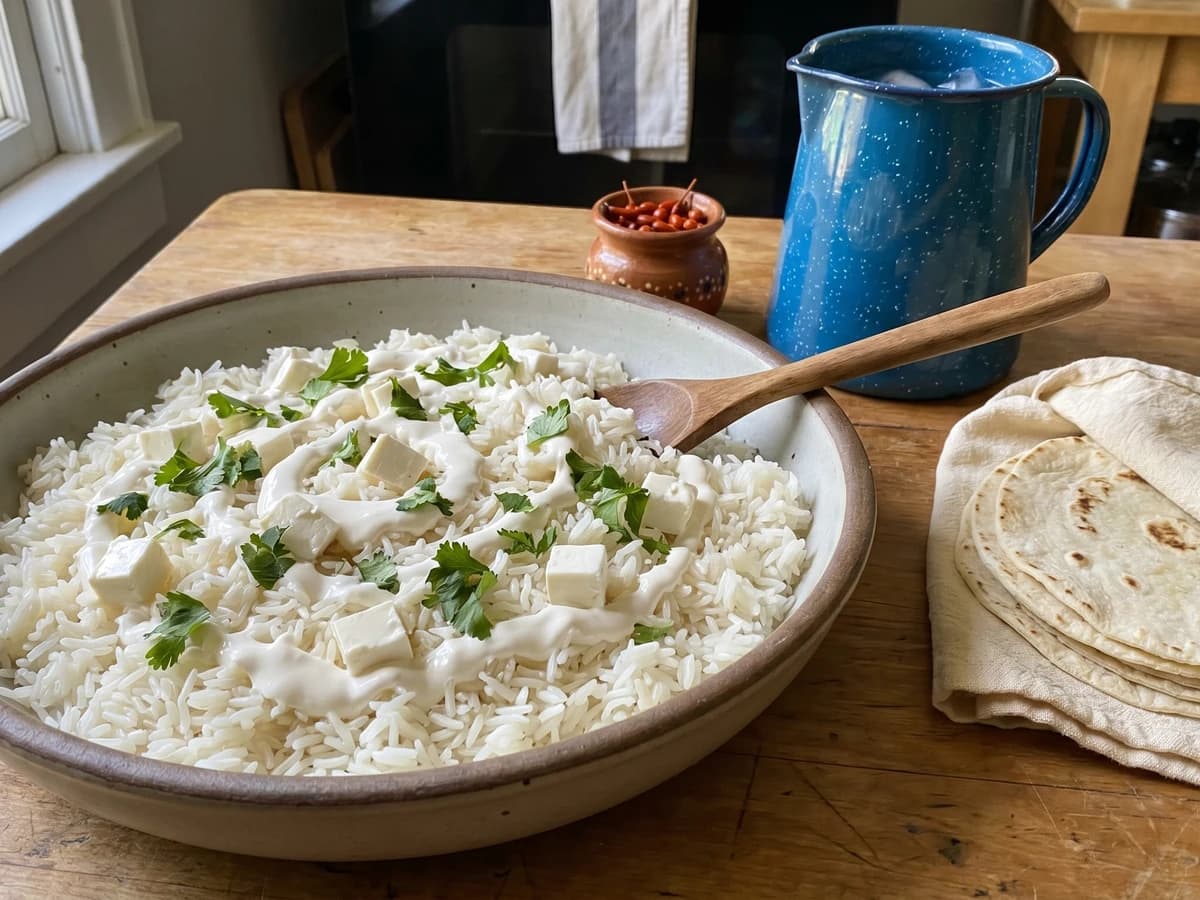
Sinaloa's home-cook white rice topped with cold cubes of cream cheese that soften into the warm grain, finished with crema and a sprinkle of chiltepin at the table. The trick that makes a side dish feel like a small luxury.
Chef Lupita
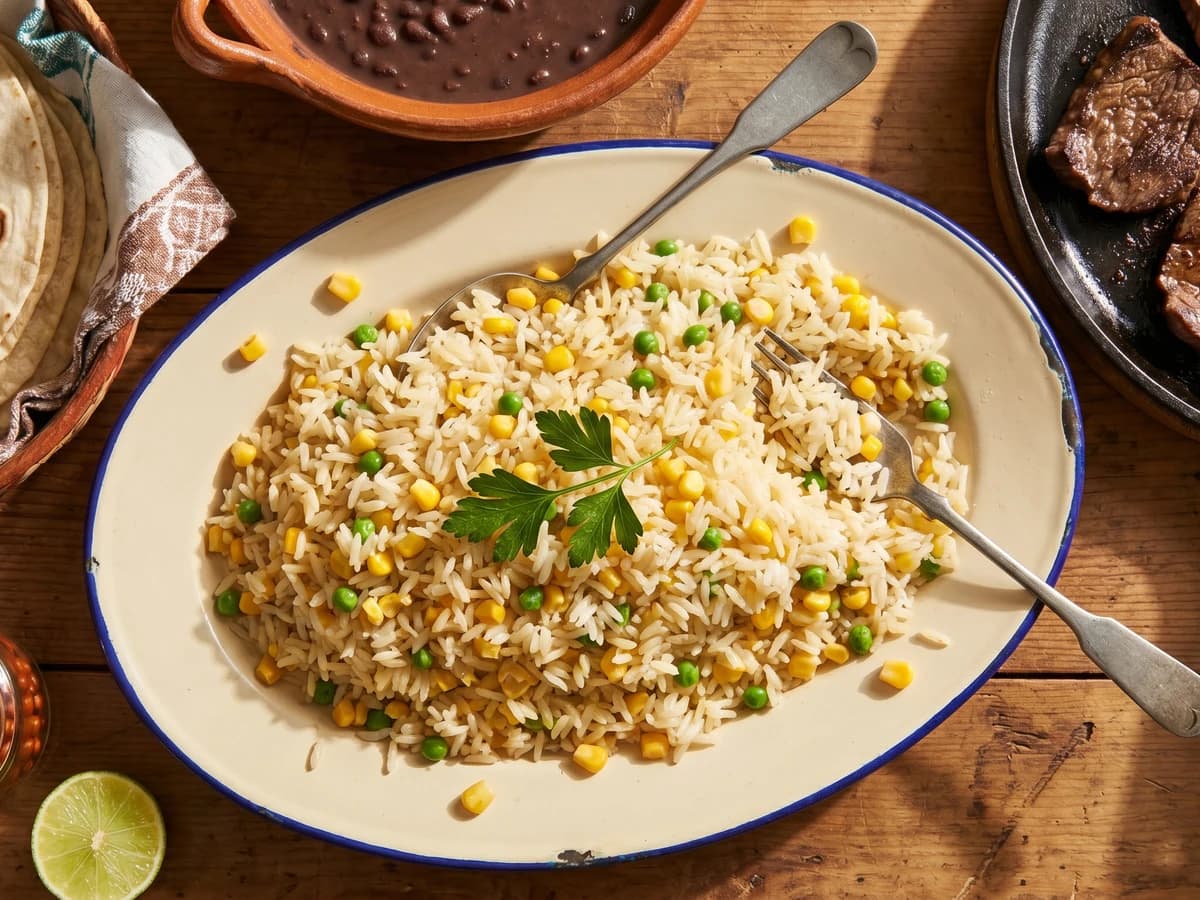
Sonora's white rice, toasted in butter and steamed with sweet corn and tender peas. The clean, quiet partner to a plate of carne asada, not the red rice of central Mexico.

Chef Lupita
Yucatán's white rice with sweet corn kernels, toasted in lard with garlic and onion. The quiet base that holds up against the peninsula's bold achiote-stained stews.