
Chef Freja
Æblegelé
Tart autumn apples, slow-boiled and strained clear overnight, then cooked with sugar to a trembling pale amber jelly that belongs on the cheese board, on morning toast, and in the kitchen of anyone who respects the season.
A cooking platform built around craft, culture, and the stories behind what we eat.
Created by Chef Freja
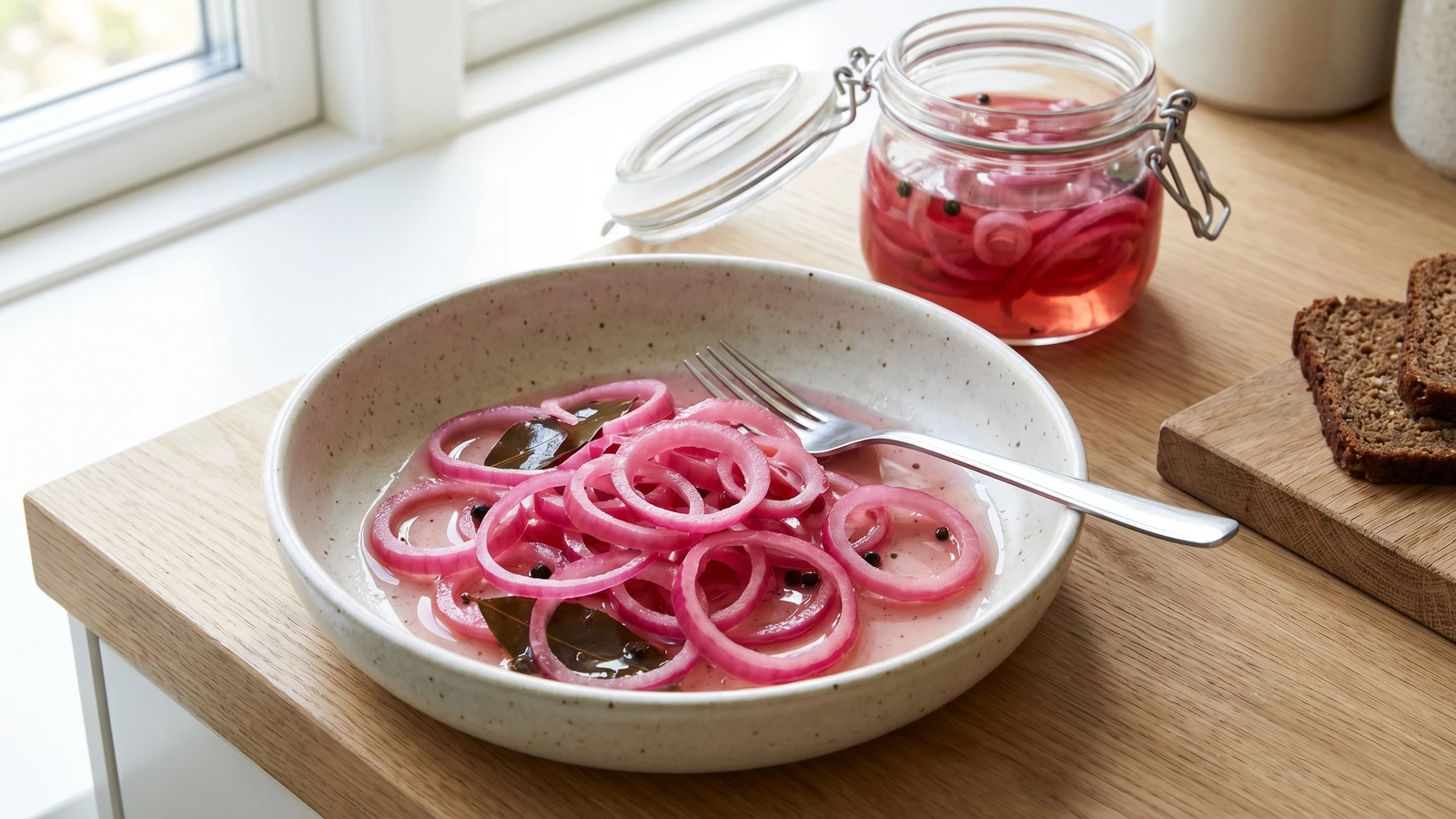
Thin red onion rings in a sweet-sour brine of vinegar, sugar, peppercorns, and bay. The jar you reach for at every julefrokost, on every piece of smorrebrod, and alongside anything that needs a bright, pink, vinegar-sharp bite.
The week before julefrokost, every Danish kitchen has a jar of these on the counter. Before the leverpostej is sliced, before the sild is dressed, before the rugbrod is cut, the pickled onions are already done. They are the quiet essential, the thing nobody notices until it isn't there.
Syltede rodloeg take fifteen minutes of actual work. You slice the onions thin, heat a simple brine of vinegar and sugar with a few whole spices, pour it over, and wait. The brine does the rest. Within hours the raw rings have softened into something translucent and vivid, pink as a winter sunset, sweet and sour in the same bite. They go on smorrebrod, beside frikadeller, across a plate of roast pork, into a rugbrod sandwich with leftover flaesk. They go, frankly, on everything.
I want you to pay attention to two things. First, the thickness of your slices. Thin rings pickle evenly and drape across food like ribbons. Thick slices stay crunchy and sharp at the centre. Second, the balance of the brine. Taste it before you pour. Sweet and sour should meet in the middle, with salt holding them together. Get those two things right and you'll have a jar in your fridge that makes everything around it better. The joy of waiting has never asked so little of you.
Syltning, the Danish art of pickling and preserving, has deep roots in a climate where the growing season is short and the winters are long. Before refrigeration, vegetables pickled in vinegar and sugar were a household necessity, and the Danish Christmas table still reflects that tradition: pickled beets, pickled cucumbers, and pickled red onions all hold their place beside the cold cuts and fish. Pickled red onions specifically became a fixture of the julefrokost spread in the twentieth century, their acidity cutting through the richness of leverpostej, flaesk, and herring. The hot-pour method, where heated brine does the work of days in just hours, is a home kitchen technique passed down through generations of Danish cooks who needed the jar ready by tomorrow.
Quantity
3 medium
sliced into thin rings
Quantity
200ml
Quantity
100ml
Quantity
100g
Quantity
1 teaspoon
Quantity
6
Quantity
2
Quantity
3
| Ingredient | Quantity |
|---|---|
| red onionssliced into thin rings | 3 medium |
| white wine vinegar | 200ml |
| water | 100ml |
| granulated sugar | 100g |
| fine sea salt | 1 teaspoon |
| whole black peppercorns | 6 |
| bay leaves | 2 |
| whole allspice berries | 3 |
Peel the red onions, halve them from root to tip, and slice them into thin half-rings. You want them about two millimetres thick, thin enough that the brine can work through every layer. Too thick and they stay raw and sharp at the centre. Too thin and they lose their structure within a day. Separate the rings with your fingers and place them in a clean glass jar or heatproof bowl.
Combine the vinegar, water, sugar, salt, peppercorns, bay leaves, and allspice berries in a small saucepan. Set it over a medium heat and stir until the sugar has dissolved completely. Let it come to a gentle simmer. You don't need a rolling boil. You need the sugar and salt fully dissolved and the liquid hot enough to soften the onions when it hits them. That first contact is what begins the pickling. A cold brine would take days to do what a hot one does in hours.
Pour the hot brine directly over the sliced onions in the jar, making sure the peppercorns and bay leaves go in too. Press the onions down gently with a spoon so they are completely submerged. They will resist at first, floating and springing back. That's fine. Once they soften, in about ten minutes, they'll settle under the liquid on their own. You'll watch the colour change almost immediately: the raw purple deepens, then the brine turns a vivid, stained-glass pink. That colour is the anthocyanins in the onion reacting to the acid. It's chemistry doing exactly what you want it to do.
Let the jar cool to room temperature on the counter, uncovered, for about thirty minutes. Then seal it and place it in the fridge. The onions are usable after two hours, but they are better after a full night. Overnight, the brine finishes its work. The rings turn soft and translucent, the sharpness gives way to something gentler, and the whole jar smells clean and sweet and bright. You'll know when they're right. They'll bend without snapping, and the taste will be round instead of raw.
1 serving (about 50g)
Culinary guides, cultural storytelling, and the editorial depth that makes cooking meaningful.
Discover Culinary ExplorerChef Freja
Tart autumn apples, slow-boiled and strained clear overnight, then cooked with sugar to a trembling pale amber jelly that belongs on the cheese board, on morning toast, and in the kitchen of anyone who respects the season.

Chef Freja
Autumn apples simmered slowly with vanilla until they collapse into a rough, golden sauce. The condiment that waits on the shelf for flaeskesteg, for roast duck, for the meals that carry you through the Danish winter.

Chef Freja
The pan sauce that holds the Danish Christmas plate together. Duck drippings, good stock, cream, and a spoonful of red currant jelly for the tart brightness that makes juleaften taste like itself.

Chef Freja
September plums slow-cooked with onion, ginger, vinegar, and warm spice into a dark, glossy chutney that belongs beside aged cheese on a cold evening. The joy of waiting, sealed in a jar.