
Chef Jeong-sun
Andong-jjimdak (Andong Braised Chicken)
A generous Andong market braise of chicken, potatoes, chilies, and glass noodles in glossy soy sauce, cooked in the right order so the noodles soak up flavor without turning heavy.
A cooking platform built around craft, culture, and the stories behind what we eat.
Created by
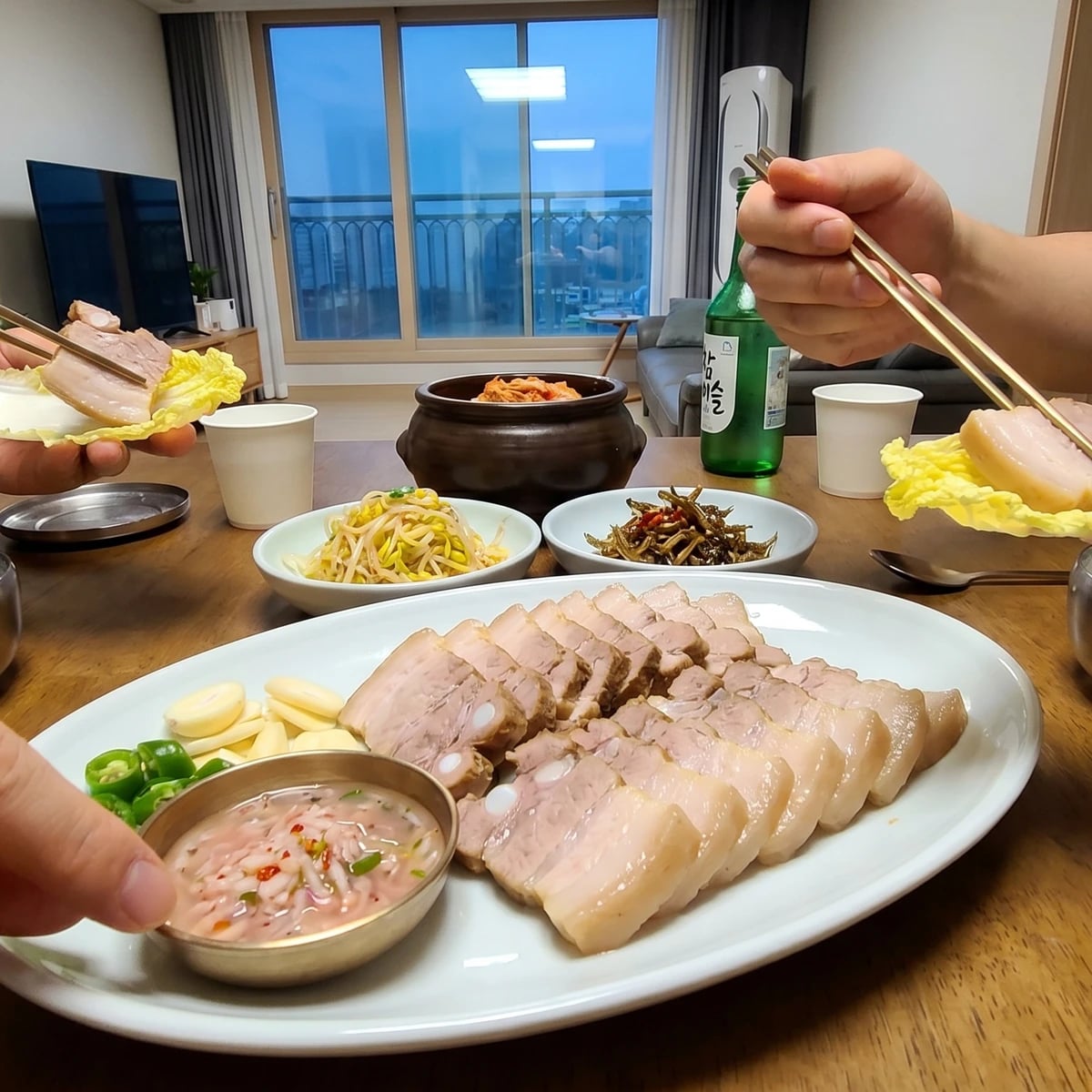
Pork belly or shoulder simmered gently with doenjang, ginger, garlic, and scallion, then sliced thick and eaten with salted shrimp, raw garlic, and rice, the plain table before bossam gets dressed.
Suyuk lives or dies in the simmer. People hear boiled pork and let the pot thrash, then blame the meat when it comes out tight and gray. My teacher would have tapped the lid once and said nothing. That was worse than a scolding. The water should move, not fight.
This is the quiet ancestor sitting inside bossam. Bossam names the wrap and the full table around it; suyuk is the meat itself, plain boiled pork sliced thick and trusted to taste like pork. Doenjang (fermented soybean paste) goes into the water to clear the smell and season lightly, not to turn the pot into stew. Garlic, ginger, onion, scallion, and a splash of soju do their work in the background.
Tonight this dish asks for good pork, enough liquid, a gentle pot, and a sharp knife. Belly gives soft layers. Shoulder gives a cleaner, meatier bite. Do not bury either one under sweet sauce. Saeujeot (salted shrimp) is the right companion because pork fat wants salt and fermentation, not noise.
손맛 is real; I measure it anyway, so it can be handed on. Two tablespoons of doenjang for this pot. Two tablespoons of salted shrimp for the sauce. Write those down the day your table goes quiet for the first bite.
Suyuk is written with the characters 熟肉, meaning cooked meat, and older Korean usage was broad: boiled beef, pork, or other meat sliced for the table, not one fixed restaurant plate. The pork version became closely tied to bossam, but bossam names the act of wrapping, while suyuk names the boiled meat itself. Kimjang, recognized by UNESCO in 2013 as communal late-autumn kimchi-making, is one setting where suyuk remains especially visible, eaten with fresh kimchi seasoning and salted cabbage after the day's work.
Quantity
900g
kept in one thick piece
Quantity
10 cups
plus more if needed to cover
Quantity
2 tablespoons
Quantity
1 medium
halved
Quantity
1 large daepa or 4 scallions
cut into 3-inch lengths
Quantity
8
smashed
Quantity
25g
sliced into thin coins
Quantity
1/2 cup
Quantity
1 teaspoon
Quantity
2
Quantity
2 tablespoons
finely chopped
Quantity
1 tablespoon
Quantity
1 teaspoon
Quantity
1 teaspoon
Quantity
1
finely chopped
Quantity
1 small
minced
Quantity
1/2 teaspoon
Quantity
3
thinly sliced
Quantity
1
thinly sliced
Quantity
to serve
Quantity
to serve
| Ingredient | Quantity |
|---|---|
| pork belly or boneless pork shoulderkept in one thick piece | 900g |
| waterplus more if needed to cover | 10 cups |
| doenjang (Korean fermented soybean paste) | 2 tablespoons |
| onionhalved | 1 medium |
| daepa (Korean leek) or scallionscut into 3-inch lengths | 1 large daepa or 4 scallions |
| garlic clovessmashed | 8 |
| fresh gingersliced into thin coins | 25g |
| soju or cheongju (Korean rice wine) | 1/2 cup |
| whole black peppercorns | 1 teaspoon |
| bay leaves (optional) | 2 |
| saeujeot (salted shrimp)finely chopped | 2 tablespoons |
| warm pork cooking broth | 1 tablespoon |
| gochugaru (Korean chili flakes) | 1 teaspoon |
| toasted sesame oil | 1 teaspoon |
| scallionfinely chopped | 1 |
| garlic clove for sauceminced | 1 small |
| toasted sesame seeds | 1/2 teaspoon |
| garlic cloves to servethinly sliced | 3 |
| green chili to servethinly sliced | 1 |
| cooked rice | to serve |
| ripe kimchi, lettuce leaves, or lightly salted napa cabbage leaves (optional) | to serve |
Use pork belly if you want soft layers of meat and fat, or shoulder if you want a meatier slice. Keep it in one thick piece, about 2 1/2 to 3 inches across, because small chunks dry out before the connective tissue loosens. Rinse only if there are bone chips, then pat dry. Good pork does not need a long soak.
Put the water in a 5 to 6 quart heavy pot and whisk in the doenjang until no large lumps remain. Add the onion, daepa or scallions, smashed garlic, ginger, soju, peppercorns, and bay leaves if using. Bring it to a strong boil for 5 minutes before the pork goes in. The aromatics need that head start, and the doenjang seasons the water lightly while clearing the pork smell.
Lower the pork into the boiling broth. The liquid should cover it by about 1 inch; add more water if the top sits exposed. Boil uncovered for 10 minutes, skimming any rough foam from the surface. This first hard boil tightens the outside just enough and pushes off the raw smell, but it is not how the meat finishes.
Lower the heat until the liquid moves in small, steady bubbles, then cover the pot with the lid slightly ajar. Simmer pork belly 50 to 60 minutes, or pork shoulder 70 to 80 minutes, turning once halfway through. Add hot water if the level drops below the meat. The pork is ready when a skewer slides in without resistance and the thickest part reads about 85 to 90 C for belly or 88 to 93 C for shoulder. Safe pork happens earlier, but suyuk texture needs time.
Turn off the heat and let the pork rest in the broth for 15 minutes. This is not idleness. Resting lets the juices settle and keeps the outside from drying while you prepare the sauce. If dinner is delayed, leave the pork in the warm broth and slice only when people are ready to eat.
Stir together the chopped saeujeot, 1 tablespoon warm pork broth, gochugaru, sesame oil, chopped scallion, minced garlic, and sesame seeds. Taste it carefully. It should be salty and sharp, because it seasons one bite at a time, not the whole platter. If your salted shrimp is very strong, loosen it with another teaspoon of broth instead of adding sugar.
Lift the pork from the broth and blot the surface lightly. Slice across the grain into 6 to 8 mm pieces, thick enough to taste the pork and thin enough to fold over rice or a cabbage leaf. Arrange the slices overlapping on a platter. Serve at once with the saeujeot sauce, sliced raw garlic, green chili, rice, and kimchi or leaves if you have them. Dip lightly. One small piece of salted shrimp on a slice is enough.
1 serving (about 350g)
Culinary guides, cultural storytelling, and the editorial depth that makes cooking meaningful.
Discover Culinary Explorer
Chef Jeong-sun
A generous Andong market braise of chicken, potatoes, chilies, and glass noodles in glossy soy sauce, cooked in the right order so the noodles soak up flavor without turning heavy.

Chef Jeong-sun
Pork belly simmered gently with doenjang, ginger, onion, and garlic, then sliced thick and wrapped in salted napa cabbage with spicy radish and saeujeot at the center of the table.

Chef Jeong-sun
Bone-in chicken, potatoes, and carrots braised in a deep red sauce until the meat is tender and the potatoes drink enough seasoning to deserve the rice beside them.

Chef Jeong-sun
A gentle soy-braised chicken from the home table, with potato, carrot, and shiitake simmered until the sauce clings dark and glossy without hiding the chicken under chili or sugar.