
Chef Jeong-sun
Agwi-jjim (Braised Monkfish with Bean Sprouts)
Firm monkfish buried under crisp soybean sprouts, minari, and a red gochugaru sauce thickened at the end; Masan's market dish asks for heat, timing, and a steady hand.
A cooking platform built around craft, culture, and the stories behind what we eat.

Created by
A generous Andong market braise of chicken, potatoes, chilies, and glass noodles in glossy soy sauce, cooked in the right order so the noodles soak up flavor without turning heavy.
Andong-jjimdak lives or dies by timing. Put everything in the pot at once and you get tired chicken, broken potatoes, and noodles that swell into a blanket. Cook it in stages and the dish behaves: chicken first, hardy vegetables next, glass noodles only when the sauce is ready to cling.
This is dinner-party comfort food, not quiet temple food and not old court food. It belongs to the market alley and the crowded table, where one wide platter feeds four people who keep reaching back for one more noodle. The sauce should be dark, glossy, savory, a little sweet, and warm with chili. It should not taste like sugar syrup. Let the chicken taste like chicken.
Master Seong-nyeo would have made me watch the sauce before she let me ask a question. 눈동냥, 귀동냥, borrowing with the eyes and ears. Watch the bubbles grow thicker around the potato edges; watch the spoon leave a brief path across the bottom of the pot. That is when the dangmyeon (glass noodles) go in, because they are greedy and will take whatever sauce you give them.
Write down your final salt and sweetness. Soy sauces differ, chickens differ, potatoes drink differently. 손맛 is real; I measure it anyway, so the next cook can make the same good platter without guessing.
Andong-jjimdak is a modern market dish associated with Andong Gu Market's chicken alley in North Gyeongsang Province, where vendors began selling the soy-braised chicken in the late 1980s. One common account says it grew partly as a response to the rise of fried chicken shops, offering a large, shareable chicken dish with vegetables and noodles at a modest price. Its dark soy sauce, dried chilies, and glass noodles made it distinct from older pale jjim preparations and helped it spread nationwide in the 1990s and early 2000s.
Quantity
1.2kg
skin on, cut through the bone into 8 to 10 pieces
Quantity
120g
Quantity
2 medium, about 450g
peeled and cut into 4cm chunks
Quantity
1 medium, about 180g
cut into 1cm-thick half-moons
Quantity
1 large, about 220g
cut into thick wedges
Quantity
4
cut into 5cm lengths, whites and greens separated
Quantity
3
snipped in half, seeds shaken out
Quantity
1
sliced on the diagonal
Quantity
8 cloves
minced
Quantity
1 teaspoon
finely grated
Quantity
1 cup
Quantity
2 cups
Quantity
3 tablespoons
Quantity
2 tablespoons
Quantity
2 tablespoons
Quantity
1 tablespoon
Quantity
1 tablespoon
Quantity
1/2 teaspoon
freshly ground
Quantity
1 tablespoon
Quantity
1 tablespoon
for finishing
| Ingredient | Quantity |
|---|---|
| bone-in chicken piecesskin on, cut through the bone into 8 to 10 pieces | 1.2kg |
| dried sweet potato starch noodles (dangmyeon) | 120g |
| potatoespeeled and cut into 4cm chunks | 2 medium, about 450g |
| carrotcut into 1cm-thick half-moons | 1 medium, about 180g |
| onioncut into thick wedges | 1 large, about 220g |
| scallionscut into 5cm lengths, whites and greens separated | 4 |
| dried red chiliessnipped in half, seeds shaken out | 3 |
| Cheongyang chili or green chili (optional)sliced on the diagonal | 1 |
| garlicminced | 8 cloves |
| fresh gingerfinely grated | 1 teaspoon |
| soy sauce | 1 cup |
| water | 2 cups |
| brown sugar | 3 tablespoons |
| rice syrup or corn syrup | 2 tablespoons |
| mirin or rice wine | 2 tablespoons |
| oyster sauce (optional) | 1 tablespoon |
| toasted sesame oil | 1 tablespoon |
| black pepperfreshly ground | 1/2 teaspoon |
| neutral oil | 1 tablespoon |
| toasted sesame seedsfor finishing | 1 tablespoon |
Put the dangmyeon in a bowl of warm water and soak 25 to 30 minutes, until the strands bend easily but still feel firm at the center. Drain them right before they go into the pot. This keeps the noodles from stealing too much sauce too early.
Bring a large pot of water to a boil. Add the chicken pieces and boil 3 minutes, just until foam rises and the outside tightens. Drain, rinse off any clinging scum, and clean the pot. This is not to cook the chicken; it gives you a cleaner braise and a sauce that stays glossy instead of muddy.
Stir together the soy sauce, water, brown sugar, rice syrup, mirin, oyster sauce if using, garlic, ginger, black pepper, and sesame oil. Taste it before it touches the chicken. It should be salty and slightly sweet, not candy-like, because the potatoes and noodles will soften it.
Heat the neutral oil in a wide heavy pot over medium heat. Add the dried red chilies and scallion whites and stir 30 seconds, just until the oil smells warm and savory. Add the blanched chicken and pour in the sauce. Bring to a boil, then reduce to a steady simmer and cook uncovered for 15 minutes, turning the chicken once.
Add the potatoes, carrot, and onion. Simmer uncovered 15 to 18 minutes more, turning the pieces gently every few minutes so the top pieces meet the sauce. The potatoes should be nearly tender when pierced, but not falling apart. If the pot looks dry before the potatoes soften, add water 2 tablespoons at a time, not by the cup.
Raise the heat to medium-high and boil 5 to 7 minutes, spooning the sauce over the chicken. You are looking for a glossy sauce that coats the spoon and leaves a brief dark trail across the bottom of the pot. Do this before the noodles go in. Dangmyeon will thicken the sauce fast, and it cannot repair a watery braise.
Add the drained noodles and scallion greens, lifting and folding with tongs so the noodles sit partly in the sauce instead of clumping on top. Cook 4 to 6 minutes, until the noodles turn translucent and glossy. Taste one noodle and one potato. If the seasoning feels flat, add 1 teaspoon soy sauce; if it feels harsh, add 1 teaspoon rice syrup. Small corrections, not a new sauce.
Transfer everything to a wide shallow serving dish, keeping the noodles loose and visible. Scatter with toasted sesame seeds and sliced fresh chili if using. Serve with rice, kimchi, and a clear soup if you want the table balanced. This is a rich dish; the side dishes should cut through it, not compete with it.
1 serving (about 575g)
Culinary guides, cultural storytelling, and the editorial depth that makes cooking meaningful.
Discover Culinary ExplorerChef Jeong-sun
Firm monkfish buried under crisp soybean sprouts, minari, and a red gochugaru sauce thickened at the end; Masan's market dish asks for heat, timing, and a steady hand.

Chef Jeong-sun
A quick Korean rice bowl built on contrast: warm rice, cold popping flying-fish roe, chopped vegetables, gim, sesame oil, and the crisp rice bottom a hot stone bowl gives you.
Chef Jeong-sun
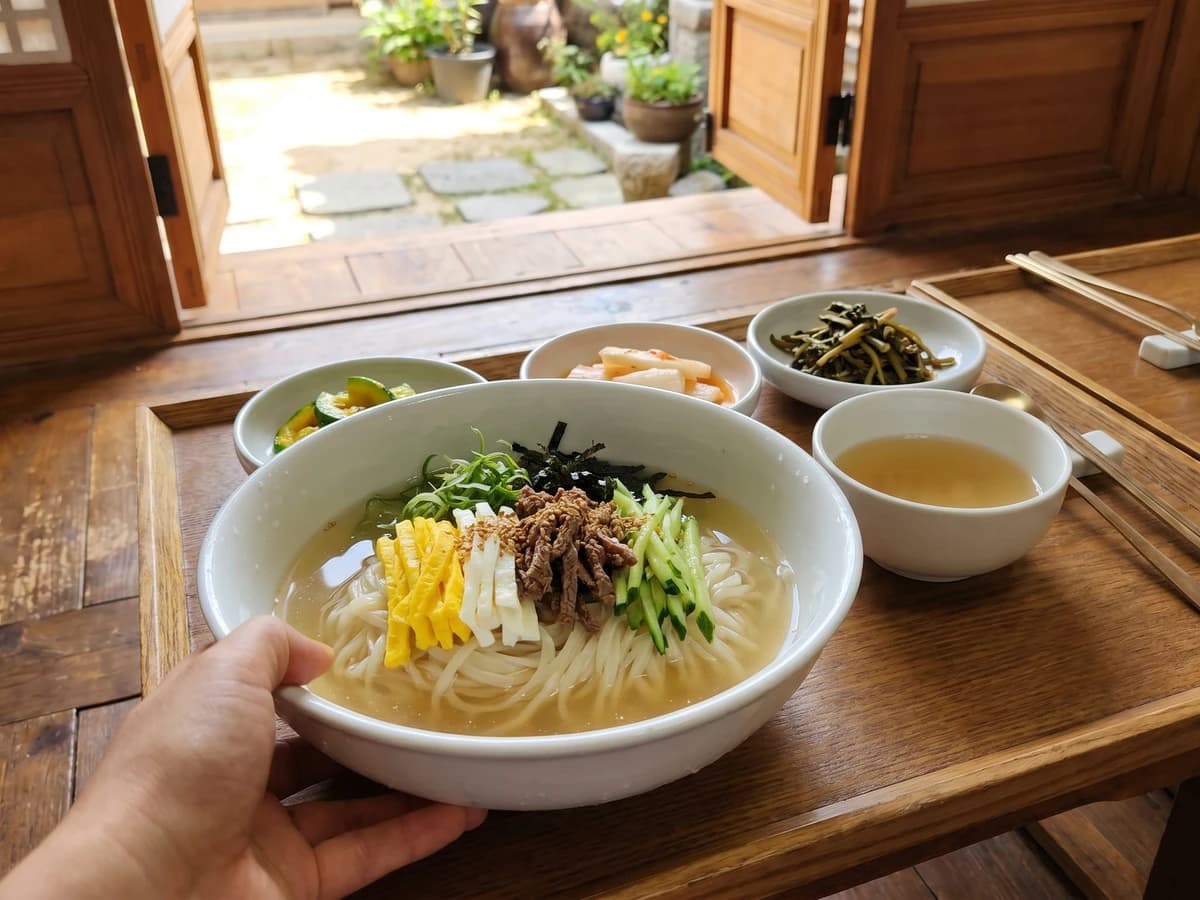
Andong's guest noodles, wheat and roasted soybean flour rolled thin, boiled and rinsed cold, then set in a clear chilled anchovy broth with careful strips of beef, egg, and cucumber.

Chef Jeong-sun
Andong's ritual-table rice served on an ordinary day: separate soy-sesame namul, warm rice, and clear radish soup, mixed without gochujang so every vegetable keeps its own voice.