
Chef Juliana
Ambrosia Baiana
You think curdled milk means you ruined dessert. Good. Tonight you'll do it on purpose, with lemon, yolks, cravo, and sugar, until the pot turns into golden gruminhos.
A cooking platform built around craft, culture, and the stories behind what we eat.
Created by
You don't need candy-shop hands for this. Cook the white brigadeiro to the right ponto, dry the grapes properly, and the little surprise behaves.
You see the tray at a birthday party and think, isso não é pra mim. Too neat, too round, too much like something made by a person born knowing how to roll sweets. Nonsense. Cozinhar não é dom, é um aprendizado, and brigadeiro is one of the kindest teachers because the pan tells you everything if you look at it.
I learned to trust ponto the same way I learned rice and beans: by ruining some batches, writing down what worked, and refusing to call the mistake a personality flaw. This sweet belongs after the pê-efe, after the rice, beans, a piece of meat or egg, and something green have done their quiet work. Brazilian birthday tables understand this better than anyone. First a gente feeds people. Then comes the little paper cup with something sweet enough to make everyone reach for one more.
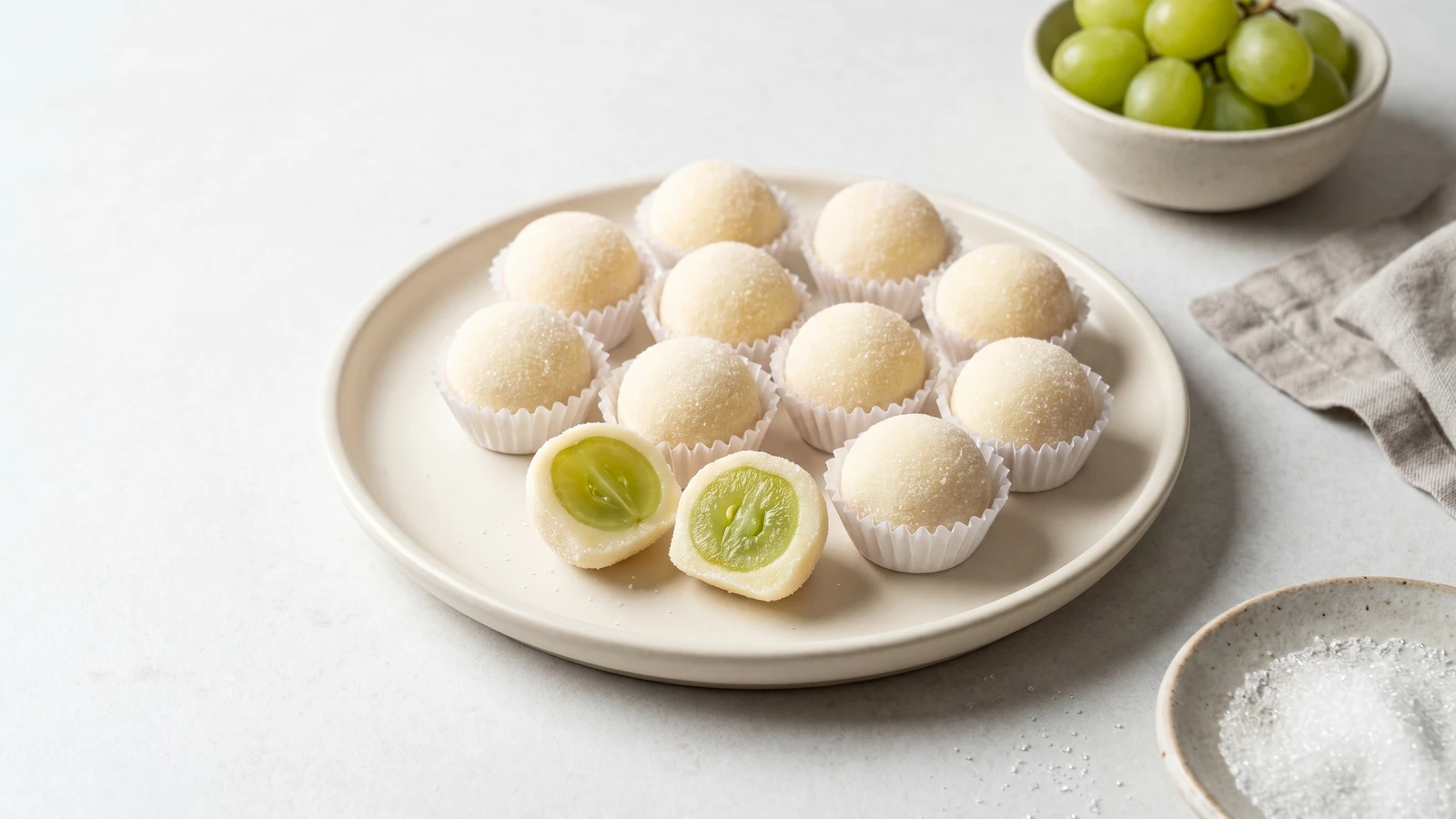
The method is plain. Cook condensed milk with butter until it pulls cleanly from the bottom of the pan, because that is what lets the brigadeiro wrap around the grape instead of sagging into a puddle. Cool it completely, because warm candy melts against your hands and sulks. Dry the grapes very well, because water is what makes the filling slide and the sugar sweat. Anota aí: the surprise is not magic. It's a cold, firm grape inside a properly cooked white brigadeiro.
This is comida de verdade in party clothes. Not a packet pretending to be dessert, not a powder doing the job of milk, butter, fruit, and patience. Small, sweet, Brazilian, and absolutely learnable.
Surpresa de Uva grew out of the Brazilian brigadeiro table, especially the birthday-party tradition that expanded from the original chocolate brigadeiro of the mid-twentieth century into white, coconut, nut, and fruit-filled versions. The grape version became common in home parties because seedless grapes are sturdy, juicy, and easy to hide inside a cooked doce de leite-style mass made from condensed milk. Its whole charm is structural: a sweet, soft outside and a cold fruit center that breaks under your teeth.
Quantity
1 can (14 ounces or 395 grams)
Quantity
1 tablespoon, plus more for greasing hands
Quantity
1 pinch
Quantity
24
washed and dried very well
Quantity
1/3 cup
for rolling
| Ingredient | Quantity |
|---|---|
| sweetened condensed milk | 1 can (14 ounces or 395 grams) |
| unsalted butter | 1 tablespoon, plus more for greasing hands |
| fine salt | 1 pinch |
| small seedless green grapeswashed and dried very well | 24 |
| granulated sugarfor rolling | 1/3 cup |
Wash the grapes, pull them from the stems, and dry each one with a clean towel. Leave them on a paper towel while you cook the brigadeiro. They need to feel dry, not just look dry, because water makes the candy slip off the fruit and turns the sugar coating damp. That mess is not your failure. It's physics being annoying.
Put the condensed milk, butter, and salt in a small heavy saucepan over medium-low heat. Stir constantly with a silicone spatula, scraping the bottom and corners, until the mixture thickens, turns glossy, and pulls away from the pan in a soft mass, about 10 to 12 minutes. Drag the spatula through the bottom: if the pan shows for 2 seconds before the brigadeiro slowly closes, you've got the ponto. Stop there. Too soon and it won't hold the grape. Too far and it gets chewy in the wrong way.
Scrape the brigadeiro onto a buttered plate and spread it into a thick layer. Let it cool until fully room temperature, about 30 minutes. Touch it with a buttered finger: it should be firm, cool, and no longer sticky-hot. Warm brigadeiro looks cooperative for two seconds, then melts on your hands and exposes the grape like it has secrets to tell.
Lightly butter your hands. Scoop about 1 teaspoon of brigadeiro, flatten it into a small disk, place one dry grape in the center, and pull the candy up around it. Roll gently between your palms until the grape is fully covered and the candy is round. Use just enough brigadeiro to hide the grape, because a thick coat turns this from a surprise into a sugar pillow.
Drop each finished candy into the granulated sugar and roll until lightly coated all over. Set them in small paper cups or on a clean plate. The sugar keeps the surface from sticking to fingers, and the little crunch makes the grape's cold burst even better.
Chill the candies for 20 minutes before serving. They should feel firm to the touch, with the grape still cool inside. Serve the same day if you can, because fresh grape is the whole point here. By tomorrow they're still good, but the fruit starts giving up juice, as fruit does when we ask it to live inside candy.
1 serving (about 23g)
Culinary guides, cultural storytelling, and the editorial depth that makes cooking meaningful.
Discover Culinary ExplorerChef Juliana
You think curdled milk means you ruined dessert. Good. Tonight you'll do it on purpose, with lemon, yolks, cravo, and sugar, until the pot turns into golden gruminhos.

Chef Juliana
You are not ruining the milk. You're curdling it on purpose, slowly, until sugar, eggs, cinnamon, and patience turn cheap ingredients into dessert.

Chef Juliana
You think curdled milk means failure. Not here. Milk, yolks, sugar, and lemon cook into golden curds in amber whey, a Minas sweet where the ponto teaches the whole recipe.

Chef Juliana
You already trust rice for dinner. Trust it for dessert: cook it gently with milk, coconut, and canela until each grain turns soft, creamy, and impossible to blame on lack of talent.