
Chef Juliana
Ambrosia Baiana
You think curdled milk means you ruined dessert. Good. Tonight you'll do it on purpose, with lemon, yolks, cravo, and sugar, until the pot turns into golden gruminhos.
A cooking platform built around craft, culture, and the stories behind what we eat.
Created by
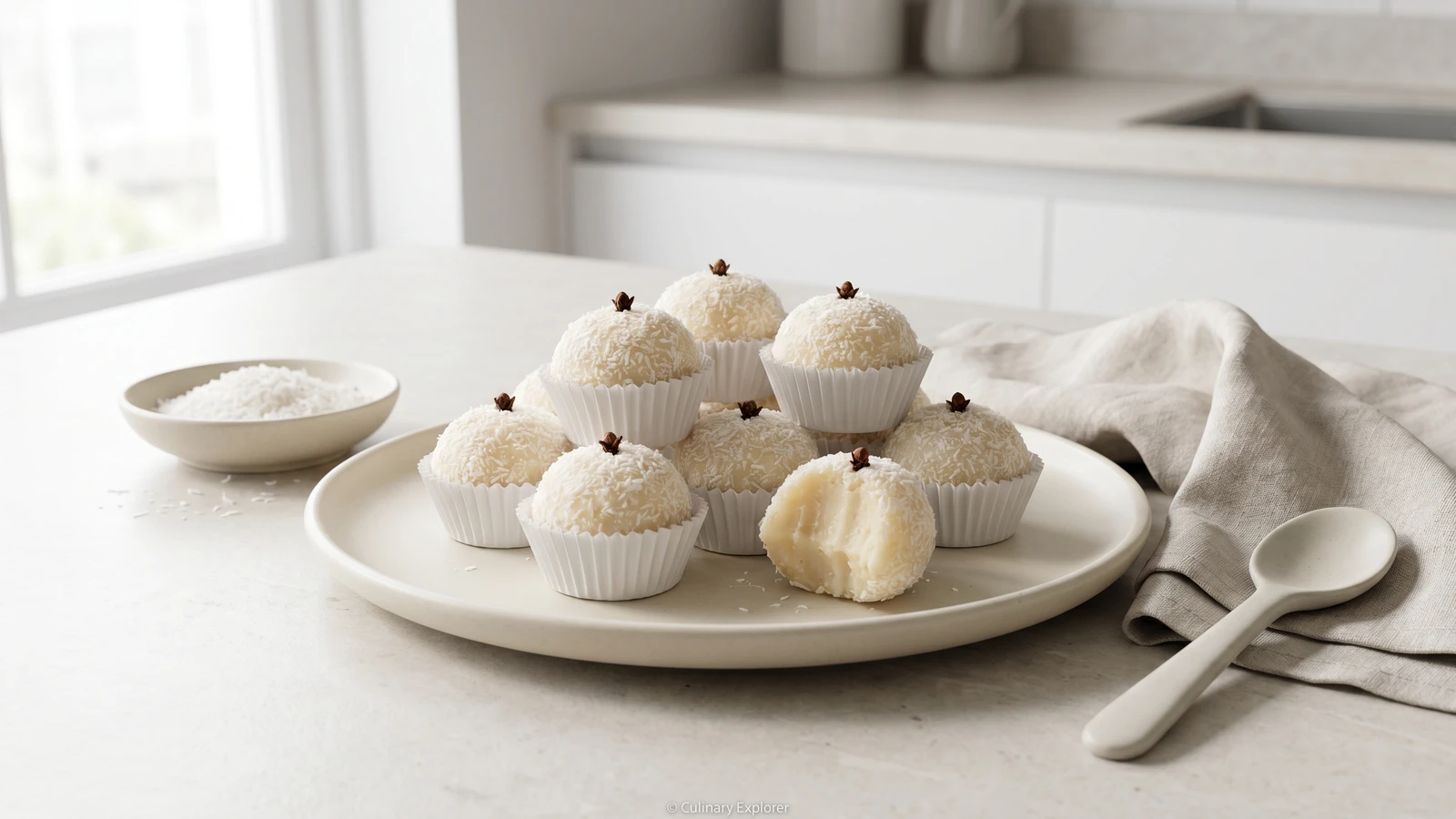
You already learned brigadeiro. This is the same pan lesson with coconut: stir until it pulls from the bottom, cool, roll, and crown each sweet with one clove.
You hear "isso não é pra mim" even before the pan comes out, don't you? Little party sweets look like somebody else's skill, the auntie's job, the birthday-table magic you admire from a safe distance. Anota aí: cooking isn't a gift, it's something you learn, and beijinho is one of the kindest places to learn ponto.
I care about rice, beans, meat or egg, and something green because that's the everyday plate, the pê-efe that quietly keeps a country itself. But a Brazilian table also knows how to celebrate without turning food into a museum piece. After the plate is solved, after the feijão is creamy and the arroz soltinho behaves, there is room for a little coconut sweet rolled by hand and passed around while people pretend they'll eat only one.
The method is plain. Condensed milk, coconut, a little butter, heat low enough that the sugar doesn't scorch, and your eyes on the bottom of the pan. Drag the spoon through the mixture and wait until it opens a clean path for a second. That's the ponto. Too soon and the sweets slump. Too late and they turn chewy in the wrong way, the kind that makes you negotiate with your teeth.
Use real shredded coconut, not coconut-flavored powder pretending to be food. A gente can use dried coconut because a Tuesday is a Tuesday, but it should still taste like coconut, not perfume from a packet. Roll them, give each one its clove, and there you are: receitas que funcionam, dressed for a birthday.
Beijinho grew out of the same Brazilian party-sweet family as brigadeiro, built around sweetened condensed milk, which became common in home kitchens and children's birthdays in the twentieth century. Older coconut sweets in Brazil often used sugar and fresh coconut, but the condensed-milk version made the recipe faster, more consistent, and easy to portion into paper cups. The clove on top is more than decoration: it perfumes the coconut and gives the sweet its familiar birthday-table face, though many people remove it before eating.
Quantity
1 can (14 ounces or 395 g)
Quantity
1 cup
for the pan
Quantity
1/2 cup
for rolling
Quantity
1 tablespoon, plus more for greasing hands
Quantity
1/8 teaspoon
Quantity
24
for finishing
| Ingredient | Quantity |
|---|---|
| sweetened condensed milk | 1 can (14 ounces or 395 g) |
| unsweetened finely shredded coconutfor the pan | 1 cup |
| unsweetened finely shredded coconutfor rolling | 1/2 cup |
| unsalted butter | 1 tablespoon, plus more for greasing hands |
| salt | 1/8 teaspoon |
| whole clovesfor finishing | 24 |
Line a small tray with parchment and put the extra 1/2 cup coconut in a shallow bowl. Open the paper cups if you're using them. Do this before the pan goes on the heat, because once the doce reaches ponto, you don't want to abandon it while you go hunting for tiny cups in a drawer.
Put the condensed milk, 1 cup shredded coconut, butter, and salt in a medium heavy saucepan. Stir with a silicone spatula until the coconut is evenly wet and the butter starts to melt. The salt is small, but it matters, because it keeps the sweet from tasting flat.
Set the pan over medium-low heat and stir constantly, scraping the bottom and corners, until the mixture thickens and pulls away from the pan, about 10 to 12 minutes. Drag the spatula through the middle: if it shows the bottom clearly for a second before closing, you're there. Keep the heat gentle so the milk sugars thicken instead of scorching into brown specks.
Scrape the mixture onto the prepared tray and spread it into a shallow mound. Let it cool until just barely warm, about 40 to 45 minutes. Warm enough to shape is fine; hot enough to stick to everything is not. Cooling firms the condensed milk so the balls hold their shape instead of slumping like they gave up.
Lightly butter your hands, scoop about 1 tablespoon of the mixture, and roll it into a small ball. Drop it into the bowl of coconut and turn it until coated all over. The butter keeps the doce from grabbing your palms, and the coconut coating gives each piece that soft, snowy outside without needing any nonsense.
Set each beijinho in a paper cup or on the tray, then press one whole clove gently into the top. Press only enough for it to stand, not so hard that the ball cracks. The clove perfumes the coconut while the sweets rest, but warn people it's there if you're serving children. Some people eat around it, some pull it out. Both survive.
Let the finished beijinhos sit at room temperature for 15 minutes before serving, or chill them if your kitchen is hot. They should be tender, creamy, and hold their round shape when lifted. If they're for a party tomorrow, cover them well and refrigerate, then bring them back toward room temperature before the table. Cold condensed-milk sweets taste tighter than they should.
1 serving (about 20g)
Culinary guides, cultural storytelling, and the editorial depth that makes cooking meaningful.
Discover Culinary ExplorerChef Juliana
You think curdled milk means you ruined dessert. Good. Tonight you'll do it on purpose, with lemon, yolks, cravo, and sugar, until the pot turns into golden gruminhos.

Chef Juliana
You are not ruining the milk. You're curdling it on purpose, slowly, until sugar, eggs, cinnamon, and patience turn cheap ingredients into dessert.

Chef Juliana
You think curdled milk means failure. Not here. Milk, yolks, sugar, and lemon cook into golden curds in amber whey, a Minas sweet where the ponto teaches the whole recipe.

Chef Juliana
You already trust rice for dinner. Trust it for dessert: cook it gently with milk, coconut, and canela until each grain turns soft, creamy, and impossible to blame on lack of talent.