Culinary Explorer

A cooking platform built around craft, culture, and the stories behind what we eat.
Discover Culinary Explorer
Sukju-namul (Seasoned Mung Bean Sprouts)

Sukju-namul (Seasoned Mung Bean Sprouts)

Created by

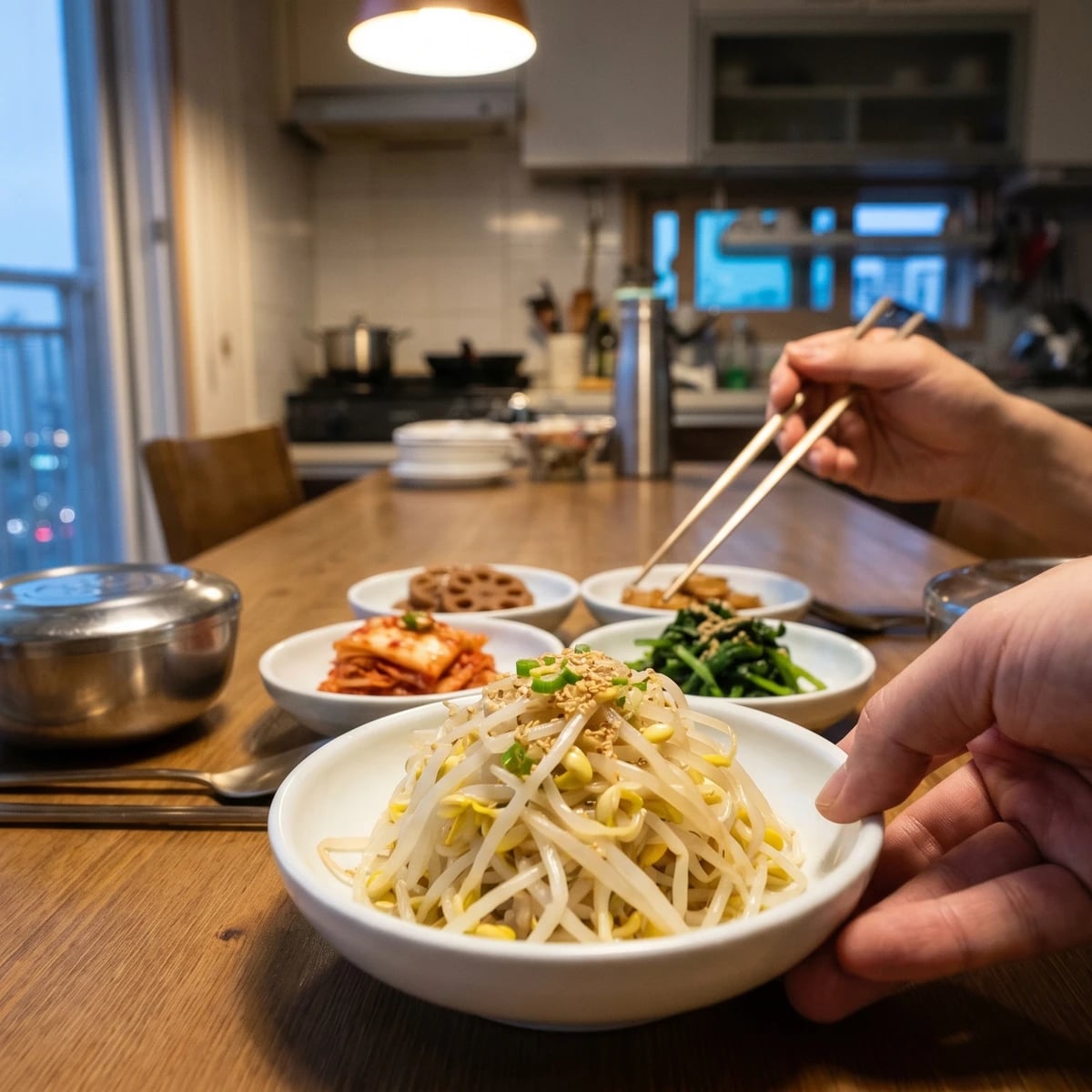
A quiet banchan of pale mung bean sprouts, blanched for less than a minute and seasoned by hand so garlic, salt, and sesame sharpen the sprout instead of weighing it down.

Side Dishes
Korean
Weeknight
Budget Friendly
10 min
Active Time
2 min cook15 min total
Yield4 small banchan servings

Sukju-namul lives or dies in the minute between raw and overcooked. Mung bean sprouts look sturdy in the market basket, white stems and tiny yellow leaves tangled together, but they give up faster than soybean sprouts. Drop them into water that is already boiling, count seventy-five seconds, then get them out. That is the dish.

This is the pale banchan that makes the rest of the table cleaner: a small mound beside rice, a spoonful tucked into bibimbap, something cool and nutty next to a hot stew. Season it alone in its own bowl. Garlic, salt, sesame oil, scallion, sesame seeds. Nothing loud. If you season it as part of a crowd, you won't hear what the sprout is doing.

My teacher made us drain it until no water sat in the bottom of the bowl, then she would point at the puddle without speaking. I learned quickly. Water steals the seasoning, and too much garlic bullies the sprout. 손맛 is real; I measure it anyway, because the difference between a clean namul and a tired one is often half a teaspoon.

Sukju-namul is an everyday Korean namul made from mung bean sprouts, the same nokdu family used for bindaetteok and cheongpomuk, and it appears most often as a quick banchan or one component of bibimbap. The name sukju is popularly linked to the fifteenth-century Joseon scholar Sin Suk-ju, a story that compares the sprout's quick spoilage to political betrayal, but that explanation is treated as folk etymology rather than settled origin. Its place on the table comes from economy and speed: mung beans sprout cheaply, cook in a minute, and give a meal a clean crunch when meat or fish is scarce.

The technique, the tradition, and the story behind every dish.

Discover Culinary Explorer

Ingredients

fresh mung bean sprouts (sukju)

Quantity

300g (about 6 cups)

rinsed; browned tips removed

water

Quantity

8 cups

for blanching

kosher salt

Quantity

1 tablespoon

for blanching water

garlic

Quantity

1 small clove (about 1/2 teaspoon)

minced very fine

scallion

Quantity

1 (about 2 tablespoons)

finely sliced

fine sea salt

Quantity

3/4 teaspoon

divided

toasted sesame oil

Quantity

2 teaspoons

toasted sesame seeds

Quantity

2 teaspoons

lightly crushed

Equipment Needed

  • Large 3-quart or larger pot
  • Colander
  • Wide mixing bowl
  • Clean kitchen towel or salad spinner

Instructions

  1. 1

    Sort and rinse

    Put the mung bean sprouts in a wide bowl of cold water and swish them gently. Lift them out with your hands so any grit stays behind. Pick away browned tips, black seed coats, or limp stems. Do not soak them long; they drink water and lose the clean snap you came for.

    Buy sprouts the day you cook them if you can. They should smell clean and faintly green, never sour, and the stems should look firm, not translucent.
  2. 2

    Blanch fast

    Bring 8 cups water to a hard boil in a large pot and stir in 1 tablespoon kosher salt. Add the sprouts all at once, press them under with chopsticks, and cook uncovered for 75 seconds. Thick market sprouts can take 90 seconds, but no more. The stems should bend and still feel crisp when you bite one.

    Sukju is not kongnamul, soybean sprouts. It is more delicate and does not need the longer covered cooking that soybean sprouts often do.
  3. 3

    Cool and drain

    Drain the sprouts at once and rinse under cold running water for 10 to 15 seconds, just enough to stop the cooking. Shake the colander hard, then spread the sprouts on a clean kitchen towel or spin them briefly in a salad spinner. Let them sit 5 minutes. Water left in the stems steals the seasoning and makes a puddle in the bowl.

  4. 4

    Season by hand

    Move the drained sprouts to a mixing bowl. Add the minced garlic, scallion, and 1/2 teaspoon fine sea salt. Toss lightly with your fingers, lifting from the bottom instead of squeezing. Add the sesame oil and crushed sesame seeds and toss again. Taste one sprout. If it tastes clean but flat, add the remaining 1/4 teaspoon salt.

  5. 5

    Rest and serve

    Let the namul rest 5 minutes, then taste once more before it goes to the table. Serve in a small banchan dish beside rice and soup. This is not a dish that should taste of garlic first or sesame oil first. It should taste like mung bean sprouts, only better cared for.

Chef Tips

  • Choose sprouts with firm white stems and pale yellow tips. If the bag has liquid pooled inside, or the sprouts smell sour, leave it at the market. My teacher would not argue with bad sprouts. She would simply cook something else.
  • The draining matters as much as the blanching. A salad spinner is an honest modern shortcut here, because the goal is the same old one: remove water without crushing the stems.
  • Do not replace these with soybean sprouts without changing the method. Kongnamul has a bean head and a stronger raw smell, so it needs longer cooking and different handling. Cousins are not twins.
  • For food safety, keep raw sprouts refrigerated, cook them the day you buy them, and eat the finished namul within 24 hours. Anyone pregnant, elderly, immunocompromised, or cooking for small children should cook sprouts thoroughly and avoid tasting them raw.

Advance Preparation

  • The sprouts can be sorted and rinsed up to 4 hours ahead. Drain them well, wrap loosely in a clean towel, and refrigerate until cooking.
  • Sukju-namul is best the day it is made. You can season it 2 hours ahead and refrigerate it, then pour off any liquid and taste again before serving.
  • Do not freeze this namul. The stems collapse after thawing, and a dish built on crispness has nothing left to stand on.

Frequently Asked Questions

Nutrition Information

1 serving (about 75g)

Calories
55 calories
Total Fat
3 g
Saturated Fat
0.5 g
Trans Fat
0 g
Unsaturated Fat
2.5 g
Cholesterol
0 mg
Sodium
520 mg
Total Carbohydrates
5 g
Dietary Fiber
2 g
Sugars
3 g
Protein
3 g

Note: Chef personas and recipes are created with AI assistance. Cook with care: follow safe food-handling practices, check doneness with a thermometer when needed, and adapt for allergies and your kitchen.

Where cooking meets culture.

Culinary guides, cultural storytelling, and the editorial depth that makes cooking meaningful.

Discover Culinary Explorer

More from Namul: The Banchan Grammar

Browse the full collection