
Chef Jeong-sun
Aehobak-bokkeum (Korean Stir-Fried Zucchini)
Tender Korean zucchini half-moons cooked quickly over real heat, seasoned with salted shrimp so the squash tastes deeper than oil and still clean enough for a weeknight table.
A cooking platform built around craft, culture, and the stories behind what we eat.
Created by
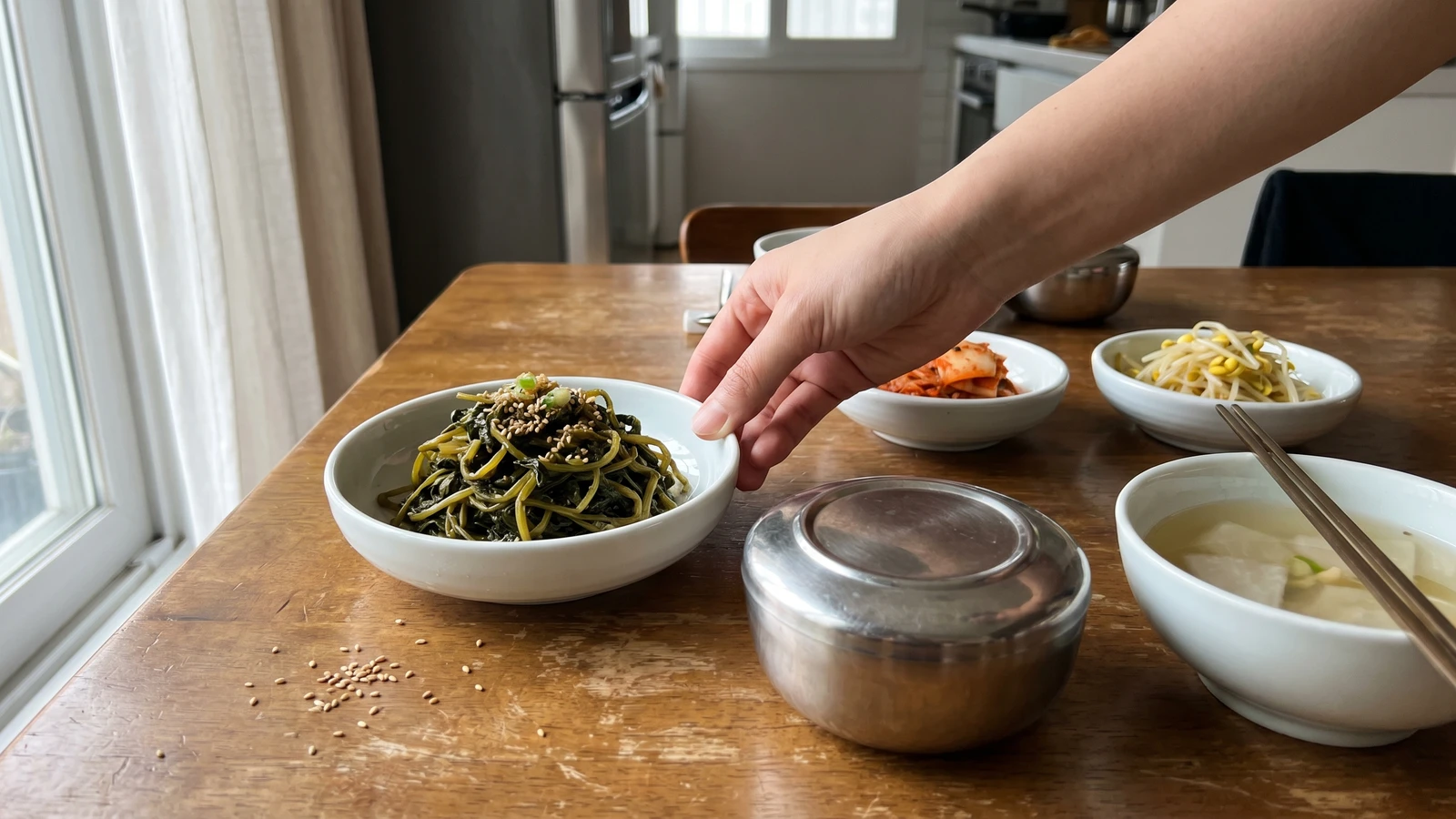
Tender summer amaranth greens blanched for less than a minute, squeezed just enough, then dressed with doenjang, sesame, garlic, and restraint so the green still tastes like itself.
Bireum belongs to hot weather. In the market it sits in loose green bundles when spring greens are already gone, cheap enough that no one brags about buying it. That is usually where the good banchan hide. Cook the month you're standing in, and in summer, this is one of the greens that answers.
The whole dish lives or dies in the blanching and the squeeze. Too long in the pot and it goes dull. Too wet in the bowl and the doenjang slides off. Too much paste and you lose the soft, mild nature of the leaf. My teacher would press the squeezed greens into my palm and ask, without looking up, whether I had left water or life in them. There is a difference.
This is a weeknight namul, not a showpiece, and it deserves the same notebook as a holiday dish. You season it alone, taste it alone, and only then let it sit beside rice, soup, and the other banchan. Write down your doenjang amount after you taste your own paste. One tablespoon in my bowl may be two teaspoons in yours, and that is exactly why memory needs a measure.
Bireum-namul belongs to Korea's long habit of eating deulnamul, field greens gathered or grown close to home and turned into small seasoned dishes for the rice table. Bireum, the Korean name for edible amaranth greens, thrives in summer heat, which is why it appears after the tender spring mountain greens have passed. It is an everyday namul rather than a court dish, commonly seasoned with doenjang, gochujang, or soy sauce depending on the household and region.
Quantity
300g
washed well, tough stems removed
Quantity
1 tablespoon
for blanching water
Quantity
1 tablespoon
Quantity
1 teaspoon
Quantity
1 teaspoon
Quantity
1 teaspoon
lightly crushed
Quantity
1 small clove
very finely minced
Quantity
1 teaspoon
minced
Quantity
1/2 teaspoon
Quantity
1/2 teaspoon
| Ingredient | Quantity |
|---|---|
| fresh bireum (amaranth greens)washed well, tough stems removed | 300g |
| coarse saltfor blanching water | 1 tablespoon |
| doenjang (Korean fermented soybean paste) | 1 tablespoon |
| soy sauce, preferably guk-ganjang (Korean soup soy sauce) | 1 teaspoon |
| toasted sesame oil | 1 teaspoon |
| toasted sesame seedslightly crushed | 1 teaspoon |
| garlicvery finely minced | 1 small clove |
| scallionminced | 1 teaspoon |
| gochugaru (Korean chili flakes) (optional) | 1/2 teaspoon |
| maesil-cheong (green plum syrup) or rice syrup (optional) | 1/2 teaspoon |
Trim away thick, fibrous lower stems and keep the tender leaves and thin upper stems. Wash the greens in two changes of cold water, lifting them out instead of pouring the gritty water over them. Bireum grows low and cheaply, which is a blessing at the market and a warning at the sink.
Bring 2 liters of water to a full boil and add 1 tablespoon coarse salt. Add the greens, pressing them under the water, and blanch 45 to 60 seconds, just until the stems bend and the leaves deepen in color. This green is tender. Boil it like cabbage and it loses its mild, field taste.
Drain the greens and rinse once under cold running water to stop the cooking. Gather them in both hands and squeeze firmly, but not cruelly, until they are damp rather than dripping. You should have about 170g squeezed greens. Too much water thins the seasoning; too much squeezing makes the namul dry and tired.
Lay the squeezed greens on the board and cut them into 2-inch lengths. This is not decoration. Namul should lift easily with chopsticks and sit neatly beside rice, not trail across the table like rope.
In a medium bowl, mash together the doenjang, soy sauce, sesame oil, crushed sesame seeds, garlic, scallion, gochugaru if using, and maesil-cheong if using. Mix the seasoning first so the doenjang loosens and coats evenly. If you drop paste straight onto the greens, one bite gets all the salt and the next gets none.
Add the cut greens to the bowl and loosen them with your fingers before mixing. Rub the seasoning through gently until every strand is coated. Taste one stem. It should be soft, savory, and nutty, with the doenjang supporting the green, not burying it. 손맛 is real; I measure it anyway, so it can be handed on.
Let the namul sit 5 minutes, then taste again. The salt settles into the greens as they rest. Serve at room temperature in a small banchan dish, with rice and one clear soup or stew. Season this namul alone, in its own bowl, before it ever meets the rice. That is how each vegetable keeps its own voice.
1 serving (about 65g)
Culinary guides, cultural storytelling, and the editorial depth that makes cooking meaningful.
Discover Culinary ExplorerChef Jeong-sun
Tender Korean zucchini half-moons cooked quickly over real heat, seasoned with salted shrimp so the squash tastes deeper than oil and still clean enough for a weeknight table.

Chef Jeong-sun
Tender Korean summer zucchini softened gently in the pan with saeujeot for salt and depth, finished with sesame so the vegetable stays sweet, green, and plainly itself.

Chef Jeong-sun
A bittersweet spring green from the southern shore, blanched just until pliant, then seasoned lightly so its clean coastal bitterness stays alive on the rice table.

Chef Jeong-sun
Torn king oyster or shiitake mushrooms, browned until their own water disappears, then finished with soy, garlic, sesame oil, and onion for a quiet banchan that earns its place.