
Chef Joost
Aspergesoep (Dutch White Asparagus Soup)
White asparagus is Limburg's spring clock, and this soup uses every pale stem and peeling to make wit goud, white gold, taste like the season it refuses to outlive.
A cooking platform built around craft, culture, and the stories behind what we eat.
Created by
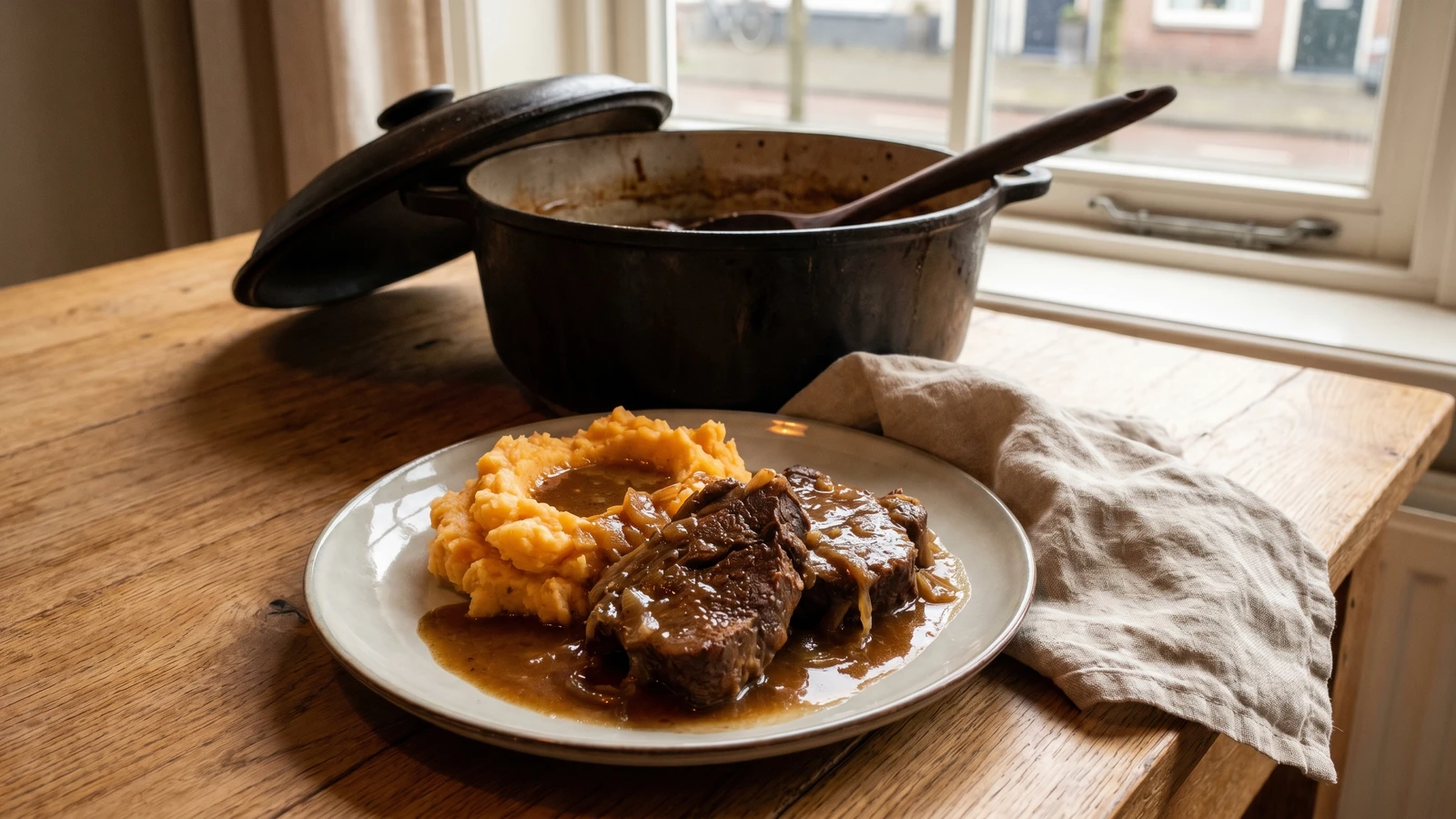
The Dutch Sunday braise named for the pale seam through the beef, cooked until that stubborn line turns to silk and the meat falls into threads.
In my grandmother's second notebook, sukadelappen sit exactly where they belong: between weekday thrift and Sunday pride. No flourish. No decoration. Just beef from the shoulder, onion browned properly, a little vinegar, bay, clove, and enough time for the kitchen to admit it is winter.
The name already tells you the secret, though it tells it sideways. Sukade is candied citron peel, the little translucent strips Dutch bakers hide in feestbrood and old Christmas cakes. A sukadelap is not sweet, for obvious reasons, but the butcher saw that pale, glossy line of connective tissue through the blade steak and named the cut after what it resembled. Cook it too quickly and that line stays stubborn. Cook it low and long, and it melts into the gravy like a promise kept.
But let me tell you a secret: this is not a poor man's steak pretending to be grander. It is a different logic altogether. Dutch cooking often prefers patience to tenderness bought at the butcher's counter. Brown the meat hard enough to give the gravy its backbone, keep the liquid modest, and let the pan work slowly until the beef pulls apart into draadjesvlees, thread-meat. Hou het altijd simpel, always keep it simple. The pot does the clever part.
Sukadelappen belong to the Dutch tradition of braising economical working cuts, especially shoulder and blade cuts, for the Sunday meal or a make-ahead winter dinner. The name comes from the strip of connective tissue running through the cut, which Dutch butchers compared to sukade, candied citron peel used in festive baking. The spicing of bay, clove, and sometimes mace reflects the ordinary place of VOC-era spices in Dutch home kitchens, where a braise could be frugal and fragrant at the same time.
Quantity
800g
about 2cm thick
Quantity
2 large
thinly sliced
Quantity
50g
Quantity
1 tablespoon
Quantity
2 tablespoons
Quantity
250ml
Quantity
150ml
Quantity
2 tablespoons
Quantity
2
Quantity
4
Quantity
1 teaspoon
Quantity
1 slice
crumbled
Quantity
to taste
| Ingredient | Quantity |
|---|---|
| sukadelappen or beef blade steaksabout 2cm thick | 800g |
| onionsthinly sliced | 2 large |
| butter | 50g |
| neutral oil | 1 tablespoon |
| flour | 2 tablespoons |
| beef stock | 250ml |
| dark beer or water | 150ml |
| red wine vinegar | 2 tablespoons |
| bay leaves | 2 |
| whole cloves | 4 |
| dark brown sugar | 1 teaspoon |
| ontbijtkoek (optional)crumbled | 1 slice |
| salt and freshly ground black pepper | to taste |
Pat the sukadelappen dry, then season both sides with salt and black pepper. Let them stand at room temperature for twenty minutes while you slice the onions. Cold wet beef stews before it browns, and browning is where this plain-looking dish begins to speak.
Heat the butter and oil in a heavy braadpan, a Dutch braising pot, over medium-high heat. Dust the beef lightly with flour and brown the slices in batches until deep brown on both sides, about three minutes per side. Do not crowd the pan. Set the browned beef on a plate and keep every dark bit in the pot; that is tomorrow's gravy beginning today.
Add the sliced onions to the same pan with a pinch of salt. Cook them slowly for ten to twelve minutes, scraping the bottom with a wooden spoon, until they are golden and soft at the edges. The onions are not garnish here; they dissolve into the sauce and give it body.
Pour in the beef stock, dark beer or water, and vinegar, scraping the pan clean as the liquid bubbles. Add the bay leaves, cloves, brown sugar, and the crumbled ontbijtkoek if using. Return the beef and any juices to the pan. The liquid should come about halfway up the meat, not drown it; a braise is not soup with ambitions.
Cover the pan, lower the heat until the liquid barely trembles, and cook for two and a half to three hours, turning the beef once or twice. The sukade seam will look stubborn for a long time, then suddenly give way into gelatin. The meat is ready when a fork slides in without argument and the beef begins to pull apart into draadjes, threads.
Lift the beef onto a warm plate and remove the bay leaves and cloves. Simmer the gravy uncovered for five to ten minutes until glossy and lightly thickened. Taste for salt, pepper, and vinegar. Return the beef to the pan and spoon the sauce over it. Serve with hutspot, stamppot, boiled potatoes, or red cabbage, and make sure there is enough gravy for the kuiltje, the little hollow in the mash.
1 serving (about 300g)
Culinary guides, cultural storytelling, and the editorial depth that makes cooking meaningful.
Discover Culinary ExplorerChef Joost
White asparagus is Limburg's spring clock, and this soup uses every pale stem and peeling to make wit goud, white gold, taste like the season it refuses to outlive.
Chef Joost
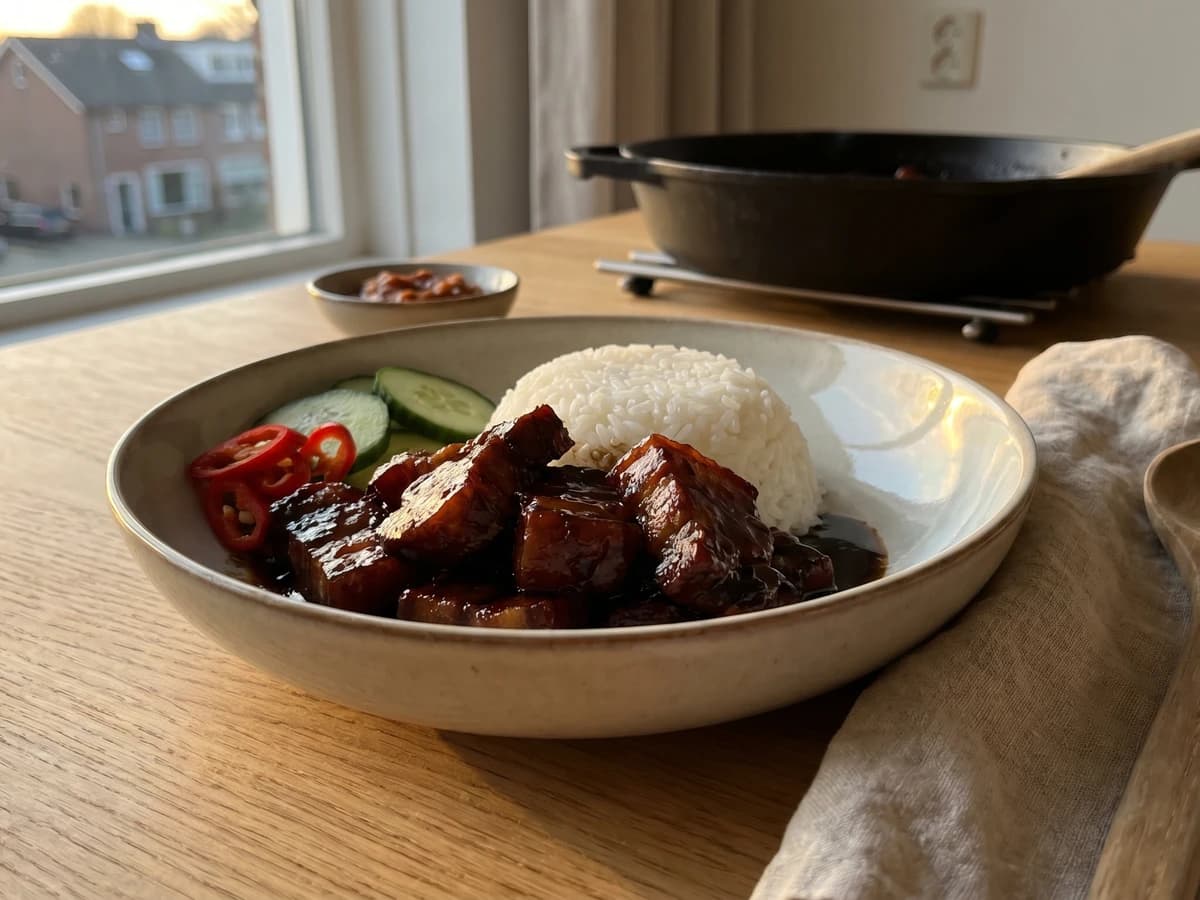
Pork, sweet soy, ginger, and patience: the Indo-Dutch braise that carried the colonial table into Dutch kitchens and made rice feel like Sunday dinner.
Chef Joost
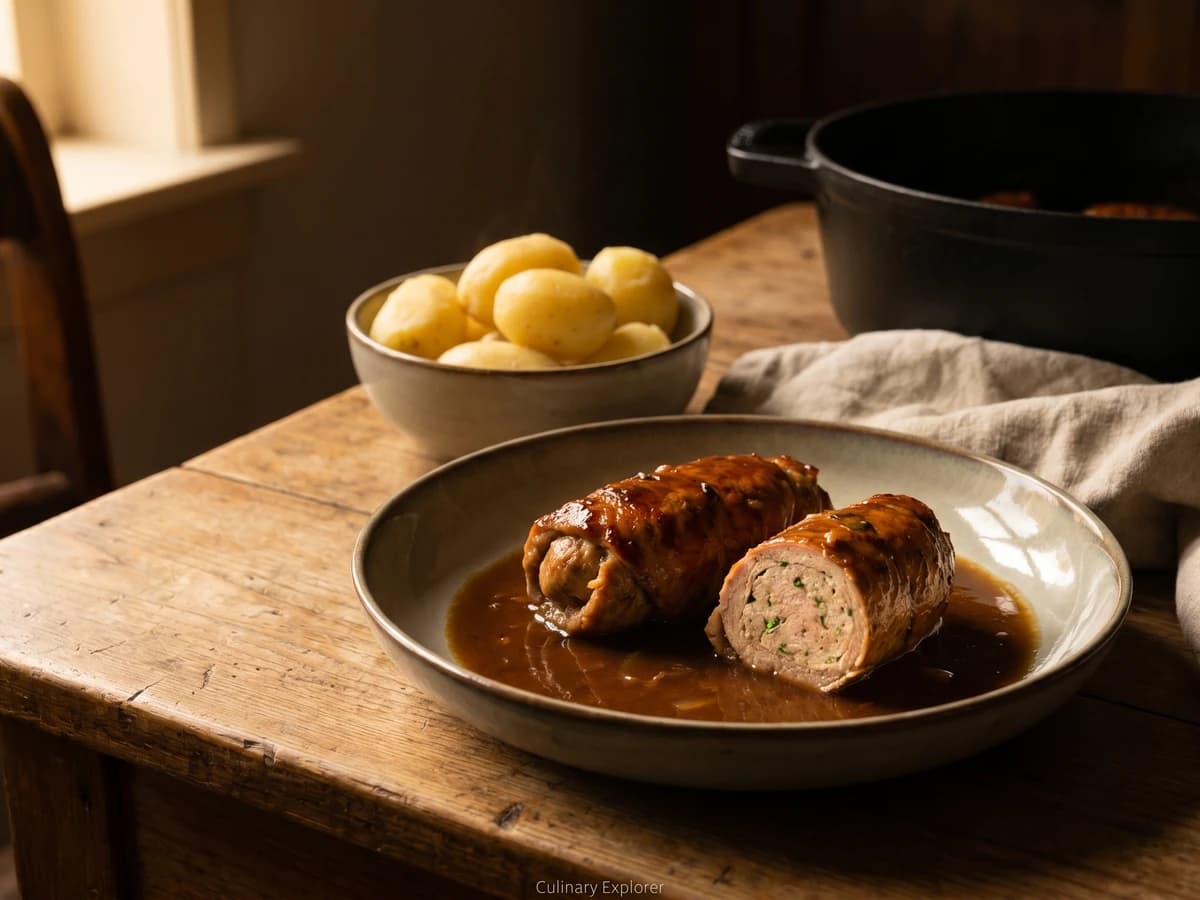
Blinde vinken are not birds but a butcher's little joke: seasoned mince tucked into thin veal or beef, browned dark in butter, then braised until the jus tastes of onion, mace, and patience.

Chef Joost
Bruine bonensoep is the quieter winter cousin of snert: brown beans, rookworst, bacon and roots in a broth that stays spoonable, frugal, and deeply Dutch.