
Chef Joost
Aspergesoep (Dutch White Asparagus Soup)
White asparagus is Limburg's spring clock, and this soup uses every pale stem and peeling to make wit goud, white gold, taste like the season it refuses to outlive.
A cooking platform built around craft, culture, and the stories behind what we eat.

Created by
A Dutch verb sailed to the Indies and came back darker, sweeter and wiser: beef smothered with ketjap manis, nutmeg, mace and clove until the sauce clings like lacquer.
Some dishes carry their passport in the name. Daging is Indonesian and Malay for meat; smoor comes from the Dutch smoren, to cook under a lid until a tough thing becomes willing. In Indonesia the Dutch word shifted into semur, and then, with returning Indo-Dutch families, it crossed back again as daging smoor. The name already tells you: this is colonial household history, complicated, intimate, and still on the table.
At Leiden, I first met it not as a recipe but as a linguistic wink in old family notebooks: beef, ketjap manis, onion, clove, nutmeg, sometimes mace, always patience. The spices were familiar to any Dutch baker of speculaas and any cook of hachee, but ketjap, sweet Indonesian soy sauce, turns the braise glossy and dark, sweet enough to round the beef without making it pudding (for obvious reasons, pudding is not dinner). History and cookery, they cannot be separated; the pot knows the trade routes even when the table is quiet.
Your method is the whole story: brown the meat, collapse the onions, then let the covered pan do what smoren promises. Do not rush the last hour. Ketjap catches if boiled hard, and beef sulks when bullied. I prefer to keep it a bit more relaxed, in the Dutch way: rice in a bowl, atjar, pickled vegetables, for brightness, sambal, chile paste, for those who insist the evening needs a little argument. Make it a day ahead if guests are coming; the sauce deepens while you sleep, one of the nicer forms of kitchen labor.
Daging smoor belongs to Indo-Dutch cooking, the domestic cuisine formed in the Dutch East Indies through colonial households, Indonesian cooks and Dutch tastes. Food historians commonly trace Indonesian semur to Dutch smoor, from smoren, to braise under a lid, while the cloves, nutmeg and mace point to the Moluccas, whose spice trade the VOC, the Dutch East India Company, seized and controlled by force in the seventeenth century. After the Japanese occupation, the Indonesian revolution and the 1949 transfer of sovereignty, Indo families brought these household dishes to the Netherlands, where daging smoor became part of the postwar Dutch table.
Quantity
1.2kg
cut into 4cm pieces
Quantity
1 teaspoon, plus more to taste
Quantity
1/2 teaspoon
Quantity
2 tablespoons
Quantity
30g
Quantity
3 large
thinly sliced
Quantity
5
minced
Quantity
3cm piece
finely grated
Quantity
2 tomatoes or 2 tablespoons paste
chopped if using tomatoes
Quantity
8 tablespoons
Quantity
1 tablespoon
Quantity
500ml
Quantity
1/2 teaspoon
Quantity
1 small blade or 1/4 teaspoon ground
Quantity
4
Quantity
2
Quantity
1 tablespoon
Quantity
to serve
Quantity
to serve
Quantity
1 handful
| Ingredient | Quantity |
|---|---|
| beef chuck, brisket, or shincut into 4cm pieces | 1.2kg |
| fine sea salt | 1 teaspoon, plus more to taste |
| ground white pepper | 1/2 teaspoon |
| neutral oil | 2 tablespoons |
| unsalted butter | 30g |
| onionsthinly sliced | 3 large |
| garlic clovesminced | 5 |
| fresh gingerfinely grated | 3cm piece |
| ripe tomatoes or tomato pastechopped if using tomatoes | 2 tomatoes or 2 tablespoons paste |
| ketjap manis (sweet Indonesian soy sauce) | 8 tablespoons |
| light soy sauce | 1 tablespoon |
| water or unsalted beef stock | 500ml |
| freshly grated nutmeg | 1/2 teaspoon |
| blade of mace or ground mace | 1 small blade or 1/4 teaspoon ground |
| whole cloves | 4 |
| Indonesian salam leaves or bay leaves (optional) | 2 |
| tamarind water or mild vinegar (optional) | 1 tablespoon |
| cooked white rice | to serve |
| atjar (pickled vegetables) and sambal (chile paste) | to serve |
| bawang goreng (crisp fried shallots) (optional) | 1 handful |
Pat the beef dry and season it with the salt and white pepper. Heat the oil and butter in a heavy braadpan, a Dutch braising pot, over medium-high heat, then brown the beef in batches until each piece has a dark crust on two or three sides. Do not crowd the pan. Crowded beef sweats, and sweating is not smoren; it is just impatience made visible.
Lift the browned beef to a plate. Lower the heat to medium, add the onions to the same pan, and cook for 10 to 12 minutes until soft, golden at the edges, and beginning to collapse. Stir often and scrape the browned bits from the bottom. Add the garlic and ginger for the last minute, just until their raw sharpness softens.
Stir in the tomatoes or tomato paste, ketjap manis, light soy sauce, nutmeg, mace, cloves, and salam leaves if using. Let everything bubble gently for two minutes until the sauce turns dark and glossy and the spices smell warm rather than dusty. Count the cloves as they go in. Four is enough; clove is generous until it becomes medicinal.
Return the beef and its juices to the pan. Add the water or stock, enough to come just below the top of the meat, then bring the pot to the gentlest simmer. Cover and cook for about 2 hours, stirring every half hour, until the beef yields easily to a fork. Keep the heat low. Ketjap is sweet, and sweet sauces punish a careless boil by catching on the bottom.
Uncover the pan and simmer for 15 to 20 minutes more, stirring often, until the sauce thickens and clings to the beef in a dark coat. Fish out the mace blade, cloves, and leaves if you can find them. Taste, then adjust with salt. If the ketjap has made the sauce too sweet for your table, stir in the tamarind water or vinegar. The point is balance, not sharpness.
Let the smoor rest for 20 minutes before serving, or cool it and refrigerate overnight. Spoon it over white rice, making a kuiltje, a little hollow, for the sauce. Add atjar for brightness, sambal for heat, and bawang goreng if you like the crisp shallot finish. Hou het altijd simpel: the braadpan may go straight to the table.
1 serving (about 450g)
Culinary guides, cultural storytelling, and the editorial depth that makes cooking meaningful.
Discover Culinary ExplorerChef Joost
White asparagus is Limburg's spring clock, and this soup uses every pale stem and peeling to make wit goud, white gold, taste like the season it refuses to outlive.
Chef Joost
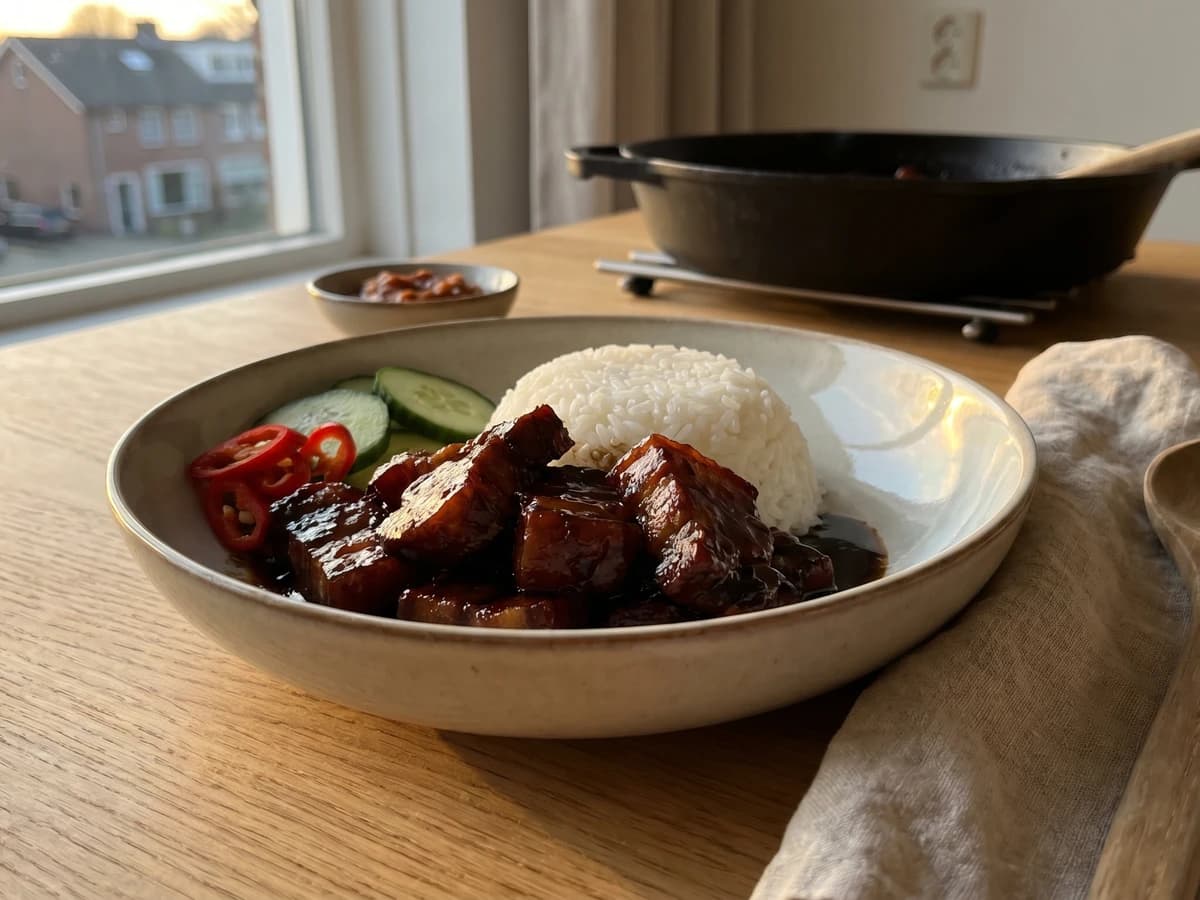
Pork, sweet soy, ginger, and patience: the Indo-Dutch braise that carried the colonial table into Dutch kitchens and made rice feel like Sunday dinner.
Chef Joost
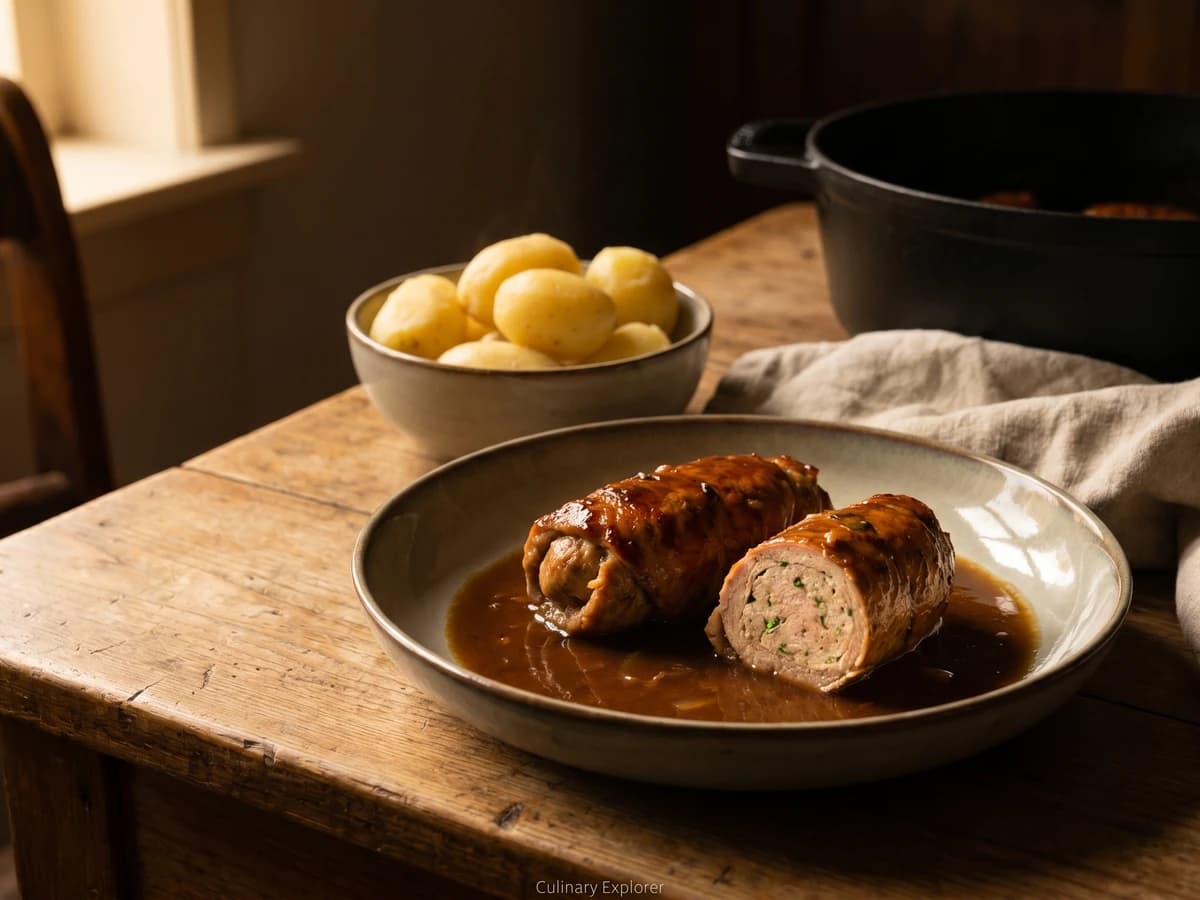
Blinde vinken are not birds but a butcher's little joke: seasoned mince tucked into thin veal or beef, browned dark in butter, then braised until the jus tastes of onion, mace, and patience.

Chef Joost
Bruine bonensoep is the quieter winter cousin of snert: brown beans, rookworst, bacon and roots in a broth that stays spoonable, frugal, and deeply Dutch.