
Chef Joost
Aspergesoep (Dutch White Asparagus Soup)
White asparagus is Limburg's spring clock, and this soup uses every pale stem and peeling to make wit goud, white gold, taste like the season it refuses to outlive.
A cooking platform built around craft, culture, and the stories behind what we eat.

Created by
Blinde vinken are not birds but a butcher's little joke: seasoned mince tucked into thin veal or beef, browned dark in butter, then braised until the jus tastes of onion, mace, and patience.
In my grandmother's second notebook, the humblest pages are the ones stained brown at the edges. Blinde vinken lived there, not under feast days but between hutspot and draadjesvlees, stringy slow-braised beef, the meals that kept a family orderly when rain hit the windows and everyone came in hungry. Its season is not a holiday but the dark half of the year, when potatoes are honest and the braadpan, the heavy Dutch roasting pot, earns its place. For obvious reasons, the parcels tasted better than the tax forms they resembled.
The name already tells you the cook is smiling: blinde vinken, blind finches. A vink is a finch, one of the little birds Europeans once roasted when appetite was less sentimental and the hedgerows less protected. These rolls are not birds. They are the memory of that shape, thin veal or beef wrapped around seasoned mince, a mock finch that went from old game table to butcher's counter. I won't pretend the word blind has one clean origin, because kitchen names are not Greek inscriptions. The honest secret is simpler: the bird disappeared, the form stayed, and Dutch thrift made supper from it.
What matters is the roll. The outside must be thin enough to bend without sulking, the filling mixed until it turns sticky, and the browning done properly before any liquid enters the pan. That dark butter stuck to the bottom is not dirt, it's the beginning of the jus. Hou het altijd simpel, always keep it simple: brown, onion, stock, patience. Serve with potatoes or red cabbage and let the gravy do what gravy was born to do.
Blinde vinken belong to a wider European habit of making little birds without birds, alongside Flemish vogel zonder kop, bird without a head, and French alouettes sans tête, larks without heads. The Dutch name means blind finches, but the adjective blind has no secure single etymology; the reliable history is the shape, a small rolled piece of meat recalling the songbirds and game birds once eaten in European kitchens. By the late nineteenth and early twentieth centuries, Dutch household cookbooks and butcher's shops had turned that older game-table form into weekday braising meat: thin veal or beef, seasoned mince, butter, and jus.
Quantity
4, about 100g each
pounded to 3mm
Quantity
350g
Quantity
40g
Quantity
3 tablespoons
Quantity
1
Quantity
1 small
very finely minced
Quantity
2 tablespoons
finely chopped
Quantity
1/2 teaspoon
Quantity
1/4 teaspoon
Quantity
pinch
Quantity
1 teaspoon
Quantity
to taste
Quantity
2 tablespoons
Quantity
1 tablespoon
Quantity
1 small
thinly sliced
Quantity
1 tablespoon
Quantity
250ml
Quantity
1
| Ingredient | Quantity |
|---|---|
| thin veal escalopes or beef minute steakspounded to 3mm | 4, about 100g each |
| minced veal, or half beef and half pork | 350g |
| fresh white breadcrumbs | 40g |
| milk | 3 tablespoons |
| egg yolk | 1 |
| shallotvery finely minced | 1 small |
| flat-leaf parsleyfinely chopped | 2 tablespoons |
| Dutch mustard | 1/2 teaspoon |
| freshly grated nutmeg | 1/4 teaspoon |
| ground mace | pinch |
| fine salt | 1 teaspoon |
| freshly ground black pepper | to taste |
| butter | 2 tablespoons |
| neutral oil | 1 tablespoon |
| onionthinly sliced | 1 small |
| flour | 1 tablespoon |
| beef or veal stock | 250ml |
| bay leaf | 1 |
Put the breadcrumbs and milk in a bowl and let them soften for five minutes. Add the minced meat, egg yolk, shallot, parsley, mustard, nutmeg, mace, salt, and a few turns of black pepper. Mix with your hand until the filling turns tacky and holds together; this stickiness is what keeps the little roll from crumbling when you cut it.
Lay the veal or beef slices flat. If they are thicker than 3mm, put them between two sheets of baking paper and tap them thinner with a meat mallet or rolling pin. Divide the filling into four short logs, set one on each slice, fold in the sides, roll firmly, and tie each one with kitchen string. They should look like small blunt birds, if you squint, which is how half of cookery history works.
Heat the butter and oil in a heavy braadpan over medium heat. Brown the rolls on all sides, about eight to ten minutes total, turning them gently with tongs. Do not hurry this. The browned bits on the bottom of the pan are the backbone of the jus, and pale meat gives you pale gravy.
Lift the browned rolls onto a plate. Add the sliced onion to the pan and cook for five minutes, scraping as it softens. Sprinkle in the flour and stir for one minute, then pour in the stock little by little, scraping the bottom until the sauce loosens and turns glossy. Return the rolls to the pan and add the bay leaf.
Cover the pan and braise over low heat for forty to forty-five minutes, turning the rolls once halfway through. The sauce should only tremble, not boil hard. Because there is minced meat inside, cook the filling through completely; an instant-read thermometer should show 70C in the centre, or the cut middle should be firm and no longer pink.
Remove the bay leaf and cut away the strings. If the jus is thin, lift out the rolls and boil the sauce for a few minutes until it lightly coats a spoon, then taste for salt and pepper. Serve the blinde vinken with boiled potatoes, mashed potatoes, or red cabbage. The potatoes are not decoration; they are there to catch the gravy.
1 serving (about 260g)
Culinary guides, cultural storytelling, and the editorial depth that makes cooking meaningful.
Discover Culinary ExplorerChef Joost
White asparagus is Limburg's spring clock, and this soup uses every pale stem and peeling to make wit goud, white gold, taste like the season it refuses to outlive.
Chef Joost
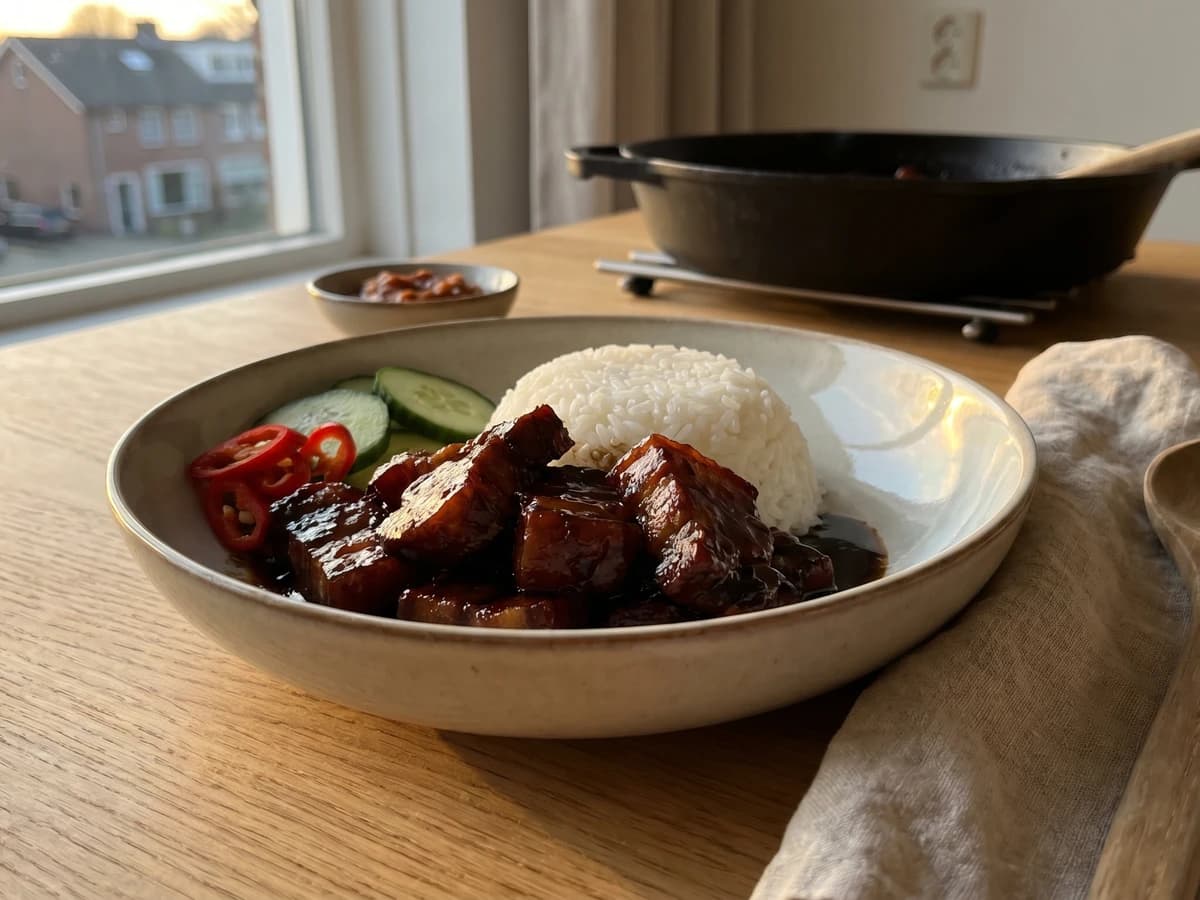
Pork, sweet soy, ginger, and patience: the Indo-Dutch braise that carried the colonial table into Dutch kitchens and made rice feel like Sunday dinner.

Chef Joost
Bruine bonensoep is the quieter winter cousin of snert: brown beans, rookworst, bacon and roots in a broth that stays spoonable, frugal, and deeply Dutch.
Chef Joost
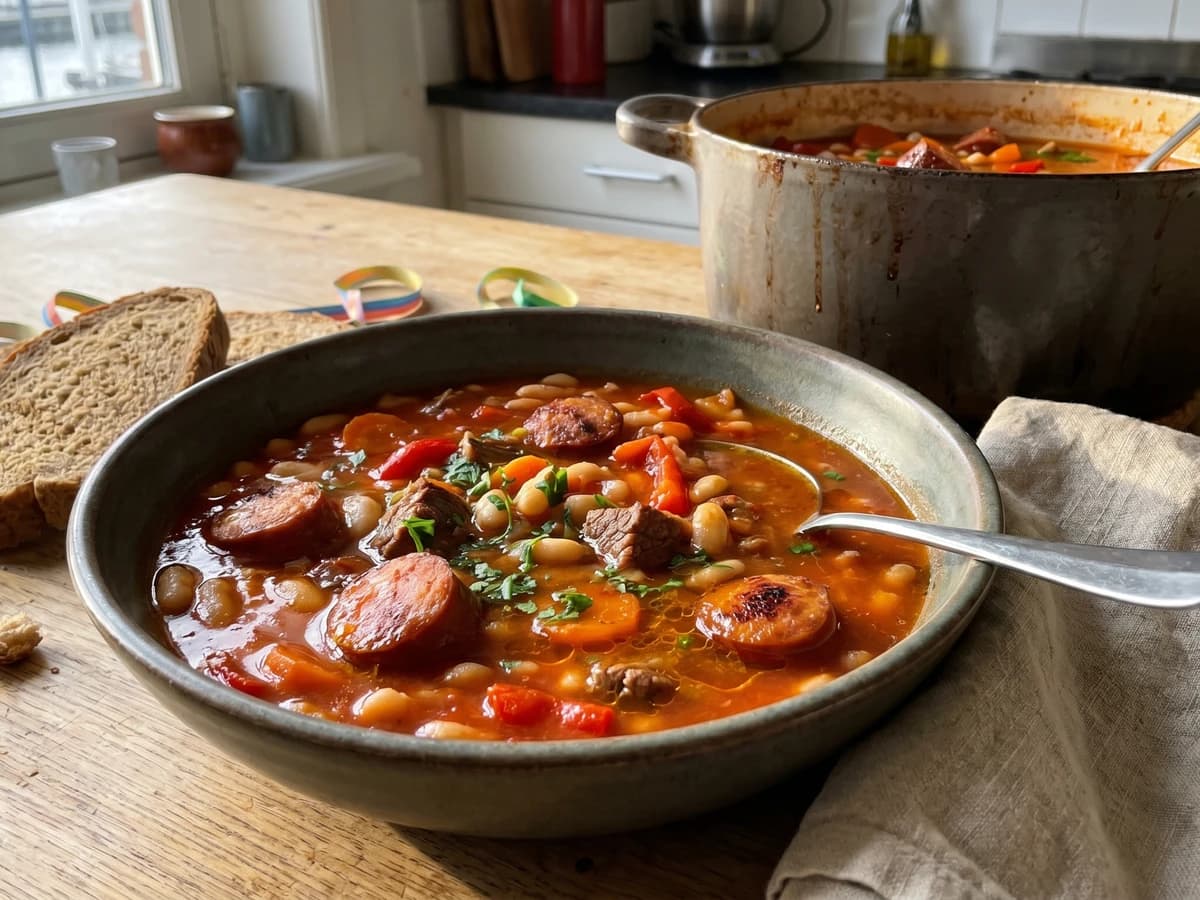
A filled tomato soup from the Catholic south, built with white beans, minced beef, and rookworst for the long, loud days of Vastelaovend.