Culinary Explorer
A cooking platform built around craft, culture, and the stories behind what we eat.
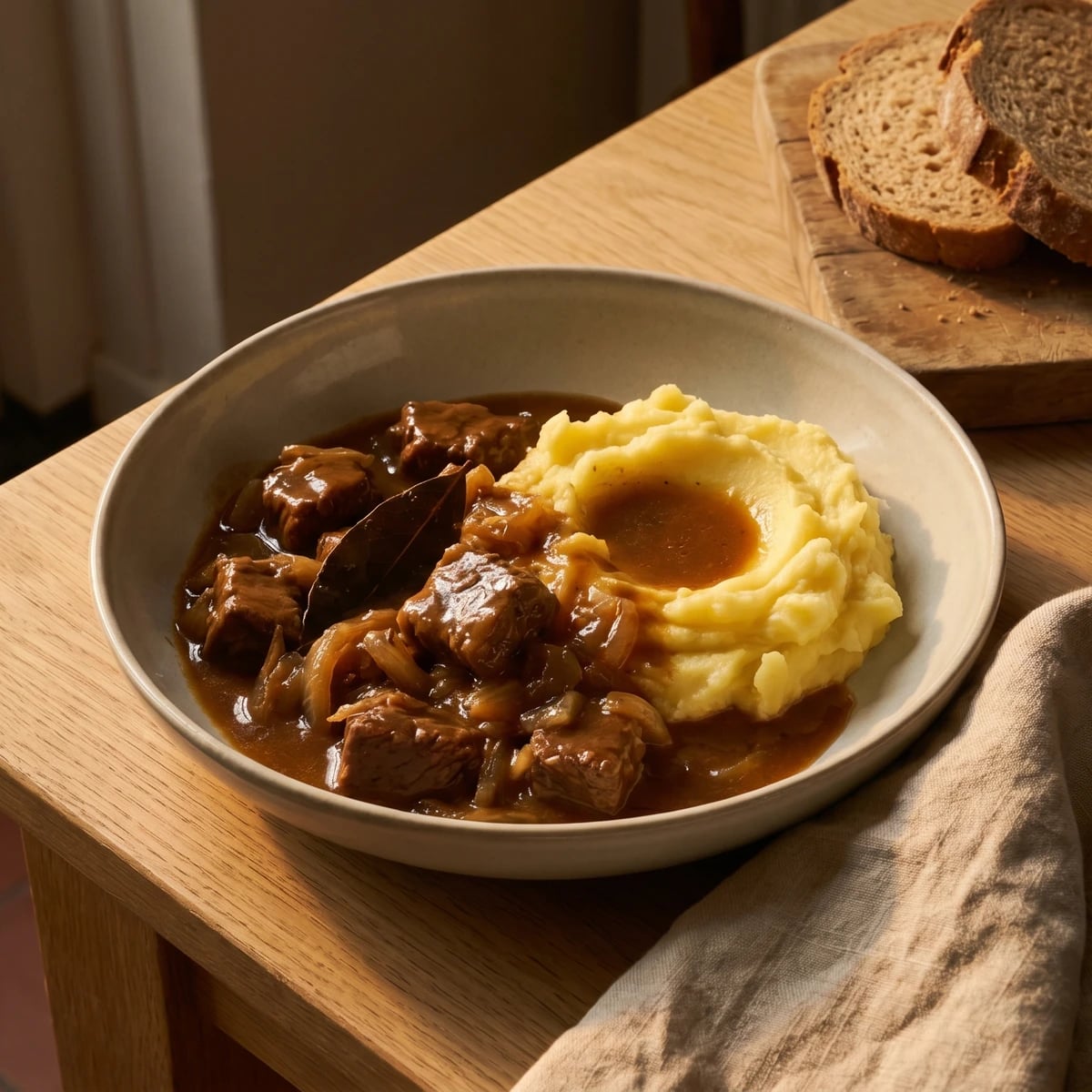
Hachee (Dutch Beef and Onion Stew)
Created by Chef Joost
The name comes from French hacher, to chop, but the soul is Dutch patience: beef hidden under onions, vinegar keeping it awake, clove proving the spice ships reached the weeknight pot.
In my grandmother's second notebook, hachee is written without ceremony, which is how you know a dish is important. The page has no flourish, only beef, onions, vinegar, bay, clove, and a small instruction in her slanted hand: laten sudderen, let it simmer. A person who had rebuilt a recipe book from memory after de Ramp, the Flood, did not waste ink on things the family already understood. Hachee belonged to the table the way the bread knife did.
The name already tells you something. Hachee comes from the French hacher, to chop, and in older kitchens it meant chopped meat cooked again into usefulness. But let me tell you a secret: this is not a leftover dish pretending to be noble. It is Dutch thrift doing what Dutch thrift does best, taking a tough cut, burying it under onions, sharpening it with vinegar, and letting time do the expensive work.
And then there is the clove. One small nail of spice in a brown stew is the whole Dutch seventeenth century, quietly present in a weeknight pan. History and cookery, they cannot be separated. Brown the meat properly, cook the onions until they slacken and sweeten, then give the pot its sourness and leave it alone. Hou het altijd simpel, always keep it simple. Hachee rewards the cook who can wait.
Ingredients
beef chuck or stewing beef
Quantity
900g
cut into 3cm pieces
butter
Quantity
3 tablespoons
large onions
Quantity
3
thinly sliced
| Ingredient | Quantity |
|---|---|
| beef chuck or stewing beefcut into 3cm pieces | 900g |
| butter | 3 tablespoons |
| large onionsthinly sliced | 3 |
Where cooking meets culture.
Culinary guides, cultural storytelling, and the editorial depth that makes cooking meaningful.
Discover Culinary Explorer