
Chef Juliana
Água de Coco
You think opening a coconut belongs to the beach vendor. It doesn't. Chill the fruit, shave the cap, tap a small door, and you've solved the cold drink beside your pê-efe.
A cooking platform built around craft, culture, and the stories behind what we eat.
Created by
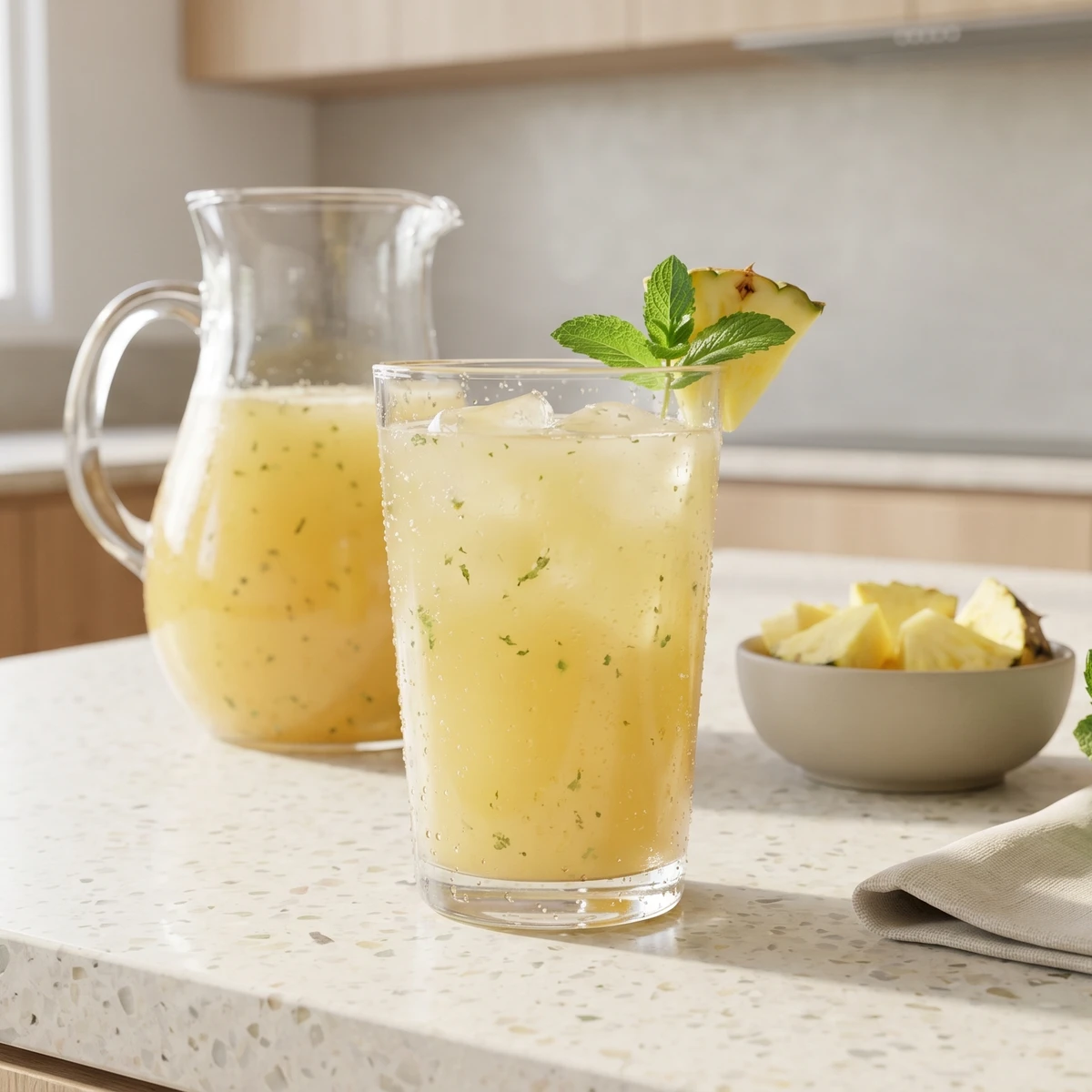
You don't need a bottle pretending to be fruit. A ripe pineapple, a handful of mint, water, and sugar solve the cold drink beside tonight's pê-efe in ten honest minutes.
You look at a pineapple and think, quietly, isso não é pra mim. It has spikes, it rolls, it seems like one of those fruits that belongs behind a counter with somebody else doing the knife work. Anota aí: the fruit is not in charge. You are.
I learned to cook as a grown woman, from zero, writing every plain step in a cheap notebook because nobody had written it down for me. A juice like this belongs in that notebook too, because cozinhar não é dom, é um aprendizado. Sometimes the lesson is a pot of beans. Sometimes it's learning that a blender, a ripe fruit, and the sense to taste before adding more sugar can rescue a hot afternoon.
This is the drink that sits naturally beside the everyday Brazilian plate: rice, beans, an egg or a piece of chicken, something green, and a cold suco natural sweating on the table. It isn't decoration. It helps resolver o jantar, especially when the day was long and the kitchen feels like a small oven with bills attached.
Choose a pineapple that smells sweet at the base, blend it with cold water, add the mint at the end so it stays fresh instead of muddy, and strain only if you want a smoother glass. No packet, no powder pretending to be fruit. Just comida de verdade, cheap when the fruit is in season, bright, cold, and entirely within your hands.
Fresh blended juices became part of Brazil's urban lunch culture in twentieth-century lanchonetes, bakeries, and self-service restaurants, where fruit was cut and blended to order instead of bottled. Pineapple with mint settled into that everyday canon because pineapple is widely grown in Brazil and its acidity cuts through a rice-and-beans plate, while mint gives a clean, cold finish. It belongs less to ceremony than to the counter beside the prato feito, which is exactly its strength.
Quantity
4 cups
peeled and cored
Quantity
3 cups, plus more to adjust
Quantity
1/2 cup
lightly packed
Quantity
2 to 4 tablespoons
to taste
Quantity
1 tablespoon
Quantity
as needed
Quantity
4 small sprigs
Quantity
4
| Ingredient | Quantity |
|---|---|
| ripe pineapple chunkspeeled and cored | 4 cups |
| cold water | 3 cups, plus more to adjust |
| fresh mint leaveslightly packed | 1/2 cup |
| sugarto taste | 2 to 4 tablespoons |
| fresh lime juice (optional) | 1 tablespoon |
| ice (optional) | as needed |
| mint sprigs (optional) | 4 small sprigs |
| small pineapple wedges (optional) | 4 |
Use pineapple that smells sweet at the base and gives just a little when pressed. If it smells like nothing, the juice will taste like nothing, and sugar won't fix that. If pineapple is expensive and tired today, cook with the season and make another juice. The fruit has to do its part too.
Trim off the top and bottom, stand the pineapple upright, slice away the peel, then cut out any hard eyes. Cut the fruit into chunks and remove the tough core if your blender is ordinary. Smaller chunks blend faster and don't make the machine fight you, which keeps the juice smooth instead of fibrous and angry.
Put the pineapple, 2 cups of the cold water, and 2 tablespoons of sugar in the blender. Blend until the fruit breaks down completely and the mixture turns golden and foamy, about 30 to 45 seconds. Starting with less water gives the blades enough fruit to grab, instead of spinning in a sad little puddle.
Add the mint leaves and blend for just 5 to 10 seconds, until you see tiny green flecks and smell the mint. Don't punish the leaves for a full minute. Over-blended mint turns dark and grassy, and then the juice tastes like you mowed the lawn into it.
Pour the juice through a fine-mesh strainer into a pitcher if you want it smooth, pressing gently with a spoon. Don't squeeze the pulp dry like it owes you money, or the fibrous bits come along and rough up the texture. Stir in the remaining 1 cup cold water, then taste. Add more sugar if the pineapple is sharp, a squeeze of lime if it tastes flat, or more cold water if it's too thick.
Fill glasses with ice and pour the juice over it. Garnish with a mint sprig or a small pineapple wedge if you already have them, not because the glass needs a costume. Serve right away, while it's bright and cold. Mint fades as it sits, and a gente wants it fresh.
1 serving (about 340g)
Culinary guides, cultural storytelling, and the editorial depth that makes cooking meaningful.
Discover Culinary Explorer
Chef Juliana
You think opening a coconut belongs to the beach vendor. It doesn't. Chill the fruit, shave the cap, tap a small door, and you've solved the cold drink beside your pê-efe.

Chef Juliana
Nobody is scared of a blender. Cachaça, coconut milk, condensed milk, and ice go in, and thirty seconds later the churrasco drink is solved.

Chef Juliana
You don't need a bar kit. Fresh maracujá, cachaça, condensed milk, and thirty honest seconds in the blender make a cold Brazilian toast that tastes bright, tart, and grown-up.

Chef Juliana
You don't need a machine to make coffee that smells like a Brazilian kitchen. Hot water, fresh grounds, a clean coador de pano, and the patience to pour like you mean it.