
Chef Juliana
Batida de Coco
Nobody is scared of a blender. Cachaça, coconut milk, condensed milk, and ice go in, and thirty seconds later the churrasco drink is solved.
A cooking platform built around craft, culture, and the stories behind what we eat.
Created by
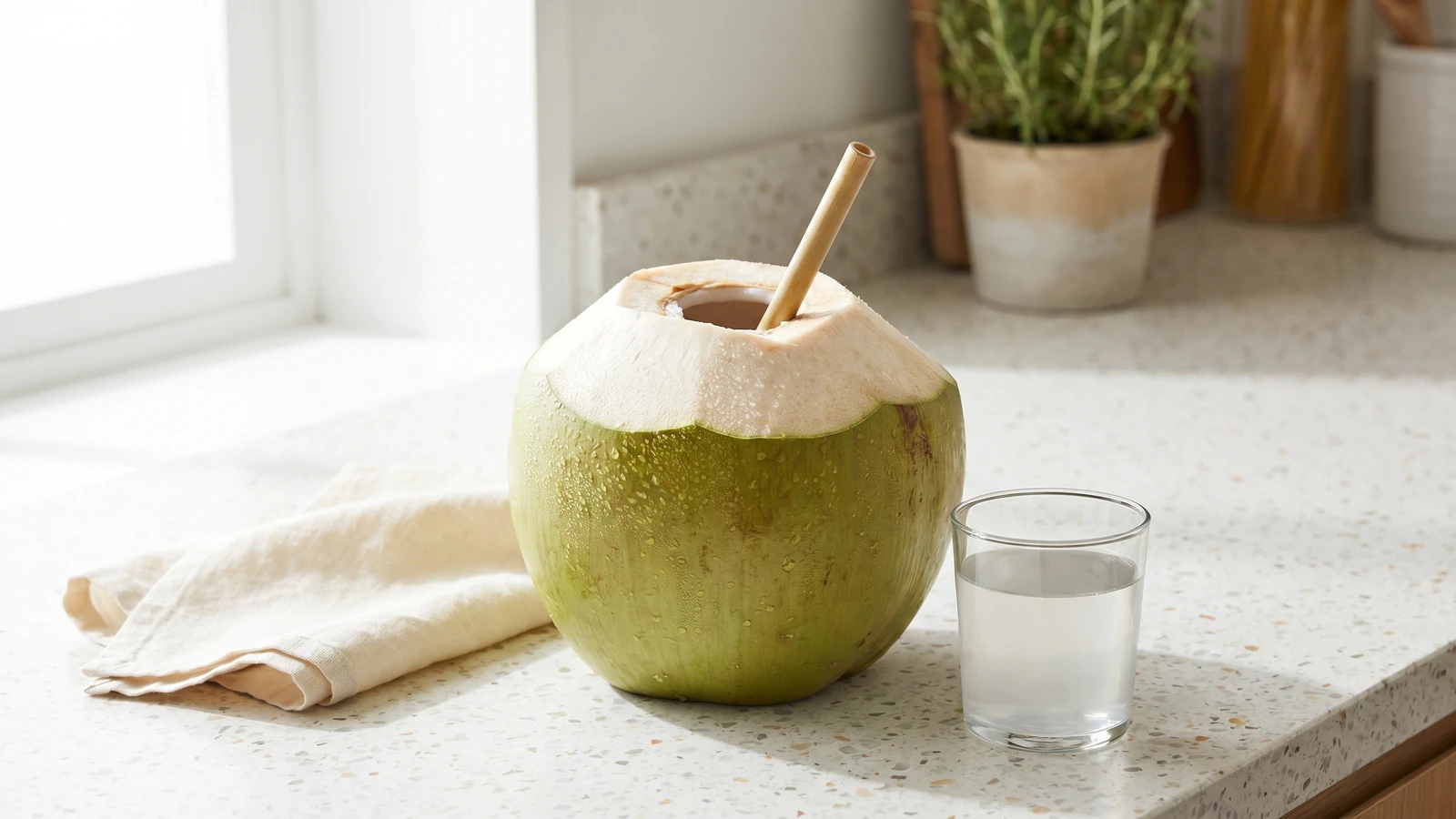
You think opening a coconut belongs to the beach vendor. It doesn't. Chill the fruit, shave the cap, tap a small door, and you've solved the cold drink beside your pê-efe.
You see the green coconut at the market and the little voice starts: isso não é pra mim. That's for the beach vendor with the frightening knife, not for my apartment counter. Nonsense. It's a fruit with water inside, not a locked safe.
The drink is free inside the coconut, which is exactly why the boxed imitation annoys me so much. Chill the fruit, open it carefully, drink it cold. That's the whole lesson. Cozinhar não é dom, é um aprendizado, and sometimes the aprendizado is knowing how to put a towel under a round thing before you bring a knife near it.
Água de coco belongs beside the everyday Brazilian table because it has the same intelligence as the pê-efe: simple food, ordinary technique, no performance. On a hot day, when lunch is arroz soltinho, feijão, something browned in the pan, and something green, this cold coconut on the side makes the whole plate feel like summer without turning lunch into a production.
Anota aí: choose a heavy green coconut, chill it properly, shave the top until the pale shell shows, and tap a small door open. No powder pretending to be refreshment. No mystery. Just comida de verdade, still in its own cup.
The coconut palm is not native to Brazil; Portuguese colonial routes brought it to the Brazilian coast in the sixteenth century, with early plantings strongly tied to Bahia and the Northeast. Água de coco became one of Brazil's plainest beach and street drinks because the young fruit carries its own clean, sealed water before the flesh hardens. The same fruit has two kitchen lives: green and young for drinking, older and brown for grated coconut, coconut milk, cakes, sweets, and savory dishes.
Quantity
1 medium
well chilled, yielding about 1 to 2 cups coconut water
| Ingredient | Quantity |
|---|---|
| young green coconutwell chilled, yielding about 1 to 2 cups coconut water | 1 medium |
Pick a young green coconut that feels heavy for its size, with a firm shell and no sour smell around the top or bottom. Shake it gently. You should hear water moving inside. Chill it for at least 2 hours, or overnight if you can, because cold fruit gives you cold água de coco without ice watering down the clean, grassy sweetness.
Put a folded kitchen towel on a sturdy cutting board and set the coconut upright, pointed top facing up. Keep your holding hand low on the side of the fruit, well away from the blade. This is not bravery hour. The towel stops rolling, and a coconut that doesn't roll is a coconut you can open without chasing it across the counter.
Using the heel of a heavy chef's knife or cleaver, shave thin slices from the green husk around the pointed top, turning the coconut as you go. Work with short, controlled cuts, away from your body, until you see a pale, hard circle under the fibers. You are removing the padding first, because whacking through the whole husk wastes force and makes a mess.
Set the blade's lower corner near the heel on the exposed pale shell and tap a small circle or square, about 1 inch wide. Tap, turn, tap again, until the sound changes from sharp to hollow and a crack opens. Lift the little plug with the handle of a spoon. A gente is making a drinking hole, not splitting firewood, so keep the movements small and controlled.
Smell the opening before you drink. It should smell clean, sweet, and a little green. Put in a straw and drink straight from the shell, or pour through a fine sieve into a glass if little bits of husk fell in. If it smells sour, tastes fizzy, or looks cloudy in a bad way, throw it out. The fruit was tired, and that is not your fault.
If the coconut has soft, spoonable jelly inside and your opening is wide enough, scoop a little out after drinking. It should be tender and slippery, almost like a very soft custard. If it's hard to reach, leave it. We came here to resolver o jantar's cold drink, not to prove anything to a coconut.
1 serving (about 360g)
Culinary guides, cultural storytelling, and the editorial depth that makes cooking meaningful.
Discover Culinary ExplorerChef Juliana
Nobody is scared of a blender. Cachaça, coconut milk, condensed milk, and ice go in, and thirty seconds later the churrasco drink is solved.

Chef Juliana
You don't need a bar kit. Fresh maracujá, cachaça, condensed milk, and thirty honest seconds in the blender make a cold Brazilian toast that tastes bright, tart, and grown-up.

Chef Juliana
You don't need a machine to make coffee that smells like a Brazilian kitchen. Hot water, fresh grounds, a clean coador de pano, and the patience to pour like you mean it.

Chef Juliana
The first coffee a lot of us drank wasn't fancy: strong coado coffee softened with hot milk, sweet if you want, made for a piece of bread and a morning that needs mercy.