
Chef Juliana
Água de Coco
You think opening a coconut belongs to the beach vendor. It doesn't. Chill the fruit, shave the cap, tap a small door, and you've solved the cold drink beside your pê-efe.
A cooking platform built around craft, culture, and the stories behind what we eat.
Created by
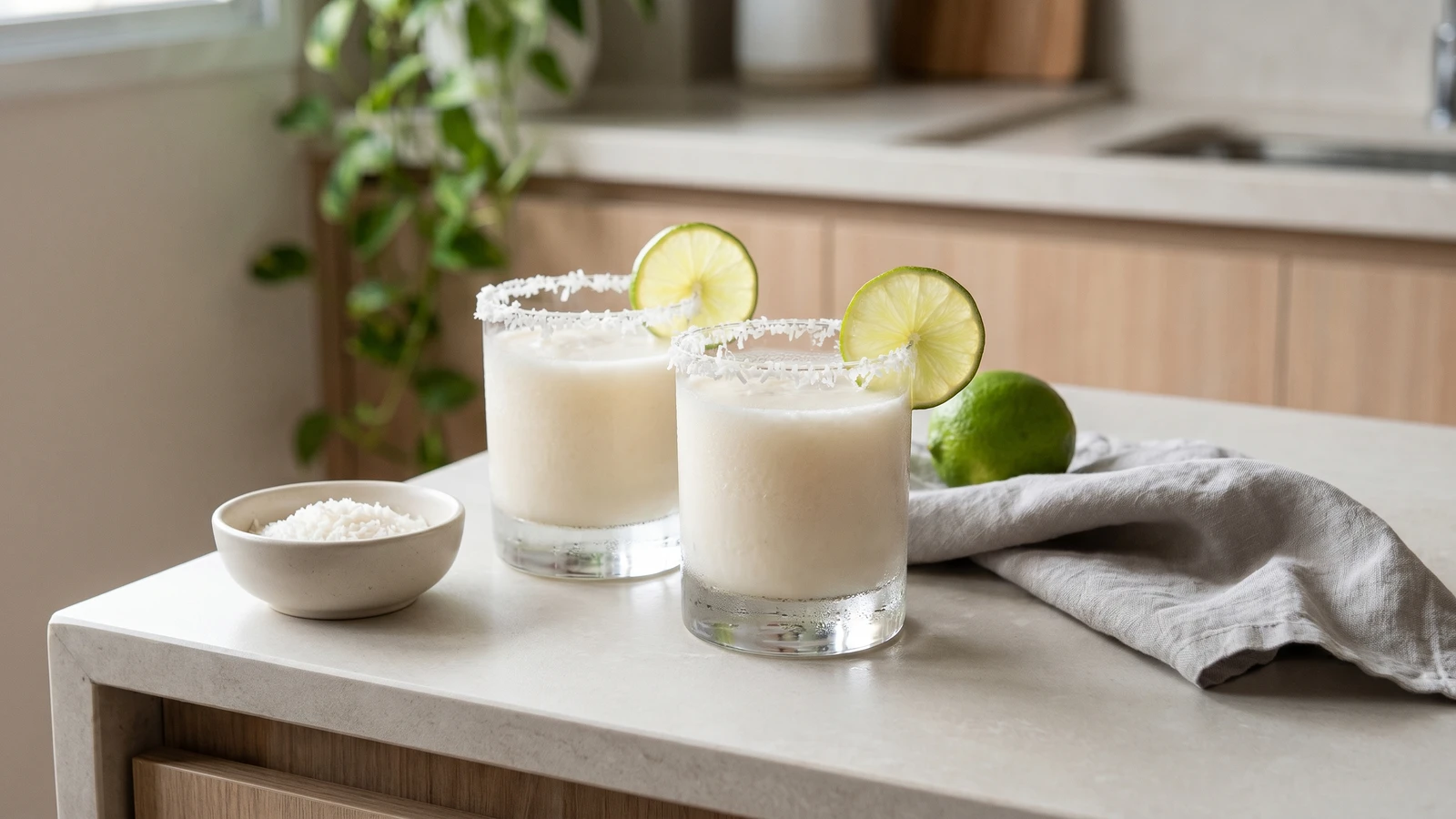
Nobody is scared of a blender. Cachaça, coconut milk, condensed milk, and ice go in, and thirty seconds later the churrasco drink is solved.
You who says "isso não é pra mim" can relax. Nobody is asking you to flambé anything, and nobody is handing you a shaker with six tiny tools. This is a blender drink. If you can measure half a cup and press a button, a gente is already halfway there.
Batida de coco belongs to the same generous table as the pê-efe and the churrasco: rice, beans, something browned on the grill, something green, and then, because Brazilians are not made of punishment, a cold creamy glass passed around while people talk too loudly. It doesn't replace dinner. It sits beside comida de verdade, not as a factory powder pretending to be coconut, but as coconut milk, condensed milk, cachaça, and ice doing honest work.
The method is almost rude in its simplicity, which I love. Chill what you can so the ice doesn't have to do all the work. Blend just until the drink turns smooth and frosty, because too long in the blender warms it and waters it down. Taste before you pour. Too strong? More coconut milk. Too thick? A splash of cold water. Too sweet? A few drops of lime wake it up.
Cozinhar não é dom, é um aprendizado, and cocktails count. Anota aí: measure, blend, taste, adjust. That's the whole school notebook page.
Batidas became especially popular in Brazil in the mid-twentieth century as home blenders spread and cachaça moved easily from bar counters to family celebrations. The word comes from bater, to beat or blend, and the family includes fruit batidas made with passion fruit, pineapple, peanut, or coconut. Batida de coco is strongly tied to parties, beach bars, and churrasco tables, where its sweetness softens the grassy bite of cachaça.
Quantity
1 cup
well shaken and chilled
Quantity
1/2 cup
chilled
Quantity
1/2 cup
chilled
Quantity
1 1/2 cups
Quantity
1 tablespoon
Quantity
2 tablespoons
optional for rimming glasses
| Ingredient | Quantity |
|---|---|
| full-fat coconut milkwell shaken and chilled | 1 cup |
| sweetened condensed milkchilled | 1/2 cup |
| cachaçachilled | 1/2 cup |
| ice cubes | 1 1/2 cups |
| fresh lime juice (optional) | 1 tablespoon |
| unsweetened shredded coconut (optional)optional for rimming glasses | 2 tablespoons |
Put the coconut milk, condensed milk, and cachaça in the fridge before you start, even if it's only for 30 minutes. Cold ingredients keep the drink thick and frosty without asking the ice to melt itself into sad coconut water.
Add the coconut milk, condensed milk, cachaça, and ice to the blender in that order. Liquids on the bottom help the blade catch right away, so you get a smooth batida instead of ice cubes banging around while you stare at the machine like it owes you money.
Blend on high for 20 to 30 seconds, just until the ice disappears and the drink looks pale, creamy, and lightly thick. Stop there. Keep blending and the motor warms the drink while the ice melts, and then you have a thin batida wondering where its charm went.
Taste a spoonful before pouring. If it tastes too strong, add 2 tablespoons more coconut milk and blend for 5 seconds. If it's too thick, add 1 or 2 tablespoons cold water. If it's too sweet, add the lime juice a few drops at a time until the coconut tastes alive again.
Pour into small cold glasses and serve right away. The surface should look smooth and frosty, with tiny bubbles around the edge. Batida waits badly, because the ice keeps melting, so pour it when people are ready to drink, not when they're still hunting for chairs.
1 serving (about 185g)
Culinary guides, cultural storytelling, and the editorial depth that makes cooking meaningful.
Discover Culinary ExplorerChef Juliana
You think opening a coconut belongs to the beach vendor. It doesn't. Chill the fruit, shave the cap, tap a small door, and you've solved the cold drink beside your pê-efe.

Chef Juliana
You don't need a bar kit. Fresh maracujá, cachaça, condensed milk, and thirty honest seconds in the blender make a cold Brazilian toast that tastes bright, tart, and grown-up.

Chef Juliana
You don't need a machine to make coffee that smells like a Brazilian kitchen. Hot water, fresh grounds, a clean coador de pano, and the patience to pour like you mean it.

Chef Juliana
The first coffee a lot of us drank wasn't fancy: strong coado coffee softened with hot milk, sweet if you want, made for a piece of bread and a morning that needs mercy.