Culinary Explorer

A cooking platform built around craft, culture, and the stories behind what we eat.
Discover Culinary Explorer
Steirisches Wurzelfleisch

Steirisches Wurzelfleisch

Created by

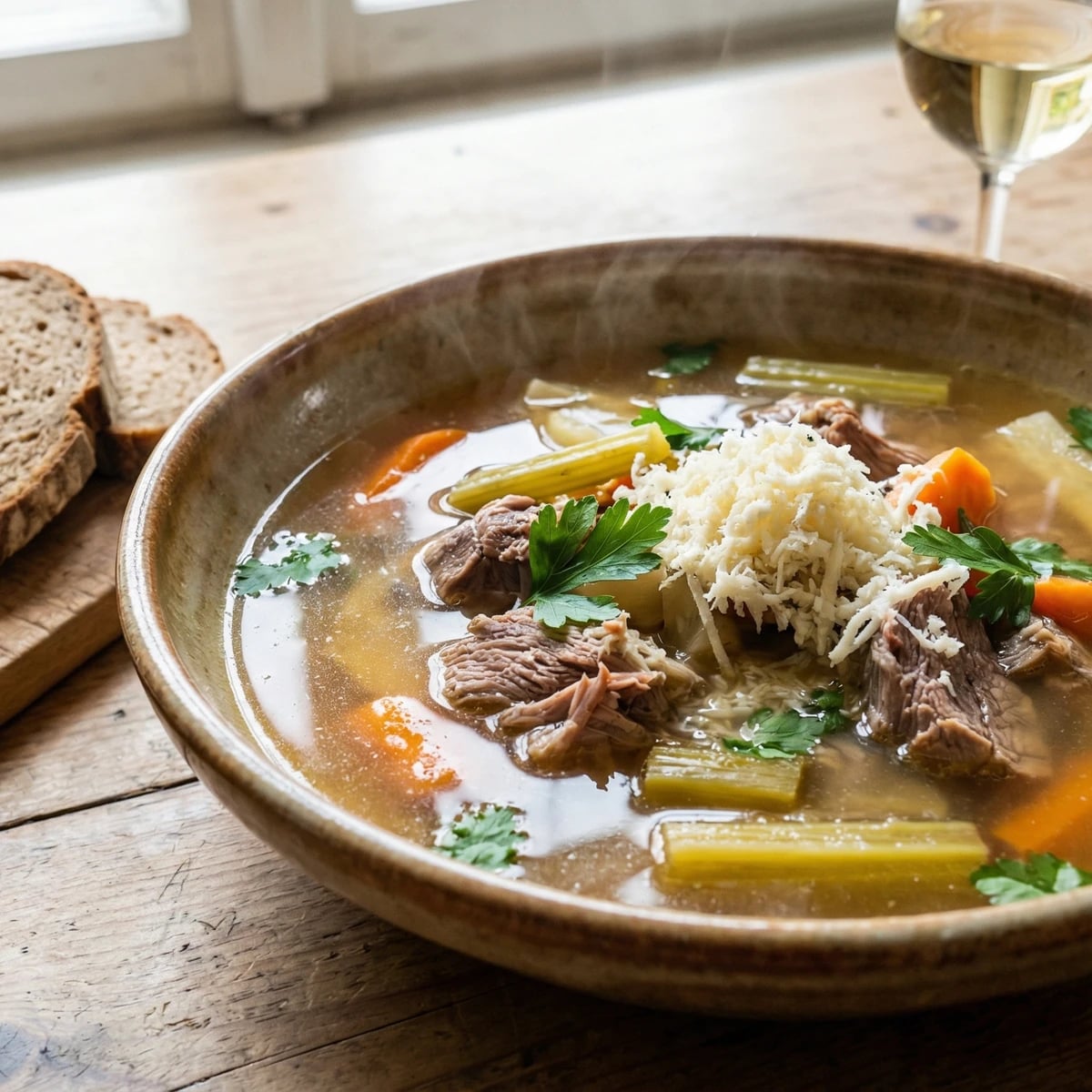
Slow-simmered Styrian pork with caraway-scented root vegetables and a sharp crown of freshly grated Kren, the kind of one-pot cooking that built farmhouse kitchens across Austria's green heart.

Soups & Stews
Austrian
Comfort Food
Make Ahead
25 min
Active Time
2 hr cook2 hr 25 min total
Yield4 servings

Gretel always said that the best Austrian cooking happens in one pot. She meant it as a compliment. Wurzelfleisch is the proof. You take good pork, a pile of root vegetables, caraway, a splash of vinegar, and you let the whole thing simmer until the broth turns silky and the meat falls apart at the suggestion of a fork. Then you grate fresh Kren (horseradish) over the top at the table and the sharp, nose-clearing heat cuts through all that richness like a cold wind through a warm kitchen.

I first ate this properly in Styria on one of our childhood trips. Gretel and my grandmother Eva took me to a Buschenschank outside Graz, one of those farmhouse wine taverns where the food comes from the same land you're sitting on. The Wurzelfleisch arrived in a deep bowl, the broth golden and slightly cloudy from the starch of the vegetables, chunks of pork and root vegetables piled together without any attempt at elegance. A woman at the next table was grating horseradish directly onto hers from a whole root, and Gretel leaned over and told me to watch. "That's Styria," she said. "They put Kren on everything and they're right to."

This is farmhouse food, not restaurant food, and it doesn't pretend otherwise. The technique is nothing more than building layers of flavor in a single pot and then getting out of the way. Good pork. Sweet root vegetables. The warmth of caraway. The bite of vinegar. And that horseradish on top, raw and sharp and absolutely essential. You don't need knife skills or complicated timing. You need decent ingredients and two hours of patience.

Wurzelfleisch belongs to Styria's tradition of Saures Fleisch, soured meat dishes preserved and flavored with vinegar, a technique that predates refrigeration across the Alpine regions. Styria calls itself das grüne Herz Österreichs, the green heart of Austria, and its cuisine reflects the agricultural abundance of the region: pumpkin seed oil, root vegetables, beans, pork, and above all Kren (horseradish), which Styrians grow and consume in quantities that astonish the rest of the country. The dish appears in regional cookbooks from the 19th century as everyday Bauernküche (farmhouse cooking), the kind of meal that fed families through long winters using what the root cellar and the smokehouse could provide.

The technique, the tradition, and the story behind every dish.

Discover Culinary Explorer

Ingredients

pork shoulder (Schopfbraten)

Quantity

800g

bone-in preferred

carrots

Quantity

2 medium

peeled and cut into thick rounds

parsnip

Quantity

1 large

peeled and cut into chunks

celeriac

Quantity

1/4 (about 200g)

peeled and cubed

yellow turnips or kohlrabi

Quantity

2 medium

peeled and cubed

onion

Quantity

1 large

quartered

garlic

Quantity

3 cloves

lightly crushed

cold water or light pork stock

Quantity

1.5 liters

white wine vinegar

Quantity

3 tablespoons

whole caraway seeds

Quantity

1 tablespoon

whole black peppercorns

Quantity

8

bay leaves

Quantity

3

whole allspice berries

Quantity

4

salt

Quantity

1 tablespoon

fresh horseradish root (Kren)

Quantity

1 large

dark rye bread

Quantity

for serving

fresh flat-leaf parsley

Quantity

for finishing

roughly chopped

Equipment Needed

  • Large heavy-bottomed pot or Dutch oven (5-liter minimum)
  • Fine-mesh skimmer or slotted spoon
  • Microplane or box grater for horseradish

Instructions

  1. 1

    Prepare the pork

    Place the pork shoulder in your largest heavy pot. If it's bone-in, all the better. The bone gives the broth body you can't get any other way. Cover with 1.5 liters of cold water or light stock. Cold liquid, always. Starting cold lets the proteins release slowly, which means a cleaner, more flavorful broth. Bring to a gentle simmer over medium heat. Gray foam will rise. Skim it off with a spoon until the surface runs mostly clear. This takes about ten minutes and it's worth every one of them.

    Pork shoulder (Schopfbraten) is the right cut here. It has enough fat running through it to stay tender over a long simmer. Lean cuts dry out and turn stringy. Don't be tempted by tenderloin.
  2. 2

    Build the aromatics

    Add the quartered onion, crushed garlic, caraway seeds, peppercorns, bay leaves, allspice berries, and salt to the pot. Caraway is the backbone of this dish. It's the spice that tells your nose this is Austrian before your mouth confirms it. Let the pot return to a lazy simmer. You want small bubbles breaking the surface every few seconds, not a rolling boil. Too much heat toughens pork. Turn the flame down further than you think you need to.

    Whole caraway seeds, not ground. Ground caraway turns bitter in a long simmer and muddies the broth. Whole seeds release their flavor slowly and stay gentle.
  3. 3

    Simmer the pork

    Let the pork simmer gently for one hour. Don't touch it. Don't lift the lid every ten minutes to check. The meat needs time and steady heat to break down its connective tissue into gelatin, which is what gives the finished broth that silky, lip-coating quality. After an hour, the pork should be tender but not yet falling apart. It still has work to do.

  4. 4

    Add the root vegetables

    Add the carrots, parsnip, celeriac, and turnips or kohlrabi to the pot. Cut them into generous chunks, roughly three centimeters. This is peasant food. Nobody is cutting brunoise here. The vegetables should be large enough to hold their shape through another forty-five minutes of simmering but small enough to eat in two bites. Push them down into the broth so they're mostly submerged.

    Don't add the vegetables at the start. Root vegetables cooked for two hours turn to mush and dissolve into the broth. Adding them after the first hour means they'll be tender and sweet but still recognizably themselves.
  5. 5

    Add the vinegar

    Stir in the white wine vinegar. Three tablespoons might not sound like much, but it does something essential. The acid brightens every flavor in the pot and cuts through the richness of the pork fat. Without it, the dish tastes flat and heavy. With it, everything lifts. Taste the broth after five minutes and add another splash if you want more sharpness. Styrians like theirs with a definite tang. I do too.

    White wine vinegar is traditional. Apple cider vinegar works well too and adds a rounder, fruitier acidity. Don't use balsamic or anything dark. You'll stain the broth and muddy the clean flavors.
  6. 6

    Finish the simmer

    Continue simmering for another forty-five minutes to an hour. The pork should now pull apart easily with a fork, and the root vegetables should be completely tender but still holding their shape. The broth will have turned slightly cloudy from the vegetable starches. That's correct. This isn't a consommé. It's a working broth, hearty and full of substance. Taste for salt and adjust. Remove the bay leaves.

  7. 7

    Shred the pork

    Lift the pork out of the broth onto a cutting board. Pull it into rough chunks using two forks, discarding any large pieces of fat or the bone. The meat should shred easily. If it resists, it needs more time. Return the shredded pork to the pot and stir it gently through the vegetables and broth.

  8. 8

    Serve with fresh Kren

    Ladle the Wurzelfleisch into deep, warm bowls, making sure each serving gets a generous share of pork, vegetables, and broth. Scatter roughly chopped parsley over the top. Now grate fresh horseradish directly over each bowl at the table. Be generous. The Kren should hit your nose before it hits your tongue. Serve with thick slices of dark rye bread for soaking up the broth. Mahlzeit!

Chef Tips

  • Buy a whole horseradish root and grate it fresh at the table. Pre-grated horseradish from a jar has lost most of its fire. Fresh Kren should make your eyes water slightly. That's how you know it's doing its job. Styrians would accept nothing less.
  • This dish is better the next day. The flavors deepen overnight in the fridge and the broth sets into a soft jelly from all the gelatin in the pork. Reheat it gently and grate fresh Kren again before serving. The horseradish must always be freshly grated.
  • If you can find Steirisches Kürbiskernöl (Styrian pumpkin seed oil), drizzle a few drops into each bowl just before serving. It's not traditional in every household, but it's deeply Styrian, and the dark, nutty oil against the tangy pork broth is something special.
  • Gretel always said that a stew tells you how well someone keeps a root cellar. Use the freshest, firmest root vegetables you can find. Soft, rubbery carrots and parsnips have nothing left to give.

Advance Preparation

  • The entire dish can be made two days ahead and refrigerated. The flavors improve significantly overnight. Reheat gently over low heat until warmed through.
  • Grate the horseradish fresh each time you serve. It loses its pungency within fifteen minutes of grating. There is no shortcut for this.
  • The broth freezes well for up to three months. Freeze the pork and vegetables in the broth together for the best results.

Frequently Asked Questions

Nutrition Information

1 serving (about 500g)

Calories
605 calories
Total Fat
31 g
Saturated Fat
11 g
Trans Fat
0 g
Unsaturated Fat
18 g
Cholesterol
115 mg
Sodium
1700 mg
Total Carbohydrates
47 g
Dietary Fiber
11 g
Sugars
12 g
Protein
33 g

Note: Chef personas and recipes are created with AI assistance. Cook with care: follow safe food-handling practices, check doneness with a thermometer when needed, and adapt for allergies and your kitchen.

Where cooking meets culture.

Culinary guides, cultural storytelling, and the editorial depth that makes cooking meaningful.

Discover Culinary Explorer

More from Austrian Stews & Gulasch

Browse the full collection