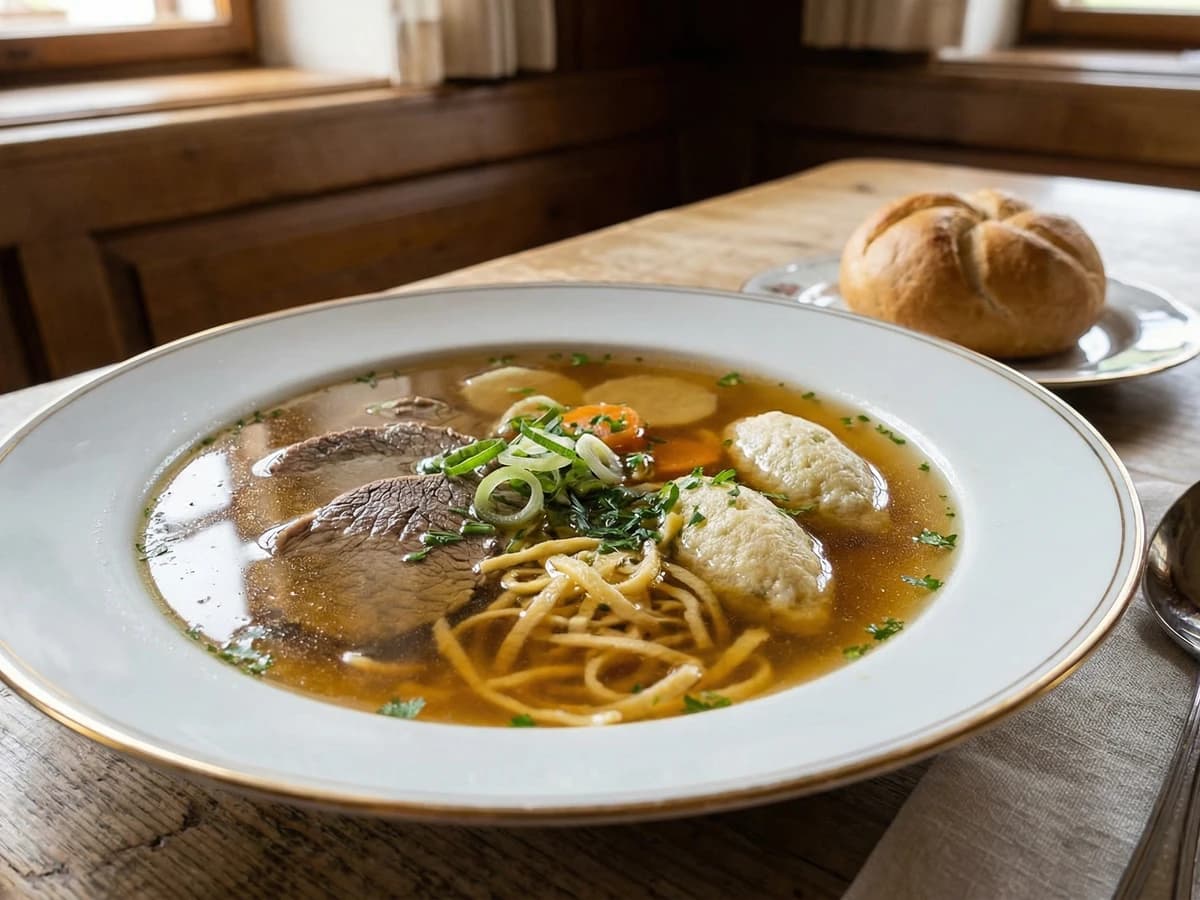
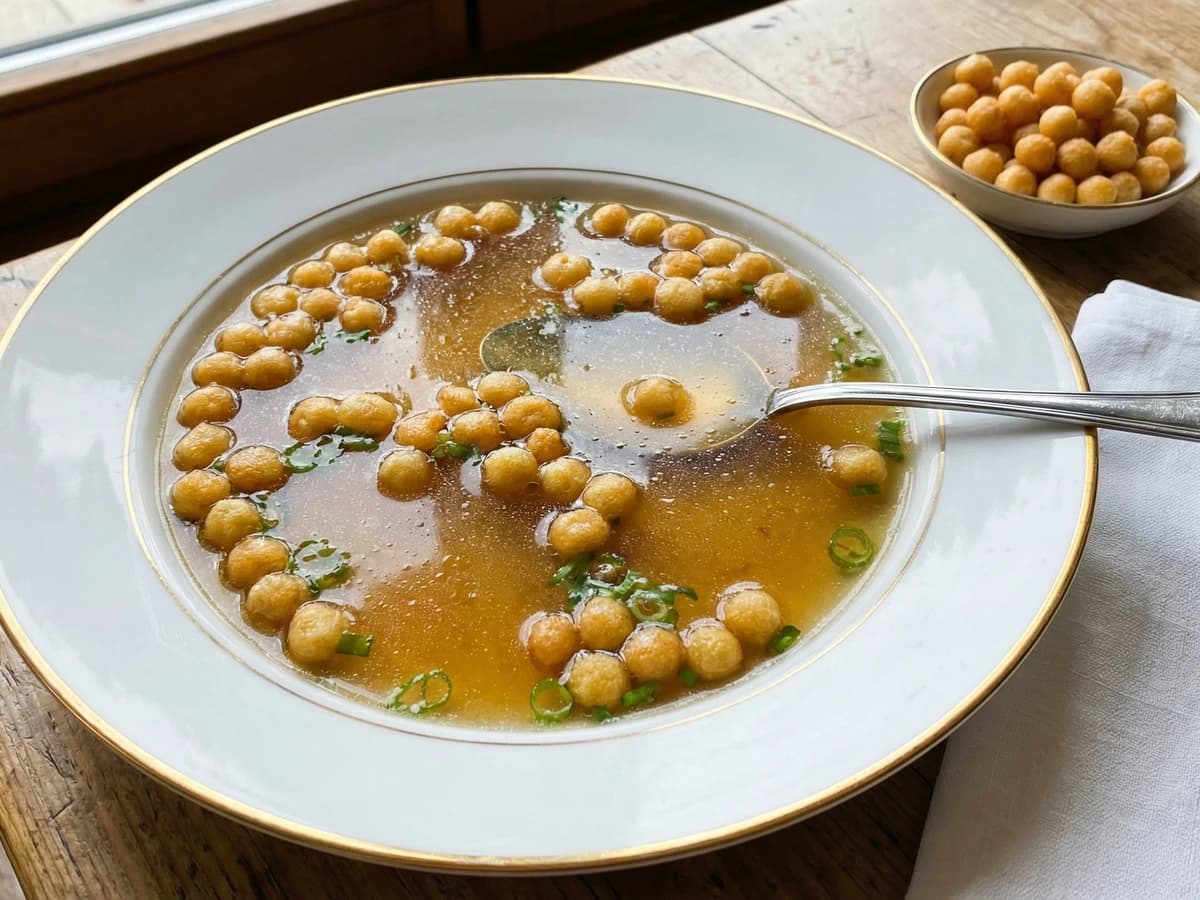
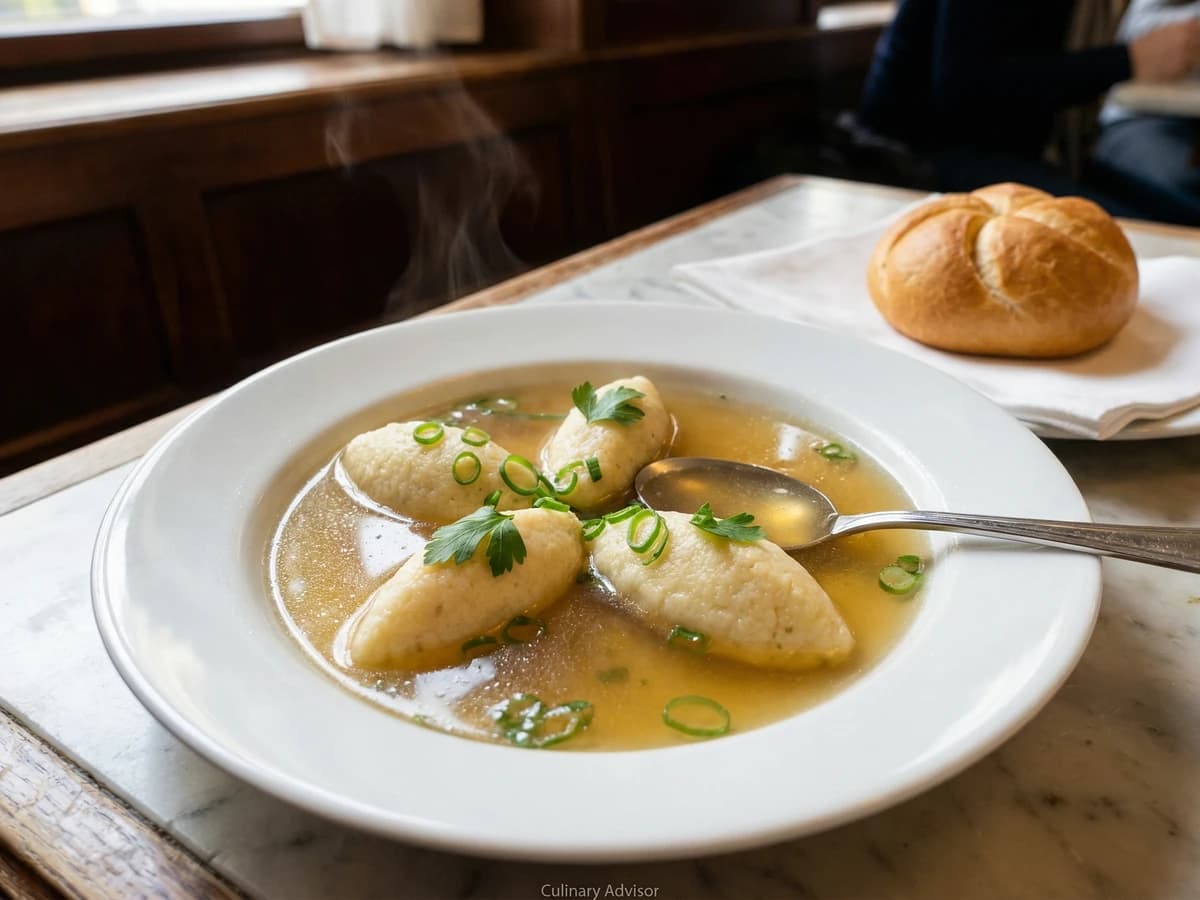
Austria's paprika-stained potato stew with sliced Frankfurter sausages, thickened by the potatoes themselves as they soften and break apart in the broth. One pot. One hour. Good Austrian home cooking.
Soups & Stews
Austrian
Weeknight
Budget Friendly
One Pot
20 min
Active Time
45 min cook•1 hr 5 min total
Yield4 servings
Erdäpfelgulasch is one of those dishes that tells you everything about how Austrian home cooks actually eat. Not every night is Tafelspitz and three sauces. Some nights you reach for a bag of potatoes, a couple of onions, and whatever sausage is in the fridge, and you make something that costs almost nothing and fills the house with the smell of paprika and caraway.
In my grandmother Eva's kitchen in Kent, this was a Tuesday night supper. Gretel always said the best Austrian food comes from knowing what to do with the simplest ingredients, and Erdäpfelgulasch proves it. You cook a mountain of sliced onions in fat until they go soft and golden, stir in good paprika until the whole pot turns brick red, add potatoes and broth, and let time do the rest. Some of the potato slices hold their shape. Others collapse into the liquid and thicken it into something halfway between a soup and a stew. That's not a mistake. That's the point.
The sausages go in at the end. Frankfurter or Burenwurst, sliced into coins and warmed through in the broth just long enough to release a little smoky fat into the liquid. You don't cook them from the start or they go rubbery and sad. A splash of vinegar right before serving wakes the whole thing up, cutting through the richness the way a squeeze of lemon brightens a Schnitzel. Serve it in deep bowls with a piece of good bread and you've got a meal that would make any Gasthaus proud.
Erdäpfelgulasch belongs to the broader family of Austrian Gulasch dishes that trace their roots to Hungarian gulyás, absorbed into Viennese cooking during the centuries when Hungary and Austria shared an empire. Unlike the Hungarian original, which centers on beef, Austrian cooks adapted the paprika-and-onion base to whatever was affordable: potatoes, sausage, sometimes just bread. Erdäpfelgulasch became a fixture of Viennese Beisl cooking, the informal neighbourhood taverns where working people ate cheaply and well, and it remains one of the most common weeknight suppers in Austrian homes today.
The technique, the tradition, and the story behind every dish.
•Heavy-bottomed pot or Dutch oven (4-liter minimum)
•Wooden spoon
•Sharp knife for potato and sausage cutting
Instructions
1
Cook the onions
Melt the lard in a heavy-bottomed pot over medium heat. Add all the sliced onions. Yes, all of them. The pile looks absurd. It will cook down to a fraction of its size, and the flavour of this entire dish lives in those onions. Stir occasionally and let them soften for about fifteen minutes until they're translucent and golden. Don't rush this by cranking the heat. Burnt onions will make your Gulasch bitter, and no amount of paprika will fix it.
Lard is traditional and gives the best flavour. If you can't find it or don't want to use it, a neutral vegetable oil works. Butter is not the right choice here. It burns too easily at the temperature you need.
2
Build the paprika base
Add the garlic and caraway seeds to the softened onions and stir for thirty seconds until fragrant. Now pull the pot off the heat. This is important. Add the paprika and stir it through the onions immediately. Paprika burns in seconds on direct heat and turns acrid and bitter. Off the heat, it blooms into the fat and releases that deep, brick-red colour and sweet warmth that defines the dish. Stir in the tomato paste and the flour, coating everything evenly. The flour thickens the broth later without you needing to add a slurry.
Use proper Hungarian sweet paprika (edelsüß), not the dusty jar that's been sitting in your cupboard for two years. Paprika loses its flavour fast once opened. If yours doesn't smell intensely sweet and peppery when you open the tin, replace it. This is the soul of the dish.
3
Add potatoes and broth
Peel the potatoes and cut them into uneven chunks, roughly two to three centimetres. Some bigger, some smaller. The uneven sizes are deliberate: the smaller pieces will dissolve into the broth and thicken it naturally, while the larger ones hold their shape and give you something to bite into. Return the pot to medium heat, add the potatoes, and stir them through the paprika-onion mixture until they're coated in red. Pour in the warm broth, add the bay leaves and dried marjoram, and season with salt and pepper.
Use waxy potatoes, not floury ones. In Austria we'd reach for Kipfler or a similar speckig (waxy) variety. Yukon Gold works well outside Austria. Floury potatoes collapse entirely and you'll end up with paprika-flavoured mash instead of a stew.
4
Simmer until tender
Bring the pot to a gentle simmer. Cover it with the lid slightly ajar and let it cook for twenty-five to thirty minutes. The surface should barely tremble, the same lazy simmer you'd use for broth. Stir once or twice to prevent sticking on the bottom. The stew is ready when a fork slides easily into the largest potato chunk and the broth has thickened to the consistency of a hearty soup. Some potatoes should have lost their edges and melted into the liquid. If it's too thick, add a splash of broth. If it's too thin, crush a few potato pieces against the side of the pot with a wooden spoon.
5
Add the sausages
Slice the Frankfurters into coins about one centimetre thick. Add them to the pot and let them warm through for five minutes in the simmering broth. Five minutes, no more. The sausages are already cooked. You're just warming them and letting them give up a little smoky fat into the liquid. If you cook them too long, the casings toughen and the sausage goes dry.
Frankfurter are the classic choice, but Burenwurst or Debreziner work beautifully here too. Debreziner are spiced with paprika themselves and push the whole dish further into that Hungarian-Austrian borderland of flavour. Use whatever good sausage is available to you.
6
Season and serve
Fish out the bay leaves. Stir in the vinegar and taste. The vinegar should brighten everything, cutting through the fat and starch with a clean, sharp note. Adjust with salt if needed. Ladle the Gulasch into deep bowls, making sure each serving gets a generous mix of potatoes and sausage coins in plenty of paprika broth. Scatter fresh parsley over the top. Serve with a piece of dark bread or a Semmel for dipping. Mahlzeit!
Chef Tips
•The vinegar at the end is not optional. Without it, Erdäpfelgulasch tastes flat, like something is missing but you can't name it. The acid lifts the paprika and balances the starchiness of the potatoes. Start with one tablespoon and add more if you like. Gretel always said a drop of vinegar is the secret to every good Gulasch.
•This stew improves overnight. The potatoes absorb the paprika broth as it sits, the flavours marry, and the whole thing becomes more unified. Make it on Sunday, eat it on Monday. You'll taste the difference.
•If you can find it, finish each bowl with a spoonful of sour cream. It's not traditional everywhere in Austria, but in the Burgenland, where the Hungarian influence runs deepest, they wouldn't serve Gulasch without it.
Advance Preparation
•Erdäpfelgulasch can be made a full day ahead and refrigerated. Reheat gently over medium-low heat, adding a splash of broth if it has thickened too much overnight.
•Slice the sausages and add them only when reheating to serve. They stay tender that way instead of sitting in the broth for hours.
Frequently Asked Questions
Nutrition Information
1 serving (about 500g)
Calories
520 calories
Total Fat
27 g
Saturated Fat
10 g
Trans Fat
0 g
Unsaturated Fat
15 g
Cholesterol
50 mg
Sodium
1530 mg
Total Carbohydrates
53 g
Dietary Fiber
8 g
Sugars
8 g
Protein
18 g
Where cooking meets culture.
Culinary guides, cultural storytelling, and the editorial depth that makes cooking meaningful.