
Chef Freja
Andelår med Rødkål
Slow-roasted duck legs with crisp, deeply golden skin, served with braised red cabbage and caramelized potatoes. The weeknight Danish duck that proves the best part of the bird is the one that takes its time.
A cooking platform built around craft, culture, and the stories behind what we eat.

Created by Chef Freja
Rye-crusted fried herring with creamed dill potatoes, pickled red onion, and fresh dill. Mormormad that belongs on every Danish table, cooked with love and the confidence of a kitchen that knows what it's doing.
Some dishes don't announce themselves. They just appear when the season calls for them, the way a coat appears by the door in October. Stegte sild med dildstuvede kartofler is that kind of food. It's mormormad, grandmother's cooking, the meal that sat at the center of the Danish weeknight table for generations and never asked permission to be there.
Fresh herring fillets, dredged in dark rugmel and fried crisp in butter. A pot of waxy potatoes folded into a gentle cream sauce loaded with fresh dill. Pickled onion rings on the side, sharp and pink and necessary. That's it. Nothing hidden, nothing clever. The meal is honest, and its honesty is the whole point.
What I want you to watch for is this: the rye flour coating. You dredge the fillets in rugmel just before they hit the pan, not a minute sooner. Rye absorbs moisture faster than wheat, and if you let the coated fillets sit, they go damp and won't crisp. But when the timing is right, the rugmel gives you a crust that's deeper in color and nuttier in flavor than wheat ever could. It tastes of the grain itself, and it belongs with herring the way dill belongs with potatoes. You'll know when it's right because the kitchen will smell of toasted rye and browned butter, and that smell is the smell of a Danish kitchen doing exactly what it was built to do.
Stegte sild med stuvede kartofler was a staple of the Danish working-class kitchen through the 19th and 20th centuries, when herring was the cheapest and most abundant protein available along the Danish coasts. Stuvede kartofler, potatoes in a flour-thickened cream sauce, appeared in Danish cookbooks as early as the 1830s and became the universal accompaniment to fried fish across every region. The addition of generous fresh dill to the cream sauce is a specifically Danish habit that distinguishes the dish from similar German and Swedish preparations, and the use of rugmel rather than wheat flour for dredging reflects the deep grain tradition of a country that built its bread, its beer, and its identity around rye.
Quantity
8
scaled and pin-boned
Quantity
4 tablespoons
for dredging
Quantity
to taste
Quantity
freshly ground, to taste
Quantity
40g
Quantity
1 tablespoon
Quantity
800g
peeled, cut into 2cm dice
Quantity
30g
Quantity
2 tablespoons
Quantity
400ml
Quantity
100ml
Quantity
large bunch
fronds picked and roughly chopped
Quantity
1 teaspoon
Quantity
to taste
Quantity
1 medium
sliced into thin rings, pickled in white wine vinegar with a pinch of sugar and salt
Quantity
to finish
| Ingredient | Quantity |
|---|---|
| fresh herring filletsscaled and pin-boned | 8 |
| dark stone-ground rugmel (rye flour)for dredging | 4 tablespoons |
| fine sea salt | to taste |
| black pepper | freshly ground, to taste |
| unsalted butter (for frying) | 40g |
| neutral oil | 1 tablespoon |
| waxy potatoespeeled, cut into 2cm dice | 800g |
| unsalted butter (for the sauce) | 30g |
| plain wheat flour | 2 tablespoons |
| whole milk | 400ml |
| potato cooking water | 100ml |
| fresh dillfronds picked and roughly chopped | large bunch |
| white wine vinegar | 1 teaspoon |
| white pepper | to taste |
| red onionsliced into thin rings, pickled in white wine vinegar with a pinch of sugar and salt | 1 medium |
| fresh dill sprigs | to finish |
Slice the red onion into thin rings and place them in a small bowl. Cover with white wine vinegar, add a pinch of sugar and a pinch of salt, and toss to coat. Leave them while you cook everything else, at least twenty minutes. The vinegar softens the raw bite and turns the edges pink and translucent. These pickled rings cut through the richness of the cream sauce like nothing else can.
Put the diced potatoes into a pot of well-salted cold water. Bring to a gentle boil and cook until they're tender but still holding their shape, about twelve to fifteen minutes. You want a knife to slide through easily, but the cubes shouldn't be falling apart. They'll go into the cream sauce soon, and if they're too soft they'll turn to mash. Drain, but save 100ml of the starchy cooking water. That water is part of the sauce.
Melt 30g of butter in a heavy saucepan over medium heat. When it foams, add the plain flour and stir constantly with a wooden spoon for two minutes. You're cooking the raw taste out of the flour. It should smell biscuity, not chalky. Pour in the milk in a slow stream, stirring all the while. Keep stirring. Lumps form when the milk hits unstirred flour, and once they're there, they don't leave. When all the milk is in, add the reserved potato cooking water. The starch in that water gives the sauce body and helps it cling to the potatoes. Let it simmer gently for five minutes, stirring often, until the sauce coats the back of a spoon.
Season the sauce with salt, white pepper, and the teaspoon of white wine vinegar. The vinegar is quiet but important: it lifts the sauce from bland to bright without anyone being able to name what you added. Fold the cooked potato cubes into the sauce gently. You're warming them through, not mashing them. Add the chopped dill now, off the heat or over the lowest flame. Dill loses its green freshness the moment it's cooked hard. Stir it in gently and it stays alive in the sauce, fragrant and soft. Cover and keep warm while you fry the herring.
Pat the herring fillets completely dry with kitchen paper. Both sides. Moisture is the enemy of crispness. Season them with salt and pepper, then dredge each fillet in the rugmel, pressing it lightly so it adheres, and shake off the excess. Dredge just before frying, not five minutes before. Rye flour absorbs moisture fast, and if you let the fillets sit, the coating goes damp and pasty and won't crisp properly in the pan.
Heat the butter and oil together in a large heavy frying pan over medium-high heat. Butter alone burns before the fish is done. Oil alone has no flavor. Together they give you a golden crust and the nutty richness that makes this taste right. When the butter is foaming and smells faintly of hazelnuts, lay the herring fillets in skin-side down. Don't crowd the pan. Work in two batches if you need to. Cook for two to three minutes without moving them. The rye flour coating should turn dark golden and the edges should be visibly crisp. Flip carefully and cook for one to two minutes more. The flesh should be opaque and flake easily.
Spoon a generous mound of the dildstuvede kartofler onto each warmed plate. Lay two herring fillets alongside, slightly overlapping, so the dark rye crust is visible. Pile a small tangle of pickled onion rings beside the fish and finish with fresh dill sprigs scattered over everything. Serve immediately. The contrast matters: warm crisp fish, warm creamy potatoes, cool sharp pickle, green fragrant dill. That's the whole dish, and every part needs to be there. Tak for mad.
1 serving (about 480g)
Culinary guides, cultural storytelling, and the editorial depth that makes cooking meaningful.
Discover Culinary ExplorerChef Freja
Slow-roasted duck legs with crisp, deeply golden skin, served with braised red cabbage and caramelized potatoes. The weeknight Danish duck that proves the best part of the bird is the one that takes its time.

Chef Freja
The whole roasted duck of juleaften, stuffed with tart apples and dark prunes, slow-roasted for four patient hours until the skin crackles like something earned and the meat underneath gives way without resistance.
Chef Freja
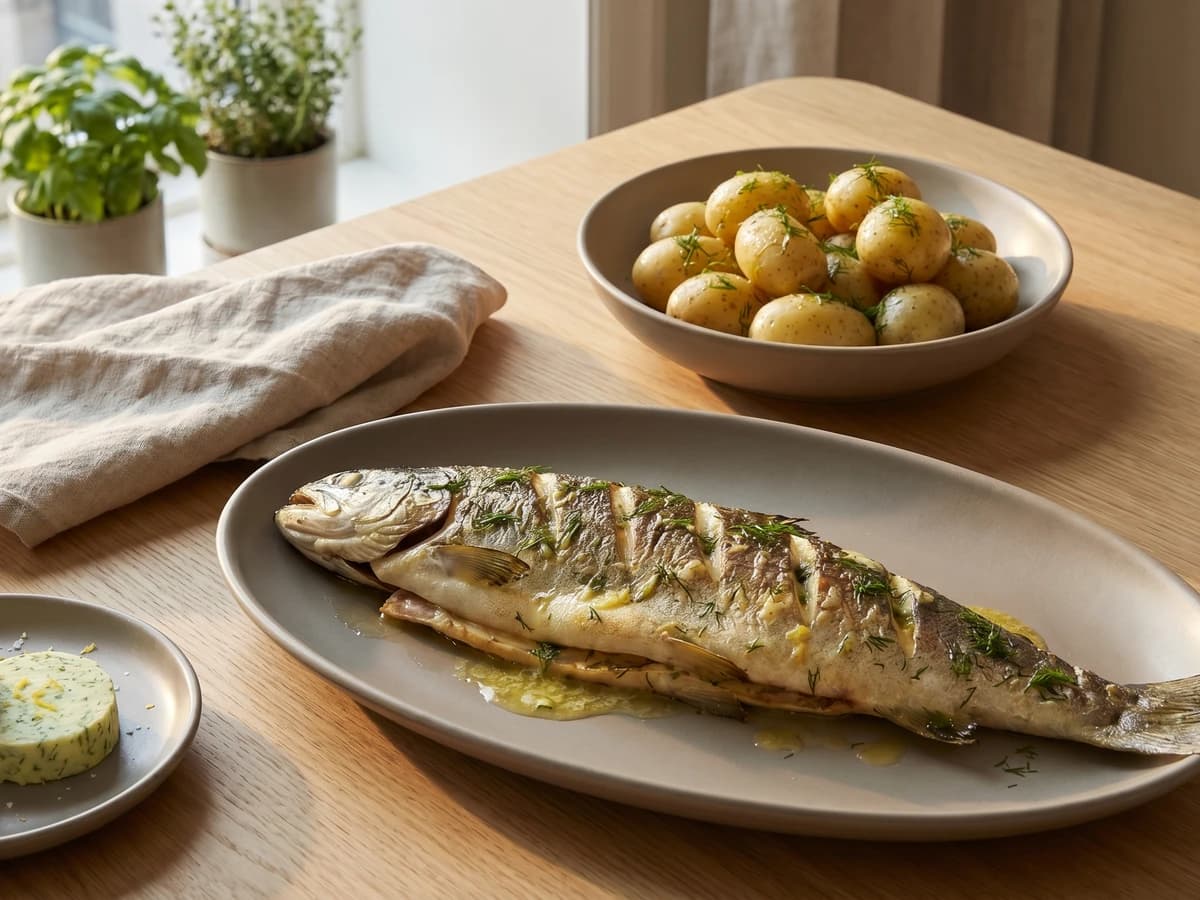
Whole sea trout baked with butter, lemon, and armfuls of dill, served beside the first nye kartofler of the season and a melting slab of dildsmor. The Danish summer table at its most generous.
Chef Freja
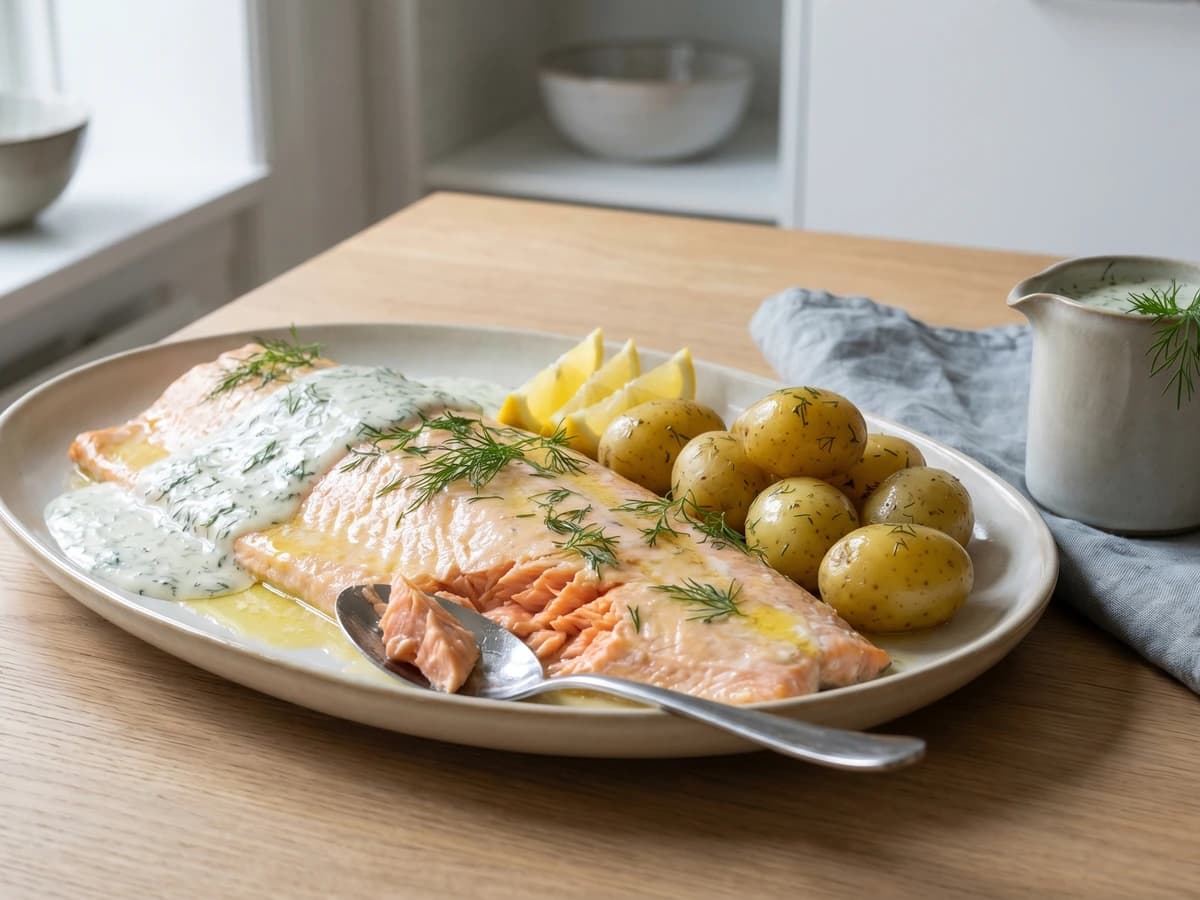
A side of salmon baked gently in butter and white wine, served warm with a bright dill cream sauce and the season's first nye kartofler. Late spring on a Danish table, cooked with love.