
Chef Freja
Andelår med Rødkål
Slow-roasted duck legs with crisp, deeply golden skin, served with braised red cabbage and caramelized potatoes. The weeknight Danish duck that proves the best part of the bird is the one that takes its time.
A cooking platform built around craft, culture, and the stories behind what we eat.
Created by Chef Freja
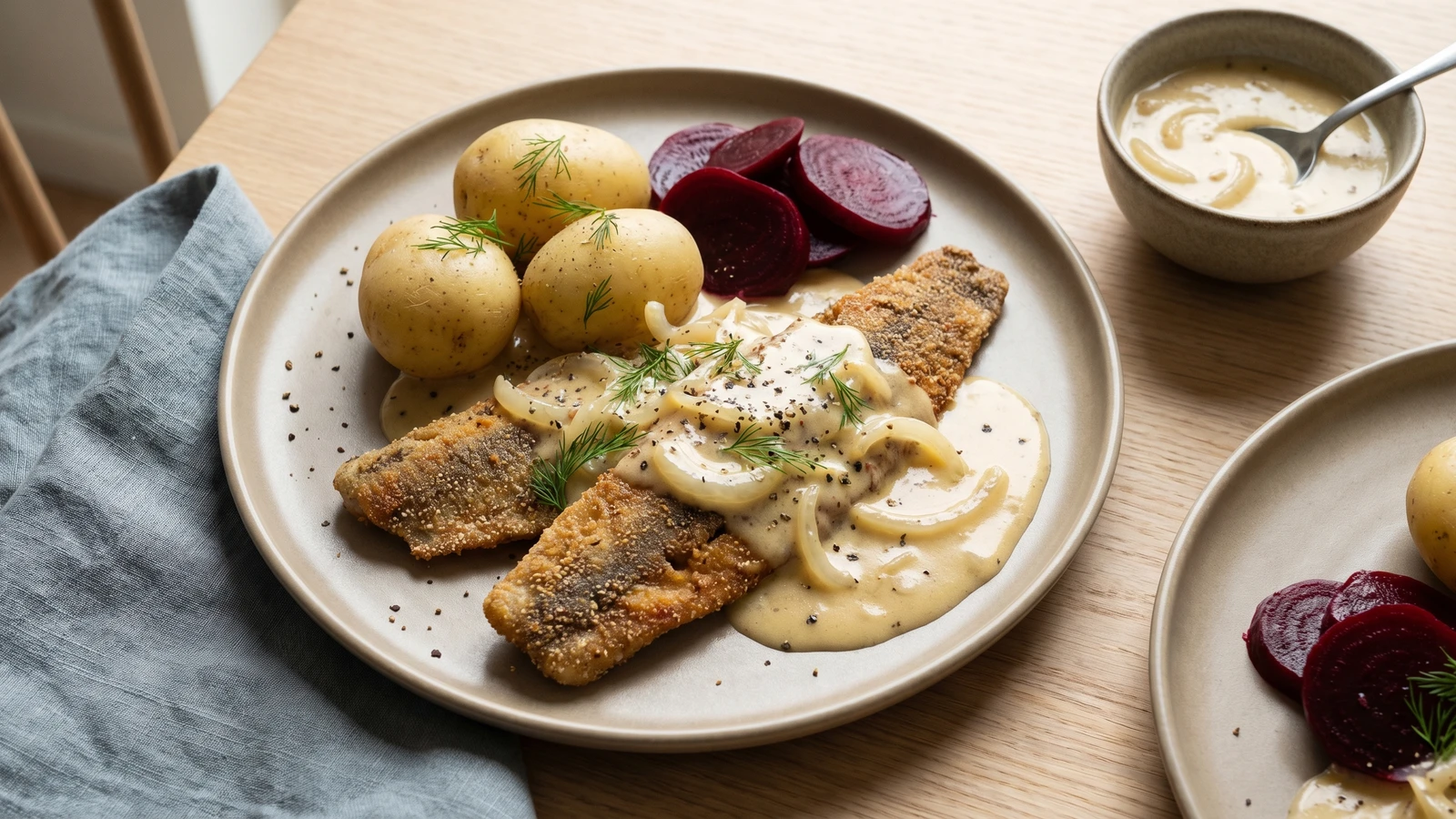
Rye-dredged herring fried in butter until the crust goes deep gold, smothered in a creamy løgsovs made from onions cooked so slowly they forget they were ever sharp, with boiled potatoes and pickled beets beside.
There are dishes that belong to Tuesday evenings. Not celebrations, not weekends, just the quiet end of an ordinary day when the kitchen light is on and the rest of the house is settling. Stegte sild med bløde løg is one of those dishes. It doesn't announce itself. It just appears, the way it has appeared in Danish kitchens for generations, because it's what the season and the budget and the clock were asking for.
The herring is dredged in dark rugmel, rye flour, and fried in butter until the crust crackles. The onion sauce is the kind your grandmother made whether she called it løgsovs or not: onions cooked so slowly in butter they turn translucent and sweet, then bound with flour and milk into something rich and mild that coats everything it touches. Beside it, plain boiled potatoes and a few slices of pickled beetroot, ruby-dark and sharp. Nothing competes. Everything belongs.
I want you to pay attention to two things. First, the onions. They need twenty minutes of low heat and a lid. You cannot rush them and you cannot skip this. Fast-cooked onions stay sharp and the sauce tastes raw. Slow-cooked onions dissolve into sweetness, and that sweetness is the backbone of the whole dish. Second, the rugmel. It dredges differently from wheat flour. It gives the herring a nuttier, darker crust with a faint bitterness that cuts the richness of the butter. That's not an accident. That's why it's there. You'll know when it's right.
Fried herring with onion sauce belongs to the tradition of mormormad, grandmother's food, the category of Danish home cooking that survived not because it appeared in cookbooks but because it passed from kitchen to kitchen by watching and doing. Herring was the cheapest protein in Denmark for centuries, and løgsovs, a butter-flour white sauce loaded with slowly cooked onions, was the thrifty cook's way of turning a humble fish into a complete meal. The combination appears in household records from the 1800s and remained a weeknight staple well into the 20th century, when it began to retreat from younger kitchens. It is now one of the dishes Danes describe with a particular kind of longing, the taste of a kitchen they grew up in.
Quantity
8
scaled and pin-boned
Quantity
4 tablespoons
for dredging
Quantity
40g
Quantity
1 tablespoon
Quantity
to taste
Quantity
freshly ground, to taste
Quantity
4 large
halved and sliced into thin half-moons
Quantity
50g
Quantity
2 tablespoons
Quantity
500ml
Quantity
1 teaspoon
Quantity
1
Quantity
pinch
freshly grated
Quantity
800g
scrubbed or peeled
Quantity
for the potato water
Quantity
small bunch
fronds picked
Quantity
to serve
| Ingredient | Quantity |
|---|---|
| fresh herring filletsscaled and pin-boned | 8 |
| dark stone-ground rugmel (rye flour)for dredging | 4 tablespoons |
| unsalted butter (for frying) | 40g |
| neutral oil | 1 tablespoon |
| fine sea salt | to taste |
| black pepper | freshly ground, to taste |
| yellow onionshalved and sliced into thin half-moons | 4 large |
| unsalted butter (for the løgsovs) | 50g |
| plain wheat flour | 2 tablespoons |
| whole milk | 500ml |
| sugar | 1 teaspoon |
| bay leaf | 1 |
| nutmegfreshly grated | pinch |
| waxy potatoesscrubbed or peeled | 800g |
| coarse sea salt | for the potato water |
| fresh dillfronds picked | small bunch |
| pickled beetroot | to serve |
Melt the 50g butter for the løgsovs in a heavy-bottomed saucepan over a low heat. Add the sliced onions, a generous pinch of salt, and the teaspoon of sugar. Stir everything through the butter, then put the lid on and let the onions cook very gently for twenty to twenty-five minutes, stirring every five minutes or so. You want them completely soft, sweet, and translucent, collapsing into each other. The sugar helps them along, but the real work is done by patience and low heat. If they take on color, your heat is too high. Bløde løg means soft onions, and soft is what you're after.
While the onions soften, put the potatoes into a large pot of cold water with a generous handful of coarse sea salt. Starting in cold water lets the heat travel evenly from the outside in, so the centers cook through without the outsides going mealy. Bring to a steady simmer and cook until a thin knife slides into the center with no resistance at all, about twenty minutes depending on size. Drain them and put the lid back on slightly ajar. The residual heat dries their surfaces, which matters when the butter and sauce meet them on the plate.
When the onions are completely soft, sprinkle the two tablespoons of wheat flour over them and stir it in. Cook for two minutes, stirring constantly. The flour needs this time to lose its raw taste, and you'll notice the mixture thicken and start to pull away from the sides of the pan slightly. Now pour in the milk in a slow, steady stream, stirring as you go. Add the bay leaf and the nutmeg. Bring the sauce to a gentle simmer and let it cook for eight to ten minutes, stirring regularly, until it has thickened to the consistency of double cream. It should coat the back of a spoon and hold a line when you draw your finger through it. Season with salt and white pepper. Remove the bay leaf. The sauce should taste of butter and slow-cooked onion, rich and sweet and mild.
Pat the herring fillets completely dry with kitchen paper. This is not optional. Wet fish steams instead of crisping, and the rugmel turns to paste instead of a crust. Season both sides with fine salt and pepper. Spread the rugmel on a plate and press each fillet into it, coating both sides, then shake off any excess. Dredge just before frying, not before. Rye flour absorbs moisture quickly and goes soft if it sits. The timing is part of the technique.
Heat the 40g butter and the tablespoon of oil together in a heavy frying pan over medium-high heat. Butter alone burns before the fish is done. Oil alone gives no flavor. Together they give you a golden crust and the nutty richness that makes these taste right. When the butter foams, the foam subsides, and it smells of hazelnuts, lay the fillets in skin-side down. Don't crowd the pan. Work in two batches if you need to. Cook for two to three minutes without moving them. The rye crust should go deep golden brown and the edges should curl slightly. Flip and cook for one minute more on the flesh side. The fillets are thin. They don't need long.
Place the warm potatoes on one side of each plate and the fried herring fillets alongside. Spoon the løgsovs generously over the herring, letting it pool around the potatoes too. The sauce is the bridge between everything on the plate. Add pickled beetroot to the side and finish with several fronds of fresh dill over the fish and the sauce. Serve immediately. This is a dish that waits for nobody. The herring should be crisp, the sauce should be warm, the potatoes should steam when you cut them open. That's the moment. Tak for mad.
1 serving (about 600g)
Culinary guides, cultural storytelling, and the editorial depth that makes cooking meaningful.
Discover Culinary ExplorerChef Freja
Slow-roasted duck legs with crisp, deeply golden skin, served with braised red cabbage and caramelized potatoes. The weeknight Danish duck that proves the best part of the bird is the one that takes its time.

Chef Freja
The whole roasted duck of juleaften, stuffed with tart apples and dark prunes, slow-roasted for four patient hours until the skin crackles like something earned and the meat underneath gives way without resistance.
Chef Freja
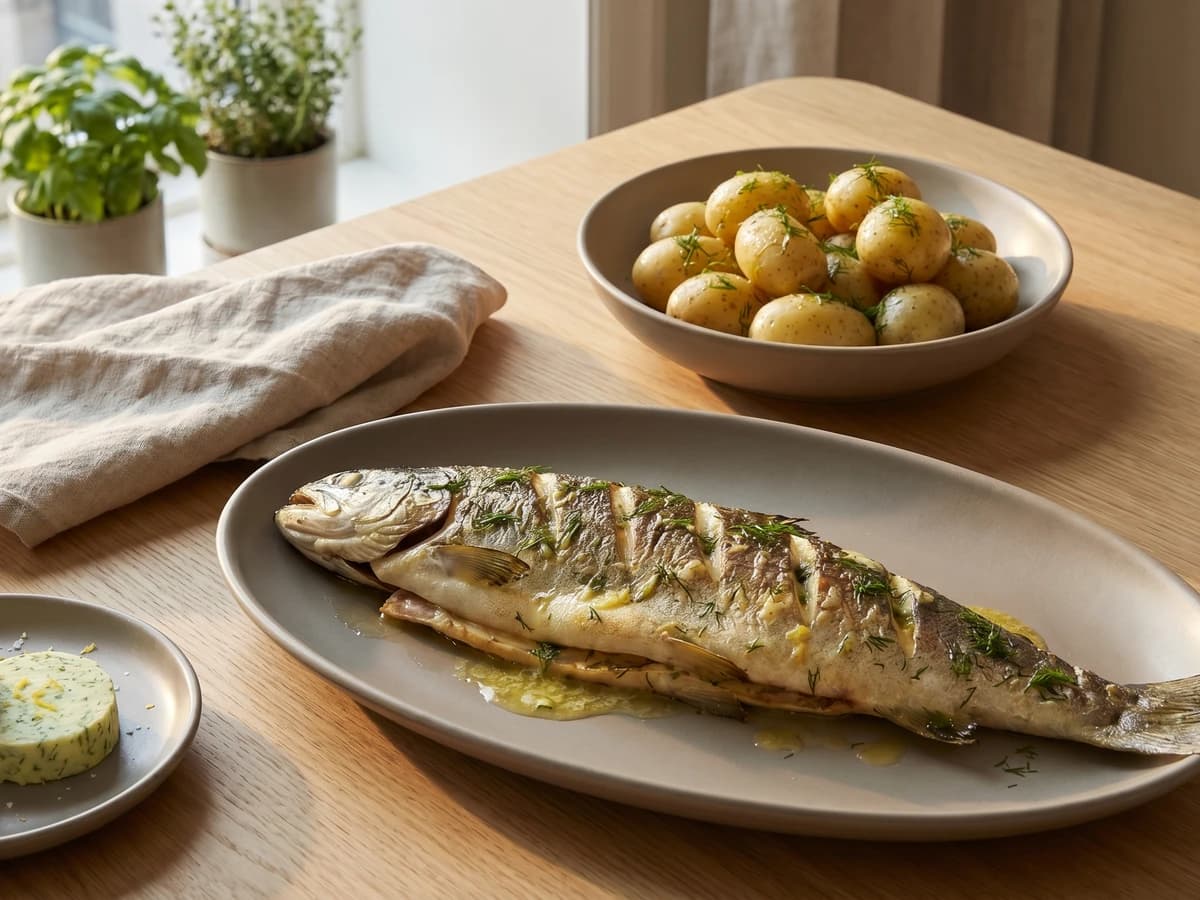
Whole sea trout baked with butter, lemon, and armfuls of dill, served beside the first nye kartofler of the season and a melting slab of dildsmor. The Danish summer table at its most generous.
Chef Freja
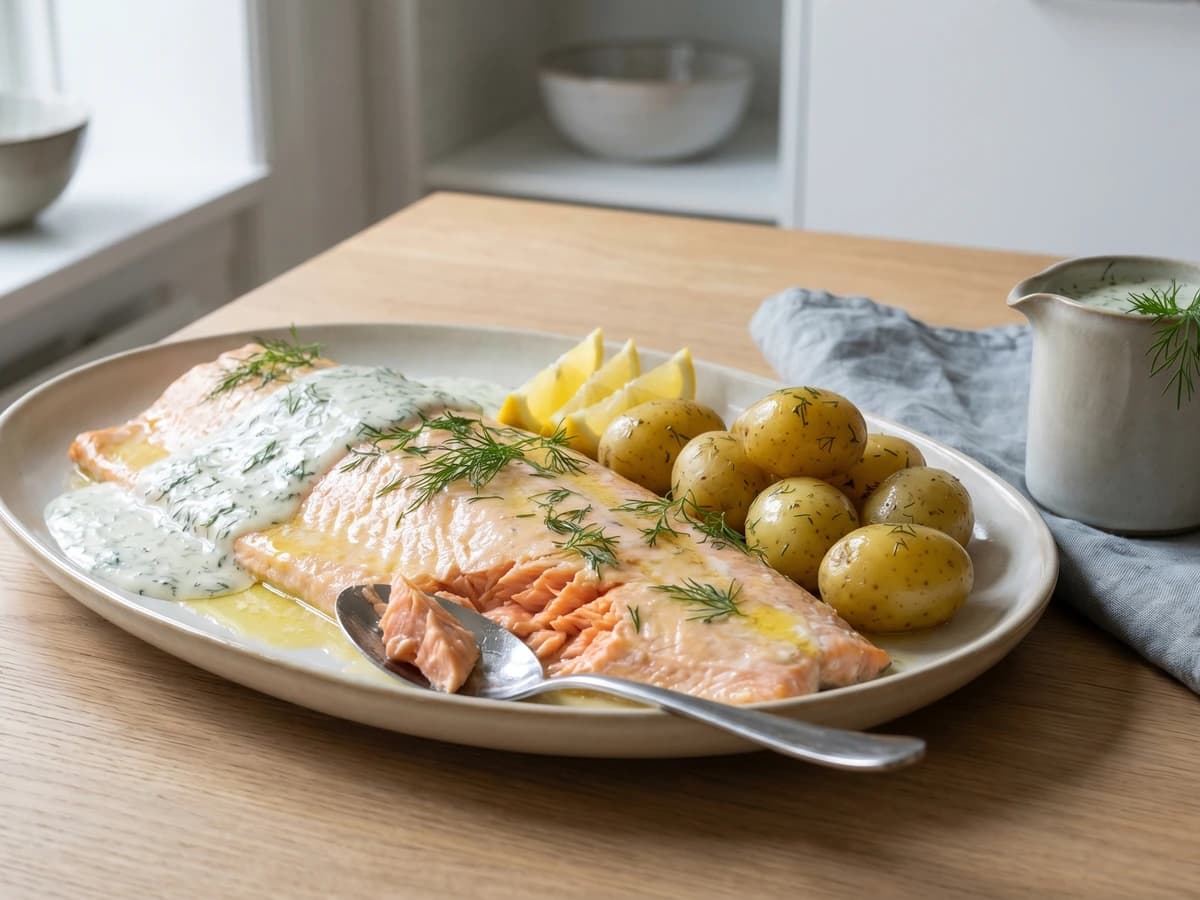
A side of salmon baked gently in butter and white wine, served warm with a bright dill cream sauce and the season's first nye kartofler. Late spring on a Danish table, cooked with love.