
Chef Freja
Danablu Mad med Rå Æggeblomme
Danish blue cheese layered on dark rye with a raw egg yolk nestled on top, red onion rings, and chives. The last piece at a Danish lunch, and the one that stays with you longest.
A cooking platform built around craft, culture, and the stories behind what we eat.
Created by Chef Freja
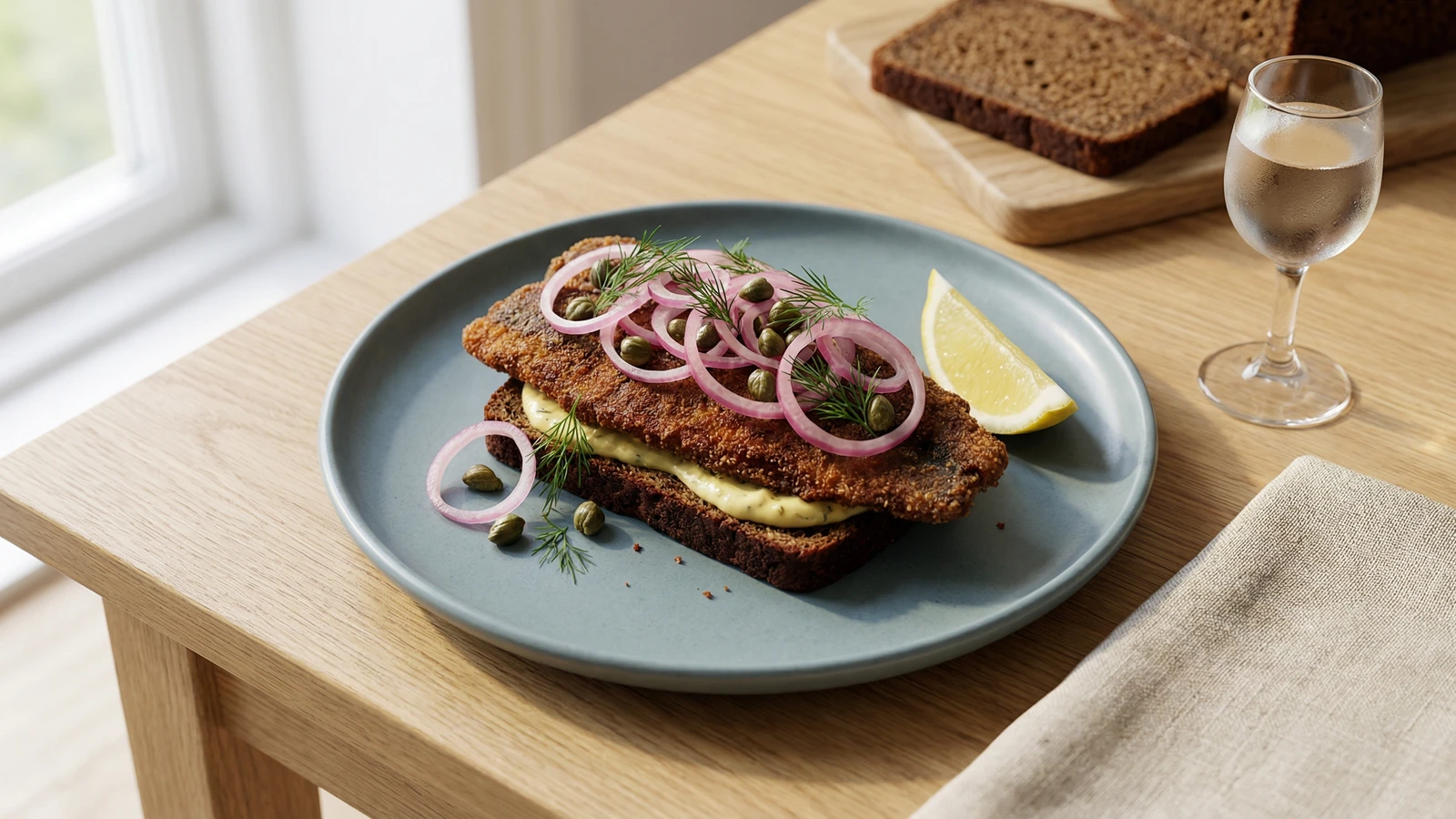
Fresh herring fillets dredged in rye flour and fried in browned butter until the skin crackles, laid on dark rugbrod with remoulade, pickled onion, and dill. The warm piece at the cold Danish lunch.
At a proper Danish frokost, everything on the table is cold. The pickled herring in its brine, the liver pate, the sliced ham, the cheese, the radishes, the capers in their little glass jar. Everything except this.
Stegte sild is the warm piece. The single piece of smorrebrod that comes out of the pan still hissing, butter just browned, skin crackling under the edge of a fork. It's the moment the cold table tips from ritual into welcome, and in many Danish homes it's the reason you sit down to lunch in the first place. A cold herring can live in a jar for weeks. A warm one has to be cooked for you, now, by the person who laid the table. That's the difference, and everyone at the table knows it.
The technique is simple and unforgiving. You dredge the fillets in rye flour, not wheat, because rye gives you a darker, nuttier crust that echoes the rugbrod underneath. You fry them in butter and oil, and you wait for the foam to settle and the butter to start smelling of hazelnuts before the fish goes in. Earlier and the skin stays pale. Later and the butter goes bitter. I'll walk you through the timing so you're never guessing.
What makes this dish sing is contrast. The warm crisp fish against the cool dense rye. The sweet remoulade against the sharp pickled onion. The salt of the capers against the herb of the dill. You're building a small piece of architecture on a slice of bread, and when you set it down in front of someone, you're telling them they're welcome at your table. That's the whole point of smorrebrod, and it starts here.
Herring shaped Denmark's early wealth. In the Middle Ages, the vast autumn shoals that passed through the Oresund strait made the Skanor and Falsterbo markets on the Danish-controlled Swedish coast the commercial heart of the Hanseatic League, drawing merchants from Lubeck, Bremen, and beyond. When the shoals shifted west toward the North Sea in the 1400s, Danish fortunes shifted with them, but the fish itself never left the Danish table. Stegte sild, the plainest possible preparation of fresh herring in butter, was weeknight home cooking in Danish kitchens long before it was codified as smorrebrod in the Copenhagen lunch restaurants of the late 1800s, and the rye flour dredge is a regional detail from Jutland and the islands that quietly distinguishes the Danish version from its Swedish and German cousins.
Quantity
4
scaled and pin-boned
Quantity
4 thick slices
Quantity
60g
for dredging
Quantity
to taste
Quantity
freshly ground, to taste
Quantity
30g
Quantity
1 tablespoon
sunflower or rapeseed
Quantity
4 tablespoons
Quantity
1 small
sliced paper-thin
Quantity
4 tablespoons
Quantity
1 teaspoon
Quantity
2 tablespoons
drained
Quantity
small bunch
fronds picked
Quantity
to serve
| Ingredient | Quantity |
|---|---|
| fresh herring filletsscaled and pin-boned | 4 |
| dark rugbrod | 4 thick slices |
| fine rye flourfor dredging | 60g |
| fine sea salt | to taste |
| black pepper | freshly ground, to taste |
| unsalted butter | 30g |
| neutral oilsunflower or rapeseed | 1 tablespoon |
| Danish remoulade | 4 tablespoons |
| red onionsliced paper-thin | 1 small |
| white wine vinegar | 4 tablespoons |
| caster sugar | 1 teaspoon |
| capersdrained | 2 tablespoons |
| fresh dillfronds picked | small bunch |
| lemon wedges (optional) | to serve |
Drop the paper-thin onion slices into a small bowl with the white wine vinegar, the sugar, and a pinch of salt. Press them down so they sit in the liquid and leave them for at least fifteen minutes while you get on with the fish. The vinegar pulls the sharpness out and turns the rings crisp and rose-pink at the edges. This is the cool note that will cut through the warm fish later, so don't skip it, and don't rush it.
Lay the herring fillets skin-side down on kitchen paper and pat the flesh side dry. Then turn them and pat the skin dry. Dry fish crisps. Wet fish steams. This small step is the difference between a crackling crust and a sad, soft one. Season both sides lightly with salt and pepper.
Spread the rye flour on a flat plate. Press each fillet into the flour on both sides, then lift and shake off the excess. The rye is the detail that makes this Danish rather than generic. Wheat flour gives you a pale, even crust. Rye gives you something darker, nuttier, with a faint toasted sweetness that echoes the rugbrod underneath. It's the same grain returning in a different form, and you'll taste the conversation between them.
Put a heavy frying pan over medium-high heat. Add the oil first, then the butter. Butter alone burns before the skin crisps. Oil alone tastes like nothing. Together they give you a pan that can hold its temperature and a flavor that belongs in a Danish kitchen. Wait for the butter to finish foaming. The foam will settle, the color will shift from pale yellow to light gold, and a nutty, hazelnut smell will lift out of the pan. That is the signal.
Lay the herring in skin-side down, away from you so you don't splash. Leave them alone. Two minutes, no moving, no poking. The skin needs undisturbed contact with the hot butter to crackle and set. When you can see the flesh turning opaque halfway up the side, flip them. One minute more on the second side, and they're done. The fillets are thin, they cook fast, and they are much better slightly under than over.
Lay out four slices of rugbrod on a board. Spread each one with a tablespoon of remoulade, taking it right to the edges. The remoulade is the glue and the cool sweet note, and it needs to reach every bite. Set a fried herring fillet on top, slightly off-centre so a strip of dark rye shows along one side. This is how smorrebrod is built: the bread is visible, the topping is honest, the architecture tells you what you're eating.
Lift a small heap of pickled onion rings onto each fillet, letting them fall naturally. Scatter the capers. Tuck several fronds of dill across the top. A squeeze of lemon if the herring calls for it. Serve at once, while the fish is still warm and the skin still crackles under the fork. Stegte sild is eaten with a knife and fork, never picked up, and you'll know when it's right because the layers hold together cleanly as you cut through. Tak for mad.
1 serving (about 170g)
Culinary guides, cultural storytelling, and the editorial depth that makes cooking meaningful.
Discover Culinary ExplorerChef Freja
Danish blue cheese layered on dark rye with a raw egg yolk nestled on top, red onion rings, and chives. The last piece at a Danish lunch, and the one that stays with you longest.

Chef Freja
Thick-sliced Danbo on properly buttered rugbrod with sweet pepper rings and a crown of garden cress. The cheese smorrebrod that lives in every Danish lunchbox, from the first day of school to the last day at the office.

Chef Freja
Copenhagen's most storied smorrebrod: leverpostej, cold salt beef, trembling aspic, onion rings, and fresh cress on dark rugbrod. Invented at Oskar Davidsen's in the 1880s for a hungry veterinarian and still one of the great pieces of the Danish lunch table.

Chef Freja
Pungent Esrom from North Zealand on dark rye with paper-thin radish and fresh chives. The cheese course that closes a proper Danish smorrebrod spread, one of the quietest, most satisfying bites in the whole tradition.