
Chef Freja
Andelår med Rødkål
Slow-roasted duck legs with crisp, deeply golden skin, served with braised red cabbage and caramelized potatoes. The weeknight Danish duck that proves the best part of the bird is the one that takes its time.
A cooking platform built around craft, culture, and the stories behind what we eat.

Created by Chef Freja
Pan-fried pork liver with slow golden onions and a sharp pan sauce, served with boiled potatoes and rugbrod. The honest weeknight dinner that fed Denmark when thrift was a kitchen virtue.
November evenings in Denmark get dark before you finish work. You come home and the kitchen is cold and the fridge holds what the fridge holds. This is the hour that stegt lever med løg was made for. It's fast, it's cheap, and when you cook it properly, it is genuinely good.
Pork liver with onions was the Tuesday night dinner of a generation that didn't waste anything. The liver was the first thing used after a slaughter, fresh and iron-rich, and the onions came from the cellar where they'd been stored since autumn. There was no pretension in it. There didn't need to be. The dish did its job: it fed a family well on very little, and it tasted like someone had taken the time to do it right.
I want to be honest with you. Liver divides people, and most of the reasons come down to bad cooking. Overcooked liver is chalky and bitter. Properly cooked liver is tender, with a mineral sweetness that the soft onions round out and the pan sauce sharpens. The difference is two minutes, and I'll tell you exactly what to look for so you land on the right side of that line. Soak the liver in milk first. Cook the onions slowly. Fry the liver fast and hot. Those three things, in that order, are the whole secret. You'll know when it's right.
Offal cooking in Denmark is tied to the autumn slagtning, the communal pig slaughter that was a defining event in rural life well into the twentieth century. Liver was eaten fresh on the day of the killing, before anything could be salted or smoked, making stegt lever one of the oldest preparations in the Danish pork tradition. By the 1950s and 1960s, the dish had become a fixture of weeknight frugality in both rural and urban kitchens, recommended by the Danish Household Council as a cheap source of iron and protein. Its slow decline since the 1980s mirrors Denmark's shift away from offal cooking, though a quiet revival among home cooks who value thrift and nose-to-tail eating has brought it back to kitchen tables in recent years.
Quantity
600g
sliced 1cm thick
Quantity
300ml
for soaking
Quantity
4 large
halved and sliced into thin half-moons
Quantity
40g, plus 20g for the liver
Quantity
1 tablespoon
Quantity
2 tablespoons
Quantity
to taste
Quantity
freshly ground, to taste
Quantity
150ml
Quantity
1 teaspoon
Quantity
to serve
Quantity
thick slices, to serve
Quantity
to serve
| Ingredient | Quantity |
|---|---|
| pork liversliced 1cm thick | 600g |
| whole milkfor soaking | 300ml |
| yellow onionshalved and sliced into thin half-moons | 4 large |
| unsalted butter | 40g, plus 20g for the liver |
| neutral oil | 1 tablespoon |
| plain flour | 2 tablespoons |
| fine sea salt | to taste |
| black pepper | freshly ground, to taste |
| beef or pork stock | 150ml |
| apple cider vinegar | 1 teaspoon |
| boiled potatoes | to serve |
| dark rugbrod | thick slices, to serve |
| pickled beetroot (optional) | to serve |
Place the liver slices in a shallow dish and pour the milk over them. Let them sit for at least thirty minutes at room temperature, or up to two hours in the fridge. The milk draws out the bitterness that lives in liver and softens the mineral edge. This is the step most people skip, and it's why most people say they don't like liver. Don't skip it. When you're ready, lift the slices out and pat them very dry with kitchen paper. Wet liver will not brown. It will steam and turn grey, and the dish will be lost before it begins.
Melt the 40g of butter in a heavy frying pan over a low to medium heat. Add all the sliced onions, spread them out, and give them a pinch of salt. The salt draws out moisture and starts the softening. Now leave them alone. Stir every few minutes, but don't rush them. You want twenty minutes at least, probably closer to twenty-five. The onions should collapse into soft, golden, faintly sweet tangles. Not browned and crisp, not caramelized to dark amber. Just soft and gold. This is the foundation of the whole dish, and it cannot be hurried. When they're ready, scrape them out onto a plate and set them aside. Don't wash the pan.
Season the dry liver slices generously on both sides with salt and pepper. Spread the flour on a plate and press each slice into it lightly, turning to coat both sides. Shake off the excess. The flour does two things: it creates the thin crust that gives the liver its golden surface, and it thickens the pan juices into a sauce later. A heavy coating makes the crust thick and pasty. You want a whisper, not a blanket.
Return the pan to a high heat and add the remaining 20g of butter and the tablespoon of oil. When the butter foams and the foam just begins to subside, lay the liver slices in without crowding. You need space between each piece, or the temperature drops and the liver stews instead of searing. Fry for two minutes on the first side. Don't move them. You'll see the edges change color, turning from raw purple-brown to a warm grey-pink climbing up the sides. Flip and fry for one to one and a half minutes more. The liver should be golden on the outside and still slightly pink at the centre. Press a slice gently with your finger: if it gives softly and springs back, it's done. If it's firm and hard, you've gone too far. Overcooked liver turns dry and chalky. That's the line, and it matters.
Transfer the liver to a warm plate and tent it loosely with foil. The pan will be dark with fond, the sticky brown residue where the flavor lives. Pour in the stock and the apple cider vinegar and scrape the bottom of the pan with a wooden spoon, loosening everything. Let it bubble for one to two minutes until it reduces by about half and coats the back of a spoon. The vinegar cuts through the richness and gives the sauce a sharp backbone that the liver needs. Taste it. Adjust the salt. Return the onions to the pan and stir them through the sauce to warm them.
Lay the liver slices on warm plates and pile the soft, sauce-coated onions on top and around them. Pour any remaining pan sauce over everything. Serve with plain boiled potatoes, a thick slice of dark rugbrod, and pickled beetroot if you have it. The beetroot's sweetness and acidity work against the richness of the liver in the same way that pickles balance a heavy meal. This is a dish you eat simply and completely, with everything on the plate talking to everything else. Tak for mad.
1 serving (about 230g)
Culinary guides, cultural storytelling, and the editorial depth that makes cooking meaningful.
Discover Culinary ExplorerChef Freja
Slow-roasted duck legs with crisp, deeply golden skin, served with braised red cabbage and caramelized potatoes. The weeknight Danish duck that proves the best part of the bird is the one that takes its time.

Chef Freja
The whole roasted duck of juleaften, stuffed with tart apples and dark prunes, slow-roasted for four patient hours until the skin crackles like something earned and the meat underneath gives way without resistance.
Chef Freja
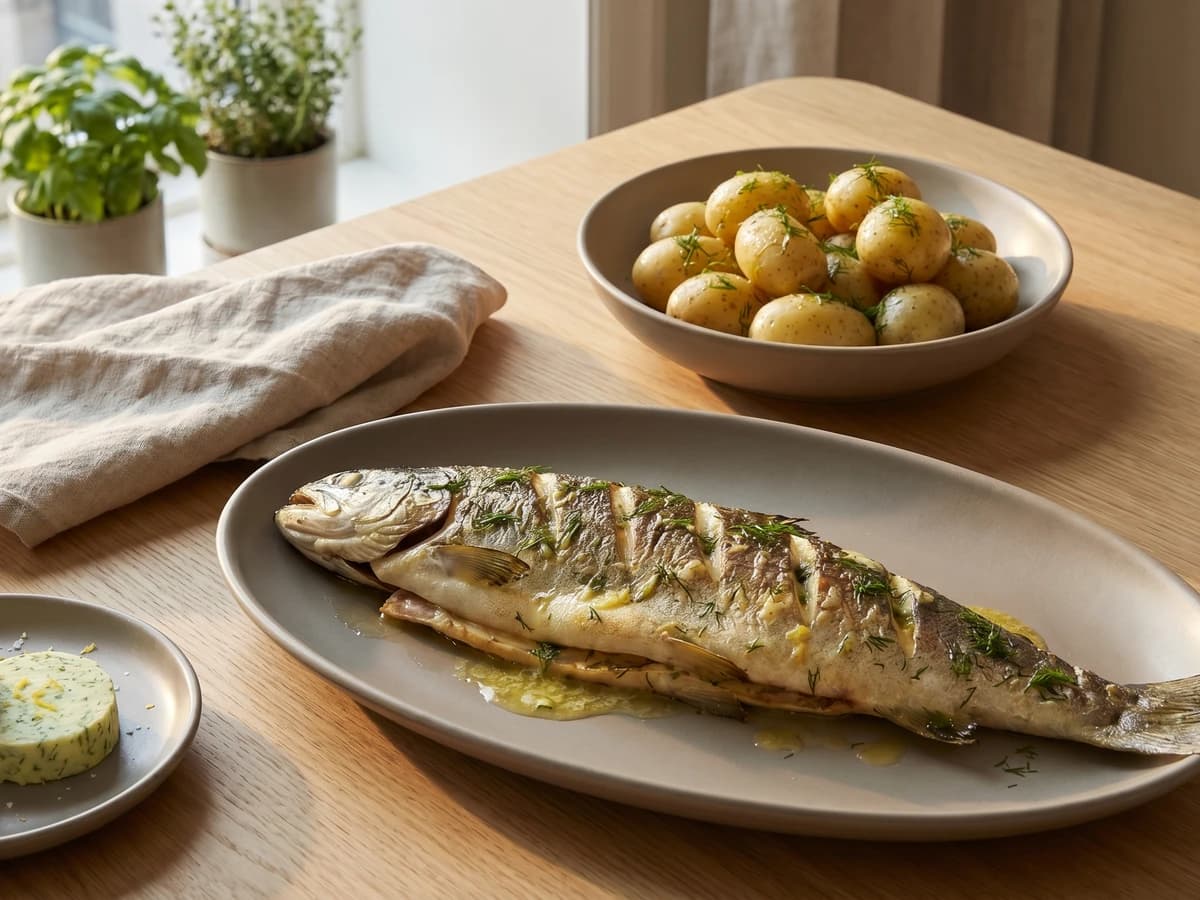
Whole sea trout baked with butter, lemon, and armfuls of dill, served beside the first nye kartofler of the season and a melting slab of dildsmor. The Danish summer table at its most generous.
Chef Freja
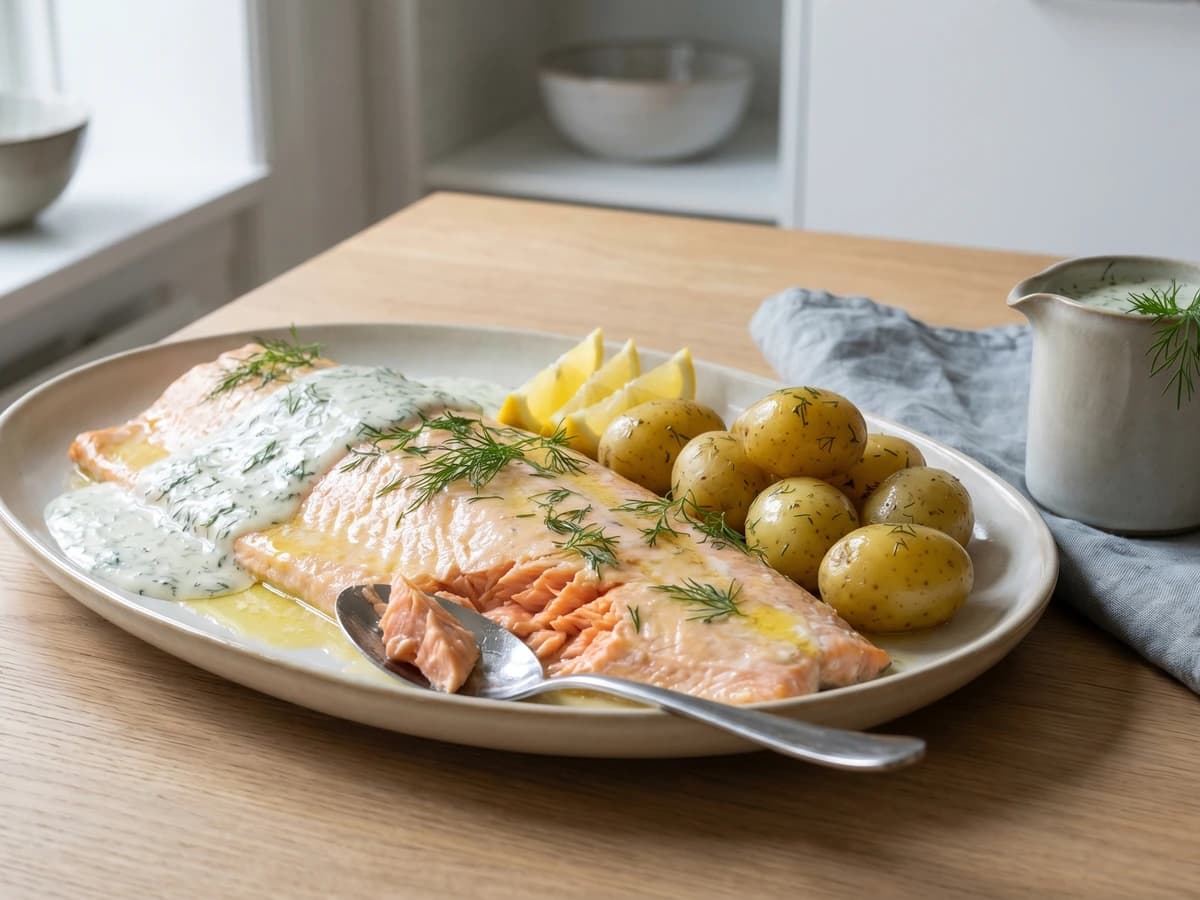
A side of salmon baked gently in butter and white wine, served warm with a bright dill cream sauce and the season's first nye kartofler. Late spring on a Danish table, cooked with love.