
Chef Freja
Andelår med Rødkål
Slow-roasted duck legs with crisp, deeply golden skin, served with braised red cabbage and caramelized potatoes. The weeknight Danish duck that proves the best part of the bird is the one that takes its time.
A cooking platform built around craft, culture, and the stories behind what we eat.
Created by Chef Freja
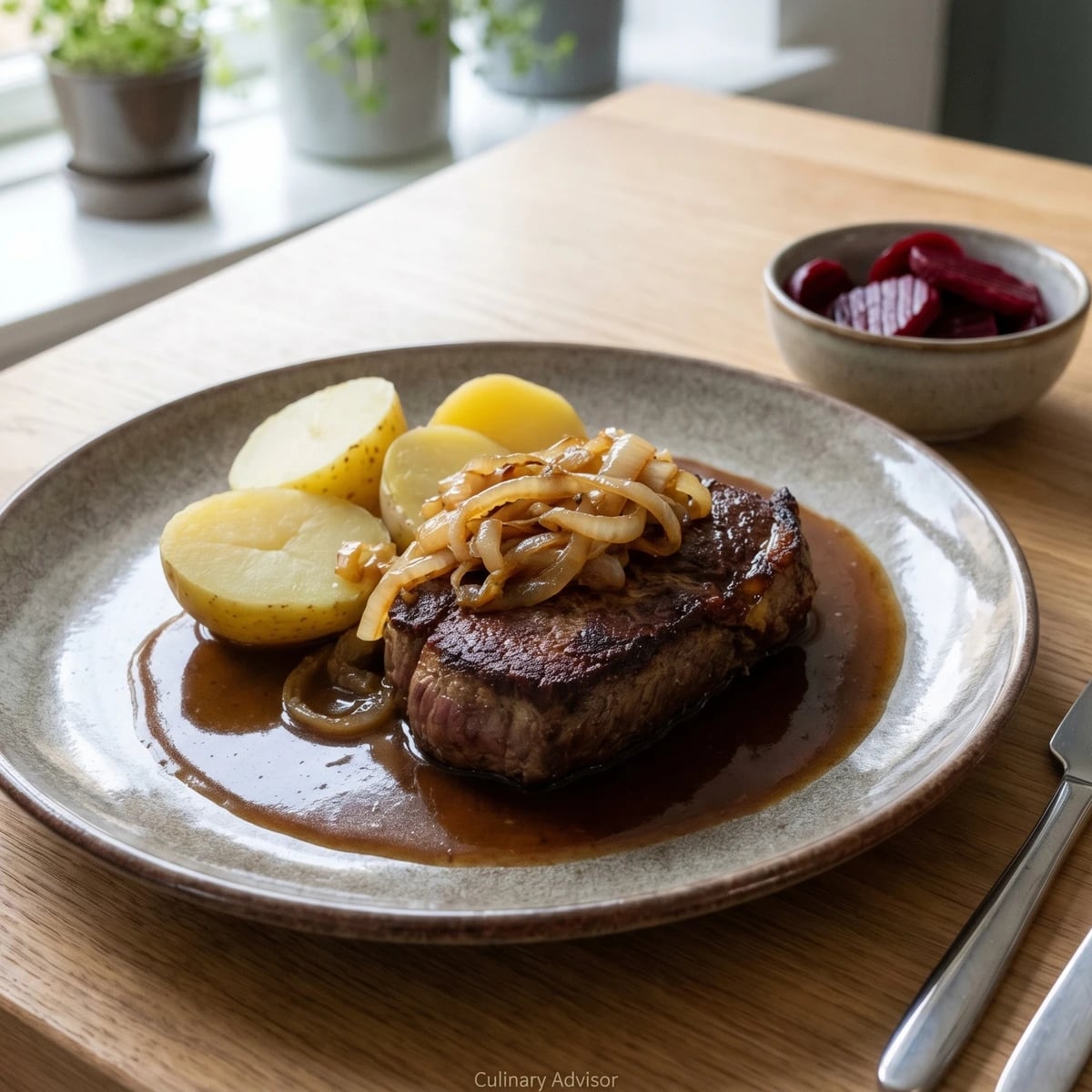
A good piece of beef seared hard, buried under golden onions fried in butter, served with boiled potatoes and the kind of brown gravy you make from what the pan remembers.
November is when this dish makes sense. The clocks have gone back, the dark arrives by four, and you want something on the table that takes less than an hour and fills the kitchen with the smell of butter and onions. Engelsk bof med løg is that dinner.
The name means English steak with onions, and the English part is mostly a footnote from a time when anything with beef felt foreign and impressive. The dish itself is entirely Danish: a good piece of beef, seared hard in a hot pan, buried under a mountain of slowly fried onions, and served with boiled potatoes and brown gravy that holds everything together. This is what faellesspisning looks like on a Tuesday, the shared meal stripped down to what matters.
Two things decide whether this is ordinary or worth remembering. First, the onions. They need a full twenty minutes in butter over a gentle heat, and if you rush them they'll burn at the edges and stay raw in the middle. Patience gives you soft, golden, sweet onions that melt into the beef when you eat them. Second, the gravy. You make it in the same pan you cooked the steak in, because that's where all the flavor is, stuck to the bottom in dark, caramelized bits that dissolve the moment the stock hits them. I'll walk you through both so you're never guessing. This is weeknight cooking at its most honest, cooked with love, and you'll know when it's right.
The name engelsk bof appeared in Danish cookbooks in the late 1800s, when English-style beefsteaks became fashionable across northern Europe. In Denmark, the dish quickly shed its foreign aspirations and became something more practical: an affordable weeknight dinner built around thin-cut beef, generous onions, and brown gravy made from the pan drippings. By the mid-twentieth century it had become one of the most commonly served meals in Danish homes, often appearing on rotating weekly menus alongside frikadeller and stegt flæsk, the unofficial trio of Danish weeknight cooking.
Quantity
4, about 180g each
1.5cm thick
Quantity
5 large
halved and sliced into thin half-moons
Quantity
80g
divided
Quantity
1 tablespoon
Quantity
2 tablespoons
Quantity
400ml
Quantity
to taste
Quantity
freshly ground, to taste
Quantity
1kg
peeled, halved if large
Quantity
to serve
| Ingredient | Quantity |
|---|---|
| beef steaks1.5cm thick | 4, about 180g each |
| yellow onionshalved and sliced into thin half-moons | 5 large |
| unsalted butterdivided | 80g |
| neutral oil | 1 tablespoon |
| plain flour | 2 tablespoons |
| beef stock | 400ml |
| fine sea salt | to taste |
| black pepper | freshly ground, to taste |
| waxy potatoespeeled, halved if large | 1kg |
| pickled beetroot (optional) | to serve |
Put the potatoes in a large pot of cold salted water. Bring to a gentle boil and cook until a knife slides through without resistance, about twenty minutes depending on size. Starting in cold water lets the potatoes heat evenly from the outside in. If you drop them into boiling water, the outsides go soft before the centers cook through. When they're done, drain and cover with a lid to keep warm while you finish everything else.
While the potatoes are on, melt 40g of the butter in a large heavy frying pan over medium-low heat. Add all the sliced onions and a generous pinch of salt. The salt draws moisture out and helps them soften without burning. Stir them through the butter, then let them cook for twenty minutes, stirring every few minutes. You want them soft, golden, and sweet, collapsing into themselves. Not caramelized to a deep brown. Not charred. Gentle gold. That takes patience and low heat. When they're done, scrape them into a bowl and set aside.
Take the steaks out of the fridge fifteen minutes before you start cooking. Pat them completely dry with kitchen paper. Season both sides generously with salt and pepper. Dry meat sears. Wet meat steams. That's the difference between a crust and a grey surface, and it matters more than the quality of the pan.
Return the pan to a high heat. Add the tablespoon of oil and 20g of butter. When the butter foams and the foam begins to subside, lay the steaks in. Don't crowd them. If your pan won't hold all four with space between, cook in two batches. Sear for two to three minutes on the first side without moving them. You want a deep, even brown crust. Flip once and cook for another two minutes. The steak should be pink in the centre. Transfer to a warm plate and let them rest while you make the gravy. Resting lets the juices redistribute. Cut into a steak straight from the pan and they run out onto the plate. Wait three minutes and they stay in the meat where they belong.
Keep the pan on the heat. There will be dark bits stuck to the bottom. That is pure flavor. Add the remaining 20g of butter and let it melt. Sprinkle in the flour and stir it into the butter and drippings for about a minute, until it smells toasty and has turned a shade darker. Pour in the beef stock gradually, stirring constantly. The liquid will hit the hot pan and bubble immediately. Keep stirring and scraping the bottom to lift every bit of caramelized meat into the sauce. Let the gravy simmer for three to four minutes until it thickens to a consistency that coats the back of a spoon. Taste it. Season with salt and pepper. The gravy should taste deeply of beef and butter, rounded and savory, the kind that makes you want to drag a piece of potato through it.
Place each steak on a warm plate. Pile the fried onions generously over the top. Pour the brown gravy around the steak, not over the onions, so you can see the layers. Set the boiled potatoes alongside and put pickled beetroot on the table for those who want it. This is a dish that goes to the table as it is. No garnish, no fuss. The onions, the gravy, the potatoes: everything is there for a reason. Tak for mad.
1 serving (about 580g)
Culinary guides, cultural storytelling, and the editorial depth that makes cooking meaningful.
Discover Culinary Explorer
Chef Freja
Slow-roasted duck legs with crisp, deeply golden skin, served with braised red cabbage and caramelized potatoes. The weeknight Danish duck that proves the best part of the bird is the one that takes its time.

Chef Freja
Pan-seared beef steaks rested and served in a glossy red wine sauce built from the fond of the same pan. The Danish dinner party dish that turns a Saturday evening into an occasion worth remembering.

Chef Freja
Strips of seared beef in a paprika cream sauce, the weeknight dish that arrived from Russia in the 1950s and never left the Danish kitchen. Served over rice with the quiet confidence of something that has been Tuesday dinner for three generations.

Chef Freja
A boneless pork loin butterflied, filled with prunes and tart apples, rolled tight and roasted until deep golden. Post-war Danish ingenuity at its most generous, sliced thick and served with a smooth cream gravy.